


Organic Halides
In this category, you can find organic molecules containing one or more halogen atoms in their structure. These organic halides include brominated, iodinated, chlorinated, and cyclic halide compounds. Organic halides are widely used in organic synthesis, pharmaceuticals, agrochemicals, and materials science due to their reactivity and ability to undergo a variety of chemical transformations. At CymitQuimica, we offer a comprehensive selection of high-quality organic halides to support your research and industrial applications, ensuring reliable and effective performance in your synthetic and analytical projects.
Subcategories of "Organic Halides"
Found 20437 products of "Organic Halides"
Sort by
Purity (%)
0
100
|
0
|
50
|
90
|
95
|
100
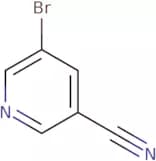
3-Cyano-5-bromopyridine
CAS:<p>3-Cyano-5-bromopyridine is an enantiopure organic compound that belongs to the group of halides. It is a functional group that is a reagent in organic synthesis, and it can be used as a precursor to dyestuffs. 3-Cyano-5-bromopyridine has been shown to have antimicrobial activity against bacteria and fungi. It also has a metabotropic glutamate receptor subtype selective affinity, which may be due to its ability to bind with glutamate in complex molecules.</p>Formula:C6H3BrN2Purity:Min. 95%Color and Shape:White To Beige To Light (Or Pale) Yellow SolidMolecular weight:183.01 g/mol4-Amino-5-chloro-2,3-dihydro-N-[1-(3-methoxypropyl)-4-piperidinyl]-7-benzofurancarboxamide
CAS:<p>The drug 4-Amino-5-chloro-2,3-dihydro-N-[1-(3-methoxypropyl)-4-piperidinyl]-7-benzofurancarboxamide (BZP) is a histamine H2 receptor antagonist. It binds to the histamine H2 receptor in the stomach and duodenum, thereby blocking stomach acid production. BZP has been shown to be effective for treating symptoms of constipation or diarrhoea caused by inflammatory bowel disease or abdominal surgery. BZP also reduces the risk of relapse after surgery but does not affect long term efficacy. This drug is not available in the United States and has significant interactions with other drugs and symptoms including constipation, bowel disease, long term efficacy, and analytical method.</p>Formula:C18H26ClN3O3Purity:Min. 95%Color and Shape:White PowderMolecular weight:367.87 g/molChlorsulfuron
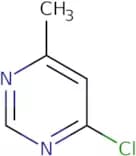
CAS:<p>Chlorsulfuron is a herbicide that inhibits the enzyme acetolactate synthase. This inhibition prevents plants from synthesizing three essential amino acids, which leads to plant death. Chlorsulfuron has been shown to be highly resistant to photosynthetic activity and transport properties, and it has no effect on soybean extract or chlorsulfuron enzyme activities in vitro. The anhydrous sodium salt of chlorsulfuron is stable in water and other solvents, making it a good choice for analytical methods such as HPLC.</p>Formula:C12H12ClN5O4SPurity:Min. 95%Color and Shape:White Off-White PowderMolecular weight:357.77 g/mol4-Methyl-6-chloropyrimidine
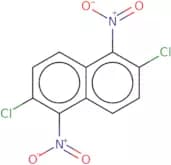
CAS:<p>4-Methyl-6-chloropyrimidine is an intermediate in the synthesis of 6-chloropurine, which is a dihydrochloride salt that can be hydrolyzed to form tetrapeptides. The nature of the reaction conditions employed for this conversion determines the yield of 4-methyl-6-chloropyrimidine. It can be synthesized by alkaline hydrolysis or by condensation of n-terminal amino acids with chloroacetic acid derivatives. This compound can also undergo hydrolytic cleavage to form oligopeptides and glycinates, which are n-substituted with dicyclohexylcarbodiimide.</p>Formula:C5H5ClN2Purity:Min. 95%Color and Shape:PowderMolecular weight:128.56 g/mol2,6-Dichloro-1,5-dinitronaphthalene
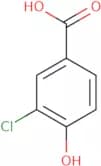
CAS:<p>2,6-Dichloro-1,5-dinitronaphthalene is an organic compound that is used as a reagent for the synthesis of other compounds. It can also be used in research for the synthesis of 2,6-dichloro-1,5-dinitronaphthalene derivatives. The CAS number for this compound is 320600-07-5. This compound is a versatile building block and has many uses as a fine chemical.</p>Formula:C10H4Cl2N2O4Purity:Min. 95%Color and Shape:PowderMolecular weight:287.06 g/mol3-Chloro-4-hydroxybenzoic acid hemihydrate
CAS:<p>3-Chloro-4-hydroxybenzoic acid hemihydrate is an analog of forskolin that is used in cancer research. It has been shown to inhibit the growth of lung cancer cells, which may be due to its ability to activate protein kinase A and phosphatase enzymes. 3-Chloro-4-hydroxybenzoic acid hemihydrate is being studied as a potential treatment for multiple sclerosis and other autoimmune disorders, although it has not yet been approved for these conditions. This drug inhibits the proliferation of tumor suppressor protein p53 and reverses the effects of a synthetic form of fty720 on the activation of the p38 mitogen activated protein kinase.</p>Formula:C7H5ClO3·H2OPurity:Min. 98 Area-%Color and Shape:PowderMolecular weight:363.15 g/mol(2-indol-3-ylethyl)((2-(trifluoromethyl)phenyl)sulfonyl)amine
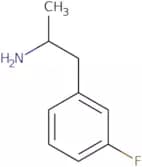
CAS:<p>Please enquire for more information about (2-indol-3-ylethyl)((2-(trifluoromethyl)phenyl)sulfonyl)amine including the price, delivery time and more detailed product information at the technical inquiry form on this page</p>Formula:C17H15F3N2O2SPurity:Min. 95%Color and Shape:PowderMolecular weight:368.38 g/mol1-(3-Fluorophenyl)propan-2-amine
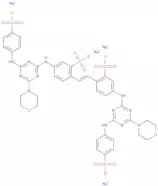
CAS:Controlled Product<p>3-Fluorophenylpropan-2-amine (3FPPA) is a synthetic, nonselective dopamine and serotonin reuptake inhibitor. 3FPPA has been shown to inhibit the growth of cancer cells in vitro, and enhances the release of growth factors from nerve endings in rat brain slices. 3FPPA can be used as a test compound for investigating the effects of psychostimulants on neural cell division.<br>3FPPA binds to fatty acids and can be used as a medication to treat obesity or cancer. 3FPPA is not selective for either dopamine or serotonin, but is an analog of both amines.</p>Formula:C9H12FNPurity:Min. 95%Molecular weight:153.2 g/molFluorescent Brightener 210, Technical grade
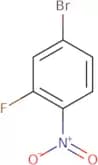
CAS:<p>Fluorescent Brightener 210 is a water-soluble, non-toxic, non-irritating, and non-sensitizing penetrant that fluoresces under ultraviolet light. It is used in the textile industry as a dye for cotton and wool and to increase the brightness of colors on paper. Fluorescent Brightener 210 is also used as an effective drug for mycoses, such as tinea pedis and ringworm of the body. This drug can be applied topically or taken by mouth. Fluorescent Brightener 210 has been shown to be effective against tinea pedis when irradiated with ultraviolet light at a dosage of 2 milligrams per square centimeter of skin for 8 hours per day for 4 weeks. The drug must be applied twice daily to the affected area during this time period. When used orally, Fluorescent Brightener 210 has been shown to reduce symptoms of tinea corporis and tinea cruris within 3 days of treatment in most</p>Formula:C40H36N12O14S4Na4Color and Shape:Clear LiquidMolecular weight:1,129 g/mol4-Bromo-2-fluoro-1-nitrobenzene
CAS:<p>4-Bromo-2-fluoro-1-nitrobenzene is a molecule that has anticancer activity. It inhibits cancer cells, but does not affect normal cells. The mechanism of action of 4-bromo-2-fluoro-1-nitrobenzene is not yet known. However, it may be due to its ability to react with the prenyl group in the cell membrane, which is important for cell growth and division. The human liver metabolizes 4-bromo-2-fluoro-1-nitrobenzene by kinetic and thermodynamic properties. This drug also has pharmacokinetic properties and can be detected in the bloodstream, urine, and feces for up to two weeks after administration. Fatty acid metabolism can cause drug reactions when taken with 4bromo2furo1nitrobenzene. Protein–protein interactions can also lead to side effects when taking this drug, such as enzyme inhibition</p>Formula:C6H3BrFNO2Purity:Min. 95%Color and Shape:PowderMolecular weight:220 g/molCCT 241533
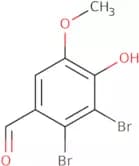
CAS:<p>CCT 241533 is a Chinese herb that has been shown to have anti-cancer properties. It has been demonstrated to inhibit the growth of HL-60 cells and induce apoptosis in these cells. CCT 241533 also inhibits the proliferation of epidermal growth factor (EGF) and induces cell death in response to radiation. This drug also binds to toll-like receptors, which are proteins on the surface of cells that detect pathogens and initiate an immune response. CCT 241533 has been shown to inhibit polymerase chain reactions by competitive inhibition or by binding to DNA, preventing transcription or replication. CCT 241533 may be useful for the treatment of infectious diseases, such as tuberculosis, because it can bind to bacterial 16S ribosomal RNA and inhibit protein synthesis, leading to cell death by inhibiting the production of proteins vital for cell division.<br>CCT 241533 has been shown in animal studies to be effective against cervical cancer due to its ability to bind</p>Formula:C23H27FN4O4Purity:Min. 95%Molecular weight:442.48 g/mol5,6-Dibromovanillin
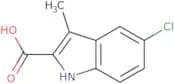
CAS:<p>5,6-Dibromovanillin is a chemical compound that has been shown to have both anti-cancer and anti-inflammatory properties. This drug is metabolized via cytochrome P450 enzymes into 5,6-dibromovanillyl alcohol and 5,6-dibromovanillin acid. The metabolic pathways for this compound are similar to those of estradiol and other estrogens. The effects of 5,6-dibromovanillin on cancer cells are highly dependent on the expression levels of cytochrome P450 enzymes. This drug may be used as a treatment for breast cancer or prostate cancer.</p>Formula:C8H6Br2O3Color and Shape:PowderMolecular weight:309.94 g/mol5-Chloro-3-methyl-1H-indole-2-carboxylic acid
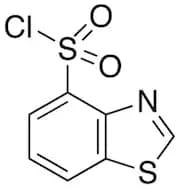
CAS:<p>5-Chloro-3-methyl-1H-indole-2-carboxylic acid (5CMC) is a versatile building block and research chemical. It has been shown to be an effective intermediate for the synthesis of many complex compounds with interesting pharmacological properties. 5CMC is also used as a speciality chemical in the production of pharmaceuticals, agrochemicals, and other chemicals. The compound is a fine chemical that can be used in various research and industrial applications.</p>Formula:C10H8ClNO2Purity:Min. 95 Area-%Color and Shape:PowderMolecular weight:209.63 g/mol1,3-Benzothiazole-4-sulfonyl Chloride
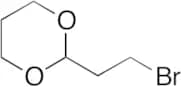
CAS:Controlled Product<p>Applications 1,3-Benzothiazole-4-sulfonyl Chloride (cas# 149575-65-5) is a compound useful in organic synthesis.<br> Not a dangerous good if item is equal to or less than 1g/ml and there is less than 100g/ml in the package<br></p>Formula:C7H4ClNO2S2Color and Shape:NeatMolecular weight:233.702-(2-Bromoethyl)-1,3-dioxane
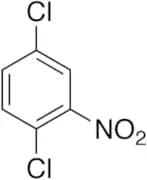
CAS:Controlled Product<p>Applications 2-(2-Bromoethyl)-1,3-dioxane, is an building block used for the synthesis of various pharmaceutical compounds such as Oxaflumazine (O758550), an Antipsychotic. It provides a useful means of introducing a masked ß-formylethyl group.<br>References Marrero-Ponce, Y., et al.: Euro. J. Med. Chem., 46 (12), 5736 (2011); J. Org. Chem., 41, 560 (1976);<br></p>Formula:C6H11BrO2Color and Shape:NeatMolecular weight:195.052,5-Dichloronitrobenzene
CAS:Controlled Product<p>Applications 2,5-Dichloronitrobenzene is a reagent used in the synthesis of antitrypanosomal, antileishmanial and antimalarial agents. Also it is used in the synthesis of lysophosphatidic acid acyltransferase-β inhibitors.<br>References Parveen, S. et al.: J. Med. Chem., 48, 8087 (2005); Gong, B. et al.: Bioorg. Med. Chem. Lett., 14, 1455 (2004);<br></p>Formula:C6H3Cl2NO2Color and Shape:NeatMolecular weight:192.001-Iodobutane
CAS:Controlled Product<p>Applications 1-Iodobutane is one of the most universally useful substrates in the assessment of haloalkene dehalogenase activity.<br> Not a dangerous good if item is equal to or less than 1g/ml and there is less than 100g/ml in the package<br>References Koudelakova, T., et al.: Biochem. J., 435, 345 (2011)<br></p>Formula:C4H9IColor and Shape:NeatMolecular weight:184.022-[4-Chloro-3-(chlorosulfonyl)benzoyl]-benzoic Acid
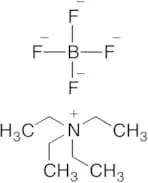
CAS:Controlled Product<p>Applications 2-[4-Chloro-3-(chlorosulfonyl)benzoyl]-benzoic Acid is a useful synthetic intermediate.<br></p>Formula:C14H8Cl2O5SColor and Shape:NeatMolecular weight:359.18Tetraethylammonium Tetrafluoroborate
CAS:Controlled Product<p>Applications Tetraethylammonium Tetrafluoroborate is used in the preparation of some organic salts of fluoboric acids.<br>References Wilke-D., et al.: Ber. Dtsch Chem. Ges.; 60B, 115 (1927)<br></p>Formula:C8H20BF4N3Color and Shape:NeatMolecular weight:217.061,1,2,2,3,3-Hexafluoro-1-(trifluoromethoxy)-3-[(1,2,2-trifluorovinyl)oxy]propane
CAS:Controlled Product<p>Applications 1,1,2,2,3,3-Hexafluoro-1-(trifluoromethoxy)-3-[(1,2,2-trifluorovinyl)oxy]propane is used in the synthesis of fluorinated copolymers.<br> Not a dangerous good if item is equal to or less than 1g/ml and there is less than 100g/ml in the package<br>References 3M Innovative Properties Company, USA, Ger. Gebrauchsmusterschrift 19pp. Patent 2017 CODEN:GGXXFR;<br></p>Formula:C6F12O2Color and Shape:NeatMolecular weight:332.044

![4-Amino-5-chloro-2,3-dihydro-N-[1-(3-methoxypropyl)-4-piperidinyl]-7-benzofurancarboxamide](/_next/image/?url=https%3A%2Fstatic.cymitquimica.com%2Fproducts%2F3D%2Fthumb-webp%2FFA27248.webp&w=3840&q=75)





![2-[4-Chloro-3-(chlorosulfonyl)benzoyl]-benzoic Acid](/_next/image/?url=https%3A%2Fstatic.cymitquimica.com%2Fproducts%2FTR%2Fthumb-webp%2FC364350.webp&w=3840&q=75)
![1,1,2,2,3,3-Hexafluoro-1-(trifluoromethoxy)-3-[(1,2,2-trifluorovinyl)oxy]propane](/_next/image/?url=https%3A%2Fstatic.cymitquimica.com%2Fproducts%2FTR%2Fthumb-webp%2FH294975.webp&w=3840&q=75)