Organic Halides
In this category, you can find organic molecules containing one or more halogen atoms in their structure. These organic halides include brominated, iodinated, chlorinated, and cyclic halide compounds. Organic halides are widely used in organic synthesis, pharmaceuticals, agrochemicals, and materials science due to their reactivity and ability to undergo a variety of chemical transformations. At CymitQuimica, we offer a comprehensive selection of high-quality organic halides to support your research and industrial applications, ensuring reliable and effective performance in your synthetic and analytical projects.
Subcategories of "Organic Halides"
Found 20440 products of "Organic Halides"
Sort by
Purity (%)
0
100
|
0
|
50
|
90
|
95
|
100
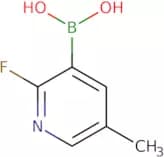
2-Fluoro-5-methylpyridine-3-boronic acid
CAS:2-Fluoro-5-methylpyridine-3-boronic acid is a high quality chemical with CAS No. 1072952-45-4 that is a useful building block for the synthesis of complex compounds and speciality chemicals. 2-Fluoro-5-methylpyridine-3-boronic acid is also a versatile building block that can be used in organic reactions as a reaction component for the synthesis of speciality chemicals and other reagents. It can also be used to make fluoroquinolones and related pharmaceuticals, which are used to treat bacterial infections. This compound has many uses in research, including being a valuable scaffold for the synthesis of new drugs.Formula:C6H7BFNO2Purity:Min. 95%Color and Shape:White PowderMolecular weight:154.93 g/molIsodesmosine chloride
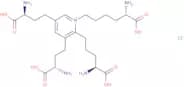
CAS:<p>Isodesmosine chloride is an amino acid derivative, which is a naturally occurring component found in the elastin protein. This organic compound is originally sourced from the structural protein elastin, prevalent in connective tissues such as skin, lungs, and blood vessels. It plays a critical role in the cross-linking and stabilization of elastin fibers, contributing to the elastic properties of these tissues.</p>Formula:C24H40ClN5O8Purity:Min. 95%Molecular weight:562.06 g/mol4-Amino-3-chloro-2,5,6-trifluoropyridine
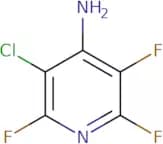
CAS:4-Amino-3-chloro-2,5,6-trifluoropyridine is a reactive and unstable chemical compound that belongs to the group of anilines. It is used in the synthesis of hypsochromic dyes. The compound has been shown to interact with other molecules, such as chemo-, supramolecular-, and synthetically-. The fluorophore has been stabilized by a supramolecular approach. Chemically induced fluorescence properties have been observed for 4-amino-3-chloro-2,5,6-trifluoropyridine.Formula:C5H2ClF3N2Purity:Min. 95%Color and Shape:SolidMolecular weight:182.53 g/mol2-Fluorobenzophenone
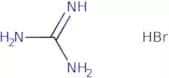
CAS:<p>2-Fluorobenzophenone is a carbonyl group that is used as a sterilant. 2-Fluorobenzophenone is a precursor to 4-fluorobenzophenone, which can be synthesized by reacting with chlorine gas, chloromethyl ether, or polychlorinated biphenyls. 2-Fluorobenzophenone has been shown to be chemically stable and resistant to chemical ionization and thermal decomposition. It has been used as a photoinitiator for the polymerization of oxetane resins. 2-Fluorobenzophenones are also useful for the synthesis of functional groups such as oxetanes, epoxides, and dioxetanes. These compounds are typically found in polymers with an oxetane backbone.</p>Formula:C13H9FOPurity:Min. 95%Molecular weight:200.21 g/molGuanidine hydrobromide
CAS:<p>Guanidine hydrobromide is a chemical compound that is used in wastewater treatment. It has been shown to interact with human serum and form hydrogen bonding interactions. Guanidine hydrobromide has also been shown to react with metal hydroxides to form guanidinium ions. The guanidinium ions have been shown to be able to bind to the mucin gene, which is an important gene for epithelial cells. This binding can lead to cell death and toxicity in humans. Guanidine hydrobromide has also been shown to react with nitrate and produce toxic products such as cyanogen bromide. The reaction mechanism of guanidine hydrobromide is currently being studied by titration calorimetry, a technique that measures heat released during chemical reactions by observing changes in temperature.</p>Formula:CH6BrN3Purity:Min. 95%Color and Shape:White PowderMolecular weight:139.98 g/mol2-Chloro-4-hydroxypyrimidine
CAS:<p>2-Chloro-4-hydroxypyrimidine is a reactive heterocycle that belongs to the group of quinazolines. It can be synthesized by reacting pyrimidine with thiophosgene and thiol in an analogous reaction, or through the substitution of amino acids with isothiocyanate. Analogues of this compound exist that have been shown to be chemoselective for the replacement of 2-chloro-4-hydroxypyrimidine residues in proteins.</p>Formula:C4H3ClN2OPurity:Min. 95%Color and Shape:White PowderMolecular weight:130.53 g/mol3-Iodopentafluoropropene-1
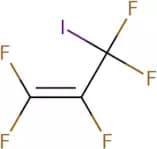
CAS:<p>3-Iodopentafluoropropene-1 is a monomer that can be used in the synthesis of polymers. It is synthesized by an asymmetric synthesis from silicon, terminal alkynes, and hydrochloric acid. 3-Iodopentafluoropropene-1 also reacts with epoxides to form polyethers. This reaction occurs in supercritical carbon dioxide at high pressures (200 bar). The chlorine atom introduced in this reaction is removed by zinc powder to yield a functional group. 3-Iodopentafluoropropene-1 can also react with hydrocarbon ligands to form a variety of products. 3-Iodopentafluoropropene-1 can be reacted with carbon tetrachloride to yield chlorofluorocarbons, which are widely used as propellants or refrigerants.</p>Formula:C3F5IPurity:Min. 95%Color and Shape:Clear LiquidMolecular weight:257.93 g/mol2-Amino-5-fluorobenzamide
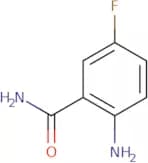
CAS:<p>2-Amino-5-fluorobenzamide (2AFB) is a compound that has been shown to have neurotoxic properties. 2AFB is a ring-opening agent, which means it can open the six-membered ring of aromatic compounds such as benzene or pyridine. 2AFB also has affinity for metal ions and therefore can be used in magnetic separations. The reaction system of 2AFB includes an enzyme, pentylenetetrazole (PTZ), that catalyzes the reaction between 2AFB and its substrate, 4-nitrophenol (4NP). This reaction produces free radicals that react with oxygen to produce peroxides. These peroxides are then detected by a chemiluminescence assay. In this way, the amount of 2AFB and 4NP can be measured quantitatively.<br>2AFB also has antioxidant properties, which may be due to its ability to scavenge free radicals from</p>Formula:C7H7FN2OPurity:Min. 95%Color and Shape:PowderMolecular weight:154.14 g/molBupivacaine hydrochloride
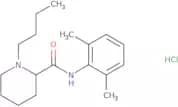
CAS:<p>Sodium channel blocker, targets channel intracellular domain</p>Formula:C18H28N2O·HClPurity:Min. 98 Area-%Color and Shape:White PowderMolecular weight:324.89 g/mol5-Bromoisophthalic acid
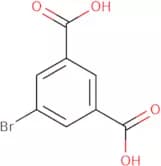
CAS:<p>5-Bromoisophthalic acid is a chemical compound that belongs to the carboxylate group and has a molecular weight of 155.03. It is also known as 5-bromo-2,4-diphenyl ether and has a chemical formula of C6H4BrO2. This compound exhibits peroxidase-like activity and has been shown to be more stable than phenol in acidic solutions. The dipole moment of 5-bromoisophthalic acid is 0.7 D, indicating that it is an aromatic compound with a nonpolar region on one side and a polar region on the other side. 5-Bromoisophthalic acid can form hydrogen bonds with water molecules and other compounds, which affects its properties such as fluorescence properties.</p>Formula:C8H5BrO4Purity:Min. 95%Color and Shape:White PowderMolecular weight:245.03 g/mol2-Chloro-4-trifluoromethylbenzonitrile
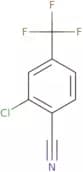
CAS:2-Chloro-4-trifluoromethylbenzonitrile is a fine chemical that belongs to the category of research chemicals, reagents and speciality chemicals. It is a versatile building block which can be used as a reaction component or useful intermediate in the synthesis of complex compounds. This compound also has many different uses, including as a useful scaffold for organic molecules.Formula:C8H3ClF3NPurity:Min. 95%Color and Shape:LiquidMolecular weight:205.57 g/mol4-Chlorosalicylic acid
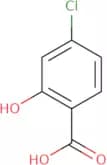
CAS:4-Chlorosalicylic acid is an inhibitor of bacterial growth that belongs to the group of phenolic compounds. It has been shown to inhibit the growth of bacteria in cell culture and be effective against a wide range of species, including Escherichia coli and Staphylococcus aureus. 4-Chlorosalicylic acid inhibits bacterial enzyme activities, such as 5-nitrosalicylic acid hydroxylase and diphenolase activities. This compound has also been shown to have anti-inflammatory properties, which may be due to its ability to inhibit prostaglandin synthesis. 4-Chlorosalicylic acid is an active intermediate in the production of other drugs such as 2,4-dichloroacetophenone and 2,5-dichlorobenzonitrile.Formula:C7H5ClO3Purity:Min. 95%Color and Shape:PowderMolecular weight:172.57 g/mol4-Bromo-2-methoxytoluene
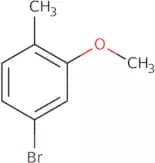
CAS:<p>4-Bromo-2-methoxytoluene is a lactone compound that has been shown to have bioactivities. It is also known as methoxy, an aromatic organic compound with one methyl substituent and two hydroxyl substituents on a benzene ring. 4-Bromo-2-methoxytoluene is found in the natural products cephalotaxaceae and cephalotaxus. This compound can be synthesized by reacting diisopropylamine with formylation of bromobenzene in the presence of acetic acid followed by treatment with sodium acetate. The chemical structure forms a skeleton containing four carbon atoms and six hydrogen atoms, which are arranged in three rings (a cyclic system). This compound exists as two isomers, namely cis and trans.</p>Formula:C8H9BrOPurity:Min. 95%Color and Shape:PowderMolecular weight:201.06 g/mol1-Octyl-3-methylimidazolium hexafluorophosphate
CAS:1-Octyl-3-methylimidazolium hexafluorophosphate is a polymerase chain reaction (PCR) reagent that has been widely used in DNA amplification. It has been shown to have a low thermal expansion coefficient, which makes it an ideal material for the preparation of PCR tubes. 1-Octyl-3-methylimidazolium hexafluorophosphate is also used in the analysis of fatty acids and can be used to determine the constant pressure volume at which these molecules are soluble. The analytical method is based on hydrogen bonding interactions, enzyme activities, and plasma mass spectrometry. This extractant can also be used to remove excess water from samples prior to extraction by using electrophoresis or other methods.Formula:C12H23F6N2PPurity:Min. 95%Color and Shape:Colorless Clear LiquidMolecular weight:340.29 g/mol4-Chloro-1H-pyrazole-3-carboxaldehyde
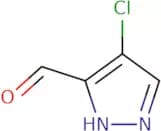
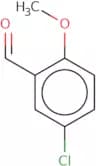
CAS:4-Chloro-1H-pyrazole-3-carboxaldehyde is a fine chemical that is used as a building block in research and development. The CAS number is 623570-54-7. This compound has been found to be useful in the synthesis of complex compounds and versatile scaffolds.Formula:C4H3ClN2OPurity:Min. 95%Color and Shape:SolidMolecular weight:130.53 g/mol5-Chloro-2-methoxybenzaldehyde
CAS:5-Chloro-2-methoxybenzaldehyde is a potent inhibitor of the bacterial enzyme acetylcholinesterase. It has been shown to have an interaction with biomolecules, such as chalcones, and can be used in the manufacture of antibacterial agents. 5-Chloro-2-methoxybenzaldehyde has been found to have potent inhibitory activity against organocatalytic aldehydes and atypical aldehydes and can be used as an active ingredient in the synthesis of novel compounds with antibacterial activity.Formula:C8H7ClO2Purity:Min. 95%Color and Shape:PowderMolecular weight:170.59 g/mol4-(Aminomethyl)-3-phenylbutyric acid hydrochloride
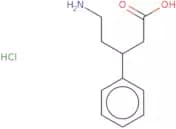
CAS:<p>4-(Aminomethyl)-3-phenylbutyric acid hydrochloride is a reagent that can be used as a building block in synthesizing new chemical compounds. It is also an intermediate for the synthesis of 4-(aminomethyl)benzoic acid, which is useful for producing pharmaceuticals, pesticides, and other agrochemicals. 4-(Aminomethyl)-3-phenylbutyric acid hydrochloride has a CAS number of 860252-34-2 and can be used in reactions with a variety of reagents to produce fine chemicals, research chemicals, and speciality chemicals.</p>Formula:C11H16ClNO2Purity:Min. 95%Molecular weight:229.7 g/mol3-Bromophthalide
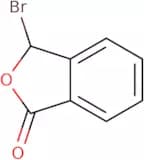
CAS:3-Bromophthalide is a potent antibacterial agent that blocks the synthesis of fatty acids, leading to bacterial cell death. It can be used to treat metabolic disorders and heart disease. 3-Bromophthalide has an antibacterial action against many Gram-positive bacteria, including methicillin-resistant Staphylococcus aureus (MRSA) and Clostridium perfringens, but not against acid-fast bacteria such as Mycobacterium tuberculosis or Mycobacterium avium complex. The mechanism of antibacterial activity is due to its ability to inhibit the synthesis of fatty acids by blocking enzymes in the fatty acid biosynthetic pathway. 3-Bromophthalide also has antiinflammatory effects, which may be due to its ability to inhibit prostaglandin synthesis.Formula:C8H5BrO2Purity:Min. 95%Molecular weight:213.03 g/mol3-Bromobenzotrifluoride
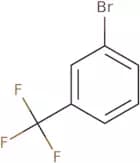
CAS:3-Bromobenzotrifluoride is a chemical reagent that is used to synthesize aryl halides. It can be used in the cross-coupling reaction of an aryl bromide with an organopalladium complex to form an aryl triflate. 3-Bromobenzotrifluoride has been shown to be stable when heated, making it a good choice for synthesis reactions. The use of 3-bromobenzotrifluoride and other halides in chemical reactions was first demonstrated by Alder Wright in 1843. 3-Bromobenzotrifluoride can be used to synthesize isoxazolidines from diazonium salts and isoxazolidines from dehydrating agents such as phosphorus pentoxide. Isolation yields are also high, with chloride being the most common impurity found in the product.Formula:C7H4BrF3Purity:Min. 95%Color and Shape:Clear LiquidMolecular weight:225.01 g/mol2-(Chloromethyl)nicotinonitrile
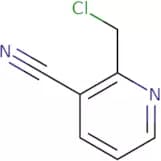
CAS:<p>2-(Chloromethyl)nicotinonitrile is a chlorinated organic compound that is used as a reagent, building block, and intermediate in organic synthesis. It is also a useful scaffold for drug design. 2-(Chloromethyl)nicotinonitrile has been shown to be an effective intermediate for the synthesis of complex compounds, such as antibiotics and pharmaceuticals. This chemical is used in the production of fine chemicals, such as pesticides and cosmetics. CAS No. 848774-96-9</p>Formula:C7H5ClN2Purity:Min. 95%Color and Shape:Yellow PowderMolecular weight:152.58 g/mol