Organic Halides
In this category, you can find organic molecules containing one or more halogen atoms in their structure. These organic halides include brominated, iodinated, chlorinated, and cyclic halide compounds. Organic halides are widely used in organic synthesis, pharmaceuticals, agrochemicals, and materials science due to their reactivity and ability to undergo a variety of chemical transformations. At CymitQuimica, we offer a comprehensive selection of high-quality organic halides to support your research and industrial applications, ensuring reliable and effective performance in your synthetic and analytical projects.
Subcategories of "Organic Halides"
Found 20440 products of "Organic Halides"
Sort by
Purity (%)
0
100
|
0
|
50
|
90
|
95
|
100
3-(Difluoromethoxy)benzyl amine
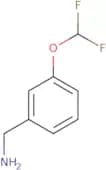
CAS:<p>3-(Difluoromethoxy)benzyl amine is a high-quality reagent that is used as an intermediate in the synthesis of complex compounds. 3-(Difluoromethoxy)benzyl amine is also a useful building block for the synthesis of speciality chemicals and research chemicals. This compound can be used as a versatile building block, which can be used to synthesize different functional groups. 3-(Difluoromethoxy)benzyl amine is soluble in many organic solvents and has a boiling point of 193 °C.</p>Formula:C8H9F2NOPurity:Min. 95%Molecular weight:173.16 g/mol2,6-Diethyl-4-phenyl-1-propylpyridinium tetrafluoroborate
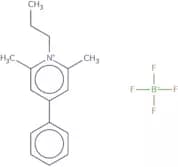
CAS:2,6-Diethyl-4-phenyl-1-propylpyridinium tetrafluoroborate is a building block and a versatile intermediate in organic synthesis. It can be used as a reactant in the preparation of fine chemicals and pharmaceuticals. 2,6-Diethyl-4-phenyl-1-propylpyridinium tetrafluoroborate has been shown to produce high quality reaction products with good yield.Formula:C16H20N·BF4Purity:Min. 95%Molecular weight:313.14 g/mol4-[(4-Chlorobenzyl)oxy]benzoic acid
CAS:<p>4-[(4-Chlorobenzyl)oxy]benzoic acid is a methyl ester of 4-chlorobenzoic acid, which is an organic compound. It is a herbicide that has been shown to be effective against weeds in rice fields. The herbicidal activity of 4-[(4-Chlorobenzyl)oxy]benzoic acid may be due to the inhibition of the plant enzyme dehydrohalogenating, which plays an important role in the synthesis of chlorophyll and other pigments. The herbicidal properties are also likely due to its ability to inhibit the enzyme carbonate, which is involved in the biosynthesis of fatty acids and sterols.</p>Formula:C14H11ClO3Purity:Min. 95%Color and Shape:PowderMolecular weight:262.69 g/mol2-Bromo-N-(4-methoxyphenyl)-N-methylbenzamide
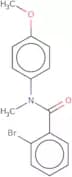
CAS:2-Bromo-N-(4-methoxyphenyl)-N-methylbenzamide is a fine chemical that is used in the synthesis of other chemicals. It is also a reagent and a speciality chemical, which can be used as a reaction component or as an intermediate in the synthesis of other compounds. 2-Bromo-N-(4-methoxyphenyl)-N-methylbenzamide can be used to make a wide variety of compounds, including polymers and pharmaceuticals. This compound has been shown to be useful for the synthesis of polycarbonates, polyurethanes, polyesters, polyamides, and polystyrenes.Formula:C15H14BrNO2Purity:Min. 95%Molecular weight:320.18 g/mol4-Fluoro-3-nitrophenylacetic acid
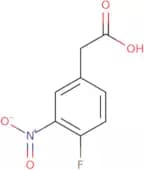
CAS:4-Fluoro-3-nitrophenylacetic acid is a chiral monomer that can be used to synthesize diphenyl ethers. The reaction requires a carbamic acid as the acid catalyst and a nucleophilic reagent, such as an amine. 4-Fluoro-3-nitrophenylacetic acid has been shown to have anti-cancer properties in vitro and in vivo. 4-Fluoro-3-nitrophenylacetic acid may also inhibit the synthesis of dihydroisoquinolines, which are important for the function of DNA polymerase. There are two strategies for synthesizing this compound: one is based on the condensation of two molecules of phenylacetaldehyde in the presence of an acid catalyst; the other employs a Lewis acid catalyst with a pyridine nucleophile.Formula:C8H6FNO4Purity:Min. 95%Color and Shape:SolidMolecular weight:199.14 g/mol2-(Chloromethyl)nicotinonitrile
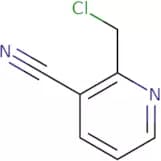
CAS:<p>2-(Chloromethyl)nicotinonitrile is a chlorinated organic compound that is used as a reagent, building block, and intermediate in organic synthesis. It is also a useful scaffold for drug design. 2-(Chloromethyl)nicotinonitrile has been shown to be an effective intermediate for the synthesis of complex compounds, such as antibiotics and pharmaceuticals. This chemical is used in the production of fine chemicals, such as pesticides and cosmetics. CAS No. 848774-96-9</p>Formula:C7H5ClN2Purity:Min. 95%Color and Shape:Yellow PowderMolecular weight:152.58 g/mol1-Chloro-1-cyclopentene
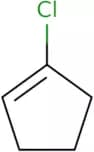
CAS:<p>1-Chloro-1-cyclopentene is a chlorine atom that belongs to the group of halides. It can be prepared by reacting 1,1-dichloroethane with n-butyl lithium and potassium t-butoxide in amide solvent at low temperature. The reaction product of 1-chloro-1-cyclopentene is a nucleophilic reagent for the formation of esters or amides. Chlorine atoms are also used as catalysts for many reactions involving organic compounds. They are able to react with electron rich molecules such as alkenes, alkynes, and even aromatic rings. This reaction proceeds via addition of the chlorine atom to one of the bonds on the molecule, followed by nucleophilic attack on the other bond. The chlorination process is reversible, which makes it possible to use the same molecule for both steps in an overall chemical process.</p>Formula:C5H7ClPurity:Min. 95%Color and Shape:Clear LiquidMolecular weight:102.56 g/mol2-(2,4-Dichlorophenyl)-1,3-benzoxazol-5-amine
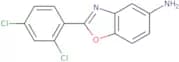
CAS:<p>2-(2,4-Dichlorophenyl)-1,3-benzoxazol-5-amine is a versatile building block that can be used in a wide range of chemical reactions. The compound is a reagent and speciality chemical with CAS No. 293737-83-4. It is an intermediate in the synthesis of pharmaceuticals and pesticides, as well as a useful scaffold for the synthesis of other compounds. 2-(2,4-Dichlorophenyl)-1,3-benzoxazol-5-amine has been shown to have high quality and can be used as a reaction component or building block in research labs.</p>Formula:C13H8Cl2N2OPurity:Min. 95%Color and Shape:PowderMolecular weight:279.12 g/mol2'-Fluoro-4'-hydroxyacetophenone
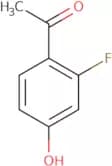
CAS:<p>2'-Fluoro-4'-hydroxyacetophenone is a glycosylated molecule that is used in phase transfer catalysis. It is a glycoside that can undergo the glycosylation reaction and can be used as a phase transfer reagent. 2'-Fluoro-4'-hydroxyacetophenone has been studied for its potential use in the synthesis of xylosides and selenadiazoles. In addition, it has shown anti-inflammatory properties, which may be due to its inhibition of prostaglandin synthesis.</p>Formula:C8H7FO2Purity:Min. 95%Molecular weight:154.14 g/molMethyl 4-bromopicolinate
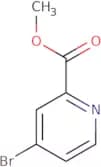
CAS:Methyl 4-bromopicolinate is a high quality, reagent and complex compound that is useful as an intermediate for the synthesis of fine chemicals. It is a useful scaffold for the synthesis of other compounds and has been used as a building block for research chemicals. Methyl 4-bromopicolinate is also versatile, being used as a reaction component in the synthesis of pharmaceuticals, agrochemicals, and other compounds.Formula:C7H6BrNO2Purity:Min. 95%Color and Shape:White PowderMolecular weight:216.03 g/molLithium fluoride
CAS:<p>Lithium fluoride (LiF) is a chemical compound that has high chemical stability and kinetic energy. It can be used as a laser medium or to generate light in the infrared region. Lithium fluoride is used to produce fluorine gas by reaction with hydrochloric acid, which is then reacted with hydrogen fluoride to produce hydrogen trifluoride. Lithium fluoride is also used for biological purposes, such as the treatment of hyperthyroidism. In addition, lithium fluoride can be used to treat syphilis and other sexually transmitted diseases because it has an inhibitory effect on bacterial growth. Lithium fluoride also inhibits erythrocyte proliferation by inhibiting DNA synthesis and protein synthesis in vivo.</p>Formula:LiFPurity:Min. 95%Color and Shape:PowderMolecular weight:25.94 g/mol1-(4-Chlorobenzyl)piperazine
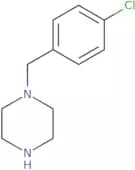
CAS:Controlled Product<p>1-(4-Chlorobenzyl)piperazine is an amine that belongs to the class of hydrogen-bond acid amides. It has a piperazine structure and is structurally related to other substances, such as dopamine. 1-(4-Chlorobenzyl)piperazine has been shown to inhibit spontaneous emission in animals and inhibit spontaneous activity at d4 receptors. This drug also inhibits the binding of agonists to the d4 receptor subtype, without affecting other subtypes.</p>Formula:C11H15ClN2Purity:Min. 98 Area-%Color and Shape:Colorless Clear LiquidMolecular weight:210.7 g/mol3-(2-Diisopropylaminoethyl)indole hydrochloride
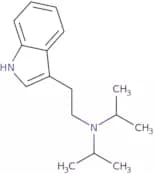
CAS:Controlled Product<p>3-(2-Diisopropylaminoethyl)indole hydrochloride is an inhibitor of the enzyme monoamine oxidase (MAO). MAO is responsible for the degradation of monoamines such as serotonin, dopamine, and norepinephrine. 3-(2-Diisopropylaminoethyl)indole hydrochloride inhibits these enzymes in order to increase the levels of these neurotransmitters in the brain. These effects are observed with a sectional study on the host plant species. 3-(2-Diisopropylaminoethyl)indole hydrochloride has been shown to have low potency for inhibiting 5-HT1A and 5-HT2A receptors in rat studies, but it is not active against 5-HT2C receptors. This drug was used to measure urinary serotonin and dopamine levels in human urine samples.</p>Formula:C16H25ClN2Purity:Min. 95%Molecular weight:280.84 g/mol3-Hydroxyanthranilic acid Hydrochloride
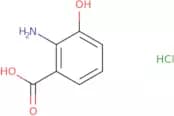
CAS:<p>3-Hydroxyanthranilic acid hydrochloride is a prodrug of 3-hydroxyanthranilic acid. It is metabolized by the liver to 3-hydroxyanthranilic acid, which inhibits the synthesis of proteins and blocks the formation of bacterial cell walls. The carboxyl group on this drug attaches to a hydrogen atom on the phenol group and forms a hydrogen bond with a protonated chloride atom to form an ionic bond. This drug also has an amino group that can donate a proton to become positively charged.</p>Formula:C7H7NO3·ClHPurity:Min. 95%Molecular weight:189.6 g/mol4-Chlorostyrene - stabilised with 4-tert-butylcatechol
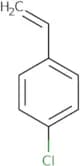
CAS:4-Chlorostyrene is a chlorinated organic compound. This chemical has been shown to bind to the hydroxyl group of polyhydroxy compounds, such as poly(vinyl alcohol), with a frequency shift of 1.0 cm-1 in the infrared spectrum. The ph optimum for this reaction is between 4 and 5. When exposed to cationic polymerization, chlorine atoms are incorporated into the polymer chain and the resultant product is a cationic polymer that has an isolated yield of 82%. In order for this reaction to be successful, both 4-chlorostyrene and 4-tert-butylcatechol must be present. The reaction mechanism is believed to involve diazonium salt formation followed by activation energies of 20 kcal/mol and 25 kcal/mol.Formula:C8H7ClPurity:Min. 95%Color and Shape:Colorless Clear LiquidMolecular weight:138.59 g/mol4-Bromo-3,5-bis(trifluoromethyl)aniline
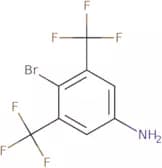
CAS:<p>4-Bromo-3,5-bis(trifluoromethyl)aniline is a chemical compound that belongs to the group of brominated compounds. It has high adsorption capacity for potassium and can be used as an adsorbent for gasification. 4-Bromo-3,5-bis(trifluoromethyl)aniline has been activated by carbons and catalysed with potassium to form an ionic complex with the carboxylic acid site on the surface of activated carbon. This process is used for purifying water or air from pollutants.</p>Formula:C8H4BrF6NPurity:Min. 95%Color and Shape:PowderMolecular weight:308.02 g/mol1-(4-Bromophenyl)piperazine hydrochloride
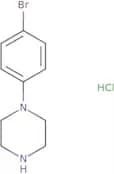
CAS:Controlled Product1-(4-Bromophenyl)piperazine hydrochloride is a linker that binds to serotonin receptors. It has been shown to inhibit the reuptake of serotonin, which may lead to an increase in the neurotransmitter's level in the synaptic cleft. The compound also inhibits the production of 5-hydroxytryptamine and other monoamine neurotransmitters, which can lead to anaphylactic reactions in humans.Formula:C10H14BrClN2Purity:Min. 95%Molecular weight:277.59 g/mol2-(4-Methoxyphenyl)-4,6-bis(trichloromethyl)-1,3,5-triazine
CAS:<p>2-(4-Methoxyphenyl)-4,6-bis(trichloromethyl)-1,3,5-triazine is a chemical compound that belongs to the class of cyanine dyes. It is used as a developer in photopolymerization and as an electron donor in electron-sensitive materials. 2-(4-Methoxyphenyl)-4,6-bis(trichloromethyl)-1,3,5-triazine has a viscosity of 0.56 Pa·s at 25°C and is sensitive to light with wavelengths ranging from 300 to 400 nm. This dye also has a yield of 1.0 g/g and a phenolic content of 0.2%.</p>Formula:C12H7Cl6N3OPurity:Min. 95%Color and Shape:White PowderMolecular weight:421.92 g/mol1-(3-(Trifluoromethoxy)phenyl)-2-nitroethene
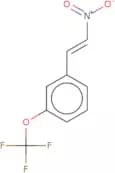
CAS:<p>1-(3-Trifluoromethoxy)phenyl)-2-nitroethene is a fluorinated aromatic compound that can be used as a building block for synthesis of pharmaceuticals, research chemicals, and other specialty chemicals. It is an intermediate that can be used in the production of other compounds. This compound may be used in pharmaceuticals to treat bacterial infections and inflammatory diseases. 1-(3-Trifluoromethoxy)phenyl)-2-nitroethene may also be utilized as a reaction component for synthesizing other organic compounds. It is soluble in solvents such as benzene, ether, chloroform, and acetone.</p>Formula:C9H6F3NO3Purity:Min. 95%Molecular weight:233.14 g/molH-Chg-OMe hydrochloride
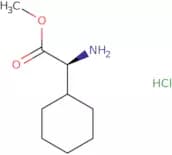
CAS:H-Chg-OMe hydrochloride is a fine chemical and reagent that is used in the synthesis of complex organic compounds and pharmaceuticals. This compound can be used as a versatile building block for a variety of reactions, such as reductive amination, reductive amination, reductive amination, and reductive amination. H-Chg-OMe hydrochloride has been shown to react with primary amines to form secondary amines. It has also been shown to react with alcohols to form ethers. CAS No. 14328-63-3Formula:C9H18ClNO2Purity:Min. 95%Color and Shape:White/Off-White SolidMolecular weight:207.7 g/mol

![4-[(4-Chlorobenzyl)oxy]benzoic acid](/_next/image/?url=https%3A%2Fstatic.cymitquimica.com%2Fproducts%2F3D%2Fthumb-webp%2FFC119049.webp&w=3840&q=75)