Organic Halides
Subcategories of "Organic Halides"
Found 20442 products of "Organic Halides"
Chloroacetic Acid-13C2
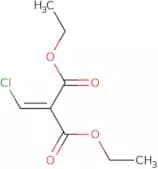
CAS:Please enquire for more information about Chloroacetic Acid-13C2 including the price, delivery time and more detailed product information at the technical inquiry form on this pagePurity:Min. 95%Diethyl 2-(chloromethylene)malonate
CAS:Please enquire for more information about Diethyl 2-(chloromethylene)malonate including the price, delivery time and more detailed product information at the technical inquiry form on this pagePurity:Min. 95%Sodium tetrachloropalladate(II)
CAS:Sodium tetrachloropalladate(II) is a photoelectron acceptor that absorbs x-rays in the wavelength range of 0.2-1.5 Å. It is used as a nanomaterial for the preparation of microspheres and optical devices. Sodium tetrachloropalladate(II) has been shown to have a chloride ion content of 36%. The chemical composition of this element can be determined by using preparative methods such as suzuki coupling reaction, phase chromatography, or elemental analysis. The isolated yield of sodium tetrachloropalladate(II) can be determined by immobilizing it on an ion exchange resin and eluting with 0.1 M HCl.Formula:Cl4Na2PdPurity:Min. 95%Molecular weight:294.21 g/mol[1,4-Bis(diphenylphosphino)butane]palladium(II) Dichloride
CAS:Controlled Product[1,4-Bis(diphenylphosphino)butane]palladium(II) dichloride (PdCl2(DPPB)) is a covalent catalyst that is used in the cross-coupling of styrene with chlorides. It has been shown to be a very effective catalyst for this reaction and yields high yields. The use of this catalyst allows for the quantification of the phosphine ligand that is used in the reaction. [1,4-Bis(diphenylphosphino)butane]palladium(II) dichloride has also been shown to be an efficient catalyst for other reactions, such as solvents and diphosphine ligands.Formula:C28H28Cl2P2PdPurity:Min. 95%Molecular weight:603.79 g/molDichloro[1,3-Bis(2,6-diisopropylphenyl)imidazolyl-2-idene](3-chloropyridyl)palladium(IV)
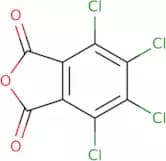
CAS:Controlled ProductDichloro[1,3-Bis(2,6-diisopropylphenyl)imidazolyl-2-idene](3-chloropyridyl)palladium(IV) is an insoluble molecule with a beige color. The molecule belongs to the class of palladium catalyzed cross coupling reactions. It can react with various halides and has been shown to have functionalities, skeleton and reactive groups. This compound is used in synthetic organic chemistry in order to generate sequences with chloride and pentane.Formula:C32H40Cl3N3PdPurity:Min. 95%Color and Shape:PowderMolecular weight:679.46 g/molTetrachlorophthalic anhydride
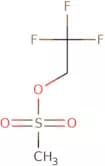
CAS:Controlled ProductTetrachlorophthalic anhydride (TCPA) is a reactive chemical that has been shown to have anti-inflammatory activity. TCPA has been found to inhibit the release of histamine from mast cells in humans, and it inhibits the production of pro-inflammatory cytokines such as tumor necrosis factor alpha (TNF-α). TCPA has also been shown to have a toxic effect on human lymphocyte transformation, which may be due to its ability to induce apoptosis. The toxicity of TCPA was studied in rats and mice, where it was found that TCPA did not cause any significant changes in clinical pathology or hydroxyl group levels.Formula:C8Cl4O3Purity:Min. 97.5 Area-%Color and Shape:White/Off-White SolidMolecular weight:285.89 g/mol2,2,2-Trifluoroethyl Methanesulfonate
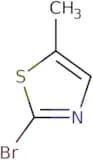
CAS:Trifluromethanesulfonic acid, also known as trifluoroacetic acid or TFA, is a colorless liquid that is miscible in water. Trifluromethanesulfonic acid has been shown to induce apoptosis in cancer cells by inhibiting the histone deacetylase (HDAC) enzyme. It also inhibits the PI3Kδ enzyme and has been shown to be an inhibitor of cancer cell growth. Trifluromethanesulfonic acid is a reactive compound with acidic properties and can react with other compounds to form salts, such as sodium trifluoromethanesulfonate. The fluorine atom in trifluromethanesulfonic acid can be substituted with chlorine atoms. Substituent effects on the chemical structure are also important for its activity.End>Formula:C3H5F3O3SPurity:Min. 95%Molecular weight:178.13 g/mol2-Bromo-5-methyl-1,3-thiazole
CAS:2-Bromo-5-methyl-1,3-thiazole (2BMT) is a heterocyclic compound that is used as a chemical intermediate for the synthesis of drugs and other organic compounds. 2BMT is synthesized by a two step process from 2-methylbenzothiazole. This compound has been shown to inhibit the enzyme acetylcholinesterase, which produces acetylcholine at nerve endings and in the brain. The monoclonal antibody binding affinity of 2BMT has also been shown to be greater than that of neonicotinoid pesticides.Formula:C4H4BrNSPurity:Min. 95%Molecular weight:178.05 g/mol2,2',4,5,5'-Pentachlorobiphenyl
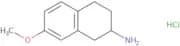
CAS:Controlled Product2,2',4,5,5'-Pentachlorobiphenyl is an environmental pollutant that is not naturally produced. It has been detected in animal tissues and faeces, as well as human tissues and faeces. The metabolite 2,4,5-trichlorophenol has been found to be a precursor of this compound. 2,2',4,5,5'-Pentachlorobiphenyl can persist in the environment for centuries and is difficult to detect because it does not react with many detection methods. This compound has been shown to alter the structure of DNA molecules in animals by inducing mutations in their offspring. The compound also induces changes in the structure of DNA molecules in tissue samples and alters protein synthesis.br>Formula:C12H5Cl5Purity:Min. 95%Molecular weight:326.43 g/mol7-Methoxy-1,2,3,4-tetrahydronaphthalen-2-ylamine hydrochloride
CAS:Controlled ProductPlease enquire for more information about 7-Methoxy-1,2,3,4-tetrahydronaphthalen-2-ylamine hydrochloride including the price, delivery time and more detailed product information at the technical inquiry form on this pageFormula:C11H15NO•HClPurity:Min. 95%Molecular weight:213.7 g/molPotassium chlorate
CAS:Controlled ProductPotassium chlorate is a strong oxidizing agent and a salt of potassium and chlorate. Potassium chlorate is used as an oxidizer in fireworks, propellants, and for the treatment of wastewater. It can also be used to generate chlorine dioxide, which is used as a disinfectant. Potassium chlorate has been shown to have genotoxic effects on rat liver cells, which may be due to its ability to induce transcriptional regulation by altering DNA methylation status. Chronic exposure to high concentrations of potassium chlorate can cause apical necrosis in rats. This type of necrosis is caused by the accumulation of potassium ions that lead to a disruption in membrane integrity. Chlorates are also known to cause chronic renal toxicity via oxidative stress mechanisms.Formula:ClKO3Purity:Min. 95%Color and Shape:White SolidMolecular weight:122.55 g/mol4-Amino-3,5-difluorobenzonitrile
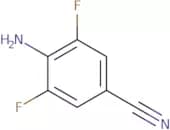
CAS:4-Amino-3,5-difluorobenzonitrile is a fine chemical used as a building block in research chemicals, reagent, and speciality chemical. It is versatile and can be used as a reaction component in the synthesis of complex compounds with various applications. CAS No. 110301-23-0 is an important intermediate for the synthesis of organic compounds and pharmaceuticals. 4-Amino-3,5-difluorobenzonitrile is also used as a scaffold for the synthesis of organic compounds.Formula:C7H4F2N2Purity:Min. 95%Color and Shape:PowderMolecular weight:154.12 g/mol2-Chloro-4-(tributylstannyl)thiazole
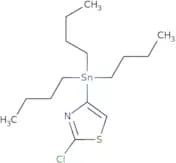
CAS:Controlled ProductPlease enquire for more information about 2-Chloro-4-(tributylstannyl)thiazole including the price, delivery time and more detailed product information at the technical inquiry form on this pagePurity:Min. 95%Copper(I) trifluoromethanesulfonate toluene complex
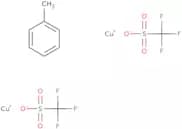
CAS:Controlled ProductToluene complex
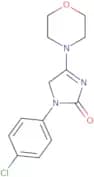
Formula:C9H8Cu2F6O6S2Purity:Min. 95%Molecular weight:517.37 g/mol1-(4-Chlorophenyl)-1,5-dihydro-4-(4-morpholinyl)-2H-imidazol-2-one
CAS:1-(4-Chlorophenyl)-1,5-dihydro-4-(4-morpholinyl)-2H-imidazol-2-one is a fatty acid. It has been shown to have clinical relevance in the treatment of epilepsy. The effective dose for this drug is unknown, but it is believed to be between 100 and 200mg per day. Benzalkonium chloride, which is used as a preservative in food products, may interfere with the absorption of 1-(4-chlorophenyl)-1,5-dihydro-4-(4-morpholinyl)-2H-imidazol-2-one. This drug should not be used by pregnant women or children. Long term efficacy studies are unavailable for this drug. Controlled release preparations are available for this medication that can help improve compliance with dosing requirements. Benzodiazepine binding sites are found in the central nervous system and benzodiazepines may bind toFormula:C13H14ClN3O2Purity:Min. 95%Molecular weight:279.72 g/mol1-(2-Bromophenyl)piperazine
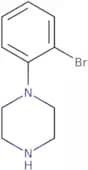
CAS:Controlled Product1-(2-Bromophenyl)piperazine is a drug that inhibits the activity of dehydrogenase, an enzyme that catalyzes the oxidation of NADH to NAD. It has been shown to inhibit other enzymes as well, such as those involved in the synthesis of amino acids and nucleic acids. 1-(2-Bromophenyl)piperazine has shown potential as a therapeutic agent for Parkinson's disease. This drug is being tested in clinical trials for its efficacy in treating a variety of diseases, including metabolic and cardiovascular disorders, hepatobiliary diseases, and neurodegenerative diseases.Formula:C10H13BrN2Purity:Min. 95%Molecular weight:241.13 g/molAllylpalladium(II) chloride dimer
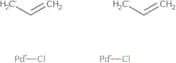
CAS:Allylpalladium(II) chloride dimer is a homogeneous catalyst that can be used for the asymmetric synthesis of organosilicon compounds. It is an allylation agent and has been shown to react with certain nitrogen-containing compounds to form a palladium nitride complex. This compound is also a good transport agent, due to its high solubility in organic solvents. Allylpalladium(II) chloride dimer has been shown to be effective in the production of cancer chemotherapeutic agents, including chlorambucil, as well as anti-inflammatory drugs such as ibuprofen. This catalyst has also been used for cross-coupling reactions with alkyl bromides and iodides. A major drawback of this catalyst is that it often leads to an isolated yield of the product, which can be improved by using a solvent or by adding water or alcohols.
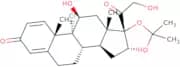
Formula:C6H10Cl2Pd2Purity:95%NmrMolecular weight:365.89 g/mol9-Chloro triamcinolone acetonide
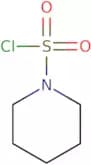
CAS:Please enquire for more information about 9-Chloro triamcinolone acetonide including the price, delivery time and more detailed product information at the technical inquiry form on this pageFormula:C24H31ClO6Purity:Min. 95%Molecular weight:450.95 g/molPiperidine-1-sulfonyl chloride
CAS:Piperidine-1-sulfonyl chloride (PSC) is a compound that has been found to have neuroprotective properties. PSC inhibits the production of nitric oxide and peroxynitrite, which are reactive oxygen species (ROS) that damage cells and DNA. PSC also prevents the formation of ROS by inhibiting the activation of protein kinase C and phospholipase A2. The neuroprotective effects of PSC may be due to its ability to inhibit matrix metalloproteinases, which are enzymes that break down tissue in response to injury or disease. This drug has also been shown to have high cytotoxicity against cancer cell lines in vitro. Piperidine-1-sulfonyl chloride is a chemical compound with neuroprotective properties. It inhibits the production of nitric oxide and peroxynitrite, which are reactive oxygen species (ROS) that damage cells and DNA. PSC also prevents the formationFormula:C5H10ClNO2SPurity:Min. 95%Molecular weight:183.66 g/mol1-(Bromomethyl)-2-(trifluoromethyl)-4-nitrobenzene
CAS:Please enquire for more information about 1-(Bromomethyl)-2-(trifluoromethyl)-4-nitrobenzene including the price, delivery time and more detailed product information at the technical inquiry form on this pageFormula:C8H5BrF3NO2Purity:Min. 95%Color and Shape:PowderMolecular weight:284.03 g/mol



![[1,4-Bis(diphenylphosphino)butane]palladium(II) Dichloride](/_next/image/?url=https%3A%2Fstatic.cymitquimica.com%2Fproducts%2F3D%2Fthumb-webp%2FFB60968.webp&w=3840&q=75)
palladium(IV)](/_next/image/?url=https%3A%2Fstatic.cymitquimica.com%2Fproducts%2F3D%2Fthumb-webp%2FFB157435.webp&w=3840&q=75)