Organic Halides
Subcategories of "Organic Halides"
Found 20442 products of "Organic Halides"
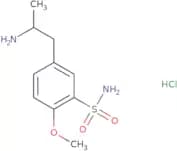
3-(4'-Methoxy-3'-sulfonamidophenyl)-2-propylamine, hydrochloride
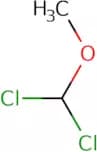
CAS:Controlled ProductPlease enquire for more information about 3-(4'-Methoxy-3'-sulfonamidophenyl)-2-propylamine, hydrochloride including the price, delivery time and more detailed product information at the technical inquiry form on this pageFormula:C10H16N2O3S•HClPurity:Min. 95%Color and Shape:PowderMolecular weight:280.77 g/mol1,1-Dichlorodimethyl ether
CAS:1,1-Dichlorodimethyl ether is a chemical compound that is used as an intermediate in the synthesis of trifluoroacetic acid from hydrochloric acid and methanol. This chemical has also been shown to inhibit inflammation by inhibiting the release of inflammatory cytokines, including epidermal growth factor (EGF) and interleukin-8 (IL-8). It may be used to treat chronic cough and chronic bronchitis. 1,1-Dichlorodimethyl ether inhibits the production of EGF by blocking the binding of EGF to its receptor on the surface of cells. The molecule also has an inhibitory effect on IL-8 production via inhibition of protein kinase C. The 1,1-dichlorodimethyl group is a reactive oxygen species that can react with other molecules such as DNA or proteins, leading to damage or even cell death.Formula:C2H4Cl2OPurity:Min. 95%Molecular weight:114.96 g/mol3,5-Dibromopyrazin-2-amine
CAS:3,5-Dibromopyrazin-2-amine is a triethyl orthoformate derivative that reacts with formamide to form 3,5-dibromopyrazine. The reaction time is typically less than 10 minutes and the yield is high. The product can be stored in a dry, inert atmosphere for up to 3 months without degradation. The compound has been shown to inhibit cyclic nucleotide phosphodiesterase (PDE) enzymes and cancer cells in vitro.
Formula:C4H3Br2N3Purity:Min. 95%Color and Shape:White To Yellow To Orange SolidMolecular weight:252.89 g/mol1-Trifluoromethylcyclopropane-1-carboxylic acid
CAS:1-Trifluoromethylcyclopropane-1-carboxylic acid is a ketone that is used in research in organic chemistry for the preparation of imidazole. It can be prepared by the transformation of ethyl 2-(trifluoromethyl)acrylate, and is also obtained from 1,4-dichloroacetone. 1-Trifluoromethylcyclopropane carboxylic acid has been shown to have some medicinal properties. It has been used in research on cancer cells and as an anti-inflammatory agent. The compound has a steric effect on the body and can be used as a weight loss drug, with one kilogram of 1-Trifluoromethylcyclopropane carboxylic acid being equivalent to 3 kilograms of weight loss.Formula:C5H5F3O2Purity:Min. 95%Color and Shape:PowderMolecular weight:154.09 g/molDesethyl chloroquine
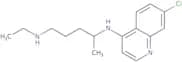
CAS:Desethyl chloroquine is a drug that is used to treat malaria and other infectious diseases. It is an antimalarial drug that has been shown to be effective in the treatment of malaria and related diseases such as toxoplasmosis, amebiasis, trypanosomiasis, and leishmaniasis. Methods for the preparation of desethyl chloroquine are described in the analytical section. To measure the concentration of desethyl chloroquine in blood, it is recommended to collect a sample of blood by venipuncture or fingerstick. The concentration-time curve in blood can be analyzed using a fluorescence detector and LC-MS/MS method. When analyzing pharmacokinetic properties, it is important to take into account the matrix effect due to human serum proteins. Desethyl chloroquine has potent inducers that affect its pharmacokinetics and metabolism, including CYP3A4 enzymes and glutathione reductase.Formula:C16H22ClN3Purity:Min. 95%Color and Shape:Slightly Yellow PowderMolecular weight:291.82 g/molDeschloro clomiphene
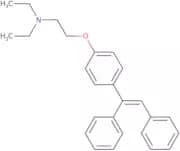
CAS:Controlled ProductPlease enquire for more information about Deschloro clomiphene including the price, delivery time and more detailed product information at the technical inquiry form on this pageFormula:C26H29NOPurity:Min. 95%Molecular weight:371.51 g/mol1-Chloro-2-(chloromethoxy)ethane
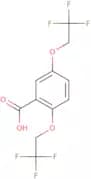
CAS:1-Chloro-2-(chloromethoxy)ethane is an acyclic nucleoside phosphonate that is used as a HIV integrase inhibitor. It binds to the HIV RNA genome and prevents the integration of viral DNA into the host cell's genome, which blocks the replication of HIV. 1-Chloro-2-(chloromethoxy)ethane has been shown to be more potent than other acyclic nucleoside phosphonates in vitro and in vivo. This drug also inhibits herpes simplex virus type 1 (HSV1) thymidine kinase activity, which is essential for viral DNA synthesis. This drug has potential antitumor activities against certain tumor cells due to its ability to inhibit cell proliferation and induce apoptosis through inhibiting rna synthesis.Formula:C3H6Cl2OPurity:Min. 95%Color and Shape:Clear LiquidMolecular weight:128.98 g/mol2,5-Bis(2,2,2-trifluoroethoxy)benzoic acid
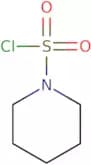
CAS:Please enquire for more information about 2,5-Bis(2,2,2-trifluoroethoxy)benzoic acid including the price, delivery time and more detailed product information at the technical inquiry form on this pageFormula:C11H8F6O4Purity:Min. 95%Color and Shape:PowderMolecular weight:318.17 g/molPiperidine-1-sulfonyl chloride
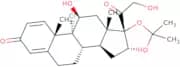
CAS:Piperidine-1-sulfonyl chloride (PSC) is a compound that has been found to have neuroprotective properties. PSC inhibits the production of nitric oxide and peroxynitrite, which are reactive oxygen species (ROS) that damage cells and DNA. PSC also prevents the formation of ROS by inhibiting the activation of protein kinase C and phospholipase A2. The neuroprotective effects of PSC may be due to its ability to inhibit matrix metalloproteinases, which are enzymes that break down tissue in response to injury or disease. This drug has also been shown to have high cytotoxicity against cancer cell lines in vitro. Piperidine-1-sulfonyl chloride is a chemical compound with neuroprotective properties. It inhibits the production of nitric oxide and peroxynitrite, which are reactive oxygen species (ROS) that damage cells and DNA. PSC also prevents the formationFormula:C5H10ClNO2SPurity:Min. 95%Molecular weight:183.66 g/mol9-Chloro triamcinolone acetonide
CAS:Please enquire for more information about 9-Chloro triamcinolone acetonide including the price, delivery time and more detailed product information at the technical inquiry form on this pageFormula:C24H31ClO6Purity:Min. 95%Molecular weight:450.95 g/mol(R)-(-)-1-[(4-Chlorophenyl)phenylmethyl]piperazine
CAS:Controlled Product(R)-(-)-1-[(4-Chlorophenyl)phenylmethyl]piperazine is a chemical compound that belongs to the group of c1-4 alkyl, high yield. It has a chemical formula of C12H17ClN2O and an organic base. This compound is hydrolyzed in vivo to levocetirizine, its active form. (R)-(-)-1-[(4-Chlorophenyl)phenylmethyl]piperazine is an antihistamine that binds to H1 receptors in the central nervous system, which results in decreased production of histamine and other proinflammatory substances. It also has optical activity, with (+) being the active form.Formula:C17H19ClN2Purity:Min. 95%Molecular weight:286.8 g/molHexachlorodimethyl sulfone
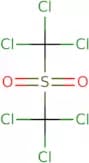
CAS:Hexachlorodimethyl sulfone (HCDS) is an industrial chemical that is used in the production of polymers, resins, and dyes. It is also used for the decontamination of radiation-contaminated water, soil, and air. HCDS has been shown to be a potent inhibitor of cationic polymerization reactions such as those used to make paints and varnishes. This property makes it useful in the development of paint strippers. Hexachlorodimethyl sulfone has a high resistance to acidity and is stable at high temperatures. This chemical can cause necrosis factor-mediated chronic arthritis in animals following intraperitoneal administration.
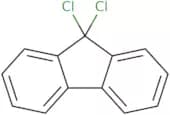
Formula:C2Cl6O2SPurity:Min. 95%Molecular weight:300.8 g/mol9,9-Dichlorofluorene
CAS:9,9-Dichlorofluorene is a bifluorenylidene that reacts with hydrochloric acid to form the trifluoroacetate anion. It is nucleophilic and can be used in organic synthesis to form carbon-fluorine bonds or chloroformates. 9,9-Dichlorofluorene also reacts with chloride ions to form the chloride anion. This reaction yields a high yield and has been used to synthesize other chemicals, including thioacetals and dimethylformamide. 9,9-Dichlorofluorene reacts with protonated nucleophiles in DMF and forms thioacetals following deprotection by hydrochloric acid. The reaction yield of this process is high and it has been extensively studied by NMR spectroscopy.Formula:C13H8Cl2Purity:Min. 95%Color and Shape:PowderMolecular weight:235.11 g/mol3-Amino-5-bromopyridine
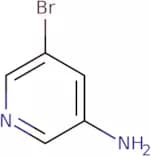
CAS:3-Amino-5-bromopyridine (3ABP) is a linker for the synthesis of cisplatin. It has been shown to have strong bactericidal activity against Escherichia coli and Staphylococcus aureus. 3ABP is cytotoxic to both renal proximal tubule cells and ring-opening cells, which are found in the kidney. It is also an inhibitor of nicotinic acetylcholine receptors (nAChRs), which are proteins that control nerve cell communication. 3ABP's pharmacokinetic properties make it suitable as a linker for cisplatin, as it has good oral bioavailability, low systemic toxicity, and high tissue selectivity.
Formula:C5H5BrN2Purity:Min. 98 Area-%Molecular weight:173.01 g/mol1,3-Dichloropropene
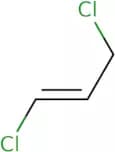
CAS:1,3-Dichloropropene is a fumigant that inhibits the production of malonic acid by inhibiting the enzyme malonate semialdehyde dehydrogenase. 1,3-Dichloropropene has been shown to be toxic in vitro, but not in vivo. In addition, this compound has been shown to inhibit the activity of enzymes such as quillaja saponaria and polymerase chain reaction (PCR) in vitro. 1,3-Dichloropropene has been found to cause chronic exposure and site specific toxicity in rats. Chronic exposure was associated with an increased incidence of lymphomas and leukemias. The mechanism for these effects is unknown, but may be due to damage to DNA or inhibition of RNA synthesis.
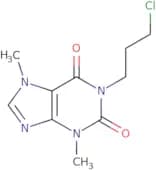
Formula:C3H4Cl2Purity:Min. 95%Color and Shape:Clear Colourless To Yellow To Dark Brown LiquidMolecular weight:110.97 g/mol1-(3-Chloropropyl)theobromine
CAS:Controlled Product1-(3-Chloropropyl)theobromine is the reaction product of acetylacetone with carbonate and water. It is a high-yielding remedy for cerebral thrombosis and other alkali burns. The chemical formula for 1-(3-chloropropyl)theobromine is C10H14ClO2. It is soluble in water, which makes it an excellent antidote for alkali burns. Acetylacetone reacts with carbonate to produce the alkanol, which then reacts with water to form 1-(3-chloropropyl)theobromine. This chemical has been found to be an effective treatment for cerebral thrombosis and other alkali burns due to its ability to react with both water and blood clots.
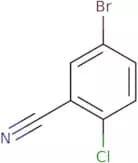
Formula:C10H13ClN4O2Purity:Min. 95%Molecular weight:256.69 g/mol5-Bromo-2-chlorobenzonitrile
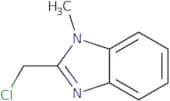
CAS:5-Bromo-2-chlorobenzonitrile is a versatile building block that has been used in the synthesis of many other chemicals. It is an important intermediate for the production of fine chemicals and pharmaceuticals. This chemical can be used as a reagent or a complex compound, making it useful in research and development. 5-Bromo-2-chlorobenzonitrile has also been shown to be an effective catalyst for cyclization reactions.Formula:C7H3BrClNPurity:Min. 95%Color and Shape:PowderMolecular weight:216.46 g/mol2-(Chloromethyl)-1-methyl-1H-benzimidazole hydrochloride
CAS:Controlled Product2-(Chloromethyl)-1-methyl-1H-benzimidazole hydrochloride (CMMB) is a synthetic compound that inhibits the enzyme tyrosinase, which is responsible for catalyzing the production of melanin. The tetradentate ligand in CMMB binds to the active site of tyrosinase and prevents it from catalyzing reactions. The redox potentials of CMMB make it possible to oxidize and reduce the compound, which allows for an easy synthesis. The dihedral angle between the amine and pyrimidine rings in CMMB provides a biomimetic structure that can be used to synthesize other aromatic compounds.Formula:C9H9ClN2Purity:Min. 95%Molecular weight:180.63 g/mol2,5-Diaminopyridine dihydrochloride
CAS:2,5-Diaminopyridine dihydrochloride is a compound that belongs to the class of hydroxamic acids. It is an intermediate in the synthesis of the anti-cancer drug, hydroxyurea (hydroxylamine). 2,5-Diaminopyridine dihydrochloride can be used as a cross-coupling reagent for coupling reactions with chlorinated and tritiated organic compounds. The efficiency of this reaction is dependent on the coulombic and mutagenic properties of 2,5-diaminopyridine dihydrochloride. 2,5-Diaminopyridine dihydrochloride has been shown to cause cancer in animal studies.Formula:C5H7N3•(HCl)2Purity:Min. 95%Molecular weight:182.05 g/mol4-Iodobenzonitrile
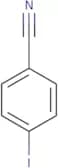
CAS:4-Iodobenzonitrile is an organic compound with the formula CH(CN)I. It is a colorless liquid that is soluble in water and acetone. 4-Iodobenzonitrile can be prepared by transfer of nitrile to iodide. The product has been used as a synthetic intermediate for pharmaceuticals, including the antibiotic erythromycin. It also has been used in the synthesis of other compounds, such as phenylacetic acid and its derivatives, and aromatic amines.
Formula:C7H4INPurity:Min. 95%Color and Shape:PowderMolecular weight:229.02 g/mol




![(R)-(-)-1-[(4-Chlorophenyl)phenylmethyl]piperazine](/_next/image/?url=https%3A%2Fstatic.cymitquimica.com%2Fproducts%2F3D%2Fthumb-webp%2FFC53712.webp&w=3840&q=75)