Organic Halides
Subcategories of "Organic Halides"
Found 20442 products of "Organic Halides"
Bis(2,2,2-Trifluoroethyl)amine
CAS:Bis(2,2,2-trifluoroethyl)amine is a colorless liquid that is soluble in water. It has a molecular weight of 122.11 and a boiling point of 217°C. Bis(2,2,2-trifluoroethyl)amine reacts with tetramethylammonium to form a dimer. The reaction is reversible and the bis(2,2,2-trifluoroethyl)amine can be regenerated by the addition of fluoride or an acid such as hydrochloric acid or sulfuric acid. Bis(2,2,2-trifluoroethyl)amine has an anion that can accept a proton from another molecule. This anion is also known as the bisulfite ion which reacts with hydrogen peroxide to form bisulfate and water.Formula:C4H5F6NPurity:Min. 95%Color and Shape:PowderMolecular weight:181.08 g/molBeclomethasone-21-Aldehyde
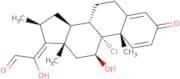
CAS:Controlled ProductPlease enquire for more information about Beclomethasone-21-Aldehyde including the price, delivery time and more detailed product information at the technical inquiry form on this pageFormula:C22H27ClO4Purity:Min. 95%Color and Shape:PowderMolecular weight:390.9 g/molQuaternary ammonium compounds, bis(hydroxyethyl) methyltallow alkyl, chlorides, salts with bentonite
CAS:Please enquire for more information about Quaternary ammonium compounds, bis(hydroxyethyl) methyltallow alkyl, chlorides, salts with bentonite including the price, delivery time and more detailed product information at the technical inquiry form on this page
Purity:Min. 95%[3-(1-Piperidin-1-ylcyclohexyl)phenyl]amine hydrochloride
CAS:Controlled Product3-(1-Piperidin-1-ylcyclohexyl)phenyl]amine hydrochloride is a ligand that binds to the acetylcholine receptor. 3-(1-Piperidin-1-ylcyclohexyl)phenyl]amine hydrochloride is an active analogue and has a high binding affinity for the cholinergic receptor. It has been shown to have a kinetic effect on the excitatory system, enhancing excitatory effects of acetylcholine without affecting inhibitory effects. 3-(1-Piperidin-1-ylcyclohexyl)phenyl]amine hydrochloride also has an antagonistic effect on modifiers of acetylcholine activity such as amantadine, but enhances the effects of other drugs, such as clonidine.
Formula:C17H26N2Purity:Min. 95%Molecular weight:258.4 g/molcis-[2-(2,4-Dichlorophenyl)-2-(1H-imidazol-1-ylmethyl)-1,3-dioxolan-4-yl]methyl p-tolylsulfonate
CAS:Please enquire for more information about cis-[2-(2,4-Dichlorophenyl)-2-(1H-imidazol-1-ylmethyl)-1,3-dioxolan-4-yl]methyl p-tolylsulfonate including the price, delivery time and more detailed product information at the technical inquiry form on this pageFormula:C21H20Cl2N2O5SPurity:Min. 95%Molecular weight:483.37 g/mol3-Bromo-4H-1,2,4-triazole
CAS:3-Bromo-4H-1,2,4-triazole is a triazole that is soluble in water. It has been shown to be an effective inhibitor of the enzyme DNA gyrase at low temperatures (4 degrees Celsius). 3-Bromo-4H-1,2,4-triazole has been analysed by spectroscopic methods and found to possess vibrational and annular spectra. The tautomers of this substance are also known to exist.Formula:C2HBrN3Purity:Min. 95%Color and Shape:PowderMolecular weight:146.95 g/molL-Tryptophanamide hydrochloride
CAS:L-Tryptophanamide hydrochloride is a fluorescent compound that belongs to the amides. It has been shown to have invertase activity and be hydrated in both isooctane and water. L-Tryptophanamide hydrochloride also has an anxiolytic effect on mice, which may be due to its ability to inhibit the production of serotonin at synapses by blocking the enzyme tryptophan hydroxylase. The drug is used for the treatment of anxiety disorders, including generalized anxiety disorder (GAD) and posttraumatic stress disorder (PTSD). This drug has a molecular profile that can be detected by fluorescence spectrometry, with an enhancement factor of 1.5-2.5.
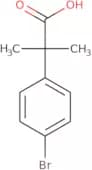
Formula:C11H14ClN3OPurity:Min. 95%Molecular weight:239.7 g/mol2-(4-Bromophenyl)-2,2'-dimethylacetic acid
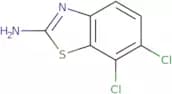
CAS:2-Bromo-2-(4-bromophenyl)-2,2'-dimethylacetic acid (2bpd) is the sodium salt of 2-(4-bromophenyl)-2,2'-dimethylacetic acid. It is a metabolite of terfenadine and thionyl chloride. 2bpd has been shown to be an inhibitor of the histamine H1 receptor. This drug is also a brominated derivative of 2-amino-2-methyl-1-propanol, which has been shown to be an inhibitor of the histamine H1 receptor.Formula:C10H11BrO2Purity:Min. 95%Molecular weight:243.1 g/mol2-Amino-5,6-dichlorobenzothiazole
CAS:2-Amino-5,6-dichlorobenzothiazole is an aminobenzothiazole derivative that has been shown to have antibacterial activity. It is a hydrophobic molecule with a skeleton consisting of alternating amines and carboxylic acids. 2-Amino-5,6-dichlorobenzothiazole binds to the fatty acid ester component of bacterial cell walls by hydrogen bonding or ionic interactions, disrupting the integrity of the cell wall and inhibiting the growth of bacteria. 2-Amino-5,6-dichlorobenzothiazole can be used to decolorize dyes and textiles that have been stained by oily materials. It is also used as a surfactant in personal care products such as shampoos and conditioners.
Formula:C7H4Cl2N2SPurity:Min. 95%Molecular weight:219.09 g/molWAY 316606
CAS:WAY 316606 is a potent, orally administered small molecule that inhibits the Wnt signaling pathway by blocking the action of β-catenin. It has been shown to have potential for treating eye disorders, including age-related macular degeneration. This drug also has potential for treatment of cell and nervous system diseases such as Alzheimer's disease and Huntington's disease. WAY 316606 inhibits the transcriptional activity of the β-catenin/Tcf4 complex by binding to it and preventing its translocation into the nucleus. In addition, WAY 316606 prevents downstream activation of genes regulated by β-catenin signaling, including c-myc and cyclin D1. This drug also blocks growth factor receptor tyrosine kinases and monoclonal antibodies that activate these receptors.
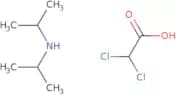
Formula:C18H19F3N2O4S2Purity:Min. 95%Molecular weight:448.48 g/molDiisopropylammonium dichloroacetate
CAS:Controlled ProductDiisopropylammonium dichloroacetate (DADCA) is a chemical that inhibits the metabolism of glucose. It has been shown to have a hypoglycemic effect in rats and is being investigated as a treatment for metabolic disorders such as diabetes and obesity. DADCA has also been shown to reduce liver lesions in animals with chronic viral hepatitis, and has been found to be effective in reducing tumor growth in mice. This drug can also be used to treat bowel disease by reducing the amount of ammonia released by bacteria. DADCA may also have physiological effects on humans, including an increase in blood pressure and fever, although these effects have not yet been studied.
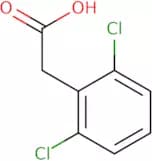
Purity:Min. 95%2,6-Dichlorophenylacetic acid
CAS:2,6-Dichlorophenylacetic acid is an inhibitor of the enzyme acetylcholinesterase. It has been shown to be effective in a number of functional assays and is efficient at inhibiting the uptake of 2,6-dichlorobenzoic acid in cells. The inhibition of this enzyme by 2,6-dichlorophenylacetic acid may be due to its protonation and binding to the active site. This binding prevents the release of the acetylcholine molecule that has been bound to the enzyme's active site. This results in increased levels of acetylcholine in the synaptic cleft, leading to an increase in neurotransmitter activity, which can have a variety of effects on neuronal function. 2,6-Dichlorophenylacetic acid also inhibits cell proliferation and induces apoptosis (programmed cell death) in Caco-2 cells by inhibiting protein synthesis.Formula:C8H6Cl2O2Purity:Min. 95%Color and Shape:White Off-White PowderMolecular weight:205.04 g/mol4-Chloro-2-phenylquinazoline
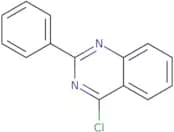
CAS:4-Chloro-2-phenylquinazoline is a ligand that inhibits the growth of bacteria by binding to their DNA. It has a molecular weight of 242.6 g/mol, and can be synthesized in two steps from 2-phenylaniline and o-chloroacetophenone. The pharmacokinetic properties of this compound have been studied using magnetic nanoparticles. 4-Chloro-2-phenylquinazoline has been shown to inhibit cancer cells and also has anti-inflammatory properties, which may be due to its ability to inhibit prostaglandin synthesis. This ligand binds to the nitrogen nucleophiles on the bacterial cell wall (e.g., trichophyton mentagrophytes) and prevents them from reacting with chlorine atoms in the environment, thus inhibiting bacterial growth.Formula:C14H9ClN2Purity:Min. 95%Color and Shape:White PowderMolecular weight:240.69 g/mol3,5-Dibromo-6-methylpyrazin-2-amine
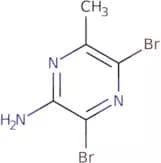
CAS:Please enquire for more information about 3,5-Dibromo-6-methylpyrazin-2-amine including the price, delivery time and more detailed product information at the technical inquiry form on this pageFormula:C5H5Br2N3Purity:Min. 95%Molecular weight:266.92 g/molHeptafluorobutyric anhydride
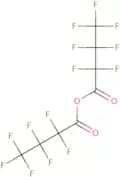
CAS:Heptafluorobutyric anhydride (HFBA) is a chemical compound that can be used as a reagent in analytical methods. It is used to prepare derivatives of amines, such as ethyl heptafluorobutyric acid, which are used in plant physiology studies. HFBA has been found to be useful for the detection of gamma-aminobutyric acid (GABA) and amines in wastewater samples by plasma mass spectrometry. The derivative of the molecule, 3-heptafluoropropionic acid, can be used as an antimicrobial agent against bacteria and fungi. The hydroxyl group on the molecule allows it to penetrate fatty acids and water molecules with high permeability. HFBA is also used as a reagent for preparing monoclonal antibodies by conjugating it with bovine serum albumin.Formula:C8F14O3Color and Shape:Clear LiquidMolecular weight:410.06 g/mol2-Bromopentane
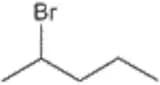
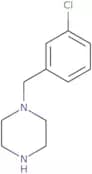
CAS:2-Bromopentane is a thiourea that is synthesized from bromoethane, an enthalpic reaction. The elimination reactions of 2-bromopentane are the reverse of the addition reactions. This product has been shown to be useful in an imaging technique that utilizes the viscosity of solids and liquids. 2-Bromopentane has also been shown to have a high rate of dehalogenase activity, which can be used for the removal of halogens from organic compounds. This product can undergo chromatographic analysis at temperatures up to 150°C and with high concentrations (>1 M).Formula:C5H11BrPurity:90%MinMolecular weight:151.04 g/mol1-(3-Chlorobenzyl)piperazine
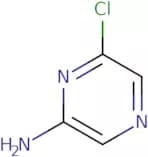
CAS:Controlled Product1-(3-Chlorobenzyl)piperazine (1CBPZ) is a selective and reversible inhibitor of ns3 protease, which plays an important role in plant resistance. 1CBPZ was found to be effective in controlling the growth of certain bacteria. It also has been shown to be useful for the prevention of liver lesions caused by casein in rats. 1CBPZ has optical properties that are sensitive to boron nitride and can be used as a control analysis for experiments involving this material. This chemical has been shown to inhibit the reaction mechanism of ns3 protease and is being used as an experimental model for studying this enzyme. The detection time for 1CBPZ is 3 hours, which makes it more energy efficient than other compounds.Formula:C11H15ClN2Purity:Min. 95%Molecular weight:210.7 g/mol2-Amino-6-chloropyrazine
CAS:2-Amino-6-chloropyrazine (2ACP) is an inhibitor that binds to the active site on human protein kinase C (PKC). It has been shown to inhibit PKC by hydrogen bonding with the hydroxide ion, which blocks its catalytic activity. 2ACP has been studied for its potential use in treating cancer and for inhibiting amine oxidases, which are enzymes associated with inflammation and chronic obstructive pulmonary disease. The inhibition of these enzymes may help to reduce stenosis in the lungs or other organs. 2ACP also has been shown to have antimycobacterial activity against Mycobacterium tuberculosis, M. avium complex, and M. leprae by inhibiting DNA synthesis and RNA synthesis. 2ACP inhibits the kinase receptor on the cell membrane that phosphorylates a water molecule into a chlorine atom, which then reacts with hydrogen peroxide to form free radicals that can kill bacteria
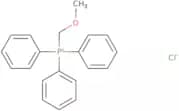
Formula:C4H4ClN3Purity:Min. 95%Molecular weight:129.55 g/mol(Methoxymethyl) triphenylphosphonium chloride
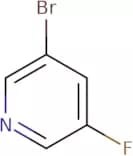
CAS:Methoxymethyl triphenylphosphonium chloride (MMTPC) is a chemical compound that has been used in vitro as an inhibitor of microbial growth. MMTPC has been shown to be effective against a number of bacterial strains, including methicillin-resistant Staphylococcus aureus and Mycobacterium tuberculosis. This agent inhibits the synthesis of proteins and nucleic acids, which may lead to cell death by inhibiting protein synthesis or by preventing DNA synthesis. MMTPC has been shown to be effective for the treatment of congestive heart failure, coronary heart disease, and autoimmune diseases. It also binds to receptors on cells that are involved in the inflammatory response, such as cytokines and leukocytes.Formula:C20H20ClOPPurity:Min. 95%Color and Shape:White PowderMolecular weight:342.8 g/mol3-Bromo-5-fluoropyridine
CAS:3-Bromo-5-fluoropyridine is a synthetic dyestuff that is used in the production of dyes and pigments. It has an analogous structure to 3-amino-5-bromopyridine, which is used as a medicine for treating epilepsy. 3-Bromo-5-fluoropyridine reacts with acetoacetate or ethyl acetoacetate to form methylated products, such as 3-(4'-hydroxyphenyl)propionate. This compound can be synthesized by halogenation with bromine or chlorination followed by hydrolysis. The synthesis of 3-bromo-5-fluoropyridine from 3-amino-5-bromopyridine involves a series of reactions, including diazonium salt formation, followed by bromination and reduction to produce the desired product.Formula:C5H3BrFNPurity:Min. 95%Color and Shape:PowderMolecular weight:175.9 g/mol



![[3-(1-Piperidin-1-ylcyclohexyl)phenyl]amine hydrochloride](/_next/image/?url=https%3A%2Fstatic.cymitquimica.com%2Fproducts%2F3D%2Fthumb-webp%2FFP120158.webp&w=3840&q=75)
![cis-[2-(2,4-Dichlorophenyl)-2-(1H-imidazol-1-ylmethyl)-1,3-dioxolan-4-yl]methyl p-tolylsulfonate](/_next/image/?url=https%3A%2Fstatic.cymitquimica.com%2Fproducts%2F3D%2Fthumb-webp%2FFD21680.webp&w=3840&q=75)