Organic Halides
Subcategories of "Organic Halides"
Found 20442 products of "Organic Halides"
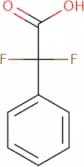
alpha,alpha-Difluorophenylacetic acid
CAS:Please enquire for more information about alpha,alpha-Difluorophenylacetic acid including the price, delivery time and more detailed product information at the technical inquiry form on this page
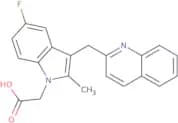
Formula:C8H6F2O2Purity:Min. 95%Molecular weight:172.13 g/molTimapiprant
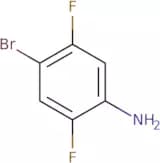
CAS:Controlled ProductTimapiprant is an amide that acts as a selective inhibitor of the prostanoid receptor CRTH2, which is involved in regulating the inflammatory response. Timapiprant inhibits skin eosinophilia, which is associated with inflammatory skin diseases such as atopic dermatitis and psoriasis. It has been shown to be safe in clinical trials and has a good safety profile. The drug's mechanism of action may be due to its ability to inhibit the production of IL-4 and IL-13 by Th2 cells and its ability to inhibit lung function. Timapiprant has shown efficacy in treating allergic rhinitis, asthma, chronic obstructive pulmonary disease, erythema multiforme, pyoderma gangrenosum, and other types of inflammatory skin diseases.Formula:C21H17FN2O2Purity:Min. 95%Molecular weight:348.37 g/mol4-Bromo-2,5-difluoroaniline
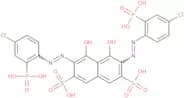
CAS:A useful building block for organic synthesis.Formula:C6H4BrF2NPurity:Min. 95%Molecular weight:208 g/molChlorophosphonazo III
CAS:Chlorophosphonazo III is a malonic acid derivative. It reacts with hydrochloric acid in the presence of an optical sensor to form a reaction solution that can be analyzed by plasma mass spectrometry. Chlorophosphonazo III has been used as a diagnostic agent and as a physiological activity indicator for damaged tissue, such as adhesions. This compound is also acidic, so it should not be stored in contact with human serum or other biological fluids because it will react with them.Formula:C22H16Cl2N4O14P2S2Color and Shape:PowderMolecular weight:757.36 g/mol4,4-difluorocyclohexane-1-carbaldehyde
CAS:Please enquire for more information about 4,4-difluorocyclohexane-1-carbaldehyde including the price, delivery time and more detailed product information at the technical inquiry form on this page
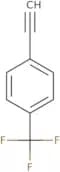
Formula:C7H10F2OPurity:Min. 95%Color and Shape:Colorless PowderMolecular weight:148.15 g/mol4-(Trifluoromethyl)phenylacetylene
CAS:4-(Trifluoromethyl)phenylacetylene is a functional group that has been synthesized by reacting an azide with a terminal alkynes. 4-(Trifluoromethyl)phenylacetylene can be used as a ligand in biomolecular syntheses and has shown fluorescence properties. It has been used to study the reactivity of metal complexes, such as copper and mercury, with other ligands. The crystal x-ray diffraction of 4-(trifluoromethyl)phenylacetylene shows that it is an unsymmetrical molecule. This functional group is not commercially available but can be recycled.Formula:C9H5F3Purity:Min. 95%Color and Shape:Clear LiquidMolecular weight:170.13 g/mol2,2'-Dichlorodiethyl ether
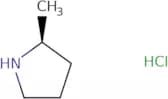
CAS:Controlled Product2,2'-Dichlorodiethyl ether (2,2-DDE) is a cationic surfactant that is used in the production of fluorocarbons and other chemicals. It is also used in wastewater treatment as an oxidizing agent. 2,2'-DDE is toxic to humans, with a blood group toxicity profile similar to that of ethylene glycol and diethylene glycol. 2,2'-DDE can be found in the environment due to its use as a component in products and its presence in wastewaters. 2,2'-DDE has been shown to be reactive with hydrogen fluoride and oxidation catalyst, which may cause interactive effects when it is present at high concentrations. This chemical has been shown to induce cell death through histological analysis on cell cultures. Reaction mechanism for this chemical is not known.Formula:C4H8Cl2OPurity:Min. 95%Color and Shape:Clear LiquidMolecular weight:143.01 g/mol(S)-2-Methylpyrrolidine hydrochloride
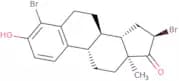
CAS:Please enquire for more information about (S)-2-Methylpyrrolidine hydrochloride including the price, delivery time and more detailed product information at the technical inquiry form on this pageFormula:C5H12ClNPurity:Min. 95%Molecular weight:121.61 g/mol4,16a-Dibromoestrone
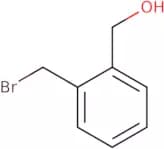
CAS:Controlled Product4,16a-Dibromoestrone is a brominated triol that is synthesized by the reductive borohydride reduction of estriol. The reduction of estriol with sodium borohydride in methanol yields 4,16a-dibromoestrone in high yield. The conversion from estriol to 4,16a-dibromoestrone can be performed using either palladium or chloride. This product has been shown to be an efficient reductive agent for the synthesis of methyl esters from carboxylic acids. This product also undergoes glucuronidation.Formula:C18H20Br2O2Purity:Min. 95%Molecular weight:428.16 g/mol(2-(Bromomethyl)phenyl)methanol
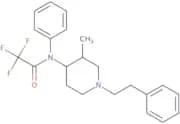
CAS:(2-(Bromomethyl)phenyl)methanol is an acceptor of a palladium complex. It is used in the synthesis of amides and other functional groups, as well as in catalysis. 2-(Bromomethyl)phenyl)methanol can be quaternized with methyl iodide to form a bromoalkylamine. The reaction proceeds via an amide group on the bromoalkylamine and a hydrogen atom from the alkyl halide. This process is known as "supramolecular" or "intermolecular" hydrogen bonding. It has been found that 2-(Bromomethyl)phenyl)methanol forms complexes with palladium through intermolecular hydrogen bonding, which are more stable than those formed by other ligands such as phosphines and cyanides.Formula:C8H9BrOPurity:95%NmrMolecular weight:201.06 g/molrac-cis despropionyl mefentanyl N-trifluoroacetate
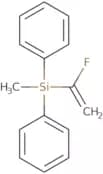
CAS:Controlled ProductPlease enquire for more information about rac-cis despropionyl mefentanyl N-trifluoroacetate including the price, delivery time and more detailed product information at the technical inquiry form on this pageFormula:C22H25F3N2OPurity:Min. 95%Molecular weight:390.44 g/mol(1-Fluorovinyl)methyldiphenylsilane
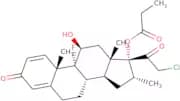
CAS:1-Fluorovinylmethyldiphenylsilane is a reactive, cross-coupling reagent that is used to synthesize organofluorine compounds. It reacts with nucleophiles such as sulfoxides, peroxides, halides, and amines to form an organofluorine compound. The nucleophile can be either in the presence or absence of hydrogen peroxide as a catalyst. The product of this reaction can be a sulfoxide, peroxide, or amine. 1-Fluorovinylmethyldiphenylsilane has been shown to react with nitro groups and iodides to form organofluorine compounds. 1-Fluorovinylmethyldiphenylsilane is soluble in organic solvents such as hexane and chloroform. This reagent should not be stored in metal containers because it will react with them spontaneously.Formula:C15H15FSiPurity:Min. 95%Molecular weight:242.36 g/molClobetasol Propionate - Impurity C
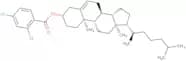
CAS:Controlled Product21-Chloro-9-fluoro-11beta,17-dihydroxy-16alpha-methylpregna-1,4-diene-3,20-dione 17-propionate is an ester of ketoconazole and the propionic acid. It is used as a pharmaceutical formulation and has been shown to be stable in an HPLC method. This compound also has an optical isomer that was validated by a stability test. This product has been shown to have antiinflammatory properties and may be used as a topical treatment for skin disorders such as clobetasol propionate.Formula:C25H32ClFO5Purity:Min. 95%Molecular weight:466.97 g/molCholesterol 2,4-Dichlorobenzoate
CAS:Cholesterol 2,4-Dichlorobenzoate (CDCB) is a crystalline solid that forms the polymorphs of monoclinic, orthorhombic, and hexagonal. This compound has been traditionally used as a food additive in many commercial products to improve flavor and stability. The membranes of bacteria are composed of cholesterol 2,4-dichlorobenzoate. The nature of the compound is such that it can exist as two different conformers: the trans conformer with the chloro group on one side and the benzoate on the other or the cis conformer with both chloro groups on one side. The monoclinic form has two conformational isomers: propionate and acetate. These isomers are not distinguishable by X-ray diffraction but can be distinguished by infrared spectroscopy.
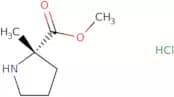
Purity:Min. 95%Molecular weight:559.65 g/molMethyl (2S)-2-methylpyrrolidine-2-carboxylate hydrochloride
CAS:Please enquire for more information about Methyl (2S)-2-methylpyrrolidine-2-carboxylate hydrochloride including the price, delivery time and more detailed product information at the technical inquiry form on this pageFormula:C7H13NO2•HClPurity:Min. 95%Molecular weight:179.64 g/molHafnocene Dichloride
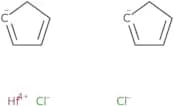
CAS:Controlled ProductHafnocene dichloride is a homogeneous catalyst for metathesis reactions. It has been shown to have significant cytotoxicity and kinetic energy, which are required for the transfer of alkenes during metathesis reactions. The zirconium-hafnium bond in hafnocene dichloride is cleaved by hydrogen chloride and hydrochloric acid, which are used as catalysts in the reaction. The optical properties of hafnocene dichloride can be changed by changing the metal complexes present during the reaction, which may be due to charge-transfer interactions between metal complexes and ligands. Hafnocene dichloride can also be used to synthesize polylactic acid (PLA) from lactic acid, which is a renewable resource that is biodegradable.Formula:C10H10Cl2HfPurity:Min. 95%Molecular weight:379.58 g/mol2-chloro-5-formyl-4-picoline
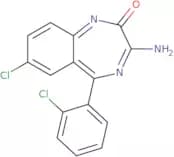
CAS:Please enquire for more information about 2-chloro-5-formyl-4-picoline including the price, delivery time and more detailed product information at the technical inquiry form on this pageFormula:C7H6ClNOPurity:Min. 95%Molecular weight:155.58 g/molZ-(R,S)-3-amino-7-chloro-5-(2-chlorophenyl)-2-oxo-1,4-benzodiazepine
CAS:Controlled ProductPlease enquire for more information about Z-(R,S)-3-amino-7-chloro-5-(2-chlorophenyl)-2-oxo-1,4-benzodiazepine including the price, delivery time and more detailed product information at the technical inquiry form on this pageFormula:C23H17N3O3Cl2Purity:Min. 95%Molecular weight:454.3 g/molBromodimethylsulfonium bromide
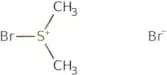
CAS:Bromodimethylsulfonium bromide is a chemical that has been used as a diagnostic agent in the diagnosis of leukemia. It is also used for the treatment of cancer, although it has shown to be ineffective against some resistant mutants. Bromodimethylsulfonium bromide is an unsymmetrical ion with one proton and one bromine atom. It reacts with amines to form an alkylammonium cation, which in turn reacts with nucleophiles such as water or alcohols to form a glycosidic bond. This reaction is responsible for the tissue culture growth inhibition seen in cells treated with this compound. Bromodimethylsulfonium bromide also inhibits fatty acid synthesis by preventing the enzyme acyl-CoA synthase from functioning properly, which leads to decreased levels of cellular energy production. Bromodimethylsulfonium bromide's fluorescence properties can be observed in tissue culture
Formula:C2H6Br2SPurity:Min. 95%Molecular weight:221.94 g/mol1,1,2,2,3,3,3-Heptafluoro-n,n-bis(1,1,2,2,3,3,3-heptafluoropropyl)-1-propanamine
CAS:Controlled Product1,1,2,2,3,3,3-Heptafluoro-n,n-bis(1,1,2,2,3,3-heptafluoropropyl)-1-propanamine (HFIP) is a fluorinated compound that is used as a solvent for hydrogen fluoride and water vapor. HFIP has been shown to be toxic to the liver cells of rats. It also causes lesions in the liver of the isolated heart. The monoclonal antibody against HFIP has been shown to reduce the transport properties of this solvent to tissues and reduce light emission from this compound. HFIP is not chemically reactive with other chemicals at room temperature and has excellent chemical stability in light exposure.Formula:C9F21NPurity:Min. 90 Area-%Color and Shape:Colorless PowderMolecular weight:521.07 g/mol