Organic Halides
Subcategories of "Organic Halides"
Found 20442 products of "Organic Halides"
Delta-9(11)-Fluorometholone acetate
CAS:Controlled ProductPlease enquire for more information about Delta-9(11)-Fluorometholone acetate including the price, delivery time and more detailed product information at the technical inquiry form on this page
Formula:C24H30O4Purity:Min. 95%Molecular weight:382.49 g/mol9-Ethyl-8-iodo-6,6-dimethyl-11-oxo-6,11-dihydro-5H-benzo[b]carbazole-3-carbonitrile
CAS:Alectinib intermediateFormula:C21H17IN2OPurity:Min. 95%Color and Shape:White PowderMolecular weight:440.28 g/mol4-Chloro-2-(methyl-phenyl-sulfamoyl)-benzoic acid methylester
CAS:4-Chloro-2-(methyl-phenyl-sulfamoyl)-benzoic acid methylester is an industrial chemical that is used in the production of other chemicals. It can be produced by the esterification of 4-chlorophenylacetic acid with methyl phenyl sulfonyl chloride, followed by diazotization and chlorination. This chemical also has the ability to form a condensation product with hydrazine.Formula:C15H14ClNO4SPurity:Min. 95%Molecular weight:339.79 g/mol2-Chloro-7H-pyrrolo[2,3-d]pyrimidin-4-amine
CAS:Please enquire for more information about 2-Chloro-7H-pyrrolo[2,3-d]pyrimidin-4-amine including the price, delivery time and more detailed product information at the technical inquiry form on this pageFormula:C6H5ClN4Purity:Min. 95%Molecular weight:168.58 g/mol5-Chloropentanol
CAS:5-Chloropentanol is a reactive compound that can be used as an epidermal growth factor. It has been shown to have potentiating effects on the production of epidermal growth factor in a biological sample. 5-Chloropentanol has also been shown to increase the rate of cell proliferation, which could be due to its ability to generate reactive chloroform in cells. It is not known whether 5-Chloropentanol has any carcinogenic properties.Purity:Min. 95%(R)-3,3'-Dibromo-1,1'-bi-2-naphthol
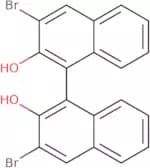
CAS:(R)-3,3'-Dibromo-1,1'-bi-2-naphthol is an aromatic hydrocarbon that is chiral. It has been used as a reagent in organic synthesis and as a fluorescent labeling agent for HPLC analysis. (R)-3,3'-Dibromo-1,1'-bi-2-naphthol has also been used to synthesize biphenyls. (R)-3,3'-Dibromo-1,1'-bi-2-naphthol can be found in natural products such as flavanones and styrene. It can act as a solvating or additive agent in organic reactions and reactions involving aromatics.
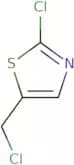
Formula:C20H12Br2O2Purity:Min. 95%Color and Shape:PowderMolecular weight:444.12 g/mol2-Chloro-5-chloromethylthiazole
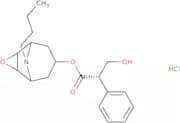
CAS:2-Chloro-5-chloromethylthiazole is an aliphatic hydrocarbon that has been used to chlorinate a variety of organic compounds. It reacts with hydrochloric acid and chlorine at low energy, producing chloride in the process. This chemical can be synthesized by reacting n-dimethyl formamide with hydrogen chloride. 2-Chloro-5-chloromethylthiazole can also be used as a crosslinking agent to react with the amine groups on proteins.Purity:Min. 95%N-Butyl nor scopolamine hydrochloride
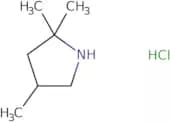
CAS:Please enquire for more information about N-Butyl nor scopolamine hydrochloride including the price, delivery time and more detailed product information at the technical inquiry form on this pageFormula:C20H28ClNO4Purity:Min. 95%Molecular weight:381.89 g/mol2,2,4-Trimethylpyrrolidine hydrochloride
CAS:Please enquire for more information about 2,2,4-Trimethylpyrrolidine hydrochloride including the price, delivery time and more detailed product information at the technical inquiry form on this pageFormula:C7H15NPurity:Min. 95%Molecular weight:113.2 g/mol2-Dimethylaminoisopropyl chloride hydrochloride
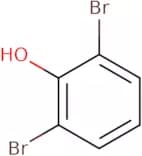
CAS:2-Dimethylaminoisopropyl chloride hydrochloride is a fluorescent molecule that emits light at wavelengths of 370-430 nm. It has a number of uses, such as detecting the presence or absence of chloride ions in water samples, determining the composition of petroleum products, and measuring the concentration of sodium ions in electrolytes. 2-Dimethylamino-1-propanesulfonic acid chloride hydrochloride can be used to identify the transition metal (Cu) in a sample, because it absorbs light at wavelengths below 450 nm.Formula:C5H12ClN·HClPurity:Min. 95%Color and Shape:White to off-white solid.Molecular weight:158.07 g/mol2,6-Dibromophenol
CAS:2,6-Dibromophenol is a chemical compound that is used as an analytical reagent in the determination of bromide ion concentrations. It can be prepared by the debromination of 2-bromophenols using hydrochloric acid and heating to 150°C. This reaction mechanism is best described by kinetic data and a model system. The reaction product of this process is 2,6-dibromo-3-hydroxyphenol. This compound has been shown to have a higher dry weight in strains with high levels of hydroxy group activity.
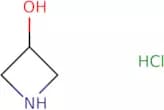
Formula:C6H4Br2OPurity:Min. 95%Molecular weight:251.9 g/mol3-Hydroxyazetidine hydrochloride
CAS:3-Hydroxyazetidine hydrochloride is an amide that interacts with hydrogen bonding. It is used as a drug for the treatment of hypertension and edema, especially in patients with long-term diseases such as autoimmune diseases. 3-Hydroxyazetidine hydrochloride inhibits the production of fatty acids and chloride ions, thereby reducing the amount of sodium ions in the body. 3-Hydroxyazetidine hydrochloride has been shown to be effective in treating high blood pressure and edema by inhibiting the enzyme regulatory protein phosphatase 2A.Formula:C3H7NO·HClPurity:Min. 97 Area-%Color and Shape:White Yellow PowderMolecular weight:109.55 g/moltrans-Chlordan
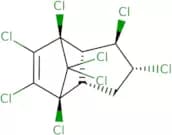
CAS:Controlled ProductTrans-Chlordan is a sodium salt that has been used for analytical purposes in wastewater treatment. It has also been found to have anti-inflammatory properties when given orally, inhibiting the production of cytokine IL-10 in rats. Trans-Chlordan has shown inhibitory properties against enzyme activities, such as lipoxygenase, cyclooxygenase, and 5-lipoxygenase. This compound also displays long-term toxicity and an antibody response in rats. Trans-Chlordan is structurally related to other compounds such as chlordane and lindane by way of its chemical backbone. Trans-Chlordan's effects on liver cells are very similar to those of other chemicals that are known to cause chronic oral toxicity or chemical pesticide poisoning.
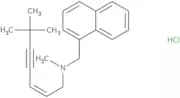
Formula:C10H6Cl8Purity:Min. 95%Color and Shape:PowderMolecular weight:409.78 g/molcis-Terbinafine hydrochloride
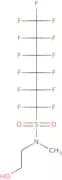
CAS:Please enquire for more information about cis-Terbinafine hydrochloride including the price, delivery time and more detailed product information at the technical inquiry form on this pageFormula:C21H25N•HClPurity:Min. 95%Molecular weight:327.89 g/molTridecafluoro-N-(2-Hydroxyethyl)-N-Methylhexanesulphonamide
CAS:Please enquire for more information about Tridecafluoro-N-(2-Hydroxyethyl)-N-Methylhexanesulphonamide including the price, delivery time and more detailed product information at the technical inquiry form on this pageFormula:C9H8F13NO3SPurity:Min. 95%Molecular weight:457.21 g/mol5-[4-(3-Chlorophenyl)piperazin-1-yl]-5-oxopentanoic acid
CAS:Controlled ProductPlease enquire for more information about 5-[4-(3-Chlorophenyl)piperazin-1-yl]-5-oxopentanoic acid including the price, delivery time and more detailed product information at the technical inquiry form on this page
Formula:C15H19ClN2O3Purity:Min. 95%Molecular weight:310.78 g/molDidecyl dimethyl ammonium chloride - 80% aqueous solution
CAS:Didecyl dimethyl ammonium chloride is a quaternary ammonium compound that has been shown to have a broad-spectrum antimicrobial activity. It has been used in disinfectants and as an active ingredient in pharmaceuticals, cosmetics, and foods. The compound is not toxic to humans or animals at concentrations up to 50%. Didecyl dimethyl ammonium chloride has been shown to be effective against infectious diseases caused by bacteria, viruses, fungi, and protozoa. This compound also has an effect on the epithelial-mesenchymal transition (EMT) process. Didecyl dimethyl ammonium chloride can be prepared by titration calorimetry or analytical method. The preparation of didecyl dimethyl ammonium chloride can be done using chloroform and benzalkonium chloride or glycol ether.
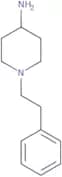
Formula:C22H48ClNColor and Shape:Clear LiquidMolecular weight:362.08 g/mol1-(2-Phenylethyl)piperidin-4-amine dihydrochloride
CAS:Controlled ProductPlease enquire for more information about 1-(2-Phenylethyl)piperidin-4-amine dihydrochloride including the price, delivery time and more detailed product information at the technical inquiry form on this pageFormula:C13H20N2Purity:Min. 95%Molecular weight:204.31 g/mol4-Benzyl-piperazine-1-carbonylchloride
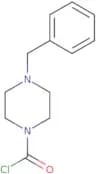
CAS:Controlled ProductPlease enquire for more information about 4-Benzyl-piperazine-1-carbonylchloride including the price, delivery time and more detailed product information at the technical inquiry form on this page
Formula:C12H15ClN2OPurity:Min. 95%Molecular weight:238.71 g/molDiethyl Chlorothiophosphate
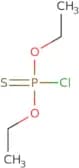
CAS:Diethyl chlorothiophosphate is a chlorinating agent that reacts with sodium carbonate to form diethyl phosphorochloridate. It is used as an analytical reagent and in the production of monoclonal antibodies. It has been shown to effectively inhibit protein synthesis in bacteria by reacting with amino groups, which are essential for protein formation. Diethyl chlorothiophosphate is also able to induce antibody responses in mice. This drug may be toxic if inhaled or ingested and may cause skin irritation.Formula:C4H10ClO2PSPurity:Min. 95%Molecular weight:188.61 g/mol


![9-Ethyl-8-iodo-6,6-dimethyl-11-oxo-6,11-dihydro-5H-benzo[b]carbazole-3-carbonitrile](/_next/image/?url=https%3A%2Fstatic.cymitquimica.com%2Fproducts%2F3D%2Fthumb-webp%2FFE137738.webp&w=3840&q=75)

![2-Chloro-7H-pyrrolo[2,3-d]pyrimidin-4-amine](/_next/image/?url=https%3A%2Fstatic.cymitquimica.com%2Fproducts%2F3D%2Fthumb-webp%2FFC63357.webp&w=3840&q=75)


![5-[4-(3-Chlorophenyl)piperazin-1-yl]-5-oxopentanoic acid](/_next/image/?url=https%3A%2Fstatic.cymitquimica.com%2Fproducts%2F3D%2Fthumb-webp%2FFC124636.webp&w=3840&q=75)