Organic Halides
Subcategories of "Organic Halides"
Found 20443 products of "Organic Halides"
4-Chloro-5-morpholin-4-ylpyridazin-3(2H)-one
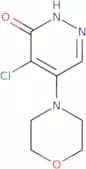
CAS:Please enquire for more information about 4-Chloro-5-morpholin-4-ylpyridazin-3(2H)-one including the price, delivery time and more detailed product information at the technical inquiry form on this pageFormula:C8H10ClN3O2Purity:90%MinColor and Shape:PowderMolecular weight:215.64 g/mol1-Bromo-3,4,5-trifluorobenzene
CAS:1-Bromo-3,4,5-trifluorobenzene is a chemical compound that belongs to the trimethyl group. It is synthesized from cyclohexane by dehydration and chlorination. 1-Bromo-3,4,5-trifluorobenzene has been shown to have a redox potential of -0.76 V vs. Ag/AgCl and is therefore an electron donor in reactions with electron acceptors such as chloride or multi-walled carbon nanotubes. The synthesis process for this compound involves a Suzuki coupling reaction between bromine and phenylacetylene followed by hydrolysis of the resulting intermediate to produce 2-bromopropane. The final step in the synthetic process involves the treatment of the intermediate with hydrogen fluoride to yield 1-bromo-3,4,5-trifluorobenzene. This chemical can be used as an industrial solvent for organic sol
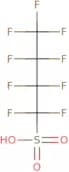
Formula:C6H2BrF3Purity:Min. 95%Color and Shape:Clear LiquidMolecular weight:210.98 g/molNonafluoro-1-butanesulfonic Acid
CAS:Nonafluoro-1-butanesulfonic acid (NBS) is a sulfonic acid that is used in the synthesis of sodium salts. NBS has been shown to be toxic to cultured human immunoglobulin cells, with an IC50 of 0.5 mM. It also inhibits the growth of 3T3-L1 preadipocytes and can cause weight gain in animal models. However, NBS has been found to be non-toxic to mice, rats and monkeys after 28 days of continuous dosing with up to 1 g/kg/day. This compound also has been found to have no significant interactions with drugs or other chemicals at concentrations up to 10 times higher than therapeutic doses. A validated analytical method for determining the concentration of NBS in water samples has been developed using liquid chromatography coupled with tandem mass spectrometry (LC/MS/MS).Formula:C4HF9O3SPurity:Min. 95%Color and Shape:Colourless To Pale Yellow LiquidMolecular weight:300.1 g/mol2-Chlorothiophenol
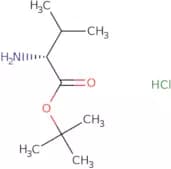
CAS:2-Chlorothiophenol is a chemical compound that belongs to the group of fatty acids. It is synthesized by reacting phosphorus pentachloride with 2-chloroethanol in the presence of magnesium salt. The corresponding molecule has a diameter of 4.8 Å and a thermal expansion coefficient of 1.5×10 K−1, which is similar to the thermal expansion coefficients of fatty acids. 2-Chlorothiophenol reacts with carbonyl groups in the presence of oxygen to form 2-chlorophenol and hydrogen chloride gas, which are products that can be detected using spectroscopic techniques such as infrared or nuclear magnetic resonance spectroscopy. The reaction mechanism for this reaction is not well understood, but it is thought that the intramolecular hydrogen acts as an electron donor to form a pi bond between carbon atoms on adjacent molecules, leading to formation of an oxygenated molecule. 2-Chlorothiophenol also has proteinFormula:C6H5ClSPurity:Min. 95%Color and Shape:Clear Colourless LiquidMolecular weight:144.62 g/molD-Valine tert-butyl ester hydrochloride
CAS:Valine is one of the 20 amino acids commonly found in proteins. Valine is a modified form of the amino acid l-valine that has been shown to have anti-inflammatory properties and may be used as a medicine. Valine tert-butyl ester hydrochloride (VTBE) is an alkyl ester that has been shown to inhibit the activity of metalloproteinases, which are enzymes that break down proteins in the body. It has also been shown to have medicinal uses in the diagnosis of diseases such as Parkinson's disease and Alzheimer's disease. VTBE may be activated by tripartite motifs and lead to structural studies on exotoxins.Formula:C9H19NO2•HClPurity:Min. 95%Color and Shape:White PowderMolecular weight:209.71 g/mol2,4-Difluorobromobenzene
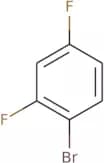
CAS:2,4-Difluorobromobenzene is an efficient method for synthesizing a variety of fluorinated arenes. It is a member of the class of compounds known as fluoroarenes. The synthesis starts with 2-bromobenzene, which reacts with butyllithium in the presence of trifluoroacetic acid to form 2-bromo-4-fluorobenzene. This compound can then be converted to the desired product by treatment with activated carbon or photochromic agents such as benzophenone and tetracyanoethylene. 2,4-Difluorobromobenzene can also be used as a synthetic intermediate for antifungal agents such as fluconazole and it has been shown to have some activity against Cryptococcus neoformans.
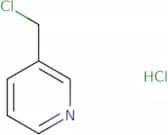
Formula:C6H3BrF2Purity:Min. 95%Molecular weight:192.99 g/mol3-Picolyl chloride hydrochloride
CAS:3-Picolyl chloride hydrochloride is a white crystalline solid that can be obtained by the reaction of thionyl chloride and 3-picolyl chloride. It has a melting point of 146°C, a boiling point of 317°C, and a density of 1.33g/cm3. The compound exhibits luminescence properties when exposed to ultraviolet light or x-rays. 3-Picolyl chloride hydrochloride is a synthetic compound that may be used as an intermediate in the preparation of other compounds with anti-inflammatory, antihistamine, or antimalarial activities.
Formula:C6H6NCl·HClPurity:Min. 95%Molecular weight:164.03 g/mol1-[2-(5-Fluoro-1H-indol-3-yl)ethyl]-5-oxopyrrolidine-3-carboxylic acid
CAS:Controlled ProductPlease enquire for more information about 1-[2-(5-Fluoro-1H-indol-3-yl)ethyl]-5-oxopyrrolidine-3-carboxylic acid including the price, delivery time and more detailed product information at the technical inquiry form on this pageFormula:C15H15FN2O3Purity:Min. 95%Molecular weight:290.29 g/molHeptadecafluorononanoic acid
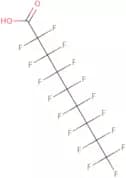
CAS:Heptadecafluorononanoic acid is a long-chain fatty acid that has been used as a building block in the synthesis of polymers. It has been shown to have an effect on locomotor activity and thermal expansion in human serum, as well as on maternal blood. Heptadecafluorononanoic acid has also been found to be effective for the treatment of hepatic steatosis and may have long-term efficacy. This compound is also able to bind with receptors, which can contribute to its biological properties. Heptadecafluorononanoic acid has been shown to inhibit geriatric patients' reaction solution. The analytical method for heptadecafluorononanoic acid consists of gas chromatography with flame ionization detection (GC-FID).
Formula:C9HF17O2Purity:Min. 95%Color and Shape:PowderMolecular weight:464.08 g/mol3,5-Dichloroisothiazole-4-carbonitrile
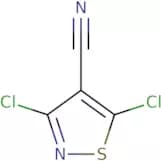
CAS:3,5-Dichloroisothiazole-4-carbonitrile is used as a reagent in organic synthesis. It is a regiospecifically chlorinated derivative of 3,5-dichloroisonicotinamide that can be prepared by reacting ethyl bromoacetate with chlorosulfonyl isocyanate. This compound reacts with phenols to give 3-chloro-1,2,4-benzothiadiazoles and other products. The reaction is catalysed by alkalis and reactive chlorine compounds such as chlorine gas or chlorosulfonic acid. 3,5-Dichloroisothiazole-4-carbonitrile also reacts with amines to give amides. 3,5-Dichloroisothiazole-4-carbonitrile reacts with halogens to form alkyl halides or alkyl sulfonates.Formula:C4Cl2N2SPurity:Min. 95 Area-%Color and Shape:PowderMolecular weight:179.03 g/mol2-Methyl-6-(trifluoromethyl)nicotinaldehyde
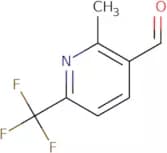
CAS:Please enquire for more information about 2-Methyl-6-(trifluoromethyl)nicotinaldehyde including the price, delivery time and more detailed product information at the technical inquiry form on this page
Formula:C8H6F3NOPurity:Min. 95%Molecular weight:189.13 g/mol4-(Trifluoromethyl)-5-(tributylstannyl)pyrazole
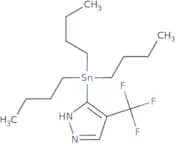
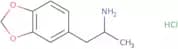
CAS:Controlled ProductPlease enquire for more information about 4-(Trifluoromethyl)-5-(tributylstannyl)pyrazole including the price, delivery time and more detailed product information at the technical inquiry form on this pageFormula:C16H29F3N2SnPurity:Min. 95%Molecular weight:425.12 g/mol3,4-Methylenedioxy amphetamine hydrochloride
CAS:Controlled Product3,4-Methylenedioxy amphetamine hydrochloride is an enantiomer of methylenedioxyamphetamine. It is a synthetic molecule that has been used as a drug and chemical intermediate. 3,4-MDA has not been detected in any natural products. 3,4-MDA is not soluble in water but is soluble in most organic solvents and oils. 3,4-MDA can be made into a non-polymeric form by adding acid to the molecule. The impurities are typically related to the solvent used during synthesis and include unreacted starting materials, side products from chemical reactions, and traces of other chemicals such as acetyl derivatives or polymers. 3,4-MDA can be assayed using high performance liquid chromatography (HPLC) with fluorescent detection; however, due to the impurities present in this substance it may be difficult to obtain a reliable result. There are two polymorphs for 3,4-MDA:
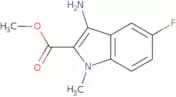
Formula:C10H14ClNO2Purity:Min. 95%Color and Shape:PowderMolecular weight:215.68 g/molMethyl 3-amino-5-fluoro-1-methyl-1H-indole-2-carboxylate
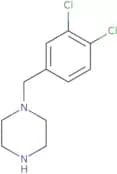
CAS:Controlled ProductPlease enquire for more information about Methyl 3-amino-5-fluoro-1-methyl-1H-indole-2-carboxylate including the price, delivery time and more detailed product information at the technical inquiry form on this pageFormula:C11H11FN2O2Purity:Min. 95%Molecular weight:222.22 g/mol1-(3,4-Dichlorobenzyl)piperazine
CAS:Controlled Product1-(3,4-Dichlorobenzyl)piperazine is an amine that is used as a reagent in organic synthesis. It is a buffered, acidic compound that emits fluorescence under UV light. It has been shown to be an electron donor and electron acceptor. 1-(3,4-Dichlorobenzyl)piperazine reacts with phenylpiperazines in the presence of acid to form a mixture of phenylpiperazines with different aliphatic chains. The reaction is characterized by emission of fluorescence that can be measured using spectroscopy techniques.Formula:C11H14Cl2N2Purity:Min. 95%Molecular weight:245.15 g/molMethyl3-iodothiophene-2-carboxylate
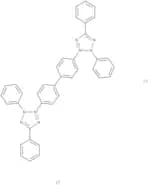
CAS:Methyl3-iodothiophene-2-carboxylate is a chemical compound that is involved in the biosynthesis of eicosanoids. It can be synthesized by the cyclization of the corresponding lactam to produce an intermediate, which is then converted to methyl3-iodothiophene-2-carboxylate by hydrolysis or reduction. This compound has been shown to inhibit malaria parasites such as Plasmodium falciparum and Plasmodium vivax. Methyl3-iodothiophene-2-carboxylate also inhibits the growth of bacteria such as Staphylococcus aureus and Bacillus subtilis. The mechanism of action is believed to be due to its ability to inhibit protein synthesis by binding with ribosomes in prokaryotic cells.END>Formula:C6H5IO2SPurity:Min. 95%Molecular weight:268.07 g/molNeotetrazolium Chloride
CAS:Neotetrazolium chloride is a tetrazolium dye that is used to detect the presence of living cells in a sample. It has an optimum concentration of 0.2% and significant cytotoxicity at concentrations greater than 1%. Neotetrazolium chloride binds to intracellular targets such as enzymes and nucleic acids, which can be detected by biochemical methods such as polymerase chain reaction (PCR). Neotetrazolium chloride can also bind to cell nuclei, making it useful for determining the number of viable cells in a sample. The bound form of neotetrazolium chloride is soluble in water and its detection limit is 10 fg/mL.Formula:C38H28N8·2ClPurity:Min. 95%Molecular weight:667.59 g/molNonafluoro butanesulfonyl fluoride
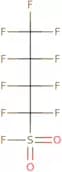
CAS:Nonafluoro butanesulfonyl fluoride is a pyrimidine compound that has been used in toxicological studies. It has been shown to be an effective inhibitor of the enzyme 5-hydroxytryptophan decarboxylase, which converts 5-hydroxytryptophan to serotonin. Nonafluoro butanesulfonyl fluoride has also been shown to inhibit the growth of methyl ketones, hydroxyl group, and hydrogen bond in a reaction solution. The chemical stability of nonafluoro butanesulfonyl fluoride is relatively high and it is resistant to hydrolysis by common reagents. This compound is not mutagenic or carcinogenic in animal studies. The LD50 values for intravenous injection in rats are reported as greater than 2000 mg/kg.Formula:C4F10O2SPurity:Min. 95%Molecular weight:302.09 g/molDesmethyl-8-bromo dragonfly hydrochloride
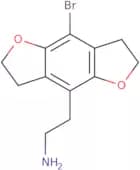
CAS:Controlled ProductDesmethyl-8-bromo dragonfly hydrochloride is a recreational drug that is a benzofuran derivative. It acts as a serotonin receptor agonist, with high potency for 5HT1A receptors and with an affinity for histamine H1 receptors. Desmethyl-8-bromo dragonfly hydrochloride has been shown to be addictive in humans, and the behavioral effects of this drug include increased motor activity and decreased anxiety.Formula:C12H15BrClNO2Purity:Min. 95%Molecular weight:320.61 g/mol5-Chloropyridine-2-boronicacid
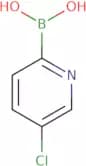
CAS:Please enquire for more information about 5-Chloropyridine-2-boronicacid including the price, delivery time and more detailed product information at the technical inquiry form on this pageFormula:C5H5BClNO2Purity:Min. 95%Molecular weight:157.36 g/mol



![1-[2-(5-Fluoro-1H-indol-3-yl)ethyl]-5-oxopyrrolidine-3-carboxylic acid](/_next/image/?url=https%3A%2Fstatic.cymitquimica.com%2Fproducts%2F3D%2Fthumb-webp%2FFF119448.webp&w=3840&q=75)