Organic Halides
Subcategories of "Organic Halides"
Found 20442 products of "Organic Halides"
5,6-Dichloronicotinic acid
CAS:5,6-Dichloronicotinic acid is a compound that can be synthesized by reacting methyl ketones with chloroacetic acid. It is used in the synthesis of maleic anhydride and has been shown to inhibit the catalysis of acetylcholine chloride. 5,6-Dichloronicotinic acid has also been shown to have an inhibitory effect on Alzheimer's disease. The kinetic mechanism for this inhibition occurs through the hydrolysis step of 5,6-Dichloronicotinic acid by magnesium chloride in hexane solution. The reactive acylation reaction proceeds when 5,6-Dichloronicotinic acid reacts with acetic anhydride in the presence of pyridine.Formula:C6H3Cl2NO2Color and Shape:PowderMolecular weight:192 g/mol((R)-4-Hydroxy-4-methyl-Orn (FITC)7)-Phalloidin trifluoroacetate salt
CAS:Please enquire for more information about ((R)-4-Hydroxy-4-methyl-Orn (FITC)7)-Phalloidin trifluoroacetate salt including the price, delivery time and more detailed product information at the technical inquiry form on this pageFormula:C56H60N10O15S2Purity:Min. 95%Molecular weight:1,177.27 g/mol1,3-Difluoro-2-vinylbenzene
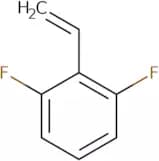
CAS:1,3-Difluoro-2-vinylbenzene is a hydroborating reagent that can be used to make alcohols from alkyl halides. It is also a potential sensor for the environment and has linearity in its response. 1,3-Difluoro-2-vinylbenzene may be an alternative to traditional hydroborating agents, such as diborane, which are toxic and expensive. This compound is sensitive to moisture and should be stored under nitrogen or argon gas.Formula:C8H6F2Purity:Min. 95%Color and Shape:Clear LiquidMolecular weight:140.13 g/molBig Endothelin-3 (22-41) amide (human) trifluoroacetate salt
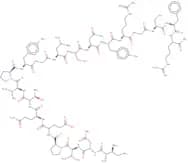
CAS:Please enquire for more information about Big Endothelin-3 (22-41) amide (human) trifluoroacetate salt including the price, delivery time and more detailed product information at the technical inquiry form on this page
Formula:C102H156N30O31Purity:Min. 95%Molecular weight:2,298.51 g/mol4-Methylvaleryl chloride
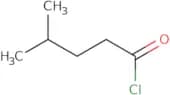
CAS:4-Methylvaleryl chloride (4MVC) is a thionyl chloride that reacts with 2-pentenoic acid to produce 4-methylvaleric acid. It has been used as a pharmaceutical intermediate and as a potent inhibitor of side-chain cleavage reactions. The reaction time required for the formation of 4MVC depends on the reaction temperature. At room temperature, it takes approximately one hour to form; at 60 degrees Celsius, it takes approximately five minutes to form.Formula:C6H11ClOPurity:Min. 95%Color and Shape:Colorless Clear LiquidMolecular weight:134.6 g/molH-D-Cys(4-methoxytrityl)-2-chlorotrityl resin (200-400 mesh)
Please enquire for more information about H-D-Cys(4-methoxytrityl)-2-chlorotrityl resin (200-400 mesh) including the price, delivery time and more detailed product information at the technical inquiry form on this pagePurity:Min. 95%5-Fluoro-2-methoxyphenylacetone
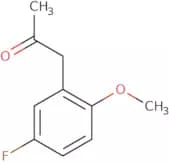
CAS:5-Fluoro-2-methoxyphenylacetone is a chemical with a wide array of applications in research and industry. It is a versatile building block, useful intermediate, and reagent for organic synthesis. This compound has been used as a starting material in the synthesis of other compounds. CAS No. 1017082-10-8Formula:C10H11FO2Color and Shape:PowderMolecular weight:182.19 g/molGlucagon (19-29) (human, rat, porcine) trifluoroacetate salt
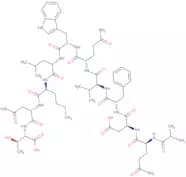
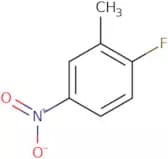
CAS:Glucagon is a peptide hormone that belongs to the group of vasoactive intestinal peptides. It is produced by the alpha cells of the pancreas and stimulates gluconeogenesis in the liver, thereby increasing blood glucose levels. Glucagon has also been shown to cause membrane hyperpolarization and cell death in cancer cells. Glucagon is a homologous protein that has been shown to have physiological effects similar to those of insulin, such as increased levels of cytosolic Ca2+ ions and camp levels. Glucagon binds to its receptor on the plasma membrane with high affinity, activating adenylate cyclase and phospholipase C, which leads to an increase in intracellular camp levels. This results in activation of protein kinase A (PKA), which phosphorylates proteins involved in glycogenolysis, glycolysis, and lipolysis. Glucagon also activates mitogen-activated protein kinases (MAPKFormula:C61H89N15O18SPurity:Min. 95%Molecular weight:1,352.52 g/mol4-Fluoro-3-methylnitrobenzene
CAS:4-Fluoro-3-methylnitrobenzene is a carbazole that is used as a pesticide. It has been shown to be effective against typhimurium and other bacteria. The mechanism of action of this compound may involve nitrenium ion formation, which is an intermediate in the reaction of ammonium nitrate with calcium carbonate. 4-Fluoro-3-methylnitrobenzene has two isomers: 4-fluoro-3-methylnitrobenzoic acid and 4-fluoronitrobenzoic acid, but only the former reacts with ammonium nitrate. The reaction time for this compound to form carcinogenic nitrosamines can vary from about one day to several months. Chemical shift data for this compound reveal its radical mechanism, which explains its low efficiency. This compound also has optical properties that can cause fluorescence or phosphorescence when exposed to ultraviolet light or laser beams, respectively.Formula:C7H6FNO2Purity:Min. 95%Molecular weight:155.13 g/mol2,4,6-Trifluorobenzoic acid
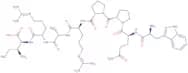
CAS:2,4,6-Trifluorobenzoic acid is a chemical compound that is an intermediate in the synthesis of stilbazole. It is prepared by chlorinating the 2,4,6-trichlorobenzoic acid with hydrogen peroxide and hydrochloric acid. The 2,4,6-trifluorobenzoic acid is then reduced to the desired product with sodium borohydride. This chemical has been detected in nature as a racemic mixture and can be used as a precursor in analytical methods for detecting other compounds. It is also used in dechlorination reactions to remove chlorine from organic molecules. This process can be monitored using UV detectors.Formula:C7H3F3O2Purity:Min. 95%Molecular weight:176.09 g/molFibronectin Adhesion-Promoting Peptide trifluoroacetate salt
CAS:Fibronectin Adhesion-Promoting Peptide trifluoroacetate salt H-Trp-Gln-Pro-Pro-Arg-Ala-Arg-Ile-OH trifluoroacetate salt (FAP) is a synthetic peptide that promotes fibronectin adhesion. It binds to the amino acid sequence in the C terminal end of fibronectin, which is known to be responsible for binding to actin filaments and growth factors. FAP has been shown to promote wound healing by stimulating the proliferation of corneal epithelial cells in vitro. The mechanism of action of FAP may be due to its ability to bind to chloride ions, which are involved in the regulation of cell proliferation and migration.
Formula:C47H74N16O10Purity:Min. 95%Molecular weight:1,023.19 g/mol2-[(5-Bromo-2-methylphenyl)methyl]-5-(4-fluorophenyl)thiophe
CAS:Intermediate in the synthesis of canagliflozinFormula:C18H14BrFSPurity:Min. 95%Molecular weight:361.27 g/mol(3,5-Diiodo-Tyr1,D-Ala2,N-Me-Phe4,glycinol5)-Enkephalin acetate salt
CAS:Controlled ProductPlease enquire for more information about (3,5-Diiodo-Tyr1,D-Ala2,N-Me-Phe4,glycinol5)-Enkephalin acetate salt including the price, delivery time and more detailed product information at the technical inquiry form on this pageFormula:C26H33I2N5O6Purity:Min. 95%Molecular weight:765.38 g/molZ-Asp(OtBu)-bromomethylketone
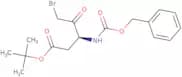
CAS:Please enquire for more information about Z-Asp(OtBu)-bromomethylketone including the price, delivery time and more detailed product information at the technical inquiry form on this pageFormula:C17H22BrNO5Purity:Min. 95%Molecular weight:400.26 g/mol2-Amino-5-fluorobenzonitrile
CAS:2-Amino-5-fluorobenzonitrile is a molecule that belongs to the class of amines. The vibrational spectroscopies and diffraction experiments show that this molecule has a strong dipole moment, which is due to the carbamic acid group. 2-Amino-5-fluorobenzonitrile has been shown to be chiral, which means it can exist in two different forms, one with a left and one with a right orientation of the atoms. This molecule can be used as an analyte for thermodynamic measurements and can be used as a reagent in organic synthesis reactions. It also has functional groups that are useful for vibrational spectroscopies.Formula:C7H5FN2Purity:Min. 95%Color and Shape:PowderMolecular weight:136.13 g/molBis(4-chlorophenyl)sulfone
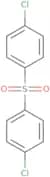
CAS:Bis(4-chlorophenyl)sulfone is a chemical compound that has been shown to have high water permeability. It is a white solid at room temperature and can be dissolved in trifluoroacetic acid, hydrochloric acid, and sodium carbonate. Bis(4-chlorophenyl)sulfone has been shown to react with diphenyl sulfoxide, giving the corresponding sulfoxide. Bis(4-chlorophenyl)sulfone can undergo chemical reactions with other compounds to form new chemical compounds. This property makes it an excellent starting material for synthesizing new drugs. Bis(4-chlorophenyl)sulfone does not cause carcinogenesis in mice when administered orally for up to 12 months at concentrations of 1 ppm or higher.Formula:C12H8Cl2O2SPurity:Min. 95%Color and Shape:SolidMolecular weight:287.16 g/molH-Gly-Gly-AMC hydrochloride salt
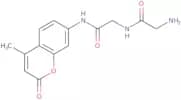
CAS:H-Gly-Gly-AMC is a fluorescent substrate for the detection of protease activity. It can be used in a homogeneous assay to measure the protease activity of cells. The assay provides an accurate measurement of protease activity and the ability to normalize data to account for differences in cell number and protein content. H-Gly-Gly-AMC hydrochloride salt (HGG) is also a fluorogenic substrate for the determination of cell death or damage, which can be measured using aminoluciferin. This assay is based on the release of aminoluciferin from lysed cells, which fluoresces in proportion to the amount released.Formula:C14H15N3O4Purity:Min. 95%Molecular weight:289.29 g/mol5-Bromo-2-fluorophenol
CAS:5-Bromo-2-fluorophenol is an organic solvent that is used in hydrotalcite to extract biphenyl. 5-Bromo-2-fluorophenol has been shown to have a high affinity for the cavity of hydrotalcite, which is a desorption technique. It can also be used to extract supramolecular systems and biomolecules, such as proteins and nucleic acids. The nature of 5-bromo-2-fluorophenol is an aromatic compound with a density of 1.40 g/mL at 20°C and a boiling point of 221°C. 5-Bromo-2-fluorophenol can be eluted using isopropyl alcohol or ethyl acetate, and the transfer rate depends on the nature of the solvent used in elution.Formula:C6H4BrFOPurity:Min. 95%Color and Shape:PowderMolecular weight:191 g/mol2,3-Dibromo-N-methylmaleimide
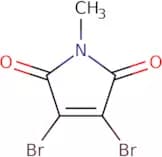
CAS:2,3-Dibromo-N-methylmaleimide is a synthetic compound that can be used as an anticancer agent. It inhibits the proliferation of endothelial cells and induces apoptosis in cancer cells. The molecular structure of 2,3-Dibromo-N-methylmaleimide is similar to bisindolylmaleimides, which are naturally occurring compounds found in plants. 2,3-Dibromo-N-methylmaleimide is synthesized by cross coupling with magnesium and hydroxyl group using a vibrational spectroscopy technique called nmr spectra. This molecule also has amine groups that can be used for drug conjugation or activation.Formula:C5H3Br2NO2Purity:Min. 95%Molecular weight:268.89 g/mol1,2-Dihydro-1-Methyl-5-(Trifluoromethyl)-3H-Pyrazol-3-One
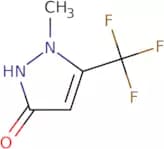
CAS:Please enquire for more information about 1,2-Dihydro-1-Methyl-5-(Trifluoromethyl)-3H-Pyrazol-3-One including the price, delivery time and more detailed product information at the technical inquiry form on this pageFormula:C5H5F3N2OPurity:Min. 95%Molecular weight:166.1 g/mol




![2-[(5-Bromo-2-methylphenyl)methyl]-5-(4-fluorophenyl)thiophe](/_next/image/?url=https%3A%2Fstatic.cymitquimica.com%2Fproducts%2F3D%2Fthumb-webp%2FFB97141.webp&w=3840&q=75)