Organic Halides
In this category, you can find organic molecules containing one or more halogen atoms in their structure. These organic halides include brominated, iodinated, chlorinated, and cyclic halide compounds. Organic halides are widely used in organic synthesis, pharmaceuticals, agrochemicals, and materials science due to their reactivity and ability to undergo a variety of chemical transformations. At CymitQuimica, we offer a comprehensive selection of high-quality organic halides to support your research and industrial applications, ensuring reliable and effective performance in your synthetic and analytical projects.
Subcategories of "Organic Halides"
Found 20442 products of "Organic Halides"
Sort by
Purity (%)
0
100
|
0
|
50
|
90
|
95
|
100
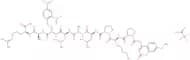
Neuropeptide Y (3-36) (porcine) trifluoroacetate salt
CAS:Please enquire for more information about Neuropeptide Y (3-36) (porcine) trifluoroacetate salt including the price, delivery time and more detailed product information at the technical inquiry form on this page
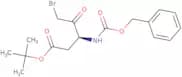
Formula:C176H271N53O54Purity:Min. 95%Molecular weight:3,993.36 g/molZ-Asp(OtBu)-bromomethylketone
CAS:Please enquire for more information about Z-Asp(OtBu)-bromomethylketone including the price, delivery time and more detailed product information at the technical inquiry form on this pageFormula:C17H22BrNO5Purity:Min. 95%Molecular weight:400.26 g/molHIV (gp120) Antigenic Peptide trifluoroacetate salt
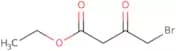
CAS:Please enquire for more information about HIV (gp120) Antigenic Peptide trifluoroacetate salt including the price, delivery time and more detailed product information at the technical inquiry form on this pageFormula:C117H211N41O31SPurity:Min. 95%Molecular weight:2,720.25 g/molEthyl 4-bromoacetoacetate
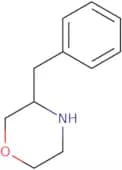
CAS:Ethyl 4-bromoacetoacetate is a chemical compound that is used in the synthesis of quinoline derivatives. It also has antiinflammatory properties and can be used to treat inflammatory diseases such as arthritis. The thermal expansion of this compound is greater than that of water, which can be useful in treating respiratory problems by providing increased oxygen transport. Ethyl 4-bromoacetoacetate is a reactive chemical that reacts with hydrochloric acid to produce hydrogen gas and ethyl bromide gas. It also undergoes nucleophilic substitutions at the carbon atom adjacent to the acetoacetate group. This reaction solution can be analyzed using magnetic resonance spectroscopy, which produces data on the sequences of this compound's atoms and its antiinflammatory activity.Formula:C6H9BrO3Purity:90%NmrMolecular weight:209.04 g/mol3-Benzylmorpholine Hydrochloride
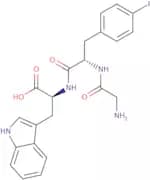
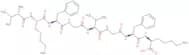
CAS:3-Benzylmorpholine Hydrochloride is a hydroxamate that is used as an acylating agent in organic synthesis. It is also used as a reagent for the preparation of hydroxamic acid and hydroxamic esters. 3-Benzylmorpholine Hydrochloride can be prepared by reacting 3-benzylmorpholine with hydrochloric acid or hydrogen chloride gas in the presence of a base such as triethylamine. The reaction starts by forming a hemiaminal, which reacts with the metal chloride to form the desired product. This reaction follows a kinetic, stereoelectronic, and rationalize mechanism. 3-Benzylmorpholine Hydrochloride has been shown to have chiral properties, which means it has two forms that are non-superimposable mirror images of each other. The enantiomeric purity can be determined using optical rotations or gas chromatography-mass spectrometry.Formula:C11H15NO·HClPurity:Min. 95%Molecular weight:213.7 g/molH-Gly-p-iodo-Phe-Trp-OH trifluoroacetate salt
CAS:Please enquire for more information about H-Gly-p-iodo-Phe-Trp-OH trifluoroacetate salt including the price, delivery time and more detailed product information at the technical inquiry form on this pageFormula:C22H23IN4O4Purity:Min. 95%Molecular weight:534.35 g/molH-Tyr(tBu)-2-chlorotrityl resin (200-400 mesh) (Low Substitution)
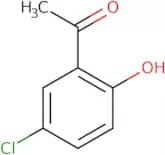
Please enquire for more information about H-Tyr(tBu)-2-chlorotrityl resin (200-400 mesh) (Low Substitution) including the price, delivery time and more detailed product information at the technical inquiry form on this pagePurity:Min. 95%1-(5-Chloro-2-hydoxyphenyl)ethanone
CAS:1-(5-Chloro-2-hydoxyphenyl)ethanone is a potent inhibitor of the antiapoptotic protein survivin. It binds to the carbonyl group of the molecule, which is located on the intramolecular hydrogen bond surface. This leads to conformational changes in the molecule and ternary complex formation, which eventually leads to apoptosis protein aggregation and activation. 1-(5-Chloro-2-hydoxyphenyl)ethanone has been shown to inhibit prostate cancer cells and has also been studied in clinical trials for its anticancer properties.Formula:C8H7ClO2Purity:Min. 95%Color and Shape:White PowderMolecular weight:170.59 g/molSomatostatin-14 (7-14) trifluoroacetate salt
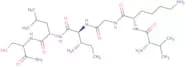
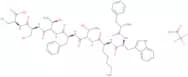
CAS:Please enquire for more information about Somatostatin-14 (7-14) trifluoroacetate salt including the price, delivery time and more detailed product information at the technical inquiry form on this pageFormula:C49H66N10O12SPurity:Min. 95%Molecular weight:1,019.17 g/molLys-(Des-Arg9,Leu8)-Bradykinin trifluoroacetate salt
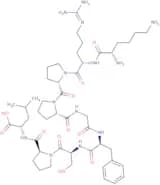
CAS:Bradykinin is a peptide that is released in response to injury and inflammation. It has two receptors, B1 and B2. Bradykinin binds to the B2 receptor which leads to vasodilation, increased vascular permeability, and bronchoconstriction. Lys-(Des-Arg9,Leu8)-Bradykinin trifluoroacetate salt H-Lys-Arg-Pro-Pro-Gly-Phe-Ser-Pro-Leu (LBP) is a synthetic analogue of bradykinin that competes with bradykinin for binding sites on the bradykinin b2 receptor. LBP also inhibits lipoxygenase activity in vitro and in animals. This drug can be used as an antagonist against bradykinin b2 receptor or as an antiplatelet agent.Formula:C47H75N13O11Purity:Min. 95%Molecular weight:998.18 g/mol4-[2-(Fmoc-amino)ethyl]-1-piperazineacetic acid dihydrochloride
CAS:Please enquire for more information about 4-[2-(Fmoc-amino)ethyl]-1-piperazineacetic acid dihydrochloride including the price, delivery time and more detailed product information at the technical inquiry form on this pageFormula:C23H27N3O4•2HClPurity:Min. 95%Color and Shape:PowderMolecular weight:482.4 g/molPseudin-2 trifluoroacetate salt
CAS:Please enquire for more information about Pseudin-2 trifluoroacetate salt including the price, delivery time and more detailed product information at the technical inquiry form on this pageFormula:C122H202N36O32Purity:Min. 95%Molecular weight:2,685.13 g/molCalcium-Like Peptide 3 trifluoroacetate salt
CAS:Please enquire for more information about Calcium-Like Peptide 3 trifluoroacetate salt including the price, delivery time and more detailed product information at the technical inquiry form on this pageFormula:C44H68N10O9Purity:Min. 95%Molecular weight:881.07 g/moltert-Butyl2-bromo-6,7-dihydrothiazolo[5,4-c]pyridine-5(4H)-carboxylate
CAS:Please enquire for more information about tert-Butyl2-bromo-6,7-dihydrothiazolo[5,4-c]pyridine-5(4H)-carboxylate including the price, delivery time and more detailed product information at the technical inquiry form on this pageFormula:C11H15BrN2O2SPurity:Min. 95%Molecular weight:319.22 g/molMet-RANTES (human) trifluoroacetate salt
Please enquire for more information about Met-RANTES (human) trifluoroacetate salt including the price, delivery time and more detailed product information at the technical inquiry form on this pageFormula:C355H543N97O101S6Purity:Min. 95%Molecular weight:7,978.1 g/mol1-Dodecylpyridinium chloride
CAS:1-Dodecylpyridinium Chloride is a quaternary ammonium salt that is used as an antimicrobial agent in a variety of products, such as pharmaceuticals, cosmetics, and household products. It has been shown to be toxic to humans at doses above 0.5 mg/kg. At sublethal doses, 1-dodecylpyridinium chloride inhibits the growth of bacteria by binding to the cationic sites on their cell surfaces and preventing them from attaching to other cells or molecules in their environment. 1-Dodecylpyridinium chloride also binds to the enzyme p-nitrophenyl phosphate reductase, which is required for bacterial growth. This inhibition leads to cell death by preventing ATP production and protein synthesis.Formula:C17H30N•ClPurity:Min. 95%Molecular weight:283.88 g/molMca-Pro-Lys-Pro-Leu-Ala-Leu-Dap (Dnp)-Ala-Arg-NH2 trifluoroacetate salt
CAS:Please enquire for more information about Mca-Pro-Lys-Pro-Leu-Ala-Leu-Dap (Dnp)-Ala-Arg-NH2 trifluoroacetate salt including the price, delivery time and more detailed product information at the technical inquiry form on this pageFormula:C61H89N17O17Purity:Min. 95%Molecular weight:1,332.46 g/molPAR-2 (6-1) amide (human) trifluoroacetate salt
CAS:Please enquire for more information about PAR-2 (6-1) amide (human) trifluoroacetate salt including the price, delivery time and more detailed product information at the technical inquiry form on this pageFormula:C28H54N8O7Purity:Min. 95%Molecular weight:614.78 g/mol(Leu116)-Prepro-Neuromedin U (104-136) (human) trifluoroacetate salt
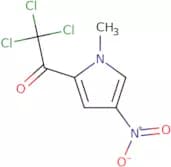
Please enquire for more information about (Leu116)-Prepro-Neuromedin U (104-136) (human) trifluoroacetate salt including the price, delivery time and more detailed product information at the technical inquiry form on this pageFormula:C177H276N46O45Purity:Min. 95%Molecular weight:3,768.37 g/mol1-Methyl-4-nitro-2-(trichloroacetyl)-1H-pyrrole
CAS:1-Methyl-4-nitro-2-(trichloroacetyl)-1H-pyrrole is an organic compound that is used in the synthesis of carboxylic acid derivatives. It is a synthetic intermediate, which can be converted to other compounds by intramolecular hydrogen bonding. The efficiency of this method has been shown through a number of experiments. In nature, 1-methyl-4-nitro-2-(trichloroacetyl)-1H-pyrrole may be found as a hydrogen bond donor.Formula:C7H5Cl3N2O3Purity:Min. 95%Molecular weight:271.48 g/mol

![4-[2-(Fmoc-amino)ethyl]-1-piperazineacetic acid dihydrochloride](/_next/image/?url=https%3A%2Fstatic.cymitquimica.com%2Fproducts%2F3D%2Fthumb-webp%2FFF48264.webp&w=3840&q=75)

![tert-Butyl2-bromo-6,7-dihydrothiazolo[5,4-c]pyridine-5(4H)-carboxylate](/_next/image/?url=https%3A%2Fstatic.cymitquimica.com%2Fproducts%2F3D%2Fthumb-webp%2FFB148706.webp&w=3840&q=75)