


Organic Halides
Subcategories of "Organic Halides"
Found 20442 products of "Organic Halides"
Tos-Gly-Pro-Lys-AMC trifluoroacetate salt
CAS:Please enquire for more information about Tos-Gly-Pro-Lys-AMC trifluoroacetate salt including the price, delivery time and more detailed product information at the technical inquiry form on this pageFormula:C30H37N5O7SPurity:Min. 95%Molecular weight:611.71 g/mol2,6-difluoro-3-nitroaniline
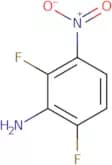
CAS:Please enquire for more information about 2,6-difluoro-3-nitroaniline including the price, delivery time and more detailed product information at the technical inquiry form on this page
Formula:C6H4F2N2O2Purity:Min. 95%Color and Shape:PowderMolecular weight:174.11 g/molGastric Inhibitory Polypeptide (3-42) (human) trifluoroacetate salt
CAS:Please enquire for more information about Gastric Inhibitory Polypeptide (3-42) (human) trifluoroacetate salt including the price, delivery time and more detailed product information at the technical inquiry form on this pageFormula:C214H324N58O63SPurity:Min. 95%Molecular weight:4,749.28 g/mol2,4,6-Trifluorobenzoic acid
CAS:2,4,6-Trifluorobenzoic acid is a chemical compound that is an intermediate in the synthesis of stilbazole. It is prepared by chlorinating the 2,4,6-trichlorobenzoic acid with hydrogen peroxide and hydrochloric acid. The 2,4,6-trifluorobenzoic acid is then reduced to the desired product with sodium borohydride. This chemical has been detected in nature as a racemic mixture and can be used as a precursor in analytical methods for detecting other compounds. It is also used in dechlorination reactions to remove chlorine from organic molecules. This process can be monitored using UV detectors.Formula:C7H3F3O2Purity:Min. 95%Molecular weight:176.09 g/molZ-Asp(OMe)-Gln-Met-DL-Asp(OMe)-fluoromethylketone
CAS:Z-Asp(OMe)-Gln-Met-DL-Asp(OMe)-fluoromethylketone is a mitochondria-targeting compound that has been shown to have neuroprotective and anti-inflammatory properties. It binds to the ATP synthase in the mitochondrial membrane, inhibiting ATP production and causing cell death by apoptosis. ZAFMK also inhibits kinases such as protein kinase 3β (PK3β) and caspase 9, which are involved in inflammation and apoptosis. ZAFMK has been shown to be effective against various diseases such as multiple sclerosis, Alzheimer's disease, Parkinson's disease, amyotrophic lateral sclerosis, Huntington's disease, and stroke.
Formula:C29H40FN5O11SPurity:Min. 95%Molecular weight:685.72 g/mol(d(CH2)51,Tyr(Me)2,Arg8)-Vasopressin trifluoroacetate salt
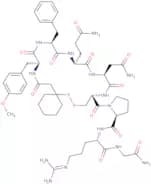
CAS:The monoclonal antibody (mAb) is a recombinant protein that binds to the extracellular region of the vasopressin receptor. It is used in pharmacological research to study the physiological function and pharmacological effects of vasopressin. The mAb has been shown to be minimally toxic, with an LD50 value of greater than 10 mg/kg in mice. It has also been shown to inhibit viruses and inhibit drug-sensitive enzymes. This antibody can be used as a diagnostic tool for congestive heart disease, as well as in experimental models for studying the minimal toxicity and tumor treatment properties of various drugs.Formula:C52H74N14O12S2Purity:Min. 95%Molecular weight:1,151.36 g/molDermcidin-1L (human) trifluoroacetate salt
CAS:Please enquire for more information about Dermcidin-1L (human) trifluoroacetate salt including the price, delivery time and more detailed product information at the technical inquiry form on this pageFormula:C210H359N57O71Purity:Min. 95%Molecular weight:4,818.44 g/molOsteostatin (human) trifluoroacetate salt
CAS:Osteostatin is a recombinant human protein that inhibits bone growth by binding to and neutralizing the effect of forskolin. Osteostatin also has an inhibitory effect on cancer cells, as it inhibits mitochondrial pathways and prevents the activation of factor receptors. Osteostatin blocks the synthesis of cAMP, which is necessary for cell proliferation in cancer cells. The inhibition of cAMP levels leads to a decrease in the production of proteins that stimulate bone growth, such as runx2.Formula:C142H228N42O58Purity:Min. 95%Molecular weight:3,451.58 g/molHepcidin-1 (mouse) trifluoroacetate salt
CAS:Please enquire for more information about Hepcidin-1 (mouse) trifluoroacetate salt including the price, delivery time and more detailed product information at the technical inquiry form on this pageFormula:C111H169N31O35S8Purity:Min. 95%Molecular weight:2,754.25 g/mol(+)-Bicifadine hydrochloride
CAS:Bicifadine hydrochloride is a crystalline form of (+)-bicifadine, which is an analgesic drug that has been shown to be effective in treating acute and chronic pain. The polymorphic form of bicifadine hydrochloride has a more stable structure than the polymorphic form of bicifadine, making it more suitable for oral administration. Bicifadine hydrochloride may be used for the treatment of neuropathic and functional impairment due to chronic pain and acute pain.Formula:C12H15N•HClPurity:Min. 95%Molecular weight:209.71 g/mol([13C6]Leu15)-pTH (1-34) (human) trifluoroacetate salt
Please enquire for more information about ([13C6]Leu15)-pTH (1-34) (human) trifluoroacetate salt including the price, delivery time and more detailed product information at the technical inquiry form on this pagePurity:Min. 95%Decamethonium bromide
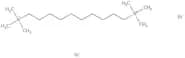
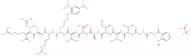
CAS:Decamethonium bromide is a potent and selective antagonist of nicotinic acetylcholine receptors. It is used in the treatment of autoimmune diseases, such as myasthenia gravis, Lambert-Eaton syndrome, and Guillain-Barre syndrome. Decamethonium bromide has been shown to inhibit the enzyme activity of acetylcholinesterase, which leads to an accumulation of acetylcholine at neuromuscular junctions. This causes muscle paralysis and increased bronchoconstriction in humans. In animal models, decamethonium bromide has been shown to be a potent inhibitor of receptor activity in the muscle tissue.Formula:C16H38Br2N2Purity:Min. 95%Color and Shape:PowderMolecular weight:418.29 g/molN-Me-Abz-Amyloid beta/A4 Protein Precursor770 (708-715)-Lys(Dnp)-D-Arg-D-Arg-D-Arg amide trifluoroacetate salt
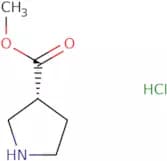
CAS:Please enquire for more information about N-Me-Abz-Amyloid beta/A4 Protein Precursor770 (708-715)-Lys(Dnp)-D-Arg-D-Arg-D-Arg amide trifluoroacetate salt including the price, delivery time and more detailed product information at the technical inquiry form on this pageFormula:C70H116N26O18Purity:Min. 95%Molecular weight:1,609.83 g/mol(R)-methyl pyrrolidine-3-carboxylate hydrochloride
CAS:Please enquire for more information about (R)-methyl pyrrolidine-3-carboxylate hydrochloride including the price, delivery time and more detailed product information at the technical inquiry form on this page
Purity:Min. 95%3-Methoxybenzyl chloride
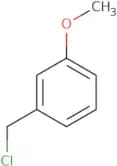
CAS:3-Methoxybenzyl chloride is a polymer conjugate that has the chemical formula C6H5CH2ClO. It reacts with hydroxy groups to form ester bonds. The compound was synthesized by reacting 3-methoxybenzyl chloride with hydrochloric acid in vitro, and the resulting product was found to have antimicrobial properties. In vivo studies have shown that this compound binds to receptors in rat striatal tissue. 3-Methoxybenzyl chloride also showed fluorescence properties when exposed to ultraviolet light and can be used for molecular modeling. Titration calorimetry has been used to study the thermal stability of this polymer conjugate.Formula:C8H9ClOPurity:Min. 95%Molecular weight:156.61 g/mol(His(1-Me)2)-LHRH trifluoroacetate salt
CAS:Please enquire for more information about (His(1-Me)2)-LHRH trifluoroacetate salt including the price, delivery time and more detailed product information at the technical inquiry form on this pageFormula:C56H77N17O13Purity:Min. 95%Molecular weight:1,196.32 g/mol4-Chlorophenylboronic acid
CAS:4-Chlorophenylboronic acid is a chemical compound that is used in the industrial preparation of biphenyl. It is produced by the Friedel-Crafts reaction between chlorine and 4-methoxyphenylboronic acid. This reaction can be carried out using a variety of solvents, such as chloroform or carbon tetrachloride. The optimal reaction conditions are acidic pH values, which are achieved by adding sodium carbonate to the solution. The product can be purified by distillation or crystallization. 4-Chlorophenylboronic acid can also be used for the synthesis of organic compounds through cross-coupling reactions with organometallic reagents, such as palladium chloride and triphenylphosphine, or through asymmetric synthesis with chiral ligands like (S)-proline and 2-(diphenylphosphino)ferrocene.Formula:C6H6BClO2Purity:Min. 95%Color and Shape:PowderMolecular weight:156.37 g/mol1,6-Diaminohexane dihydrochloride
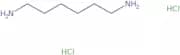
CAS:1,6-Diaminohexane dihydrochloride is a chemical that is used in the analytical method for the determination of p-hydroxybenzoic acid. It has also been used to measure fatty acids and anhydrous sodium. The sample preparation required for this chemical includes mixing with water and adding hydroxyl groups. A toxicological study on 1,6-diaminohexane dihydrochloride shows that it has no acute toxicity in rats. However, it does show some signs of toxicity in rabbits and dogs at high doses. Amine compounds are usually very reactive due to the presence of a lone electron pair on nitrogen.
Formula:C6H18Cl2N2Purity:Min. 95%Molecular weight:189.13 g/mol2-Bromobenzo[d]thiazol-6-amine
CAS:Please enquire for more information about 2-Bromobenzo[d]thiazol-6-amine including the price, delivery time and more detailed product information at the technical inquiry form on this pageFormula:C7H5BrN2SPurity:Min. 95%Molecular weight:229.1 g/molNickel(II) chloride ethylene glycol dimethyl ether complex
CAS:Nickel(II) chloride ethylene glycol dimethyl ether complex is a nickel compound that can be prepared by hydrolysis of a diazo compound. It has been shown to be an effective catalyst for the preparation of aryl chlorides. Nickel(II) chloride ethylene glycol dimethyl ether complex is used in the synthesis of pharmaceuticals and other organic compounds. The coordination chemistry of this complex is important in the area of biological research, as it has been shown to have anti-inflammatory properties. This complex also has an activation energy of 33 kcal/mol, which makes it an efficient catalyst for reactions with low activation energies, such as those involving carbon-carbon bonds.Formula:C4H10Cl2NiO2Purity:Min. 95%Color and Shape:PowderMolecular weight:219.72 g/mol







![([13C6]Leu15)-pTH (1-34) (human) trifluoroacetate salt](/_next/image/?url=https%3A%2Fstatic.cymitquimica.com%2Fproducts%2F3D%2Fthumb-webp%2FFL110012.webp&w=3840&q=75)


![2-Bromobenzo[d]thiazol-6-amine](/_next/image/?url=https%3A%2Fstatic.cymitquimica.com%2Fproducts%2F3D%2Fthumb-webp%2FFB144124.webp&w=3840&q=75)
