Organic Halides
Subcategories of "Organic Halides"
Found 20442 products of "Organic Halides"
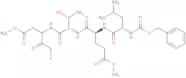
Z-Leu-Glu(OMe)-Thr-DL-Asp(OMe)-fluoromethylketone
CAS:Please enquire for more information about Z-Leu-Glu(OMe)-Thr-DL-Asp(OMe)-fluoromethylketone including the price, delivery time and more detailed product information at the technical inquiry form on this pageFormula:C30H43FN4O11Purity:Min. 95%Molecular weight:654.68 g/molH-Lys(Boc)-2-chlorotrityl resin (200-400 mesh)
Please enquire for more information about H-Lys(Boc)-2-chlorotrityl resin (200-400 mesh) including the price, delivery time and more detailed product information at the technical inquiry form on this pagePurity:Min. 95%Mca-Pro-Leu-Ala-Nva-Dap (Dnp)-Ala-Arg-NH2 trifluoroacetate salt
CAS:Please enquire for more information about Mca-Pro-Leu-Ala-Nva-Dap (Dnp)-Ala-Arg-NH2 trifluoroacetate salt including the price, delivery time and more detailed product information at the technical inquiry form on this pageFormula:C49H68N14O15Purity:Min. 95%Molecular weight:1,093.15 g/mol7-Methoxy-4-(trifluoromethyl)coumarin
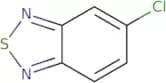
CAS:7-Methoxy-4-(trifluoromethyl)coumarin is a potent and selective aromatase inhibitor. It inhibits the activity of the enzyme, which converts testosterone to estradiol. The inhibition of this enzyme may be beneficial in the treatment of breast cancer. This compound has also been shown to inhibit the activity of P450 enzymes and coumarin derivatives, which are involved in drug metabolism and detoxification.Formula:C11H7F3O3Purity:Min. 95%Molecular weight:244.17 g/mol5-Chloro-2,1,3-benzothiadiazole
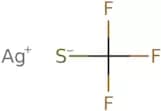
CAS:5-Chloro-2,1,3-benzothiadiazole is a drug substance that belongs to the group of benzothiadiazoles. It is an organic solvent that is used in the chloromethylation of aromatic compounds and as a chromatographic reagent. 5-Chloro-2,1,3-benzothiadiazole has been used in research studies on the chlorination of acetonitrile and chloride. This drug is synthesized by reacting benzene with selenium dioxide and sodium hydroxide. 5-Chloro-2,1,3-benzothiadiazole can be produced by reacting benzene with nitromethane and oxalic acid or by heating phthalic anhydride with a solution of potassium hydroxide in acetonitrile. The liquid chromatography method is used to separate this drug from impurities such as monochloride,Formula:C6H3ClN2SPurity:Min. 95%Molecular weight:170.62 g/mol(Trifluoromethylthio) Silver(I)
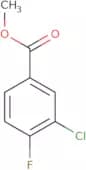
CAS:(Trifluoromethylthio) silver(I) is an efficient method for the synthesis of chiral, functionalized organosulfur compounds. It is prepared by the trifluoromethylthiolation of aryl acetonitriles in the presence of persulfate and a radical coupling agent. The reaction time can be adjusted to suit the desired product, with shorter times producing more complex molecules. This compound can be used as a nucleophile in organic reactions, including sulfide activation reactions.Formula:CHAgF3SPurity:Min. 95%Molecular weight:209.95 g/molMethyl 3-chloro-4-fluorobenzoate
CAS:Methyl 3-chloro-4-fluorobenzoate is a white crystalline solid with a melting point of 61°C. It is soluble in ethyl acetate, ether, and chloroform. Methyl 3-chloro-4-fluorobenzoate is used as a reagent in the synthesis of polymers, pharmaceuticals, and pesticides. It has been shown to be useful as a building block for the synthesis of complex compounds such as heterocycles and polymers. Methyl 3-chloro-4-fluorobenzoate is also used as an intermediate in the production of other chemicals such as pharmaceuticals, catalysts, and herbicides.Formula:C8H6ClFO2Purity:Min. 95%Molecular weight:188.58 g/mol(Leu31,Pro34)-Neuropeptide Y (human, rat) trifluoroacetate salt
CAS:Please enquire for more information about (Leu31,Pro34)-Neuropeptide Y (human, rat) trifluoroacetate salt including the price, delivery time and more detailed product information at the technical inquiry form on this page
Formula:C189H284N54O56SPurity:Min. 95%Molecular weight:4,240.67 g/molDefensin HNP-1 (human) trifluoroacetate salt
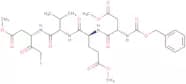
CAS:Defensin HNP-1 is a trifluoroacetate salt of human defensin HNP-1. It has antimicrobial activity against Gram-negative and Gram-positive bacteria, including Mycobacterium tuberculosis, Staphylococcus aureus, Mycoplasma pneumoniae, Streptococcus pneumoniae, Haemophilus influenzae and Enterococcus faecalis. The purified protein also has broad-spectrum activity against cancer cells. Defensin HNP-1 is most active in neutrophils from humans with active cystic fibrosis. The protein binds to the bacterial cell membrane and causes the release of lysosomal enzymes that kill the bacteria. Defensin HNP-1 is also able to inhibit the growth of tumor cells as it can be internalized into these cells by endocytosis.Formula:C150H222N44O38S6Purity:Min. 95%Molecular weight:3,442.04 g/molZ-Asp(OMe)-Glu(OMe)-Val-DL-Asp(OMe)-fluoromethylketone
CAS:Z-Asp(OMe)-Glu(OMe)-Val-DL-Asp(OMe)-fluoromethylketone is a small molecule that has been shown to induce apoptosis in cultured cells. It is a caspase-3 inhibitor, which prevents the activation of the caspase cascade and protects cells from oxidative injury. Low doses of Z-Asp(OMe)-Glu(OMe)-Val-DL-Asp(OMe)-fluoromethylketone have been shown to induce apoptosis in cultured cells, with no significant cytotoxicity at high doses. The mechanism of action for this agent is not yet known, but it may promote mitochondrial membrane potential loss and neuronal death by binding to DNA, or induce cell death through a caspase-independent pathway.Formula:C30H41FN4O12Purity:Min. 95%Molecular weight:668.66 g/molOsteoblast Activating Peptide (human) trifluoroacetate salt
Please enquire for more information about Osteoblast Activating Peptide (human) trifluoroacetate salt including the price, delivery time and more detailed product information at the technical inquiry form on this page
Formula:C120H196N38O37SPurity:Min. 95%Molecular weight:2,795.14 g/mol(Tyr1)-pTH (1-34) (human) trifluoroacetate salt
CAS:Please enquire for more information about (Tyr1)-pTH (1-34) (human) trifluoroacetate salt including the price, delivery time and more detailed product information at the technical inquiry form on this pageFormula:C189H295N55O51S2Purity:Min. 95%Molecular weight:4,217.84 g/mol(Chlorodifluoromethyl)trimethylsilane
CAS:(Chlorodifluoromethyl)trimethylsilane is a chlorinating agent that is used for the transfer of chlorine to organic compounds. The activated chlorides are converted to aldehydes, which are then reacted with terminal alkynes in the presence of sodium carbonate to produce (chlorodifluoromethyl)trimethylsilanes. This reaction produces an organosilicon compound that has been shown to inhibit certain enzymes, such as lipases and proteases. Chlorodifluoromethyl)trimethylsilane also has bioisosteres, or structural analogs, with other halogens. It can be prepared by irradiation of chlorodichloromethane at room temperature in the presence of a catalyst.Formula:C4H9ClF2SiPurity:Min. 95%Color and Shape:Colorless PowderMolecular weight:158.65 g/molAngiotensin (1-12) (human) trifluoroacetate salt
CAS:Please enquire for more information about Angiotensin (1-12) (human) trifluoroacetate salt including the price, delivery time and more detailed product information at the technical inquiry form on this pageFormula:C73H109N19O16Purity:Min. 95%Molecular weight:1,508.77 g/mol4-Chlorophenethyl alcohol
CAS:4-Chlorophenethyl alcohol is a synthetic, primary alcohol. It can be synthesized by reacting 2,4-dichlorobenzoic acid with a Grignard reagent. The reaction produces 4-chlorophenethyl alcohol, which is insoluble in water and reacts with chloride to form chloroform. This procedure can be used to produce other chlorinated alcohols. 4-Chlorophenethyl alcohol has been shown to have acute toxicities that are similar to those of trifluoroacetic acid and it is believed that the toxicity is due to its ability to react with proteins and nucleic acids.Formula:C8H9ClOPurity:Min. 95%Color and Shape:PowderMolecular weight:156.61 g/mol5,6-Dichloronicotinic acid
CAS:5,6-Dichloronicotinic acid is a compound that can be synthesized by reacting methyl ketones with chloroacetic acid. It is used in the synthesis of maleic anhydride and has been shown to inhibit the catalysis of acetylcholine chloride. 5,6-Dichloronicotinic acid has also been shown to have an inhibitory effect on Alzheimer's disease. The kinetic mechanism for this inhibition occurs through the hydrolysis step of 5,6-Dichloronicotinic acid by magnesium chloride in hexane solution. The reactive acylation reaction proceeds when 5,6-Dichloronicotinic acid reacts with acetic anhydride in the presence of pyridine.Formula:C6H3Cl2NO2Color and Shape:PowderMolecular weight:192 g/mol2-Chloro-6-methoxypyridine
CAS:2-Chloro-6-methoxypyridine (2CMP) is a potent antagonist that binds to copper chloride, inhibiting its ability to activate aryl chlorides. This chemical has been shown to have anti-angiogenic effects in human cancer cells and can be used for the treatment of cancer. 2CMP has also been shown to be effective at blocking angiogenesis in mice with breast cancer. 2CMP is synthesized through an asymmetric synthesis process, which involves the use of a dipole and molecular docking analysis.Formula:C6H6ClNOPurity:Min. 95%Color and Shape:Clear LiquidMolecular weight:143.57 g/mol(Des-His6)-ACTH (1-24) (human, bovine, rat) trifluoroacetate salt
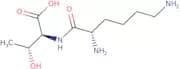
Please enquire for more information about (Des-His6)-ACTH (1-24) (human, bovine, rat) trifluoroacetate salt including the price, delivery time and more detailed product information at the technical inquiry form on this pageFormula:C130H203N37O30SPurity:Min. 95%Molecular weight:2,796.3 g/molH-Lys-Thr-OH hydrochloride salt
CAS:H-Lys-Thr-OH hydrochloride salt is a synthetic amino acid that has been used in the synthesis of a cyclic peptide. The synthesis was achieved by metathesis reactions, which involved the reaction of an acid chloride with a chiral amine to form an ester. H-Lys-Thr-OH hydrochloride salt has been shown to have high binding constants to its targets and can be used as a selective reagent for the synthesis of virus proteins. It is also able to bind to carboxylate groups, which are common in wild type viruses and gene products. This reagent also has cleavage products, which can be used for efficient method for synthesizing cyclic peptides.
Formula:C10H21N3O4Purity:Min. 95%Molecular weight:247.29 g/molTetraethylammonium bromide
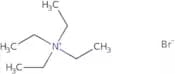
CAS:Tetraethylammonium bromide is an ionic liquid that has a low viscosity and high water solubility. It is used as an antimicrobial agent in the process of producing polymers, such as polyurethane. Tetraethylammonium bromide has been shown to be effective against a broad range of bacteria, including Bacillus subtilis and Escherichia coli. It has also been shown to have a protective effect on neurons by preventing neuronal death in response to oxidative stress. This protection may be due to its ability to increase the concentration of cytosolic Ca2+ ions, which are involved in neuronal survival pathways.
Formula:C8H20BrNPurity:Min. 95%Color and Shape:White Off-White PowderMolecular weight:210.16 g/mol