Toxicology
Toxicology standards are used to study the harmful effects of substances on biological systems. These standards are essential in evaluating the safety and toxicity of drugs, chemicals, and environmental agents. CymitQuimica provides a wide selection of toxicology standards, enabling researchers to assess the potential risks associated with exposure to various compounds.
Found 13652 products of "Toxicology"
Sort by
Purity (%)
0
100
|
0
|
50
|
90
|
95
|
100
Tetradifon
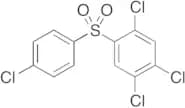
CAS:<p>Applications Tetradifon is an acaricide and ovicide. Also, Tetradifon possessed nephrotoxic by promoting kidney morphometric and functional damage and depleting renal antioxidant defense system in rats.<br> Not a dangerous good if item is equal to or less than 1g/ml and there is less than 100g/ml in the package<br>References Badraoui, R., et al.: Exp Toxicol Pathol., 64, 645-50 (2012);<br></p>Formula:C12H6Cl4O2SColor and Shape:NeatMolecular weight:356.05Ethyl Indole-3-acetate
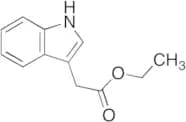
CAS:Controlled Product<p>Applications Ethyl Indole-3-acetate is a compound used in the synthesis of 9H-Pyrrolo[1,2-α]Indoles via Michael Addition-Condensation with α,β-Unsaturated Ketimines.<br>References Zhang, M., et al.: J. Heterocyclic Chem. (2016)<br></p>Formula:C12H13NO2Color and Shape:NeatMolecular weight:203.24rac-Cotinine-d3 N-β-D-Glucuronide
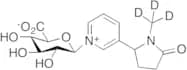
Controlled Product<p>Stability Hygroscopic<br>Applications rac-Cotinine-d3 N-β-D-Glucuronide is a labelled racemic analogue of Cotinine N-β-D-Glucuronide (C725175), a major metabolite of Nicotine (N412420) in humans. Carcinogen.<br>References Benowitz, N., et al.: Clin. Pharmacol. Ther., 56, 483 (1994), Nakajima, M., et al.: Drug Metab. Dispos., 24, 1212 (1996), Messina, E., et al.: J. Pharmacol. Exp. Ther., 282, 1608 (1997), Oscarson, M., et al.: Hum. Mutat., 20, 275 (2002),<br></p>Formula:C16H17D3N2O7Color and Shape:NeatMolecular weight:355.366-Hydroxy Bentazon
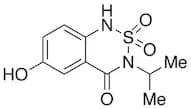
CAS:Controlled Product<p>Applications A metabolite of Bentazon, a selective post-emergence herbicide.<br>References Klibanov, A., et al.: Science, 221, 259 (1983), Huber, R., et al.: Rev. Environ. Contam. Toxicol., 137, 111 (1994), Roper, J., et al.: Wat. Res., 29, 2720 (1995),<br></p>Formula:C10H12N2O4SColor and Shape:ColourlessMolecular weight:256.28Picaridin
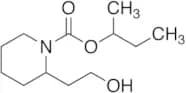
CAS:Controlled Product<p>Applications Acts on certain olfactory receptor cell types to reduce the activating or attracting effect of odor sources.Insect repellent.<br>References Boeckh, J., et al.: Pestic. Sci., 48, 359 (1996), Yap, H.H., et al.: J. Vector Ecol., 23, 62 (1998),<br></p>Formula:C12H23NO3Color and Shape:ColourlessMolecular weight:229.32Thifensulfuron-methyl
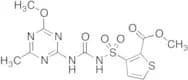
CAS:<p>Applications Thifensulfuron-methyl is a sulfonylurea herbicide.<br> Not a dangerous good if item is equal to or less than 1g/ml and there is less than 100g/ml in the package<br>References Zhuang, Q-K., et al.: Huanjing Yu Jiankang Zazhi, 32, 621-623 (2015)<br></p>Formula:C12H13N5O6S2Color and Shape:NeatMolecular weight:387.39Ouabain
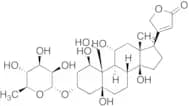
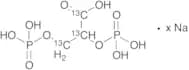
CAS:Controlled ProductFormula:C29H44O12Color and Shape:White To Off-WhiteMolecular weight:584.652,3-DPG-13C3 Sodium Salt
CAS:Formula:C3H8O10P2·x(Na)Color and Shape:White To Light BeigeMolecular weight:269.02 + x(22.99)(R)-Apomorphine-d4 Hydrochloride
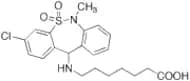
CAS:Controlled ProductFormula:C17H13D4NO2·HClColor and Shape:NeatMolecular weight:271.35 + 36.46Tianeptine
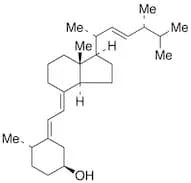
CAS:<p>Applications Tricyclic compound with psychostimulant, anti-ulcer and anti-emetic properties. Antidepressant.<br>References Malen, C., et al.: Experientia, 28, 811 (1972), Safa, A., et al.: J. Biol. Chem., 262, 7884 (1987), Ford, J.M., et al.: Pharmacol. Rev., 42, 155, (1990), Pierre, A., et a.: Cancer Res., 51, 2312 (1991),<br></p>Formula:C21H25ClN2O4SColor and Shape:White To Off-WhiteMolecular weight:436.95Dihydro Tachysterol
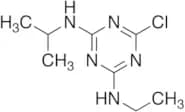
CAS:<p>Applications Calcium regulator. Preparation by reduction of Tachysterol. It is widely used for hypocalcemic hypoparathyroidism following surgical removal of parathyroids.<br> Not a dangerous good if item is equal to or less than 1g/ml and there is less than 100g/ml in the package<br>References Schilling, T., et al.: Exp. Clin. Endocrinol. Diabetes, 105, 237 (1997), Bushinsky, D., et al.: Lancet, 352, 306 (1998), Jehle, D., et al.: J. Med., 30, 39 (1999), Winer, K., et al.: J. Clin. Endocrinol. Metab., 88, 4214 (2003),<br></p>Formula:C28H46OColor and Shape:White To Off-WhiteMolecular weight:398.66Atrazine
CAS:<p>Applications Selective herbicide. Potential symptoms of overexposure are irritation of eyes and skin; dermatitis, skin sensitization; dyspnea, weakness, incoordination, salivation; hypothermia; liver injury.This compound is a contaminant of emerging concern (CECs)<br> Not a dangerous good if item is equal to or less than 1g/ml and there is less than 100g/ml in the package<br>References Dalgaard-Mikkelsen, S., et al.: Pharmacol. Rev., 14, 225 (1962), Muller, K., et al.: J. Environ. Qual., 31, 309 (2002), Backhaus, T., et al.: Environ. Toxicol. Chem., 23, 258 (2004),<br></p>Formula:C8H14ClN5Color and Shape:ColourlessMolecular weight:215.68N-Carbamoylformimidamide Tritosulfuron
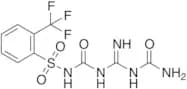
CAS:Controlled Product<p>Applications N-carbamoylformimidamide Tritosulfuron is a metabolite of Tritosulfuron (T886903) is a sulfonylurea herbicide found in in ground, surface and wastewater.<br>References Fenoll, J., et al.: Talanta, 101, 273 (2012); Huntscha, S., et al.: J. Chromatogr. A, 1268, 74 (2012); Reemtsma, T., et al.: Water Res., 47, 5535 (2013);<br></p>Formula:C10H10F3N5O4SColor and Shape:NeatMolecular weight:353.28Topotecan-d6
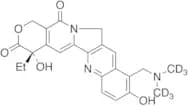
CAS:Controlled ProductFormula:C232H6H17N3O5Color and Shape:YellowMolecular weight:427.48N-Propylphosphorothioic Triamide
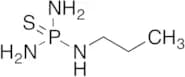
CAS:<p>Applications N-Propylphosphorothioic triamide is used to significantly reduce ammonia volatilization in urea.<br>References Sunderlage, B., et al.: Soil Sci. Soc. Am. J., 82, 253 (2018)<br></p>Formula:C3H12N3PSColor and Shape:NeatMolecular weight:153.1862Disperse Polyester Dark Blue, 90%
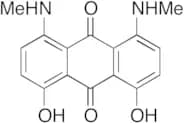
CAS:<p>Stability Light Sensitive<br>Applications Disperse Polyester Dark Blue causes photocontact dermatitis in workers engaged in its manufacturing.<br>References Davies, Keith A., et al.: J. Appl. Chem. Biotechn., 25(3), 195-204 (1975)<br></p>Formula:C16H14N2O4Purity:90%Color and Shape:Dark Blue To Dark VioletMolecular weight:298.2916β-Hydroxytestosterone
CAS:Controlled ProductFormula:C19H28O3Color and Shape:NeatMolecular weight:304.424Aziprotryne
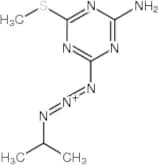
CAS:Controlled Product<p>Applications Aziprotryne is a pesticide.<br></p>Formula:C7H11N7SColor and Shape:ColourlessMolecular weight:225.27