Biochemicals and Reagents
Subcategories of "Biochemicals and Reagents"
- Biomolecules(98,622 products)
- By Biological Target(100,423 products)
- By Pharmacological Effects(6,927 products)
- Cryopreservatives(21 products)
- Desinfectants and Related Compounds(28 products)
- Hormones(353 products)
- Plant Biology(6,913 products)
- Secondary Metabolites(14,362 products)
Found 130307 products of "Biochemicals and Reagents"
PRSS16 antibody
PRSS16 antibody was raised using a synthetic peptide corresponding to a region with amino acids SHSTPYCGLRRAVQIVLHSLGQKCLSFSRAETVAQLRSTEPQLSGVGDRQ
Purity:Min. 95%C10ORF96 Blocking Peptide
A synthetic peptide for use as a blocking control in assays to test for specificity of C10orf96 antibody, catalog no. 70R-3327
Purity:Min. 95%KIR2DL1 protein
MEGVHRKPSL LAHPGRLVKS EETVILQCWS DVMFEHFLLH REGMFNDTLR LIGEHHDGVS KANFSISRMT QDLAGTYRCY GSVTHSPYQV SAPSDPLDIV IIGLYEKPSL SAQLGPTVLA GENVTLSCSS RSSYDMYHLS REGEAHERRL PAGPKVNGTF QADFPLGPAT HGGTYRCFGS FHDSPYEWSK SSDPLLVSVT GN
Purity:Min. 95%MMP16 antibody
The MMP16 antibody is a highly effective substance used in Life Sciences research. It is a monoclonal antibody that specifically targets the matrix metalloproteinase 16 (MMP16), also known as MT3-MMP. This antibody has been extensively studied and proven to be highly specific and sensitive in detecting MMP16 expression in various tissues and cell types.
Rabbit anti Rat IgG (H + L)
Rabbit anti-rat IgG (H+L) was raised in rabbit using rat IgG whole molecule as the immunogen.Purity:Min. 95%KLRC1 antibody
The KLRC1 antibody is a polyclonal antibody that specifically targets the chemokine-activated receptor KLRC1. This antibody is commonly used in life sciences research and has been shown to have high affinity and specificity for KLRC1. It can be used in various applications, such as Western blotting, immunohistochemistry, and ELISA. The KLRC1 antibody has been proven effective in detecting KLRC1 expression in human serum samples and has been used to study its role in various biological processes. This antibody has also been utilized in the development of therapeutic inhibitors targeting KLRC1 signaling pathways. With its reliable performance and versatility, the KLRC1 antibody is an essential tool for researchers studying protein kinases and their associated pathways.
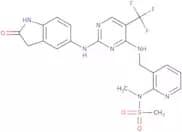
PF 562271
CAS:Inhibitor of FAK kinase
Formula:C21H20F3N7O3SPurity:Min. 95%Molecular weight:507.49 g/molRef: 3D-FP103993
Discontinued productPfkfb2 Blocking Peptide
A synthetic peptide for use as a blocking control in assays to test for specificity of Pfkfb2 antibody, catalog no. 70R-9420
Purity:Min. 95%NECAB3 Blocking Peptide
A synthetic peptide for use as a blocking control in assays to test for specificity of NECAB3 antibody, catalog no. 70R-3495
Purity:Min. 95%HK1 Blocking Peptide
A synthetic peptide for use as a blocking control in assays to test for specificity of HK1 antibody, catalog no. 70R-10230
Purity:Min. 95%ACSL3 Blocking Peptide
A synthetic peptide for use as a blocking control in assays to test for specificity of ACSL3 antibody, catalog no. 70R-6570
Purity:Min. 95%[D-Ala2,Met5]-Enkephalinamide
CAS:D-Ala2,Met5]-Enkephalinamide is a potent endogenous opioid peptide that binds to opioid receptors and has been shown to have both antinociceptive and depressant effects. It has been shown to be effective in a model system of pain, acting on the descending antinociceptive pathway from the rostral ventromedial medulla (RVM) to the spinal cord. D-Ala2,Met5]-Enkephalinamide has also been observed to inhibit locomotor activity in CD1 mice at sub-effective doses. D-Ala2,Met5]-Enkephalinamide has been shown to act through activation of both G protein-coupled mu opioids receptors and G protein-coupled delta opioid receptors.
Formula:C28H38N6O6S•CH3COOH•H2OPurity:Min. 95%Molecular weight:664.77 g/molRSBN1 Blocking Peptide
A synthetic peptide for use as a blocking control in assays to test for specificity of RSBN1 antibody, catalog no. 70R-3989
Purity:Min. 95%PCBP3 Blocking Peptide
A synthetic peptide for use as a blocking control in assays to test for specificity of PCBP3 antibody, catalog no. 70R-4780
Purity:Min. 95%DGKE antibody
DGKE antibody was raised using the N terminal of DGKE corresponding to a region with amino acids EAERRPAPGSPSEGLFADGHLILWTLCSVLLPVFITFWCSLQRSRRQLHRPurity:Min. 95%CA 242 antibody
The CA 242 antibody is a highly specialized monoclonal antibody that targets specific proteins in the body. It has been extensively studied and proven to be effective in various research areas within the Life Sciences field. This antibody specifically interacts with glial fibrillary acidic protein (GFAP), β-catenin, and oncostatin, among others.HNRPDL Blocking Peptide
A synthetic peptide for use as a blocking control in assays to test for specificity of HNRPDL antibody, catalog no. 70R-4655
Purity:Min. 95%TMEM195 antibody
TMEM195 antibody was raised using the N terminal of TMEM195 corresponding to a region with amino acids MKNPEAQQDVSVSQGFRMLFYTMKPSETSFQTLEEVPDYVKKATPFFISL
Purity:Min. 95%TMCC1 Blocking Peptide
A synthetic peptide for use as a blocking control in assays to test for specificity of TMCC1 antibody, catalog no. 70R-6287
Purity:Min. 95%ActA antibody
The ActA antibody is a monoclonal antibody that specifically targets the growth factor TGF-beta. It is widely used in the field of Life Sciences for various research purposes. This antibody has been shown to bind to collagen and inhibit its activity, leading to a decrease in the production of dimers and chemokines. Additionally, the ActA antibody has been found to have high affinity for glycopeptides and ferritin, making it an ideal tool for molecular docking studies. Its unique glycosylation pattern also contributes to its high viscosity and stability, allowing for easy immobilization on various surfaces. With its exceptional characteristics, the ActA antibody is an invaluable asset in the field of research and development.MAGEA9 Blocking Peptide
A synthetic peptide for use as a blocking control in assays to test for specificity of MAGEA9 antibody, catalog no. 20R-1203
Purity:Min. 95%ECT2 Blocking Peptide
A synthetic peptide for use as a blocking control in assays to test for specificity of ECT2 antibody, catalog no. 70R-5714
Purity:Min. 95%Itgb1 Blocking Peptide
A synthetic peptide for use as a blocking control in assays to test for specificity of Itgb1 antibody, catalog no. 70R-9607
Purity:Min. 95%N-(3-(5-((3-Acrylamido-4-(morpholine-4-carbonyl)phenyl)amino)-1-methyl-6-oxo-1,6-dihydropyridin-3-yl)-2-methylphenyl)-4-(tert-butyl) benzamide
CAS:N-(3-(5-((3-Acrylamido-4-(morpholine-4-carbonyl)phenyl)amino)-1-methyl-6-oxo-1,6-dihydropyridin-3-yl)-2-methylphenyl)-4-(tert-butyl) benzamide is a novel pharmaceutical compound, which is synthesized through an intricate organic chemistry process aimed at targeting specific pathophysiological pathways. This compound functions by modulating cellular pathways with high specificity, potentially altering disease progression at the molecular level.Formula:C38H41N5O5Purity:Min. 95%Molecular weight:647.8 g/molRef: 3D-VID28064
Discontinued productPRKAR2A antibody
PRKAR2A antibody was raised in rabbit using the middle region of PRKAR2A as the immunogen
TLE4 Blocking Peptide
A synthetic peptide for use as a blocking control in assays to test for specificity of TLE4 antibody, catalog no. 70R-7916
Purity:Min. 95%ATG5 antibody
ATG5 antibody was raised using a synthetic peptide corresponding to a region with amino acids DPEDGEKKNQVMIHGIEPMLETPLQWLSEHLSYPDNFLHISIIPQPTDPurity:Min. 95%DONSON antibody
DONSON antibody was raised using the middle region of DONSON corresponding to a region with amino acids DLITALISPTTRGLREAMRNEGIEFSLPLIKESGHKKETASGTSLGYGEE
mAdiponectin protein (His tag)
18-247 amino acids: MGSSHHHHHH SSGLVPRGSH MEDDVTTTEE LAPALVPPPK GTCAGWMAGI PGHPGHNGTP GRDGRDGTPG EKGEKGDAGL LGPKGETGDV GMTGAEGPRG FPGTPGRKGE PGEAAYVYRS AFSVGLETRV TVPNVPIRFT KIFYNQQNHY DGSTGKFYCN IPGLYYFSYH ITVYMKDVKV SLFKKDKAVL FTYDQYQEKN VDQASGSVLL HLEVGDQVWL QVYGDGDHNG LYADNVNDST FTGFLLYHDT NPurity:Min. 95%CYP11B1 Blocking Peptide
A synthetic peptide for use as a blocking control in assays to test for specificity of CYP11B1 antibody, catalog no. 70R-9996
Purity:Min. 95%ACPA
CAS:Agonist of cannabinoid receptors. Inhibits forskolin-induced cAMP release from human CB1-transfected Chinese hamster ovary (CHO) cells by enhancing the binding of [35S]GTPγS to cerebellar membrane. Although initially identified as a CB1-selective agonist, ACPA inhibits migration of BV-2 cells, demonstrating its action on CB2 receptors.
Formula:C23H37NOPurity:Min. 95%Molecular weight:343.55 g/molRef: 3D-BA17967
Discontinued productNEK7 Blocking Peptide
A synthetic peptide for use as a blocking control in assays to test for specificity of NEK7 antibody, catalog no. 70R-2229
Purity:Min. 95%TFAP2C Blocking Peptide
A synthetic peptide for use as a blocking control in assays to test for specificity of TFAP2C antibody, catalog no. 70R-7988
Purity:Min. 95%ZNF491 Blocking Peptide
A synthetic peptide for use as a blocking control in assays to test for specificity of ZNF491 antibody, catalog no. 70R-8126
Purity:Min. 95%ACTRT2 Blocking Peptide
A synthetic peptide for use as a blocking control in assays to test for specificity of ACTRT2 antibody, catalog no. 70R-2384
Purity:Min. 95%KLHDC8A Blocking Peptide
A synthetic peptide for use as a blocking control in assays to test for specificity of KLHDC8A antibody, catalog no. 70R-1409
Purity:Min. 95%Nxph1 Blocking Peptide
A synthetic peptide for use as a blocking control in assays to test for specificity of Nxph1 antibody, catalog no. 70R-9330
Purity:Min. 95%CCR5 antagonist 1
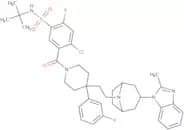
CAS:CCR5 antagonist 1 is a novel, orally active small molecule that binds to the CCR5 receptor. It has been shown to inhibit HIV-1 infection of human T cells and macrophages in vitro and reduce viral load in vivo. This drug has also been shown to possess antiviral potency against influenza virus and other viruses. The pharmacokinetic properties of this drug have been studied in rats and monkeys, with the results showing that it is rapidly absorbed from the gastrointestinal tract into the bloodstream, with a half-life of about 2 hours. This compound also inhibits chemokine production by binding to the chemokine receptor.
Formula:C39H46ClF2N5O3SPurity:Min. 95%Molecular weight:738.3 g/molGPR4 antibody
The GPR4 antibody is a retinoid and HDAC inhibitor that belongs to the class of monoclonal antibodies. It is used in vaccine strains and has been shown to target β-catenin, collagen, and methyl transferase. This antibody is widely used in the field of life sciences and medicine for its nuclear properties. The GPR4 antibody specifically binds to Gynura procumbens and can be used as a tool for studying various cellular processes. With its high specificity and affinity, this antibody is a valuable tool for researchers in the field of antibodies.
Caspase 6 antibody
The Caspase 6 antibody is a highly specialized immunoassay tool designed for neutralizing the activity of Caspase 6, a drug antibody that plays a crucial role in various cellular processes. This antibody has been extensively studied and proven to be effective in inhibiting the growth factor signaling pathway mediated by Caspase 6. Additionally, it has shown promising results as a potential therapeutic agent for diseases involving abnormal cell proliferation.
UBE2C Blocking Peptide
A synthetic peptide for use as a blocking control in assays to test for specificity of UBE2C antibody, catalog no. 70R-5588
Purity:Min. 95%Adenosine Deaminase antibody
The Adenosine Deaminase antibody is a highly specialized biomolecule used in Life Sciences research. It is available as both a monoclonal and polyclonal antibody, making it versatile for various applications. This antibody specifically targets and binds to adenosine deaminase, an enzyme involved in the breakdown of adenosine.
PABPC5 antibody
PABPC5 antibody was raised using a synthetic peptide corresponding to a region with amino acids DAEWALNTMNFDLINGKPFRLMWSQPDDRLRKSGVGNIFIKNLDKSIDNR
C2ORF42 Blocking Peptide
A synthetic peptide for use as a blocking control in assays to test for specificity of C2orf42 antibody, catalog no. 70R-3949
Purity:Min. 95%S100A9 protein
The S100A9 protein is a recombinant protein that is widely used in the field of life sciences. It plays a crucial role in various biological processes, including immune response, inflammation, and cell growth. This protein has been extensively studied and has shown to interact with other proteins such as fibronectin, collagen, and growth factors.
Purity:Min. 95%H1F0 Blocking Peptide
A synthetic peptide for use as a blocking control in assays to test for specificity of H1F0 antibody, catalog no. 70R-2112
Purity:Min. 95%PPIE Blocking Peptide
A synthetic peptide for use as a blocking control in assays to test for specificity of PPIE antibody, catalog no. 70R-1434
Purity:Min. 95%COL4A3 antibody
COL4A3 antibody is a high-quality antibody used in Life Sciences research. It is specifically designed to target and bind to the COL4A3 protein, which plays a crucial role in various biological processes. This antibody has been extensively tested and validated for its specificity and sensitivity.
Sialylglycopeptide
CAS:Sialylglycopeptide is an oligosaccharide that is present in the cell membrane of human erythrocytes. It has been shown to be a ligand for toll-like receptor 2, which is a pattern recognition receptor (PRR) that recognizes pathogen-associated molecular patterns. This molecule is also involved in the inflammatory response and in some infectious diseases. Sialylglycopeptide reacts with nitrite ions to form nitrosogalactopyranoside, which can lead to oxidative injury of cells such as those from the heart or lung. The sialylglycopeptides are also important for lactation, and their levels increase when pregnant women are exposed to glucocorticoids.
Formula:C112H189N15O7Purity:Min. 95%Molecular weight:2,865.8 g/molIL6 antibody
The IL6 antibody is a powerful tool in the field of Life Sciences. It is a monoclonal antibody that specifically targets interleukin-6 (IL-6), a key growth factor involved in various physiological processes. This antibody has been extensively studied and proven to be effective in inhibiting the activity of IL-6.ZNF662 Blocking Peptide
A synthetic peptide for use as a blocking control in assays to test for specificity of ZNF662 antibody, catalog no. 70R-9026
Purity:Min. 95%HLTF Blocking Peptide
A synthetic peptide for use as a blocking control in assays to test for specificity of HLTF antibody, catalog no. 70R-8247
Purity:Min. 95%ATIC Blocking Peptide
A synthetic peptide for use as a blocking control in assays to test for specificity of ATIC antibody, catalog no. 70R-1295
Purity:Min. 95%LIPT1 antibody
LIPT1 antibody was raised using the N terminal of LIPT1 corresponding to a region with amino acids NCFQLLCNCQVPAAGFKKTVKNGLILQSISNDVYQNLAVEDWIHDHMNLE
ISCA2 Blocking Peptide
A synthetic peptide for use as a blocking control in assays to test for specificity of ISCA2 antibody, catalog no. 70R-2471
Purity:Min. 95%TRNT1 antibody
TRNT1 antibody was raised using the N terminal of TRNT1 corresponding to a region with amino acids PQDIDFATTATPTQMKEMFQSAGIRMINNRGEKHGTITARLHEENFEITT
GAPDH antibody
The GAPDH antibody is a highly effective monoclonal antibody that has been activated to target specific proteins in the body. It is commonly used in Life Sciences research to study various cellular processes and pathways. This antibody has been found to neutralize the activity of TGF-beta, a protein involved in cell growth and differentiation. Additionally, it has shown to have glycosylation properties, which can impact protein function and stability. One of the key targets of the GAPDH antibody is E-cadherin, a protein responsible for cell adhesion and tissue integrity. By binding to E-cadherin, this antibody can modulate cell-cell interactions and potentially influence cellular behavior. Furthermore, studies have demonstrated that the GAPDH antibody can inhibit collagen production, which is crucial for maintaining tissue structure and elasticity. This property may have implications in wound healing and tissue regeneration. Another important aspect of the GAPDH antibody is its ability to regulate microvessel density. By targeting specific proteins involved in angiogenesis, thisZG16 Blocking Peptide
A synthetic peptide for use as a blocking control in assays to test for specificity of ZG16 antibody, catalog no. 70R-5441
Purity:Min. 95%DHX15 Blocking Peptide
A synthetic peptide for use as a blocking control in assays to test for specificity of DHX15 antibody, catalog no. 70R-4690
Purity:Min. 95%ent-Voriconazole-d3
CAS:Voriconazole is an antifungal agent that inhibits the synthesis of ergosterol, a component of fungal cell membranes. It binds to the cytochrome P450 enzyme, which is involved in the conversion of lanosterol to ergosterol. Voriconazole has been shown to have potent inhibitory effects on ion channels and protein interactions. It is also used as a research tool for studying protein-protein interactions and receptor pharmacology. This compound can be used as an activator or inhibitor depending on its target.
Formula:C16H11D3F3N5OPurity:Min. 95%Molecular weight:352.33 g/molRef: 3D-BAA31496
Discontinued productANKRD42 antibody
ANKRD42 antibody was raised using the N terminal of ANKRD42 corresponding to a region with amino acids PLHLAATHGHSFTLQIMLRSGVDPSVTDKREWRPVHYAAFHGRLGCLQLL
Goat anti Rabbit IgG (H+L) (PolyCompHRP)
Goat anti-Rabbit IgG (H+L) secondary antibody (PolyCompHRP); 1 mg/mlPurity:Min. 95%Mouse PMN antibody (FITC)
Mouse PMN antibody (FITC) was raised in rabbit using mouse PMNs as the immunogen.








![[D-Ala2,Met5]-Enkephalinamide](/_next/image/?url=https%3A%2Fstatic.cymitquimica.com%2Fproducts%2F3D%2Fthumb-webp%2FPEK-4117.webp&w=3840&q=75)