Biochemicals and Reagents
Subcategories of "Biochemicals and Reagents"
- Biomolecules(98,620 products)
- By Biological Target(100,451 products)
- By Pharmacological Effects(6,928 products)
- Cryopreservatives(21 products)
- Desinfectants and Related Compounds(28 products)
- Hormones(353 products)
- Plant Biology(6,913 products)
- Secondary Metabolites(14,363 products)
Found 130328 products of "Biochemicals and Reagents"
SR 9011
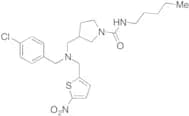
CAS:Applications SR 9011 is a synthetic REV-ERBα/β agonist with activity in vivo. It is a lead compound for a new class of cancer drugs associated with the body’s circadian clock.
References Solt, L.A., et. al.: Nature, 485, 7396 (2012); Chem. and Eng. News. p.8, Jan. 15, 2018Formula:C23H31ClN4O3SColor and Shape:NeatMolecular weight:479.00N-(2,4-Dimethylphenyl)-3-oxobutanamide
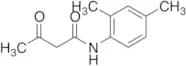
CAS:Applications N-(2,4-Dimethylphenyl)-3-oxobutanamide (cas# 97-36-9) is a useful research chemical.
Formula:C12H15NO2Color and Shape:NeatMolecular weight:205.2517alpha-Dydrogesterone
CAS:Controlled ProductApplications 17α-Dydrogesterone is an isomer of Dydrogesterone (D826000), a synthetic progestin largely used in hormone therapy, on the central nervous system by studying two markers of the neuroendocrine function: the neurosteroid allopregnanolone and the opioid .beta.-endorphin. Progestogen.
References Bernardi, F., et al.: Eur. J. Endocrinol., 138, 316 (1998); Rupprecht, R., et al.: Steroids, 64, 83 (1999); Uzunova, V., et al.: Brain Res., 976, 1 (2003); Pluchino, N., et al.: J. Steroid Biochem. Mol. Biol., 102, 205 (2006)Formula:C21H28O2Color and Shape:NeatMolecular weight:312.446Tiopronin-d3
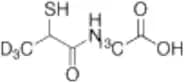
CAS:Controlled ProductApplications Labelled Tiopronin. It is used as antidote against heavy metal poisoning; hepatoprotectant; mucolytic.
References Capasso, F., et al.: Agents Actions, 11, 741 (1981), Amor, B., et al.: Arthritis Rheum., 25, 698 (1982), Ichida, F., et al.: J. Int. Med. Res., 10, 325 (1982),Formula:C5H6D3NO3SColor and Shape:NeatMolecular weight:166.21Stearoyl L-a-Lysolecithin
CAS:Stability Hygroscopic, moisture sensitive
Applications Stearoyl L-α-Lysolecithin is an bioactive lysophosphatidylcholine derived compound found to be released by bronchial epithelial cells. Stearoyl L-α-Lysolecithin have also been utilized in the development of liposomes and michelles by drug transdermal delivery devices.
References Zhuge, Y., et al.: Allergy Asthma Immunol Res., 6, 66 (2014)Formula:C26H54NO7PColor and Shape:NeatMolecular weight:523.68Coronene
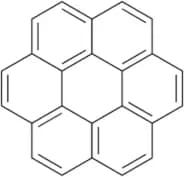
CAS:Controlled ProductApplications Coronene is a polycyclic aromatic hydrocarbon found in smoked fish and was examined for potential toxic and carcinogenic effects.
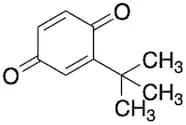
References Mihlca, G. L., et al.: J. Agroliment. Process. Technol., 17, 392 (2011); Zitka, O., et al.: Int. J. Electrochem. Sci., 7, 908 (2012); Rogge, W.F., et al.: Anal. Bioanal. Chem., 401, 3069 (2011)Formula:C24H12Color and Shape:Dark Yellow PowderMolecular weight:300.352-tert-Butyl-1,4-benzoquinone
CAS:Controlled ProductApplications 2-Tert-Butyl-1,4-Benzoquinone (cas# 3602-55-9) is a useful research chemical.
Formula:C10H12O2Color and Shape:NeatMolecular weight:164.2D-Arabinose
CAS:Controlled ProductStability Hygroscopic
Applications D-Arabinose is a pharmaceutical intermediate and a food addictive. A reducing sugar and pentose analog of D-ribose.
References Chen, X., et al.: Int. J. Biol. Macromol., 104, 1294 (2017); Konuchova, M., et al.: Chemicke Listy, 110, 491 (2016); Pelckmans, M., et al.: ACS Catalysis, 8, 4201 (2018); Haghparast, S., et al.: J. Agric. Sci. Techn., 15, 87 (2013)Formula:C5H10O5Color and Shape:White SolidMolecular weight:150.13Xanthine
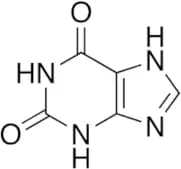
CAS:Applications Found in animal organs, yeast, patatoes, coffee beans, tea. This drug can be used to relax and widen certain breathing passages of the lungs. It is also found that a large number of derivatives have adenoside receptor antagonist properties.
References Mueller, C. et. al: Handbook Exp. Pharmacol. 200,151(2011)Formula:C5H4N4O2Color and Shape:White SolidMolecular weight:152.114-Methoxyaniline hydrochloride
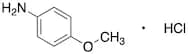
CAS:Controlled ProductApplications 4-Methoxyaniline hydrochloride (cas# 20265-97-8) is a useful research chemical.
Not a dangerous good if item is equal to or less than 1g/ml and there is less than 100g/ml in the packageFormula:C7H9NO·HClColor and Shape:NeatMolecular weight:159.613’-Deoxyguanosine (>90%)
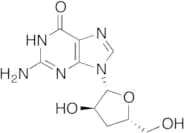
CAS:Controlled ProductApplications 3’-Deoxyguanosine is a derivative of guanosine, a ligand which may be complexe with enzymes such as purine nucleoside phosphorylase and receptors. Potential anti-amoebic agent.
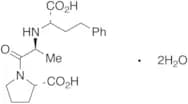
References Gaubert, G. et al.: Biochimie., 81, 1041 (1999);Formula:C10H13N5O4Purity:>90%Color and Shape:NeatMolecular weight:267.24Enalaprilat Dihydrate
CAS:Controlled ProductFormula:C18H24N2O5·2H2OColor and Shape:NeatMolecular weight:384.424-(Diethylamino)azobenzene
CAS:Controlled ProductApplications 4-(Diethylamino)azobenzene (cas# 2481-94-9) is a useful research chemical. Dyes and metabolites, Environmental Testing
Formula:C16H19N3Color and Shape:Yellow-OrangeMolecular weight:253.34(S)-(-)-Canadine
CAS:Applications (S)-(-)-Canadine is a protoberberine alkaloid which potently block functional KATP channels natively expressed on midbrain dopamine neurons. Canadine is used for treatment of degenerative diseases or conditions associated with KATP channel signaling. (S)-(-)-Canadine has a strong central nervous system-depressing activity and is used in the preparation of tetrahydroprotoberberine derivatives as new antipsychotic agents.
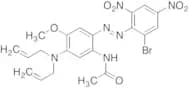
References Sun, H. et al.: Bioorg. Med. Chem., 21, 856 (2013); Deeb, O., et al.: Chem. Biol. Drug Des., 76, 255 (2010); Sun., et al.: Br. J. Pharmcol., 158, 1302 (2009); Duchowicz, P., et al.: Bioorg. Med. Chem., 14, 5876 (2006); Yamahara, J. et al.: Chem. Pharm. Bull., 24, 1909 (1976)Formula:C20H21NO4Color and Shape:NeatMolecular weight:339.38Disperse Blue 373 (Technical Grade)
CAS:Controlled ProductApplications Disperse Blue 373 have adverse effect on soil and water environment and is a major mutagen in environmental system. This dye is released by textile industry
References Watanabe, T., et al.: Env. Sci (Tokyo, Japan), 12, 356 (2005);Carneiro, P.A., et. al.: J. Hazardous Mat., 174, 694 (2010);Formula:C21H21BrN6O6Color and Shape:NeatMolecular weight:533.332Trichloronate 10 µg/mL in Cyclohexane
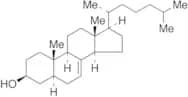
CAS:Applications A Cholesterol (C432501) metabolite. Lathosterol (indicating cholesterol synthesis) and Sitosterol (indicating cholesterol absorption) also decreased with deteriorating health. Low Lathosterol, Sitosterol (S497050), and Cholesterol (C432501) predicted mortality additively and independently of each other.
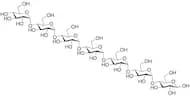
References Chyou, P., et al.: Age Ageing, 29, 69 (2000), Schatz, I., et al.: Lancet, 358, 351 (2001), Bjorkman, M., et al.: Eur. J. Endocrinol., 158, 749 (2008),Formula:C27H46OColor and Shape:White To Off-WhiteMolecular weight:386.65Maltoheptaose (>80%)
CAS:Controlled ProductFormula:C42H72O36Purity:>80%Color and Shape:NeatMolecular weight:1153.00Glycyl-Glycyl-Glycine
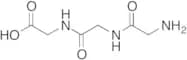
CAS:Controlled ProductApplications Glycyl-glycyl-glycine is used as a model peptide for studies of physicochemical parameters and molecular associations of small peptides. It is also used as a copper chelator.
Formula:C6H11N3O4Color and Shape:NeatMolecular weight:189.17L,L-Dityrosine Dihydrochloride
CAS:Controlled ProductStability Hygroscopic
Applications Dityrosine (DY), a tyrosine dimer formed by 3,3’-biaryl bond formation can be used as a biomarker to detect oxidative protein damage and selective proteolysis. Fluorescence intensity decays of Dityrosine are generally characterized by two decay components, one with a lifetime in the range of 150 to 800 ps and another between 2.5 and 4.5 ns.
References Libertini, L., et al.: Biophys. J., 47, 765 (1985), Huggins, T., et al.: J. Biol. Chem., 268, 12341 (1993), Malencik, D., et al.: Biochemistry, 35, 4375 (1996),Formula:C18H20N2O6·2ClHColor and Shape:NeatMolecular weight:433.28