Biochemicals and Reagents
Subcategories of "Biochemicals and Reagents"
- Biomolecules(98,750 products)
- By Biological Target(100,261 products)
- By Pharmacological Effects(6,826 products)
- Cryopreservatives(21 products)
- Desinfectants and Related Compounds(28 products)
- Hormones(356 products)
- Plant Biology(6,896 products)
- Secondary Metabolites(14,348 products)
Found 130132 products of "Biochemicals and Reagents"
2-Amino-6-mercaptopurine-9-D-riboside Hydrate
CAS:Stability Hygroscopic
Applications 2-Amino-6-mercaptopurine-9-D-riboside Hydrate (cas# 345909-25-3) is a compound useful in organic synthesis.Formula:C10H13N5O4S·x(H2O)Color and Shape:Light Yellow PowderMolecular weight:299.31Disperse Red 151 (>90%)
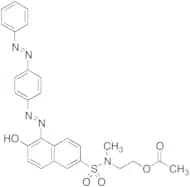
CAS:Controlled ProductFormula:C27H25N5O5SPurity:>90%Color and Shape:NeatMolecular weight:531.58all-trans-Retinal
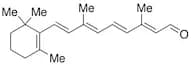
CAS:Controlled ProductStability Hygroscopic
Applications Corotenoid component of the visual pigments. All-trans retinal is converted to retinoic acid in vivo by the action of retinal dehydrogenase.
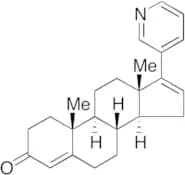
References Ball, et al.: Biochem. J., 42, 516 (1948), O’Brien, D.F., et al.: Science, 218, 961 (1982),Formula:C20H28OColor and Shape:Yellow To Dark OrangeMolecular weight:284.4417-(3-Pyridinyl)-androsta-4,16-dien-3-one
CAS:Controlled ProductFormula:C24H29NOColor and Shape:NeatMolecular weight:347.49Decanoyl-L-carnitine Chloride
CAS:Controlled ProductStability Hygroscopic
Applications Decanoyl-L-carnitine Chloride is a metabolite of L-Carnitine (C184110); an essential cofactor of fatty acid metabolism. Also required for the transport of fatty acids through the inner mitochondrial membrane.
References Mitchell, M.E., et al.: Am. J. Clin. Nutr., 31, 293 (1978); Lango, R., et al.: Cardiovasc. Res., 51, 21 (2001); Vaz, F.M., et al.: Biochem. J., et al.: 361, 417 (2002); Karlic, H., et al.: Nutrition, 20, 709 (2004)Formula:C17H34ClNO4Color and Shape:NeatMolecular weight:351.91Thiodiglycolic Acid-d4
CAS:Controlled ProductApplications Thiodiglycolic Acid-d4 acts as a reagent for the synthesis of metabolites of S-carboxymethyl-L-cysteine and S-methyl-L-Cysteine and of some isotoically labelled (2H, 13C) analogs.
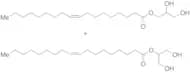
References Meese, C. O., et al.: Archiv der Pharmazie, 323, 957 (1990)Formula:C4D4H2O4SColor and Shape:NeatMolecular weight:154.17Glycerol Monoleate
CAS:Applications Glycerol Monoleate is used to synthesize water soluble drugs in need of sustained-release for drug delivery.
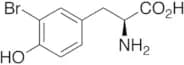
References Chang, C. et al.: Int. J. Pharm., 276, 83 (2004); Chang, C. et al.: Int. J. Pharm., 173, 51 (1998);Formula:C21H40O4Color and Shape:NeatMolecular weight:356.543-Bromo-L-tyrosine
CAS:Controlled ProductApplications 3-Bromo-L-tyrosine is used in the preparation and synthesis of polyclonal antibodies that work against brominated protein related allergic responses and afflictions. Also effective in asthma control and prediction in children.
References Kambayashi, Y. et al.: J. Clin. Biochem., 44, 95 (2009); Wedes, S. et al.: J. Ped., 159, 248 (2011);Formula:C9H10BrNO3Color and Shape:White To Light BrownMolecular weight:260.085-Fluorodihydropyrimidine-2,4-dione
CAS:Controlled ProductApplications A metabolite of 5-Fluorouracil. (F596000)
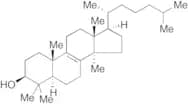
References Bocci, G., et al.: Eur. J. Clin. Pharmacol., 58, 593 (2002), Longley, D.B., Nature Rev. Cancer, 3, 330 (2003), Fischel, J., et al.: Anti-Cancer Drugs, 15, 969 (2004)Formula:C4H5FN2O2Color and Shape:NeatMolecular weight:132.093Dihydrolanosterol
CAS:Controlled ProductApplications Dihydrolanosterol, is a derivative of Lanosterol (L174580). It is also one of cytochrome P 450 lanosterol 14α-demethylase (CYP51), which is shown to have an important role in regulating meiosis and reproduction.
References Smiljanic, K., et. al.: Lipids, 48, 1069 (2013); Ma, L., et. al.: Food Chem., 139, 503 (2013);Formula:C30H52OColor and Shape:NeatMolecular weight:428.73Trisodium UDP-glucuronic Acid
CAS:Applications Trisodium UDP-glucuronic Acid is a reactant used in the enzymatic preparation of β-glucuronides.
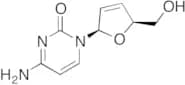
References Stevenson, D.E., et. al.: Collect Czech. Chem. C., 65, 117 (2000); Robotham, S.A., Brodbelt, J.S.: Biochem. Pharmacol., 82, 1764 (2011); Kren, V., et. al.: Drug Metab. Dispos., 28, 1513 (2000)Formula:C15H19O18P2·3NaColor and Shape:NeatMolecular weight:646.23Dideoxycytidinene
CAS:Controlled ProductStability Hygroscopic
Applications Dideoxycytidinene, can be used for the synthesis of Zalcitabine (Z140000), which is pyrimidine nucleoside analogue with antiviral activity.
References van der Vliet, P.C. and Kwant, M.M.: Biochemistry, 20, 2628 (1981), Mitsuya, H., Broder, S.: Proc. Nat. Acad. Sci. USA, 83, 1911 (1986), Starnes, M.C., and Cheng, Y.: J. Biol. Chem., 262, 988 (1987),Formula:C9H11N3O3Color and Shape:NeatMolecular weight:209.2Rhodamine-123
CAS:Applications Rhodamine-123 is a fluorescent dye most commonly used in flow cytometry as functional reporter for Pgp. Rhodamine 123 (R123), as a typical of P-glycoprotein substrate, was widely used to quantify P-glycoprotein (P-gp) functional efflux activity in vivo. Rhodamine-123 can be used in multiparameter analyses without fluorescence interference in combination with common protein labeling dyes such as PE-Cy5 and AMCA (7-amino-4-methylcoumarin-3-acetic acid).
References Yumoto, R., et al.: J. Pharmacol. Exp. Ther., 289, 149 (1999), Romiti, N., et al.: Toxicol. Appl. Pharmacol., 183, 83 (2002), Mizuno, N., et al.: Pharmacol. Rev., 559, 425 (2003), del Amo, E., et al.: Eur. J. Pharm. Sci., 36, 200 (2009),Formula:C21H16N2O3·ClHColor and Shape:NeatMolecular weight:380.82N-Acetyl-DL-aspartic Acid
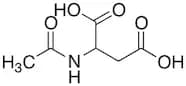
CAS:Controlled ProductApplications N-Acetyl-DL-aspartic acid (cas# 2545-40-6) is a useful research chemical.
Formula:C6H9NO5Color and Shape:NeatMolecular weight:175.1399-cis-Retinoic Acid Methyl Ester
CAS:Stability Light Sensitive
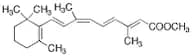
Applications 9-cis-Retinoic Acid Methyl Ester is a cis-Vitamin A derivative.
References Englert, G., et al.: Helv. Chimica Acta, 58, 2367 (1975),Formula:C21H30O2Color and Shape:NeatMolecular weight:314.46Divicine Sulfate
CAS:Applications Divicine Sulfate (2:1) is a starting material and useful building block of various pharmaceuticals.
Formula:C4H6N4O2·x(H2O4S)Color and Shape:BeigeMolecular weight:142.12 + x(98.08)3-Methylglutaconic Acid
CAS:Controlled ProductStability Hygroscopic
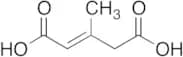
Applications 3-Methylglutaconic acid is a glutarate which builds up in the urine in 3-methylglutaconic aciduria. 3-methylglutaconic aciduria is a term used to describe five different disorders that impair the functioning of energy-producing centers within cells (mitochondria)
References Walsh, R., et al.: J. Inherit. Metab. Dis., 22, 251 (1999); Gonzalez, I., et al.: Am J Med Genet A., 134, 409 (2005); MacKenzie, J., et al.: Biochim Biophys Acta., 1772, 509 (2007)Formula:C6H8O4Color and Shape:NeatMolecular weight:144.134-Amino-5-aminomethyl-2-methylpyrimidine
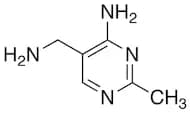
CAS:Controlled ProductApplications Substrate for TenA enzyme in the thiamin salvage pathway
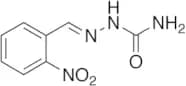
References Jenkins, A., et al.: Nat. Chem. Biol., 3, 492 (2007), Jenkins, A., et al.: Bioorg. Chem., 36, 29 (2008),Formula:C6H10N4Color and Shape:Light YellowMolecular weight:138.172-Nitrobenzaldehyde Semicarbazone
CAS:Controlled ProductFormula:C8H8N4O3Color and Shape:NeatMolecular weight:208.17