Biochemicals and Reagents
Subcategories of "Biochemicals and Reagents"
- Biomolecules(98,675 products)
- By Biological Target(100,155 products)
- By Pharmacological Effects(6,847 products)
- Cryopreservatives(21 products)
- Desinfectants and Related Compounds(28 products)
- Hormones(353 products)
- Plant Biology(6,911 products)
- Secondary Metabolites(14,345 products)
Found 130241 products of "Biochemicals and Reagents"
Proinsulin C-peptide (55-89), human
Catalogue peptide; min. 95% purity
Formula:C153H259N49O52Molecular weight:3,616.98 g/mol[Arg14,20,21, Leu16]-PACAP (1-27)-Gly-Lys-Arg, amide, human, ovine, rat
Catalogue peptide; min. 95% purity
Formula:C157H253N53O42Molecular weight:3,555.01 g/molPanaxynol
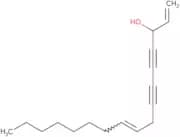
CAS:Panaxynol is an active compound that belongs to the group of polyphenols. It has been shown to inhibit nuclear DNA synthesis in human leukemic HL-60 cells. This inhibition is due to its ability to bind with the dextran sulfate moiety of DNA, thereby preventing DNA synthesis. Panaxynol also has antibacterial efficacy against gram-positive bacteria and significant cytotoxic effects on HL-60 cells.
Formula:C17H24OPurity:Min. 95%Color and Shape:Clear LiquidMolecular weight:244.37 g/molP62 (417-429), M. leprae
Catalogue peptide; min. 95% purity
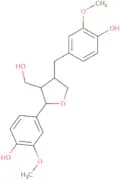
Formula:C65H116N16O17Molecular weight:1,393.75 g/mol(-)-Lariciresinol
CAS:Lariciresinol is a natural compound that has been shown to have antioxidative properties and inhibit the growth of cancer cells in vitro. It has also been shown to reduce the metastatic potential of colorectal cancer cells by inhibiting fatty acid synthesis. Lariciresinol has synergistic effects when combined with other natural compounds, such as resveratrol, for example. This compound inhibits the proliferation of cancer cells by inducing apoptosis through a multivariate logistic regression analysis. The mechanism of lariciresinol-mediated apoptosis includes inhibition of transcriptional regulation and mitochondrial membrane potential, which leads to an increase in reactive oxygen species (ROS) and reactive nitrogen species (RNS). Lariciresinol also inhibits bacterial growth by binding to DNA gyrase and topoisomerase IV and interfering with transcription through RNA polymerase.Formula:C20H24O6Purity:Min. 95%Molecular weight:360.4 g/molRef: 3D-IDA32719
Discontinued productPeptide YY (3-36) (canine, mouse, porcine, rat)
Catalogue peptide; min. 95% purity
Formula:C190H288N54O57Molecular weight:4,240.64 g/molGastrin Releasing Peptide (1-16), human
Catalogue peptide; min. 95% purity
Formula:C74H121N17O20SMolecular weight:1,600.9 g/molCorticotropin trifluoroacetate
Please enquire for more information about Corticotropin trifluoroacetate including the price, delivery time and more detailed product information at the technical inquiry form on this page
Purity:Min. 95%Ref: 3D-BC183139
Discontinued productTachykinin (111-129) Beta-Prepro (Human)
Catalogue peptide; min. 95% purity
Formula:C96H156N34O31SMolecular weight:2,314.59 g/mol[Des-Asp10]Decorsin, Leech
Catalogue peptide; min. 95% purity
Formula:C175H272N54O59S6Molecular weight:4,268.78 g/molAZD 5991
CAS:AZD 5991 is a cell-specific compound that inhibits the apoptosis pathway. It has been shown to have potent antitumor activity against T-cell lymphomas and other cancers in vitro and in vivo. AZD 5991 targets cyclin D2 and PCSK9, which are proteins involved in the regulation of the cell cycle, thereby inhibiting tumor growth. This drug also exhibits potent inhibition of ribosome synthesis, which may be due to its ability to inhibit protein synthesis by targeting the enzyme activities required for ribosome production. AZD 5991 also exhibits anti-inflammatory properties that may be due to its ability to inhibit colony-stimulating factor (CSF) production.
Purity:Min. 95%Ref: 3D-BA166834
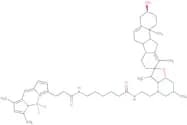
Discontinued productBodipy cyclopamine
CAS:Fluorescent derivative of cyclopamine
Formula:C49H70BF2N5O4Purity:Min. 95%Color and Shape:Red SolidMolecular weight:841.92 g/molhCG protein
The hCG protein is a growth factor that plays a crucial role in various biological processes. It is involved in the regulation of cell growth, differentiation, and development. This protein has been extensively studied in the field of Life Sciences and has shown promising results in various applications. One of the key characteristics of the hCG protein is its ability to interact with arginase, an enzyme involved in the metabolism of arginine. Through molecular docking studies, it has been shown that hCG can bind to arginase and modulate its activity, leading to potential therapeutic applications. Monoclonal antibodies targeting the hCG protein have been developed for research purposes. These antibodies are highly specific and can be used in immunoassays to detect and quantify hCG levels in human serum samples. They have also been used for the immobilization of hCG on electrodes, enabling the development of biosensors for diagnostic purposes. Furthermore, studies have demonstrated that the hCG protein plays a role in the regulation of mes
Purity:Min. 95%Steroid Free Serum
Steroid Free Serum is a high-quality serum that is free from steroids. It is commonly used in various Life Sciences applications, including research and diagnostic assays. This serum contains important components such as alpha-fetoprotein, angiotensin-converting enzyme, collagen, erythropoietin, pegylated growth factor, chemokines, and antibodies with neutralizing properties.
Purity:Min. 95%Thymopentin acetate salt
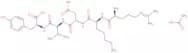
CAS:Controlled ProductThymopentin acetate salt H-Arg-Lys-Asp-Val-Tyr-OH acetate salt is an experimental model system that has been shown to replicate the physiological effects of thymopoietin in vitro. It has also been shown to inhibit the growth of Candida glabrata, a fungus that causes infection in patients with HIV or AIDS. Thymopentin acetate salt H-Arg-Lys-Asp-Val-Tyr-OH acetate salt has been shown to activate both toll like receptor and IL2 receptor, which may be due to its ability to stimulate polyamine synthesis.Formula:C30H49N9O9Purity:Min. 95%Molecular weight:679.77 g/molH-GILGFVFTL-OH
CAS:FluM1 (58-66) is a short part of the matrix protein of Influenza A virus which is the most abundant component of this enveloped virus localized under the viral lipid envelope. The GILGFVFTL epitope is highly conserved in Influenza A virus strains at a rate of 93% for 69 strains tested. Human Influenza epitopes may bind MHC molecules and then may be recognized by CD8+ cytotoxic T cells. Applications of FluM1 (58-66): FluM1 (58-66) is used to stimulate CTL responses in peripheral blood mononuclear cells (PBMCs). Then, ELISPOT assay is used to quantify peptide epitope specificity and IFN-γ releasing effector cells. FluM1 (58-66) has shown CTL responses qualified of immunodominant with restriction by HLA-A*02:01. It has also been detected CTL responses when FluM1 (58-66) is restricted by all HLA-C. Therefore, FluM1 (58-66) may help to understand the reaction of immune system against Influenza virus of each populations having different HLA type. FluM1 (58-66) has indeed prompted research to develop T-cell vaccine strategies capable of inducing specific CTL responses in patients upon immunization with Influenza M1 antigenic epitope. MVA-NP+M1 vaccine use GILGFVFTL epitope and is tested in clinical trial. Potential cross-reactivity with HIV-1 p17 Gag (77-85): Moreover, FluM1 (58-66) share similarities with HIV-1 p17 Gag (77-85) which can potentially show a cross-reactivity between these epitopes. It has been demonstrated a cross-reactivity and results suggest that immunity following infection by Influenza virus causes specific immune response to HIV-1 p17 Gag (77-85).
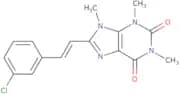
Formula:C49H75N9O11Molecular weight:966.18 g/mol8-(3-Chlorostyryl)caffeine
CAS:Controlled Product8-(3-Chlorostyryl)caffeine is a caffeine derivative that binds to the adenosine A3 receptor. It has been shown to inhibit locomotor activity and increase diastolic pressure in knockout mice lacking the adenosine A3 receptor. 8-(3-Chlorostyryl)caffeine has also been shown to have inhibitory properties on cyclase, which is necessary for the production of cAMP, the second messenger in cells. This drug also inhibits dopamine release from neurons and hydrogen bond formation with DNA, protein, and other biomolecules. Lastly, 8-(3-Chlorostyryl)caffeine can bind to both A1 and A2A receptors as well as to dna binding sites.
Formula:C16H15ClN4O2Purity:Min. 95%Color and Shape:PowderMolecular weight:330.77 g/molAngiotensin A (1-7) trifluoroacetate
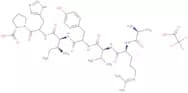
CAS:Endogenous heptapetide which causes vasodilation and has anti-hypertensive properties.
Formula:C40H62N12O9•(C2HF3O2)xPurity:Min. 95%Color and Shape:PowderMolecular weight:855 g/mol


![[Arg14,20,21, Leu16]-PACAP (1-27)-Gly-Lys-Arg, amide, human, ovine, rat](/_next/image/?url=https%3A%2Fstatic.cymitquimica.com%2Fproducts%2F3D%2Fthumb-webp%2FVAC-00488.webp&w=3840&q=75)





![[Des-Asp10]Decorsin, Leech](/_next/image/?url=https%3A%2Fstatic.cymitquimica.com%2Fproducts%2F3D%2Fthumb-webp%2FVAC-00243.webp&w=3840&q=75)