Biochemicals and Reagents
Biochemicals and reagents are fundamental substances for research and development in fields such as biotechnology, molecular biology, pharmacology, and medicine. These products are essential for a variety of applications, including compound synthesis, biological sample analysis, metabolic process research, and drug production. At CymitQuimica, we offer a wide selection of high-quality, high-purity biochemicals and reagents suitable for various scientific and industrial needs. Our catalog includes enzymes, antibodies, nucleic acids, amino acids, and many other products, all designed to support researchers and professionals in their research and development projects, ensuring reliable and reproducible results.
Subcategories of "Biochemicals and Reagents"
- Biomolecules(99,104 products)
- By Biological Target(99,074 products)
- By Pharmacological Effects(6,784 products)
- Cryopreservatives(21 products)
- Desinfectants and Related Compounds(28 products)
- Hormones(346 products)
- Plant Biology(6,693 products)
- Secondary Metabolites(14,218 products)
Found 130576 products of "Biochemicals and Reagents"
Sort by
Purity (%)
0
100
|
0
|
50
|
90
|
95
|
100
ADRB3 antibody
<p>The ADRB3 antibody is a highly specialized antibody used in the field of Life Sciences. It is a polyclonal antibody that targets the adrenergic receptor beta-3 (ADRB3), which plays a crucial role in various physiological processes such as adipose tissue metabolism and regulation of energy expenditure. This antibody has been extensively studied and proven to have neutralizing properties against ADRB3, making it an essential tool for researchers studying growth factors, alpha-fetoprotein, and other related molecules.</p>Purity:Min. 95%FAK antibody
<p>FAK antibody was raised in Mouse using a purified recombinant fragment of human FAK expressed in E. coli as the immunogen.</p>P54 antibody
<p>The P54 antibody is a highly specialized protein that belongs to the family of kinase inhibitors. It is commonly used in Life Sciences research and has shown promising results in various studies. This polyclonal antibody specifically binds to proteins involved in the regulation of cell growth, such as epidermal growth factor (EGF) and androgen receptors.</p>EIF4H Blocking Peptide
<p>A synthetic peptide for use as a blocking control in assays to test for specificity of EIF4H antibody, catalog no. 70R-4728</p>Purity:Min. 95%OR1D2 antibody
<p>The OR1D2 antibody is a highly specialized fibroin that exhibits cytotoxic properties. This antibody specifically targets TGF-beta, a key protein involved in various cellular processes. It also interacts with fibrinogen, a crucial protein for blood clotting. The OR1D2 antibody is available as both polyclonal and monoclonal antibodies, providing flexibility for different research needs. In addition, it has been shown to inhibit caspase-9 activity, an enzyme involved in apoptosis. Researchers in the life sciences field can utilize this antibody as a valuable tool for studying signal transduction pathways and family kinase inhibitors. Its immobilization capabilities make it ideal for binding proteins on surfaces or electrodes, facilitating various experimental setups.</p>OR13C9 antibody
<p>OR13C9 antibody was raised in rabbit using the middle region of OR13C9 as the immunogen</p>Purity:Min. 95%ALDH6A1 antibody
<p>ALDH6A1 antibody was raised using the middle region of ALDH6A1 corresponding to a region with amino acids AVLVGEAKKWLPELVEHAKNLRVNAGDQPGADLGPLITPQAKERVCNLID</p>Purity:Min. 95%TWEAK antibody
<p>TWEAK antibody was raised in goat using highly pure recombinant human TWEAK as the immunogen.</p>Purity:Min. 95%Psenen antibody
<p>Psenen antibody was raised in rabbit using the N terminal of Psenen as the immunogen</p>Purity:Min. 95%Noggin antibody
<p>Noggin antibody was raised in rabbit using a synthetic peptide comprising an internal sequence of the human Noggin protein as the immunogen.</p>Purity:Min. 95%HTR3A antibody
<p>HTR3A antibody was raised in rabbit using the middle region of HTR3A as the immunogen</p>Purity:Min. 95%AK3 antibody
<p>The AK3 antibody is a nephrotoxic monoclonal antibody that is used in the field of Life Sciences. It has been extensively studied for its ability to detect protein biomarkers in various biological samples, including human serum. The AK3 antibody specifically targets histidine residues and can be used as a tool for the detection and quantification of proteins that contain this amino acid. It has also been shown to have inhibitory effects on epidermal growth factor and alpha-fetoprotein, making it a valuable tool for research in cancer biology. The AK3 antibody is commonly used in immunoassays and can be utilized with techniques such as carbon electrode-based assays or colloidal gold-based assays. Its high specificity and sensitivity make it an essential component in many research laboratories.</p>Goat anti Human IgA (α chain) (FITC)
<p>This antibody reacts with heavy chains on human IgA (alpha chain) and.</p>NKIRAS1 antibody
<p>NKIRAS1 antibody was raised using the N terminal of NKIRAS1 corresponding to a region with amino acids CETMEDVYMASVETDRGVKEQLHLYDTRGLQEGVELPKHYFSFADGFVLV</p>Purity:Min. 95%Thrombopoietin antibody
<p>Thrombopoietin antibody was raised using a synthetic peptide corresponding to a region with amino acids HELLNGTRGLFPGPSRRTLGAPDISSGTSDTGSLPPNLQPGYSPSPTHPP</p>Purity:Min. 95%IFN Alpha 7 antibody
<p>IFN Alpha 7 antibody was raised using the N terminal of IFNA7 corresponding to a region with amino acids RALILLAQMGRISPFSCLKDRHEFRFPEEEFDGHQFQKTQAISVLHEMIQ</p>Purity:Min. 95%CDCP1 antibody
<p>The CDCP1 antibody is a growth factor that plays a crucial role in various cellular processes. It is an apical membrane protein and has been found to be a potential target for anti-CD20 antibodies. The CDCP1 antibody specifically recognizes and binds to the human folate receptor, inhibiting its activity. This monoclonal antibody has been extensively studied in the field of life sciences and has shown promising results as a therapeutic agent. Its unique glycosylation pattern allows for enhanced stability and efficacy. Additionally, the CDCP1 antibody has been found to activate signaling pathways involved in hepatocyte growth, making it a valuable tool for research in this area. With its high specificity and affinity towards its target antigen, this monoclonal antibody is a powerful tool for scientists and researchers alike.</p>NEU1 antibody
<p>NEU1 antibody was raised using a synthetic peptide corresponding to a region with amino acids VWSKDDGVSWSTPRNLSLDIGTEVFAPGPGSGIQKQREPRKGRLIVCGHG</p>NF kappaB p65 antibody
<p>The NF kappaB p65 antibody is a polyclonal antibody that specifically targets the protein NF kappaB p65. This antibody is widely used in life sciences research to study the role of NF kappaB p65 in various biological processes. NF kappaB p65 is a transcription factor that plays a crucial role in regulating gene expression. It forms a complex with other proteins and binds to specific DNA sequences, thereby controlling the transcription of target genes involved in immune response, inflammation, cell survival, and development.</p>Purity:Min. 95%CEBP γ protein (His tag)
<p>DNA binding domain 39-147 amino acids: MRGSHHHHHH GMASMTGGQQ MGRDLYDDDD KDRWGSMPGG GGKAVAPSKQ SKKSSPMDRN SDEYRQRRER NNMAVKKSRL KSKQKAQDTL QRVNQLKEEN ERLEAKIKLL TKELSVLKDL FLEHAHNLAD NVQSISTENT TADGDN</p>Purity:Min. 95%PREB antibody
<p>PREB antibody was raised in rabbit using the N terminal of PREB as the immunogen</p>Purity:Min. 95%TPH2 antibody
<p>TPH2 antibody was raised using the N terminal of TPH2 corresponding to a region with amino acids REAATESGKTAVVFSLKNEVGGLVKALRLFQEKRVNMVHIESRKSRRRSS</p>Dendritic Cell antibody
<p>The Dendritic Cell antibody is a monoclonal antibody that specifically targets dendritic cells. Dendritic cells play a crucial role in the immune system by presenting antigens to T cells and initiating an immune response. This antibody binds to the GM-CSF receptor on dendritic cells, promoting their maturation and activation.</p>Carbonic anhydrase 1 protein (His tag)
<p>1-261 amino acids: MGSSHHHHHH SSGLVPRGSH MASPDWGYDD KNGPEQWSKL YPIANGNNQS PVDIKTSETK HDTSLKPISV SYNPATAKEI INVGHSFHVN FEDNDNRSVL KGGPFSDSYR LFQFHFHWGS TNEHGSEHTV DGVKYSAELH VAHWNSAKYS SLAEAASKAD GLAVIGVLMK VGEANPKLQK VLDALQAIKT KGKRAPFTNF DPSTLLPSSL DFWTYPGSLT HPPLYESVTW IICKESISVS SEQLAQFRSL LSNVEGDNAV PMQHNNRPTQ PLKGRTVRAS F</p>Purity:Min. 95%CYP2A6 antibody
<p>The CYP2A6 antibody is a monoclonal antibody that targets the protein kinase CYP2A6. This antibody can be used for various applications, including immunohistochemical detection and clinical use as a medicament. CYP2A6 is an enzyme that plays a crucial role in the metabolism of several compounds, including cotinine. It is also involved in the activation of procarcinogens and the detoxification of xenobiotics. The CYP2A6 antibody can be used to study the expression and localization of CYP2A6 in different tissues and cell types, making it a valuable tool in life sciences research. Additionally, this antibody may have potential applications in the development of novel antibacterial agents.</p>LRRC37B antibody
<p>LRRC37B antibody was raised using the N terminal of LRRC37B corresponding to a region with amino acids VSRPTKFVVSPKNLKKDLAERWSLPEIVGIPHQLSKPQRQKQTLPDDYLS</p>Purity:Min. 95%PD1 antibody
<p>The 6-Fluoro-3-indoxyl-beta-D-galactopyranoside is a powerful antituberculosis drug that falls under the class of rifamycins. It is specifically designed to combat tuberculosis infections by targeting active compounds and exerting bactericidal activity. This drug has been extensively studied using advanced techniques like transcription-quantitative polymerase chain and patch-clamp technique, which have demonstrated its high efficacy in inhibiting bacterial growth. It undergoes various metabolic transformations, including hydrolysis by esterases, oxidation by cytochrome p450 enzymes, reduction by glutathione reductase, or conjugation with glucuronic acid. Furthermore, it specifically binds to markers expressed at high levels in Mycobacterium tuberculosis strains and effectively inhibits cell growth in culture.</p>GR antibody
<p>The GR antibody is a highly specialized antibody that targets and interacts with specific molecules involved in various biological processes. It is available as both polyclonal and monoclonal antibodies, providing researchers with options for their specific needs.</p>PCSK6 antibody
<p>PCSK6 antibody was raised in rabbit using a synthetic peptide conjugated to KLH as the immunogen.</p>Purity:Min. 95%MBP antibody (Prediluted for IHC)
<p>Rabbit polyclonal MBP antibody (Prediluted for IHC)</p>Purity:Min. 95%Aprepitant-d4
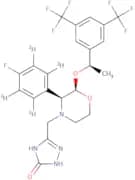
CAS:Controlled Product<p>Aprepitant-d4 is a sample preparation reagent used in the analysis of neurokinin-1 receptor antagonists, such as aprepitant. It is a chromatographic reagent that has been shown to have a high level of sensitivity and specificity for detection. Aprepitant-d4 can be used in the analysis of HIV infection by monitoring for changes in neurokinin-1 (NK1) receptor levels. This reagent has also been shown to be specific for the detection of aprepitant by mass spectrometric methods, which are sensitive and selective. Aprepitant-d4 is an acetonitrile solution that dissolves aprepitant at concentrations up to 1 mg/mL with no significant solubility limitations.</p>Formula:C23H17D4F7N4O3Purity:Min. 95%Molecular weight:538.45 g/molGAP43 antibody
<p>GAP43 antibody was raised in rabbit using purified GAP-43 from feline Brain as the immunogen.</p>Purity:Min. 95%MAS1 antibody
<p>MAS1 antibody was raised using the middle region of MAS1 corresponding to a region with amino acids VIIFIAILSFLVFTPLMLVSSTILVVKIRKNTWASHSSKLYIVIMVTIII</p>Purity:Min. 95%Resistin antibody
<p>Resistin antibody was raised in goat using highly pure recombinant human resistin as the immunogen.</p>Purity:Min. 95%ACY1 antibody
<p>The ACY1 antibody is a highly specialized monoclonal antibody that has been developed for various applications in the field of life sciences. This antibody specifically targets and neutralizes the ACY1 protein, which is involved in several important biological processes.</p>Goat anti Mouse IgG (H + L) (FITC)
<p>This antibody reacts with heavy (gamma) chains on mouse IgG and light chains on all mouse immunoglobulins.</p>Purity:Min. 95%ATF2 antibody
<p>The ATF2 antibody is a polyclonal antibody that specifically targets ATF2, a transcription factor involved in various cellular processes. This antibody can be used for research purposes to study the role of ATF2 in different signaling pathways and gene regulation. It has been shown to have neutralizing activity against ATF2 and can be used to inhibit its function in vitro and in vivo. The ATF2 antibody is highly specific and does not cross-react with other proteins, making it a reliable tool for studying ATF2-mediated processes. It is available as both monoclonal and polyclonal antibodies, providing researchers with options based on their specific experimental needs. The antibody is formulated with excipients to ensure stability and maintain its functionality over time.</p>CCL28 protein (His tag)
<p>23-127 amino acids: MGSSHHHHHH SSGLVPRGSH MILPIASSCC TEVSHHISRR LLERVNMCRI QRADGDCDLA AVILHVKRRR ICVSPHNHTV KQWMKVQAAK KNGKGNVCHR KKHHGKRNSN RAHQGKHETY GHKTPY</p>Purity:Min. 95%Estradiol Valerate
<p>Estradiol Valerate (USP grade powder) chemical reference substance</p>Purity:Min. 95%NS13001
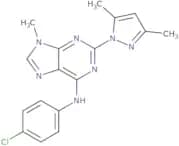
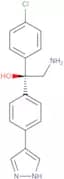
CAS:<p>NS13001 is a small molecule that has been shown to induce apoptotic cell death in leukemia cells. It binds to the cytochrome p450 protein, which is an important regulator of intracellular calcium. NS13001 binds to calmodulin and alters calcium signaling, leading to the activation of pro-apoptotic genes. This drug also increases the cytosolic calcium concentration by activating the ryanodine receptor, which results in cerebellar Purkinje neurons degeneration. NS13001 has been shown to be effective against lymphocytic leukemia cells that express activated caspase 3 and microglia cells.</p>Formula:C17H16ClN7Purity:Min. 95%Molecular weight:353.81 g/molRBM45 antibody
<p>RBM45 antibody was raised using the middle region of RBM45 corresponding to a region with amino acids MRQEALGHEPRVNMFPFEQQSEFSSFDKNDSRGQEAISKRLSVVSRVPFT</p>GluR4 antibody
<p>The GluR4 antibody is a monoclonal antibody that specifically targets the GluR4 protein, which is a subtype of glutamate receptor. This antibody has been extensively studied in the field of Life Sciences and has shown promising results in various research applications. It has been used to detect and quantify the expression levels of GluR4 in human serum samples, as well as in different cell types.</p>KLF12 antibody
<p>KLF12 antibody was raised in rabbit using the N terminal of KLF12 as the immunogen</p>Purity:Min. 95%SDF1 protein (His tag)
<p>22-93 amino acids: MGSSHHHHHH SSGLVPRGSH MKPVSLSYRC PCRFFESHVA RANVKHLKIL NTPNCALQIV ARLKNNNRQV CIDPKLKWIQ EYLEKALNKR FKM</p>Purity:Min. 95%RBM42 antibody
<p>RBM42 antibody was raised using the middle region of RBM42 corresponding to a region with amino acids RPRPPRPEPPPGLMALEVPEPLGEDKKKGKPEKLKRCIRTAAGSSWEDPS</p>Histone H4 antibody
<p>The Histone H4 antibody is a powerful tool used in Life Sciences research. It is a polyclonal antibody that specifically targets and binds to the nuclear chromatin, allowing for the detection and analysis of histone H4 protein. This antibody has been widely used in various applications, including immunocytochemical localization and immunohistochemical detection.</p>Purity:Min. 95%P4HB antibody
<p>P4HB antibody was raised using the C terminal of P4HB corresponding to a region with amino acids DRTVIDYNGERTLDGFKKFLESGGQDGAGDDDDLEDLEEAEEPDMEEDDD</p>Purity:Min. 95%Telomerase antibody
<p>The Telomerase antibody is a highly specialized inhibitor that targets the enzyme telomerase, which plays a crucial role in cell division and the maintenance of telomeres. This monoclonal antibody specifically binds to telomerase and inhibits its activity, making it an effective tool for studying telomere biology and potential therapeutic applications.</p>CRYZL1 protein (His tag)
<p>1-349 amino acids: MGSSHHHHHH SSGLVPRGSH MKGLYFQQSS TDEEITFVFQ EKEDLPVTED NFVKLQVKAC ALSQINTKLL AEMKMKKDLF PVGREIAGIV LDVGSKVSFF QPDDEVVGIL PLDSEDPGLC EVVRVHEHYL VHKPEKVTWT EAAGSIRDGV RAYTALHYLS HLSPGKSVLI MDGASAFGTI AIQLAHHRGA KVISTACSLE DKQCLERFRP PIARVIDVSN GKVHVAESCL EETGGLGVDI VLDAGVRLYS KDDEPAVKLQ LLPHKHDIIT LLGVGGHWVT TEENLQLDPP DSHCLFLKGA TLAFLNDEVW NLSNVQQGKY LCILKDVMEK LSTGVFRPQL DEPIPLYEAK VSMEAVQKNQ GRKKQVVQF</p>Purity:Min. 95%SETD4 antibody
<p>SETD4 antibody was raised in rabbit using the C terminal of SETD4 as the immunogen</p>Purity:Min. 95%VEGFB antibody
<p>The VEGFB antibody is a highly specialized monoclonal antibody that has neutralizing properties against vascular endothelial growth factor B (VEGFB). It is commonly used in the field of Life Sciences for research purposes. This antibody works by binding to VEGFB and inhibiting its activity, which plays a crucial role in angiogenesis and blood vessel formation.</p>ApoE protein
<p>ApoE protein is a neutralizing protein that can be targeted by lysine-specific monoclonal antibodies, such as trastuzumab. It plays a crucial role in various biological processes, including the regulation of cholesterol metabolism and the clearance of amyloid-beta plaques in Alzheimer's disease. ApoE protein is also involved in the modulation of epidermal growth factor receptor (EGFR) signaling and acts as a family kinase inhibitor. Additionally, it interacts with growth factors like urokinase plasminogen activator (uPA) and chemokines to regulate cell migration and inflammation. The use of antibodies against ApoE protein has been studied extensively, and their efficacy has been confirmed through spectrometric analysis. These antibodies have shown promise as potential therapeutics for targeting diseases associated with abnormal ApoE function, such as cardiovascular diseases and neurodegenerative disorders.</p>Purity:Min. 95%Goat anti Rabbit IgG (20 nm Gold Colloid)
<p>Goat anti-rabbit IgG antibody was raised in goat using rabbit IgG as the immunogen.</p>Purity:Min. 95%Giardia lamblia antibody
<p>Giardia lamblia antibody is a monoclonal antibody that specifically targets and binds to Giardia lamblia, a microscopic parasite that causes gastrointestinal infections in humans. This antibody has been extensively studied in the field of Life Sciences and has shown promising results in diagnostic applications. It can be used in various immunoassays to detect the presence of Giardia lamblia antigens in human serum or other biological samples. The highly specific binding of this antibody to Giardia lamblia antigens allows for accurate and reliable detection, making it an invaluable tool for researchers and healthcare professionals. Additionally, molecular docking studies have revealed insights into the mechanism of action of this antibody, highlighting its ability to interact with specific tyrosine residues on the target antigen. With its activated colloidal properties and high affinity for Giardia lamblia antigens, this monoclonal antibody offers great potential for advancing our understanding and management of Giardiasis infections.</p>Wnt10a antibody
<p>Wnt10a antibody was raised in rabbit using the middle region of Wnt10a as the immunogen</p>Purity:Min. 95%CD62E antibody
<p>The CD62E antibody is a monoclonal antibody that has antiviral properties and is commonly used in research and medical applications. It specifically targets the CD62E protein, also known as E-selectin, which plays a crucial role in immune response and inflammation. This antibody works by binding to the CD62E protein, preventing its interaction with other molecules involved in immune cell adhesion and migration.</p>SLC10A1 antibody
<p>SLC10A1 antibody was raised using a synthetic peptide corresponding to a region with amino acids VFSLAMKGDMNLSIVMTTCSTFCALGMMPLLLYIYSRGIYDGDLKDKVPY</p>Purity:Min. 95%AT 13148
CAS:<p>Inhibitor of ROCK I and ROCK II kinases; multi-AGC kinase inhibitor</p>Purity:Min. 95%Alkaline Phosphatase antibody
<p>Alkaline phosphatase antibody was raised in mouse using human placental alkaline phosphatase as the immunogen.</p>BRAF antibody
<p>The BRAF antibody is a monoclonal antibody that specifically targets the BRAF protein, which plays a crucial role in cell growth and division. This antibody has been extensively studied in the field of life sciences and has shown promising results in various applications. It has been found to inhibit the activity of BRAF, leading to reduced cell proliferation and increased cell cytotoxicity.</p>HER2 antibody
<p>The 6-Fluoro-3-indoxyl-beta-D-galactopyranoside is a powerful antituberculosis drug from the rifamycin class. It is specifically designed to combat tuberculosis infections by targeting active compounds and exhibiting bactericidal activity. This drug works by binding to DNA-dependent RNA polymerase, preventing transcription and replication, thus inhibiting bacterial growth. Extensive research has been conducted on this compound using advanced techniques such as transcription-quantitative polymerase chain and patch-clamp technique. It undergoes various metabolic transformations, including hydrolysis by esterases, oxidation by cytochrome p450 enzymes, reduction by glutathione reductase, or conjugation with glucuronic acid. Additionally, it specifically binds to markers expressed in Mycobacterium tuberculosis strains, inhibiting cell growth in culture.</p>Purity:Min. 95%