Biochemicals and Reagents
Subcategories of "Biochemicals and Reagents"
- Biomolecules(98,563 products)
- By Biological Target(101,024 products)
- By Pharmacological Effects(6,952 products)
- Cryopreservatives(21 products)
- Desinfectants and Related Compounds(28 products)
- Hormones(531 products)
- Plant Biology(6,903 products)
- Secondary Metabolites(14,369 products)
Found 130609 products of "Biochemicals and Reagents"
3,7,11,15,19,23,27,31,35-nonamethyl-2E,6E,10E,34-hexatriacontatetraene-1,15,19,23,27,31-hexol
CAS:Please enquire for more information about 3,7,11,15,19,23,27,31,35-nonamethyl-2E,6E,10E,34-hexatriacontatetraene-1,15,19,23,27,31-hexol including the price, delivery time and more detailed product information at the technical inquiry form on this page
Formula:C45H84O6Purity:Min. 95%Molecular weight:721.1 g/mol5-[3-(5-Mercapto-1,3,4-oxadiazol-2-yl)propyl]-1,3,4-oxadiazole-2-thiol
CAS:Please enquire for more information about 5-[3-(5-Mercapto-1,3,4-oxadiazol-2-yl)propyl]-1,3,4-oxadiazole-2-thiol including the price, delivery time and more detailed product information at the technical inquiry form on this pageFormula:C7H8N4O2S2Purity:Min. 95%Molecular weight:244.3 g/mol2-[4-[[5-[[(1S)-1-(4-tert-Butylphenyl)ethyl]carbamoyl]-2,3-dimethylindol-1-yl]methyl]phenyl]benzoic acid
CAS:2-[4-[[5-[[(1S)-1-(4-tert-Butylphenyl)ethyl]carbamoyl]-2,3-dimethylindol-1-yl]methyl]phenyl]benzoic acid is a protein inhibitor that inhibits the activation of ion channels. It has been shown to be an activator of peptides and receptors. The purity of this compound is high and it has a CAS number of 1415252-61-7. This compound can be used as a research tool for cell biology and biochemistry studies, as well as for pharmacology research.Formula:C37H38N2O3Purity:Min. 95%Molecular weight:558.7 g/molEpitinib succinate
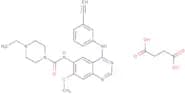
CAS:Epitinib succinate is a potent and selective inhibitor of human epidermal growth factor receptor (EGFR) tyrosine kinase, which is overexpressed in many types of cancer. This Chinese analog of the anticancer drug Gefitinib has been shown to inhibit tumor growth and induce apoptosis in cancer cells. Epitinib succinate selectively inhibits EGFR kinases by binding to the ATP-binding site, leading to inhibition of downstream signaling pathways that promote cell proliferation and survival. This drug has been tested in preclinical studies and has shown promising results as a potential treatment for various types of cancer. Epitinib succinate can be detected in urine and is currently being investigated as a potential toxin for targeted cancer therapy.Formula:C28H32N6O6Purity:Min. 95%Molecular weight:548.6 g/molOrphanin FQ (1-11)
CAS:Orphanin FQ (1-11) is a peptide that belongs to the group of ligands. It can bind to orphan receptors and activate them by binding to their corresponding G protein-coupled receptor. The peptide has been shown to inhibit ion channels, such as the N-type calcium channel, and also has an effect on cell biology.Formula:C49H75N15O14Purity:Min. 95%Molecular weight:1,098.2 g/mol(E)-2-((2-(Benzo[D]thiazol-2-yl)hydrazineylidene)methyl)-4-nitrophenol
CAS:2-((2-Benzothiazol-2-yl)hydrazineylidene)methyl)-4-nitrophenol is an inhibitor of protein interactions, Receptor, Peptides, Activator, and Ion channels. It binds to the ligand binding site of the receptor and blocks the interaction between peptide ligands and its receptors. The inhibition of ion channels prevents calcium influx into cells and prevents neuronal activity. 2-((2-Benzothiazol-2-yl)hydrazineylidene)methyl)-4-nitrophenol is a high purity research tool for use in Cell Biology and Antibody production.Formula:C14H10N4O3SPurity:Min. 95%Molecular weight:314.32 g/molML346
CAS:ML346 is a small molecule that stabilizes proteins by binding to the unfolded protein response (UPR) signaling pathway. It can also be used to induce conformational changes in proteins. This drug targets the endoplasmic reticulum, mitochondria, and the cytosol. ML346 has been shown to have anticancer properties, which may be due to its ability to induce apoptosis in cancer cells.
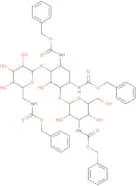
Formula:C14H12N2O4Purity:Min. 95%Molecular weight:272.26 g/molTetra-N-benzyloxycarbonylkanamycin A
CAS:Please enquire for more information about Tetra-N-benzyloxycarbonylkanamycin A including the price, delivery time and more detailed product information at the technical inquiry form on this pageFormula:C50H60N4O19Purity:Min. 95%Molecular weight:1,021 g/molLeukotriene d4
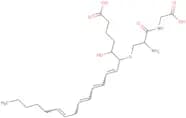
CAS:Leukotriene D4 is an inhibitor analog that has been found in human urine. It has been studied for its potential as an anticancer agent due to its ability to induce apoptosis in cancer cells. Leukotriene D4 also inhibits protein kinases, which are enzymes involved in cell growth and division. Medicinal research has shown that this compound may have potential as a therapeutic agent for the treatment of cancer and other diseases. In Chinese medicine, Leukotriene D4 is used as an inhibitor of tumor growth and proliferation. Researchers are continuing to study the effects of this compound on various types of cancer cells to determine its full potential as a medicinal agent.
Formula:C25H40N2O6SPurity:Min. 95%Molecular weight:496.7 g/molPropentofylline-d6
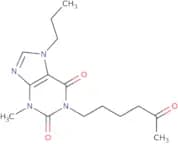
CAS:Controlled ProductPlease enquire for more information about Propentofylline-d6 including the price, delivery time and more detailed product information at the technical inquiry form on this pageFormula:C15H22N4O3Purity:Min. 95%Molecular weight:312.4 g/molEtymemazine-d6
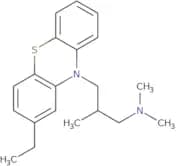
CAS:Please enquire for more information about Etymemazine-d6 including the price, delivery time and more detailed product information at the technical inquiry form on this page
Formula:C20H26N2SPurity:Min. 95%Molecular weight:332.5 g/molH-SLLMWITQV-OH
NY-ESO-1 (157-165) C165V – SLLMWITQV – General analogue epitope of tumor cells
Formula:C51H83N11O13SMolecular weight:1,090.3 g/molMHC Class I antibody (PE)
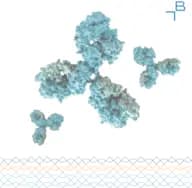
MHC Class I antibody was raised in mouse using human HSB-2 t cell line as the immunogen.Purity:Min. 95%Molecular weight:0 g/mol1,2-Dimyristelaidoyl-sn-glycero-3-phosphocholine
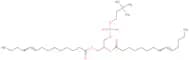
CAS:1,2-Dimyristoyl-sn-glycero-3-phosphocholine (DMPC) is a lipid that is used in bilayered membranes. When DMPC is mixed with other lipids, it can form a bilayer. The properties of DMPC are determined by the type of head group and the number of double bonds in the fatty acid chains. DMPC has a hydrophobic region that is near the head group and a hydrophilic region that is near the tail end. This makes it ideal for use as a model system for studying lipid bilayers because it mimics more closely than any other lipid the properties of natural membranes.Formula:C36H68NO8PPurity:Min. 95%Molecular weight:673.9 g/mol1,2,4,5-Tetrahydrobenzo[D]oxepine
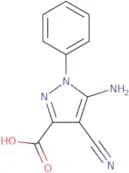
CAS:1,2,4,5-Tetrahydrobenzo[D]oxepine is a ligand that binds to the receptor and activates it. It is used as a research tool in cell biology, peptides and antibodies. 1,2,4,5-Tetrahydrobenzo[D]oxepine has been shown to interact with ion channels and to inhibit protein interactions.Formula:C10H12OPurity:Min. 95%Molecular weight:148.2 g/mol5-Amino-4-cyano-1-phenyl-1H-pyrazole-3-carboxylic acid
CAS:5-Amino-4-cyano-1-phenyl-1H-pyrazole-3-carboxylic acid is a research tool that can be used in cell biology, pharmacology, and ion channels research. It is a competitive inhibitor of ligand binding to the ion channel. This product has CAS No. 1076197-28-8 and is available in high purity for life science research. 5-Amino-4-cyano-1-phenyl--1H pyrazole 3 carboxylic acid has been shown to inhibit the activation of G protein coupled receptors by peptides and antibodies.Formula:C11H8N4O2Purity:Min. 95%Molecular weight:228.21 g/molOrlistat tetradecyl ester
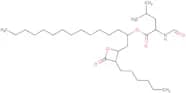
CAS:Please enquire for more information about Orlistat tetradecyl ester including the price, delivery time and more detailed product information at the technical inquiry form on this page
Formula:C31H57NO5Purity:Min. 95%Molecular weight:523.8 g/molAmino-dPEG®12-Tris (-dPEG®24-t-butyl ester)3
Amino-dPEG®12-Tris (-dPEG®24-t-butyl ester)3 is a PEG compound with two different functional groups (also known as heterobifunctional). Unlike homobifunctional PEG compounds (same functional group on both ends), this type of compounds are more versatile as have two different anchor points. Amino-dPEG®12-Tris (-dPEG®24-t-butyl ester)3 is used as a linker and spacer to add a PEG moiety, via pegylation (a bioconjugation technique) to proteins, peptides, oligonucleotides, small molecules and nanoparticles.Formula:C205H403N5O97Purity:Min. 95%Molecular weight:4,490.37 g/molColchicine-d6
CAS:Colchicine-d6 is an analog of colchicine that has been deuterated at the C-ring. It is a potent inhibitor of tubulin polymerization and has been shown to induce apoptosis in various cancer cell lines. Colchicine-d6 inhibits kinases such as protein kinase C and glycogen synthase kinase-3β, which are involved in the regulation of apoptosis. It also inhibits xylanases, which are enzymes that degrade hemicellulose in plant cell walls. Colchicine-d6 has anticancer properties and can be used as an inhibitor for cancer treatment. Its efficacy has been demonstrated in Chinese hamster ovary cells and human urinary tumor cells. This compound shows promise as a potential therapeutic agent for the treatment of various cancers.Formula:C22H25NO6Purity:Min. 95%Molecular weight:405.5 g/molITI-214
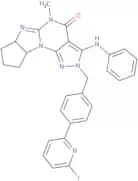
CAS:ITI-214 is a new drug that has been shown to have a number of potential therapeutic uses. It has been shown to inhibit locomotor activity, which may be due to its ability to inhibit the release of calcium from the sarcoplasmic reticulum. ITI-214 also inhibits cyclic nucleotide phosphodiesterases, which are enzymes that break down cyclic nucleotides and thereby regulate cellular function. This inhibition leads to an increase in intracellular levels of cAMP, leading to enhanced physiological function. ITI-214 has been shown to have anti-cancer effects in vitro and in vivo. It also enhances the efficacy of cancer treatments such as radiation therapy and chemotherapy, by inhibiting tumor growth and enhancing immune responses against cancer cells. The mechanism by which ITI-214 exerts these effects is not yet known but may be related to its ability to inhibit Ercc1, a gene associated with hereditary colon cancer susceptibility or other genes involved in DNA repair pathways.Formula:C29H26FN7OPurity:Min. 95%Molecular weight:507.6 g/mol


![5-[3-(5-Mercapto-1,3,4-oxadiazol-2-yl)propyl]-1,3,4-oxadiazole-2-thiol](/_next/image/?url=https%3A%2Fstatic.cymitquimica.com%2Fproducts%2F3D%2Fthumb-webp%2FINA40931.webp&w=3840&q=75)
![2-[4-[[5-[[(1S)-1-(4-tert-Butylphenyl)ethyl]carbamoyl]-2,3-dimethylindol-1-yl]methyl]phenyl]benzoi…](/_next/image/?url=https%3A%2Fstatic.cymitquimica.com%2Fproducts%2F3D%2Fthumb-webp%2FQGC25261.webp&w=3840&q=75)

![(E)-2-((2-(Benzo[D]thiazol-2-yl)hydrazineylidene)methyl)-4-nitrophenol](/_next/image/?url=https%3A%2Fstatic.cymitquimica.com%2Fproducts%2F3D%2Fthumb-webp%2FZLA97056.webp&w=3840&q=75)

![1,2,4,5-Tetrahydrobenzo[D]oxepine](/_next/image/?url=https%3A%2Fstatic.cymitquimica.com%2Fproducts%2F3D%2Fthumb-webp%2FFAA36866.webp&w=3840&q=75)