Biochemicals and Reagents
Subcategories of "Biochemicals and Reagents"
- Biomolecules(98,564 products)
- By Biological Target(101,024 products)
- By Pharmacological Effects(6,952 products)
- Cryopreservatives(21 products)
- Desinfectants and Related Compounds(28 products)
- Hormones(531 products)
- Plant Biology(6,903 products)
- Secondary Metabolites(14,369 products)
Found 130609 products of "Biochemicals and Reagents"
WHSC1 antibody
WHSC1 antibody was raised in rabbit using the N terminal of WHSC1 as the immunogenPurity:Min. 95%IL18BP antibody
IL18BP antibody was raised in rabbit using residues 44-55 [STKDPCPSQPPVC] of the 40 kDa human IL-18BP as the immunogen.Purity:Min. 95%SPAI-1 (Porcine)
SPAI-1 is a protein that belongs to the group of activator proteins. It is an activator of the N-type calcium channels. SPAI-1 interacts with the receptor and peptides, which are involved in signal transduction pathways. SPAI-1 has been shown to be a high purity ion channel ligand that can be used as a research tool for cell biology and pharmacology studies.Formula:C245H378N72O65S8Purity:Min. 95%Molecular weight:5,628.6 g/molH-WLGFIAGLIAIVMVT-OH
Peptide H-WLGFIAGLIAIVMVT-OH is a Research Peptide with significant interest within the field academic and medical research. This peptide is available for purchase at Cymit Quimica in multiple sizes and with a specification of your choice.Formula:C79H124N16O16SMolecular weight:1,604.01 g/molRPSA Blocking Peptide
A synthetic peptide for use as a blocking control in assays to test for specificity of RPSA antibody, catalog no. 70R-6040Purity:Min. 95%Avenaciolid
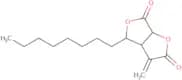
CAS:Avenaciolid is a pyrrolidine dicarboxylic acid that inhibits the activity of the glutamate transporter in vitro. It has been shown to have inhibitory effects on insulin resistance, which may be due to its effect on the production of free radicals. Avenaciolid also has a diagnostic use in diagnosing liver cancer, as well as an aminotransferase activity that can be used to measure liver damage. This compound has been shown to inhibit group P2 enzymes and mitochondrial enzyme activities, and is thought to induce apoptosis by inducing oxidative stress.Formula:C15H22O4Purity:Min. 95%Molecular weight:266.33 g/molC16-20:4 PC
CAS:Phosphatidylcholine (PC) is a phospholipid that is an important component of biological membranes. It is composed of choline and fatty acids, the most common being C16-20:4. PC is synthesized by the enzyme lecithin:cholesterol acyltransferase (LCAT). The synthesis of PC requires acetylation, which can be performed by a number of different enzymes. PC has been shown to have anti-apoptotic effects and has been found to inhibit platelet activation in vivo. PC also activates macrophage-like cells, which may be due to its oxidation products.Formula:C44H82NO7PPurity:Min. 95%Molecular weight:768.1 g/molPFKP antibody
The PFKP antibody is a monoclonal antibody used in Life Sciences research. It has various applications, including the study of nonsteroidal anti-inflammatory drugs and growth factors. This antibody can be used as a selectable marker in cytometry analysis and is particularly useful in the study of pluripotent stem cells. The PFKP antibody is highly specific and can be used for various techniques such as polymerase chain reaction (PCR) and immunoprecipitation with nuclear extracts. Additionally, this antibody has been shown to have an effect on epidermal growth factor-induced apoptosis. Its high specificity makes it an essential tool for researchers studying antibodies, monoclonal antibodies, and even oncolytic adenoviruses.TIMP3 antibody
The TIMP3 antibody is a monoclonal antibody used in Life Sciences research. It specifically targets epidermal growth factor and has been widely used in studies related to alpha-fetoprotein, histidine, globulin, and mesenchymal stem cells. The TIMP3 antibody has shown neutralizing properties against caspase-9 and acts as a growth factor family kinase inhibitor. It is formulated with excipients to ensure stability and efficacy. This antibody is highly sought after by researchers in the field for its specificity and reliability in various applications.Chlamydia trachomatis antibody
Chlamydia trachomatis antibody was raised in rabbit using L2 and other serovar groups as the immunogen.(R)-BAY1238097
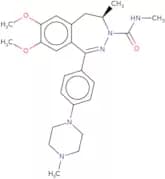
CAS:(R)-BAY1238097 is a research tool that is used to activate the receptor. It binds to the ligand-binding site of the receptor and can be used for pharmacological studies. (R)-BAY1238097 has been shown to bind to calcium channels and inhibit ion channel activity, suggesting that it can act as an inhibitor. (R)-BAY1238097 has also been shown to bind to proteins such as antibodies, human growth hormone, and insulin-like growth factor-1 receptor.
Formula:C25H33N5O3Purity:Min. 95%Molecular weight:451.56 g/molGNF362
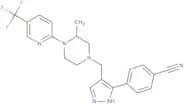
CAS:GNF362 is an analog of cyclin-dependent kinase (CDK) inhibitors that has been shown to inhibit the growth of tumor cells. This protein kinase inhibitor is derived from human urine and has potent anticancer activity. GNF362 selectively inhibits CDK2, CDK5, and CDK9 kinases, which are involved in cell cycle regulation and transcriptional control. This drug induces apoptosis in cancer cells by blocking the phosphorylation of key proteins involved in cell survival pathways. GNF362 has been tested in Chinese hamster ovary cells and has shown promising results as a potential therapy for various types of cancer.Formula:C22H21F3N6Purity:Min. 95%Molecular weight:426.4 g/molCHDI 00390576
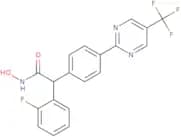
CAS:CHDI 00390576 is a high purity, pharmacologically active ligand. It has been shown to activate receptors and ion channels. CHDI 00390576 is also a research tool used in cell biology and antibody production.Formula:C19H13F4N3O2Purity:Min. 95%Molecular weight:391.3 g/molCPE antibody
The CPE antibody is a life sciences product that serves as a serum marker for various applications. This antibody specifically targets and binds to the protein known as CPE (carboxypeptidase E), which plays a crucial role in several biological processes. With its high specificity and affinity, the CPE antibody can be used in research, diagnostics, and therapeutics.