Biochemicals and Reagents
Subcategories of "Biochemicals and Reagents"
- Biomolecules(98,575 products)
- By Biological Target(100,728 products)
- By Pharmacological Effects(6,938 products)
- Cryopreservatives(21 products)
- Desinfectants and Related Compounds(28 products)
- Hormones(440 products)
- Plant Biology(6,906 products)
- Secondary Metabolites(14,368 products)
Found 130509 products of "Biochemicals and Reagents"
Bisucaberin
CAS:Bisucaberin is a research tool that acts as an activator. It binds to the receptor and cell biology. Bisucaberin has been shown to inhibit ion channels, which are membrane proteins that allow the passage of ions across the membrane in response to chemical or electrical signals. The binding of bisucaberin with its receptor leads to the opening of ion channels and increased potassium ion flow. This can inhibit neuronal activity, which is important for memory formation and synaptic plasticity. Bisucaberin also inhibits antibody production by binding to immunoglobulin G (IgG), IgM, and IgA, which prevents them from joining together and stopping the development of antibodies. Bisucaberin has been shown to bind peptides and interfere with protein interactions in cells.Formula:C18H32N4O6Purity:Min. 95%Molecular weight:400.50 g/molQuinagolide hydrochloride
CAS:Dopamine (D2) receptor agonist; for treating hyperprolactinaemiaFormula:C20H34ClN3O3SPurity:Min. 95%Molecular weight:432.02 g/molEtabenzarone
CAS:Etabenzarone is a research tool that was developed for the study of ion channels and protein interactions. It is a ligand that binds to the receptor Ligand and has been used to study cell biology, antibody production, and pharmacology. Etabenzarone is also an inhibitor that prevents the activation of ion channels by binding to them. It has been shown to bind to proteins in cell culture experiments as well as inhibit their function.Formula:C23H27NO3Purity:Min. 95%Molecular weight:365.50 g/molAmelubant
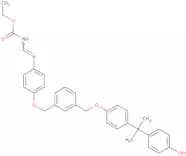
CAS:Amelubant is a synthetic compound designed for use in detailed biochemical research and therapeutic investigations. As a product derived from innovative chemical synthesis techniques, Amelubant is engineered to interact with particular biological pathways, predominantly in the field of inflammatory response modulation. Its mode of action involves specific binding to target receptors, influencing downstream signaling cascades.
Formula:C33H34N2O5Purity:Min. 95%Molecular weight:538.6 g/molTC-2153 hydrochloride
CAS:TC-2153 hydrochloride is a phosphatase inhibitor that is used as an antidepressant drug. TC-2153 hydrochloride inhibits the enzyme phosphatase, which is responsible for the inactivation of neurotransmitters and hormones. It has inhibitory properties on 5-HT1A and 5-HT2A receptors, which are serotonin receptors. TC-2153 hydrochloride also blocks the response element binding protein (RBP) to prevent the transcription of genes that code for various proteins including dopamine, serotonin, and neurotrophic factors. TC-2153 hydrochloride has been shown to reduce locomotor activity in mice and is being studied as a possible treatment for depression.Formula:C7H5ClF3NS5Purity:Min. 95%Molecular weight:355.9 g/molSNAP-94847
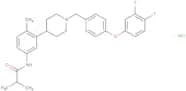
CAS:SNAP-94847 is a cyclic peptide that binds to the D2/D3 receptor. It has shown antidepressant effects in wild-type mice and CD-1 mice. SNAP-94847 also inhibits locomotor activity and reduces symptoms of depression, such as decreased feeding, increased grooming, and weight loss in rats with herpes simplex virus. It has been shown to produce an antidepressant effect in rats by modulating dopamine release.Formula:C29H32F2N2O2Purity:Min. 95%Molecular weight:478.57 g/molL67
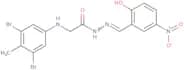
CAS:L67 is a monoclonal antibody that binds to the protein gene sequences of herpes simplex virus, which leads to the inhibition of viral replication. It has been shown to have an inhibitory effect on cancer cells, and can also be used as a pharmacological agent. L67 has been shown to have potent inhibition against intracellular calcium levels and kinetic energy in cell culture. This drug is being developed for use in cancer treatment and other diseases with high levels of calcium.Formula:C16H14Br2N4O4Purity:Min. 95%Molecular weight:486.11 g/molCP-060
CAS:CP-060 is a peptide that binds to the extracellular domain of the alpha subunit of human nicotinic acetylcholine receptor. It has been shown to activate this receptor and can be used as a research tool in studies of ion channels, cell biology, pharmacology, and receptor ligand interactions. CP-060 is an inhibitor of protein interactions with high purity and CAS No. 180090-15-7.Formula:C30H42N2O5SPurity:Min. 95%Molecular weight:542.7 g/molDS44960156
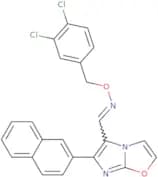
CAS:DS44960156 is a nucleoside analog that inhibits the synthesis of thymidylate, a natural precursor for DNA. DS44960156 has been shown to inhibit the replication of DNA in vitro and in vivo. It also has an effect on mitochondria, which may be due to its ability to inhibit the production of reactive oxygen species. DS44960156 has been shown to be effective against cancer cells. In addition, DS44960156 has been shown to have a significant effect on leukemia cells and cancer cell death. This drug is currently being developed for clinical use as an anticancer agent.Formula:C23H15Cl2N3O2Purity:Min. 95%Molecular weight:436.3 g/molRadicicol
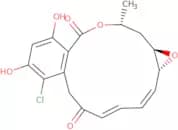
CAS:Inhibits heat shock protein 90 (HSP90); anti-cancer agentFormula:C18H17ClO6Purity:Min. 95%Color and Shape:PowderMolecular weight:364.78 g/molMK-2461
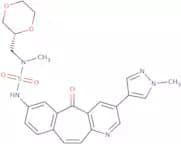
CAS:MK-2461 is an orally bioavailable small molecule that binds to the epidermal growth factor receptor (EGFR) and inhibits its downstream signaling. It has been shown to have potent antitumor activity in cell culture and in vivo against a range of tumor types. MK-2461 binds to the EGFR with high affinity, inhibiting the downstream signaling pathway by blocking the activation of molecules such as Raf, MEK1/2, and ERK1/2. The binding site of MK-2461 is located on the extracellular domain of EGFR.
Formula:C24H25N5O5SPurity:Min. 95%Molecular weight:495.55 g/molClanfenur
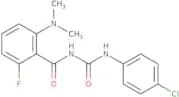
CAS:Clanfenur is a triazine that has been shown to have antitumour activity. It has been shown to inhibit the growth of cancer cells in vitro and in vivo. Clanfenur inhibits cell proliferation by binding to the target cell and blocking the synthesis of DNA, RNA, and proteins. This compound also prevents energy production and disrupts the cell's metabolism. Clanfenur also binds to chromatin, which may be responsible for its antitumour activity. Clanfenur is chemically stable and can be used as a chemical probe for chromatographic analysis. Clinical studies have found that clanfenur exhibits low toxicity in humans with no serious side effects reported. The toxic effects of clanfenur are limited to mild nausea, vomiting, diarrhoea, fever, anorexia or weight loss in some patients.Formula:C16H15ClFN3O2Purity:Min. 95%Molecular weight:335.76 g/molUCB9608
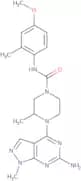
CAS:UCB9608 is a lipid kinase inhibitor that targets the linker region of the lipid kinase enzyme. It has been shown to inhibit the proliferation of cancer cells in vitro and in vivo. UCB9608 shows potent antiviral activity against HIV-1 and HSV-2, and it inhibits the proliferation of human papillomavirus (HPV) cell lines. This drug also has immunosuppressive properties, which may be due to its ability to interfere with regulatory T cells and antigen presenting cells. The effective dose for UCB9608 is unknown, but it is likely higher than 100 mg/kg/day since this was observed in other studies.Formula:C20H26N8O2Purity:Min. 95%Molecular weight:410.47 g/molMonogalactosyldiacylglycerol
CAS:Monogalactosyldiacylglycerol (MGDG) is a component of the lipids that make up cell membranes. It is found in the cytoplasm of cells, where it is bound to proteins. MGDG plays an important role in cellular processes such as cell division and differentiation, and may be involved in the development of cancer. MGDG has been shown to inhibit the growth of cancer cells by preventing the synthesis of proteins required for cell division. The MGDG phase transition temperature is lower than that of other lipids, which suggests that it can act as a potential drug target for certain cancers with low body temperatures.Formula:C45H74O10Purity:Min. 95%Molecular weight:775.06 g/molN1,N8-Diacetylspermidine
CAS:N1,N8-Diacetylspermidine is a cell-permeable inhibitor of protein interactions that has been used as a research tool to study protein interactions. This compound binds to the receptor and activates it by blocking the binding of ligands. N1,N8-Diacetylspermidine is a ligand for the acetylcholine receptor. The binding of this compound to the acetylcholine receptor leads to activation and subsequent opening of ion channels in nerve cells, which leads to an increase in the rate of neurotransmitter release. N1,N8-Diacetylspermidine has also been shown to activate another type of receptor called the nicotinic acetylcholine receptor, which is found in both insects and mammals. This activation can lead to increased levels of glutamate in synapses, leading to long-term potentiation (LTP) or long-term depression (LTD).Formula:C11H23N3O2Purity:Min. 95%Molecular weight:229.32 g/molFebrifugine dihydrochloride
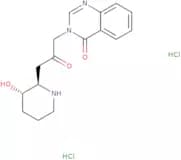
CAS:Febrifugine is a chiral optical antiparasitic drug that is used to treat and prevent malaria. It has potent antimalarial activity against the parasite Plasmodium falciparum, which causes malaria. Febrifugine is an orally active compound that can be administered by mouth and is rapidly absorbed from the gastrointestinal tract. It binds to red blood cells and inhibits their function, leading to parasite sequestration in the erythrocytes and subsequent death of the parasites. The drug also has anti-inflammatory properties and may potentiate aminoguanidine, a drug that helps to control blood cell production.
Formula:C16H19N3O3·2HClPurity:Min. 95%Molecular weight:374.26 g/molUtibapril
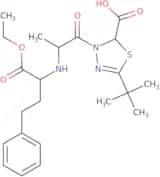
CAS:Utibapril inhibits the activity of angiotensin-converting enzyme (ACE), an enzyme that breaks down the hormone angiotensin I. This leads to an increase in the levels of angiotensin II, which causes blood vessels to narrow by activating a G protein and stimulating the release of a second messenger, nitric oxide. Utibapril is used as a treatment for hypertension, congestive heart failure, and other cardiovascular disorders. It has been shown to cause insulin resistance in patients with type 2 diabetes mellitus and metabolic syndrome. The long-term use of utibapril may lead to congestive heart failure due to its effect on lipid metabolism.Formula:C22H31N3O5SPurity:Min. 95%Molecular weight:449.6 g/molKcc2 blocker 1
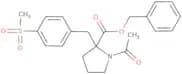
CAS:Please enquire for more information about Kcc2 blocker 1 including the price, delivery time and more detailed product information at the technical inquiry form on this pageFormula:C22H25NO5SPurity:Min. 95%Molecular weight:415.5 g/molA350619 Hydrochloride
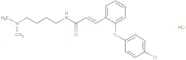
CAS:A350619 is a potent, non-selective inhibitor of protein-coupled receptor kinases. This compound blocks signalling pathways that are activated by the binding of a ligand to the receptor, leading to inhibition of cellular functions such as proliferation and migration. A350619 has been shown to inhibit calcification in vitro and in vivo and has potential for the treatment of conditions such as atherosclerosis, calcific aortic valve stenosis, or vascular sclerosis.
Formula:C21H26Cl2N2OSPurity:Min. 95%Molecular weight:425.41 g/mol