Biochemicals and Reagents
Subcategories of "Biochemicals and Reagents"
- Biomolecules(98,757 products)
- By Biological Target(100,261 products)
- By Pharmacological Effects(6,822 products)
- Cryopreservatives(21 products)
- Desinfectants and Related Compounds(28 products)
- Hormones(356 products)
- Plant Biology(6,893 products)
- Secondary Metabolites(14,348 products)
Found 130132 products of "Biochemicals and Reagents"
PTP1B protein
MEMEKEFEQI DKSGSWAAIY QDIRHEASDF PCRVAKLPKN KNRNRYRDVS PFDHSRIKLH QEDNDYINAS LIKMEEAQRS YILTQGPLPN TCGHFWEMVW EQKSRGVVML NRVMEKGSLK CAQYWPQKEE KEMIFEDTNL KLTLISEDIK SYYTVRQLEL ENLTTQETRE ILHFHYTTWP DFGVPESPAS FLNFLFKVRE SGSLSPEHGP VVVHCSAGIG RSGTFCLADT CLLLMDKRKD PSSVDIKKVL LEMRKFRMGL IQTADQLRFS YLAVIEGAKF IMGDSSVQDQ WKELSHEDLE PPPEHIPPPP RPPKRILEPH NPurity:Min. 95%ZNF610 antibody
ZNF610 antibody was raised in rabbit using the N terminal of ZNF610 as the immunogenPurity:Min. 95%Becampanel
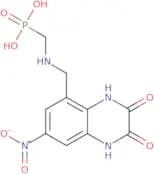
CAS:Becampanel is a linker drug that binds to the adenosine A1 receptor and blocks nerve transmission. It is used to treat chronic pain, postoperative pain, and neuropathic pain. Becampanel has been shown to be effective in reducing diabetic neuropathy and Alzheimer's disease. This drug has been shown to have a synergistic effect when combined with cholinesterase inhibitors, which are drugs that inhibit the breakdown of acetylcholine by cholinesterases. The combination of becampanel with an acetylcholine esterase inhibitor produces a significant reduction in the symptoms of chronic pain.Formula:C10H11N4O7PPurity:Min. 95%Molecular weight:330.19 g/molInsulin-Like Growth Factor Ab BSA/Azide Free
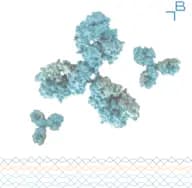
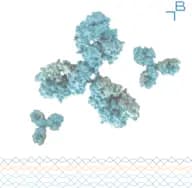
Insulin-Like Growth Factor Monoclonal Antibody BSA/Azide FreeSynuClean D
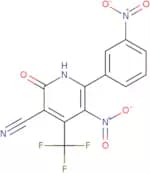
CAS:Inhibits aggregation of α-synuclein by binding to the inner cavity of α-synuclein fibrils. α-synuclein is a major component of amyloid deposition in dopaminergic neurons of Parkinson’s patients. SynuCleanD has therapeutic potential in Parkinson’s disease as it can prevent the degeneration of dopaminergic neurons.Formula:C13H5F3N4O5Purity:Min. 95%Molecular weight:354.2 g/molNCS1 protein (His tag)
1-190 amino acids: MGKSNSKLKP EVVEELTRKT YFTEKEVQQW YKGFIKDCPS GQLDAAGFQK IYKQFFPFGD PTKFATFVFN VFDENKDGRI EFSEFIQALS VTSRGTLDEK LRWAFKLYDL DNDGYITRNE MLDIVDAIYQ MVGNTVELPE EENTPEKRVD RIFAMMDKNA DGKLTLQEFQ EGSKADPSIV QALSLYDGLV LEHHHHHHPurity:Min. 95%(±)-Clopidogrel-(phenyl-13C6)
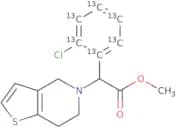
CAS:(±)-Clopidogrel-(phenyl-13C6) is a potent, selective and competitive antagonist of the thromboxane A2 receptor. It is a pharmacological tool for studying protein interactions with the thromboxane A2 receptor. (±)-Clopidogrel-(phenyl-13C6) has been shown to inhibit ion channels and ligand-gated ion channels, as well as to block certain voltage-activated calcium channels. This agent also binds to antibodies that are specific for the thromboxane A2 receptor, making it useful in cell biology and antibody studies. (±)-Clopidogrel-(phenyl-13C6) is an inhibitor of platelet aggregation, which may be due to its ability to bind with high affinity to the peptide sequence Glu-Leu-Arg on the platelet surface.Formula:C6C10H16ClNO2SPurity:Min. 95%Molecular weight:327.78 g/molHuman-monoFITC (PheB1)
Human-monoFITC (PheB1) is a peptide with the amino acid sequence Phe-B1. It is a fluorescent ligand that is used as a research tool for receptor binding studies. The antibody conjugated to human-monoFITC (PheB1) can be used to detect and quantify the protein in Western blots.
Purity:Min. 95%17:0 PE
CAS:Palmitoleic acid (17:0) is a fatty acid that plays an important role in regulating the function of mitochondria. It has been shown to be reactive and may play a role in the development of cancer, but it also has antioxidant properties. Palmitoleic acid (17:0) is synthesized from acetyl-CoA, which is derived from malonyl-CoA and acetyl-CoA. The enzyme carnitine palmitoyltransferase catalyzes this reaction, converting malonyl-CoA to malonyl-acylcarnitine, which then undergoes β oxidation to form acetyl-CoA and palmitoleic acid (17:0). In addition to its regulatory effects, palmitoleic acid (17:0) also acts as a photosynthetic pigment that absorbs light energy for photosynthesis. The measurement of 17:0 PE concentrations can be used as an indicator of photosynthetic activity in
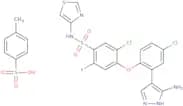
Formula:C39H78NO8PPurity:Min. 95%Molecular weight:720.01 g/molPF 05089771
CAS:PF 05089771 is a ligand that has been shown to activate the G-protein coupled receptor, GPRC6A. It has also been shown to inhibit the activity of protein kinase A and protein phosphatase 1D. PF 05089771 is a research tool for studying the ion channels and peptides that are involved in cell biology and cell signaling. This compound is an antibody inhibitor and can be used as a research tool for studying protein interactions.Formula:C25H20Cl2FN5O6S3Purity:Min. 95%Molecular weight:672.56 g/molKidins220 antibody
Kidins220 antibody was raised in rabbit using residues 1747-1762 [ASSESTGFGEERESIL] of the human 220kDa Kidins220 protein as the immunogen.Purity:Min. 95%Polystyrene M NH2 (5 µm)
Polystyrene is a thermoplastic polymer that is used in the production of polystyrene resins, which are used as building blocks for peptide synthesis. New England Peptide offers a variety of polystyrene resin products including particle resins and Rapp Polymere resins. The particle size of the resin ranges from 5-100 µm. Polymers can be synthesized using various methods including solid-phase synthesis and solution phase synthesis, which both require polystyrene resins. This product is available with a variety of functionalities, such as amine, hydroxyl and carboxyl groups.
Purity:Min. 95%OICR-0547
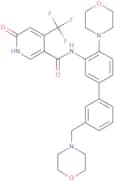
CAS:OICR-0547 is a small molecule that was identified by the OICR consortium as a potential antibiotic. It has been shown to have broad-spectrum activity against Gram-positive and Gram-negative bacteria, including drug-resistant strains. OICR-0547 binds to the bacterial ribosome and inhibits protein synthesis, which leads to cell death. The compound also has an inhibitory effect on the growth of several yeast species and mammalian cells. The binding of OICR-0547 to the ribosome induces a change in conformation that prevents peptidyl transferase from synthesizing proteins. This inhibition of translation leads to cell death because it prevents production of proteins vital for cell division. In addition, OICR-0547 inhibits the growth of methicillin resistant Staphylococcus aureus (MRSA), Enterococcus faecalis, Enterobacter cloacae, Pseudomonas aeruginosa, BurkholderiaFormula:C28H29F3N4O4Purity:Min. 95%Molecular weight:542.55 g/molE3 Ligase ligand 8
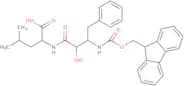
CAS:E3 Ligase ligand 8 is a protein that belongs to the ubiquitin ligase family. It is involved in the regulation of gene expression and metabolism. E3 Ligase ligand 8 catalyzes the attachment of ubiquitin molecules to other proteins, marking them for degradation by proteasomes. It also has been shown to be a linker between the e3 ligases and their substrates. E3 Ligase ligand 8 has been shown to bind DNA in vitro, which may be due to its ability to form heterocycles with c-Myc protein, leading to increased transcriptional activity.Formula:C31H34N2O6Purity:Min. 95%Molecular weight:530.6 g/molU2AF1 antibody
U2AF1 antibody was raised using the N terminal of U2AF1 corresponding to a region with amino acids MAEYLASIFGTEKDKVNCSFYFKIGACRHGDRCSRLHNKPTFSQTILIQNApelin-36 (rat, mouse)
CAS:Apelin-36 is a peptide that is a ligand for the APJ receptor. It has been shown to activate this receptor in vitro, as well as in vivo in rats and mice. Apelin-36 has also been shown to act as an inhibitor of the activity of the enzyme phosphodiesterase 4 (PDE4), which is involved in inflammatory responses.
Formula:C185H304N68O43SPurity:Min. 95%Molecular weight:4,201 g/molSLC25A14 antibody
SLC25A14 antibody was raised using a synthetic peptide corresponding to a region with amino acids SIVAEFGTFPVDLTKTRLQVQGQSIDARFKEIKYRGMFHALFRICKEEGV
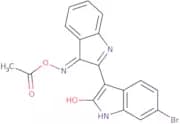
BIO-acetoxime
CAS:Inhibitor of GSK-3 kinaseFormula:C18H12BrN3O3Purity:Min. 95%Molecular weight:398.21 g/molIGHG1 MS Calibrator-4 (25nmol)
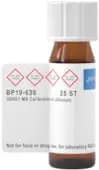
The IGHG1 MS Calibrator-4 is a tryptic peptide that is a product of the Ig gamma-1 chain C region. This peptide is used as a calibrator for mass spectrometry. The IGHG1 MS Calibrator-4 contains Biologically Active Peptides, which can be used to identify the presence of proteins in biological samples. The New England Peptide Company offers peptides for use in proteomics, such as the IGHG1 MS Calibrator-4.Purity:Min. 95%