Biochemicals and Reagents
Subcategories of "Biochemicals and Reagents"
- Biomolecules(98,755 products)
- By Biological Target(100,260 products)
- By Pharmacological Effects(6,822 products)
- Cryopreservatives(21 products)
- Desinfectants and Related Compounds(28 products)
- Hormones(356 products)
- Plant Biology(6,893 products)
- Secondary Metabolites(14,348 products)
Found 130132 products of "Biochemicals and Reagents"
Apolipoprotein A1 Heavy Tryptic Peptide Standard (4nmol)
Apolipoprotein A1 heavy tryptic peptide standard for protein identification and quantitation studies. Apolipoprotein A1 is a structural component of high density lipoprotein (HDL) and is involved in cellular cholesterol homeostasis and reverse cholesterol transport.Purity:Min. 95%IL 22 Human
IL-22 is a cytokine that regulates the immune system and has been shown to play a role in the development of Th1 cells. IL-22 is an activator for IL-22 receptor and can be used as a ligand or antibody for research purposes. IL-22 is not known to interact with ion channels, but it does bind to cell membranes. IL-22 is also used as a pharmacological tool for studying protein interactions, such as peptides, and is also useful in cell biology research.Purity:Min. 95%PNU-282987 S enantiomer free base
CAS:PNU-282987 is a novel chemical compound that belongs to the group of ligands. It binds to the alpha subunit of the GABA receptor in the central nervous system, which is responsible for regulating neuronal excitability. PNU-282987 is a potent activator of this receptor, and has been shown to increase the frequency of spontaneous inhibitory postsynaptic currents (sIPSCs) in mouse hippocampal neurons. PNU-282987 has no effect on other ligand-gated ion channels or on the binding of various radioligands to glutamate receptors. It also does not inhibit protein synthesis or DNA replication, nor does it bind to antibodies directed against GABA receptors.Formula:C14H17ClN2OPurity:Min. 95%Molecular weight:264.75 g/molmonobiotin INSL5
Monobiotin INSL5 is a peptide that is biologically active and is obtained from the New England Peptide Company. Monobiotin INSL5 has shown to be an antagonist of the insulin-like growth factor II receptor and may have potential as a therapeutic agent for diabetes mellitus.Purity:Min. 95%PTPN2 antibody
PTPN2 antibody was raised using the middle region of PTPN2 corresponding to a region with amino acids ESGSLNPDHGPAVIHCSAGIGRSGTFSLVDTCLVLMEKGDDINIKQVLLNPurity:Min. 95%[D-Ala2,Met5]-Enkephalinamide
CAS:[D-Ala2,Met5]-Enkephalinamide is a peptide that belongs to the group of opioid peptides. It acts as an agonist and binds to the µ-opioid receptor. This receptor is involved in transmitting signals from outside the cell to inside the cell by regulating ion channels and controlling protein interactions. The binding of [D-Ala2,Met5]-Enkephalinamide to this receptor results in an inhibitory effect on neurotransmitter release, leading to a decrease of pain sensation. It has also been shown that [D-Ala2,Met5]-Enkephalinamide can act as an antagonist at other opioid receptors, such as the κ-opioid receptor.Formula:C28H38N6O6SPurity:Min. 95%Molecular weight:586.7 g/molAlpha-1-Acid Glycoprotein Light Tryptic Peptide Standard (4nmol)
Alpha-1-Acid Glycoprotein light tryptic peptide standard for protein identification and quantitation. Alpha-1-Acid Glycoprotein is an acute phase protein whose concentration in serum increases during, infection, inflammation and tissue injury.Purity:Min. 95%INSL3
Insl3 is a protein that is localized in the ovary and human chorionic gonadotropin. It is also found in human serum. In animals, Insl3 causes fertility. In humans, it stimulates the development of the gubernaculum, which attaches to the testes. The expression of Insl3 increases during puberty and continues to be expressed throughout adulthood. Insl3 is translated from mRNA as a precursor protein with an N-terminal signal peptide sequence that directs its secretion from the cell into the extracellular space. The Insl3 precursor protein has two C-terminal domains: an internal domain and a carboxy-terminal domain. These domains are translated from separate initiation codons on one mRNA molecule. The internal domain contains sequences for translation initiation, ribosome binding sites, and translational stop codons; these sequences are not present in the carboxy-terminal domain. Insl3 can be detected by using an
Purity:Min. 95%Granzyme A antibody
Granzyme A antibody was raised using a synthetic peptide corresponding to a region with amino acids TREGDLKLLQLTEKAKINKYVTILHLPKKGDDVKPGTMCQVAGWGRTHNSPurity:Min. 95%RO 28-1674
CAS:RO 28-1674 is an investigational compound, classified as an ORL1 receptor agonist, derived from synthetic chemical processes. As an agonist of the opioid receptor-like 1 (ORL1), RO 28-1674 selectively targets the nociceptin/orphanin FQ peptide receptor, influencing the modulation of pain and other physiological responses. This mechanism of action involves the activation of intracellular signaling pathways that alter neuronal excitability and neurotransmitter release, impacting nociception and potentially other neurophysiological processes.Formula:C18H22N2O3S2Purity:Min. 95%Molecular weight:378.5 g/molAtogepant
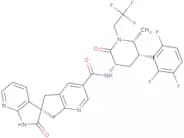
CAS:Atogepant is a drug for the treatment of migraine that belongs to the group of anti-migraine drugs. It has been shown to inhibit the synthesis of cholesterol, which may be one of its mechanisms for prevention of migraines. Atogepant also inhibits microbial infections through inhibition of growth and can be used as a prophylactic agent against bacterial and viral infections. Atogepant is not active against fungi or parasites. The drug has been observed to have few side effects in women, and it does not affect liver function. It is thought that atogepant binds to a receptor on trigeminal nerve cells, which leads to activation of these cells and subsequent relief from migraine pain.
Formula:C29H23F6N5O3Purity:Min. 95%Molecular weight:603.52 g/mol6-[D10]Leu-Glargine
Please enquire for more information about 6-[D10]Leu-Glargine including the price, delivery time and more detailed product information at the technical inquiry form on this pagePurity:Min. 95%HAV VP3 antibody
HAV VP3 antibody is a monoclonal antibody that specifically targets the HAV VP3 protein. It is commonly used in life sciences research to study the role of this protein in various biological processes. This antibody has been shown to bind to actin filaments, nuclear proteins, and albumin, making it a versatile tool for studying protein interactions and localization. Additionally, HAV VP3 antibody has been used in studies involving atypical hemolytic uremic syndrome and Brucella abortus infection. With its high specificity and affinity, this monoclonal antibody is a valuable asset for researchers in the field of immunology and molecular biology.Hepatitis B Virus e-Antigen Recombinant
Hepatitis B virus e-antigen recombinant is a vaccine that contains the hepatitis B virus surface antigen. The recombinant vaccine is produced by Escherichia coli and is purified by chromatography. It has been shown to be immunoreactive in humans and has a minimal viral load of less than 0.001 plaque-forming units per milliliter. The recombinant vaccine has been shown to be safe, as it does not cause any adverse reactions or side effects.Purity:Min. 95%CFM 4
CAS:CFM 4 is a uv-absorbing analog of the fatty acid, γ-linolenic acid. It has been shown to inhibit tumor growth in mice with metastatic properties, and may be useful for the treatment of certain types of cancer. CFM 4 inhibits β-catenin signaling in cells by inhibiting fatty acid synthesis. It also shows biological properties that have been attributed to its ability to inhibit cell cycle progression. CFM 4 inhibits the growth of breast cancer cells by inducing apoptosis and has been shown to be effective against other types of cancer as well.
CFM 4 is used in tissue culture experiments as a source of energy for chloroplasts and can be cycled back into chloroplasts after it has been removed from the cell.Formula:C22H16ClN3OSPurity:Min. 95%Molecular weight:405.9 g/molCD86 antibody (biotin)
CD86 antibody (biotin) was raised in rat using LPS-activated murine B cells as the immunogen.Purity:Min. 95%SB 258719
CAS:SB 258719 is a selective 5-HT1A receptor antagonist, which is a type of pharmacological agent that binds to and inhibits the activity of the 5-HT1A receptor. It is synthesized from chemical compounds typically used in neurobiological research. The mode of action involves the competitive blockade of serotonin (5-HT) at the 5-HT1A receptor sites, thereby preventing serotonin from activating these receptors in the brain.Formula:C18H30N2O2SPurity:Min. 95%Molecular weight:338.51 g/mol4-(1H-Indol-4-yl)-N-phenyl-1-piperazinecarboxamide
CAS:Adapalene is a retinoid-related compound that is used as an anti-acne medication. It has been shown to inhibit the growth of cancer cells by binding to the retinoic acid receptor and inhibiting transcription. Adapalene also binds to mutant enzymes involved in the synthesis of glutamate, which may contribute to its anti-cancer effects. Adapalene has been shown to induce apoptosis in pancreatic cancer cells, highlighting its potential as a therapy for this type of cancer.Formula:C19H20N4OPurity:Min. 95%Molecular weight:320.4 g/molCD8a antibody (FITC)
CD8a antibody (FITC) was raised in rat using murine thymus or spleen as the immunogen.Purity:Min. 95%


![[D-Ala2,Met5]-Enkephalinamide](/_next/image/?url=https%3A%2Fstatic.cymitquimica.com%2Fproducts%2F3D%2Fthumb-webp%2FPEK-4117-V.webp&w=3840&q=75)

![6-[D10]Leu-Glargine](/_next/image/?url=https%3A%2Fstatic.cymitquimica.com%2Fproducts%2F3D%2Fthumb-webp%2FTSI-3420-V.webp&w=3840&q=75)