Biochemicals and Reagents
Subcategories of "Biochemicals and Reagents"
- Biomolecules(98,556 products)
- By Biological Target(100,854 products)
- By Pharmacological Effects(6,941 products)
- Cryopreservatives(21 products)
- Desinfectants and Related Compounds(28 products)
- Hormones(528 products)
- Plant Biology(6,904 products)
- Secondary Metabolites(14,368 products)
Found 130538 products of "Biochemicals and Reagents"
ERI2 Blocking Peptide
A synthetic peptide for use as a blocking control in assays to test for specificity of EXOD1 antibody, catalog no. 70R-3113
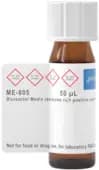
Purity:Min. 95%Bioreactor Media (exosome rich positive control)
The exosome positive control is a component of our Exosome Kits , products ME-020 and ME-020P and consists of exosomes purified from HEK293 cells. This can also be purchased as a standalone research tool for studying exosomes and their role in regulating cellular function.
Purity:Min. 95%FLJ25439 Blocking Peptide
A synthetic peptide for use as a blocking control in assays to test for specificity of FLJ25439 antibody, catalog no. 70R-3828
Purity:Min. 95%NUDT22 Blocking Peptide
A synthetic peptide for use as a blocking control in assays to test for specificity of NUDT22 antibody, catalog no. 70R-10087
Purity:Min. 95%LDLRAP1 Blocking Peptide
A synthetic peptide for use as a blocking control in assays to test for specificity of LDLRAP1 antibody, catalog no. 70R-2837
Purity:Min. 95%SLC22A2 Blocking Peptide
A synthetic peptide for use as a blocking control in assays to test for specificity of SLC22A2 antibody, catalog no. 70R-1735
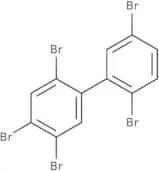
Purity:Min. 95%PBB 101
CAS:Controlled ProductPBB 101 is a medicinal compound that belongs to the indole family and has been studied for its potential as an anticancer agent. In Chinese medicine, PBB 101 has been used to treat various ailments, including tumors. It has been shown to induce apoptosis in cancer cells by inhibiting specific proteins involved in cell cycle regulation. PBB 101 has demonstrated significant antitumor activity in vitro against a variety of cancer cell lines, including leukemia. This inhibitor is currently being investigated as a potential treatment for cancer and may provide a new approach to cancer therapy.
Formula:C12H5Br5Purity:Min. 95%Molecular weight:548.7 g/molRef: 3D-SCA88896
Discontinued productWDR5 Blocking Peptide
A synthetic peptide for use as a blocking control in assays to test for specificity of WDR5 antibody, catalog no. 70R-8499
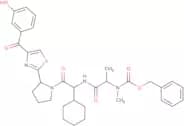
Purity:Min. 95%cIAP1 ligand 2
CAS:cIAP1 ligand 2 is a peptide that binds to the cIAP1 receptor, which is involved in the regulation of apoptosis. This inhibitor blocks the binding of the caspase-2 and -3 to the receptor and inhibits activation of these enzymes. The cIAP1 ligand 2 has been shown to inhibit tumor cell growth in vitro and in vivo. It has also been used as a research tool for studying protein interactions and antibody production.
Formula:C34H40N4O6SPurity:Min. 95%Molecular weight:632.8 g/molRef: 3D-HUD11470
Discontinued productFebuxostat 67M-4
CAS:Febuxostat is a potent, selective inhibitor of the enzyme xanthine oxidoreductase (XOR). This enzyme is involved in the production of uric acid and its inhibition leads to a decrease in serum uric acid levels. Febuxostat is used for the treatment of chronic gouty arthritis, hyperuricemia associated with primary or secondary causes, and asymptomatic hyperuricemia.
Febuxostat was shown to bind to a number of different receptors and ion channels, including the purinergic receptor P2Y1, ATP-sensitive potassium channel KATP, transient receptor potential ankyrin 1 channel TRPA1 and TRPV1. It also interacts with peptides such as vasopressin V1a receptor antagonist [8] and alpha-2 adrenergic receptor antagonist [9].Formula:C16H14N2O5SPurity:Min. 95%Molecular weight:346.4 g/molRef: 3D-HRA58249
Discontinued productCDY1 antibody
CDY1 antibody was raised using the C terminal of CDY1 corresponding to a region with amino acids FPRTWWQSAEDVHREKIQLDLEAEFYFTHLIVMFKSPRPAAMVLDRSQDF
Colestipol
CAS:Colestipol is a bile acid sequestrant, which is a type of polymeric anion-exchange resin derived from a synthetic, non-absorbable source. Its mode of action involves binding bile acids in the intestine, thereby interrupting their enterohepatic circulation. This binding process forms an insoluble complex that is excreted in feces, reducing the bile acid pool and prompting the liver to use circulating cholesterol to synthesize new bile acids. Consequently, this results in a decrease in serum cholesterol levels.Colestipol is primarily used in the management of hypercholesterolemia, particularly in patients who cannot tolerate statins or require additional cholesterol-lowering support. Its applications extend to both primary and secondary prevention of coronary artery disease due to its role in lowering low-density lipoprotein (LDL) cholesterol levels. While effective, its usage must be carefully monitored due to potential gastrointestinal side effects and possible interactions with the absorption of other medications and nutrients.
ZNF572 Blocking Peptide
A synthetic peptide for use as a blocking control in assays to test for specificity of ZNF572 antibody, catalog no. 70R-8424
Purity:Min. 95%MITD1 Blocking Peptide
A synthetic peptide for use as a blocking control in assays to test for specificity of MITD1 antibody, catalog no. 70R-4507
Purity:Min. 95%MYH10 antibody
MYH10 antibody was raised using the N terminal of MYH10 corresponding to a region with amino acids WFPKATDKTFVEKLVQEQGSHSKFQKPRQLKDKADFCIIHYAGKVDYKAD
Pladienolide B
CAS:Pladienolide B is a natural macrocyclic compound, which is a secondary metabolite derived from the culture broth of the bacterium Streptomyces platensis. It functions as a selective inhibitor of the spliceosome, a complex responsible for pre-mRNA splicing. By binding to the SF3b subunit of the spliceosome, Pladienolide B disrupts normal splicing processes, leading to alterations in gene expression. This disruption affects the growth and survival of cancer cells, demonstrating significant antitumor activity in various cancer models.Pladienolide B's unique mechanism of targeting the spliceosome makes it a subject of interest in cancer research, particularly for malignancies resistant to conventional therapies. Its efficacy in preclinical studies highlights its potential as a lead compound for the development of novel anticancer drugs. Researchers investigate its applications in targeting specific cancer types, exploring synergies with other treatments, and understanding resistance mechanisms, making it an important tool in both basic research and therapeutic exploration.
Formula:C30H48O8Molecular weight:536.7 g/molGSK J2
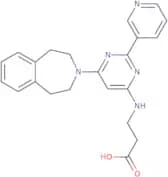
CAS:GSK J2 is a substance that inhibits the activity of histone methyltransferase enzymes. This drug has been shown to inhibit tumor growth and induce apoptosis in cancer cells. GSK J2 also increases insulin sensitivity, which may be due to its ability to suppress the production of Th17 cells. GSK J2 has been shown to improve insulin sensitivity in patients with type 2 diabetes. GSK J2 is an inhibitor of Hdac, a class of enzymes that regulate epigenetic gene expression. It has been shown to inhibit the growth factor-induced phosphorylation and activation of Akt/mTORC1 signaling pathway, which leads to decreased cell proliferation and increased apoptosis in mammalian cells.
Formula:C22H23N5O2Purity:Min. 95%Molecular weight:389.45 g/molRef: 3D-UFC85452
Discontinued productNPY1R antibody
human NPY1R C-terminal peptide immunoge, Affinity purified Rabbit polyclonal NPY1R antibody, lyophilized