Antibiotics
Antibiotics are compounds designed to destroy or inhibit the growth of various microorganisms, playing a crucial role in treating infections and preventing the spread of diseases. This category offers a diverse range of active ingredients specifically for research in the biochemical field. These compounds are essential tools in studying bacterial mechanisms, resistance patterns, and the development of new therapeutic agents. Researchers can explore a wide variety of antibiotics to understand their effects, optimize their use, and develop novel treatments to combat emerging microbial threats. The availability of such a broad spectrum of antibiotics supports advanced research and innovation in microbiology and pharmaceutical sciences.
Subcategories of "Antibiotics"
- Macrolide Antibiotics(26 products)
- Steroidal Antibiotics(31 products)
- Tetracycline Antibiotics(20 products)
- β-Lactam Antibiotics(11 products)
Found 4086 products of "Antibiotics"
Sort by
Purity (%)
0
100
|
0
|
50
|
90
|
95
|
100
Potassium clavulanate - 1:1 mixture with cellulose, Antibiotic for Culture Media Use Only
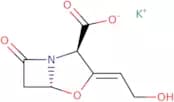
CAS:<p>Potassium clavulanate is a beta-lactamase inhibitor and an antibacterial agent. The presence of potassium clavulanate in culture media inhibits the activity of beta-lactamases, which are enzymes that confer resistance to penicillin and other beta-lactam antibiotics. It also has been shown to be active against bacterial infections such as tuberculosis, sepsis, and pneumonia, where it can inhibit the growth of bacteria by interfering with their ability to form cell walls.</p>Formula:C8H8KNO5Purity:Min. 95.0 Area-%Molecular weight:237.25 g/mol25-O-Deacetyl rifabutin
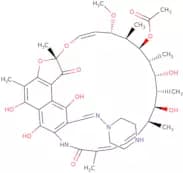
CAS:<p>25-O-Deacetyl rifabutin is an antibiotic derivative, which is sourced from the semi-synthetic modification of rifabutin, a compound originally derived from the fermentation of the bacterium Amycolatopsis mediterranei. This derivative works by inhibiting bacterial RNA synthesis. It achieves this by specifically targeting the DNA-dependent RNA polymerase enzyme, which is essential for bacterial transcription. The mechanism involves binding to the beta-subunit of the polymerase, thereby blocking the elongation of the RNA chain, which ultimately leads to the death of the bacterial cell.</p>Formula:C44H60N4O10Purity:Min. 95%Color and Shape:Purple PowderMolecular weight:804.97 g/molIonomycin
CAS:<p>Ionomycin is an ionophore compound with a mode of action that facilitates calcium ion transport across cell membranes. It is used in research to study calcium signaling and T-cell activation.</p>Formula:C41H72O9Purity:Min. 98 Area-%Color and Shape:PowderMolecular weight:709.01 g/molCeftaroline fosamil acetate
CAS:<p>Cephalosporin antibiotic active against gram-positive bacteria including MRSA</p>Formula:C24H25N8O10PS4Purity:Min. 98 Area-%Molecular weight:744.74 g/molCamptothecin
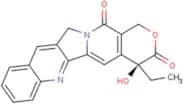
CAS:<p>Camptothecin (CPT) belongs to the alkaloid group of natural products and is a specific DNA topoisomerase I (Topo I) inhibitor (IC50=679 nM) with specificity.</p>Formula:C20H16N2O4Purity:99.52% - 99.88%Color and Shape:Solid PowderMolecular weight:348.35Trovafloxacin mesylate
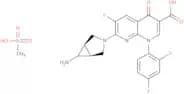
CAS:<p>Trovafloxacin mesylate is a synthetic antibiotic belonging to the fluoroquinolone class, which is derived from chemical synthesis processes rather than natural sources. The mode of action of trovafloxacin mesylate involves the inhibition of bacterial enzymes DNA gyrase and topoisomerase IV. These enzymes are essential for DNA replication, repair, and transcription within the bacterial cell. By inhibiting these enzymes, trovafloxacin mesylate disrupts bacterial DNA processes, leading to cell death and exerting its antibacterial effects.</p>Formula:C21H19F3N4O6SPurity:Min. 95%Molecular weight:512.46 g/molVancomycin CDP-1
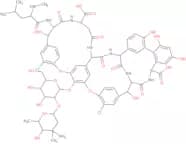
CAS:<p>Vancomycin CDP-1 is a degradation product of vancomycin with no direct therapeutic action but used in research for analytical method development and validation.</p>Formula:C66H74Cl2N8O25Purity:Min. 95%Color and Shape:PowderMolecular weight:1,450.24 g/molLysostaphin, from staphylococcus staphylolyticus
CAS:<p>Lysostaphin, from Staphylococcus staphylolyticus is a zinc metalloenzyme with action on bacterial cell walls by cleaving polyglycine cross-links and is used for treating staphylococcal infections and in research applications.</p>Purity:Min. 95%Color and Shape:PowderCeftizoxime alapivoxil
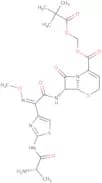
CAS:<p>Ceftizoxime alapivoxil is a prodrug antibiotic, which is derived from ceftizoxime, a third-generation cephalosporin. This semi-synthetic source enables the compound to effectively combat a wide range of bacterial infections by improving oral bioavailability compared to its parent compound. Once administered, ceftizoxime alapivoxil is metabolized in the body to release ceftizoxime, which exerts its antibacterial activity by binding to penicillin-binding proteins (PBPs) on bacterial cell walls. This binding action inhibits the transpeptidation step critical for cell wall synthesis, leading to cell lysis and bacterial death.</p>Purity:Min. 95%Oligomycin
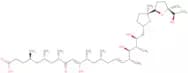
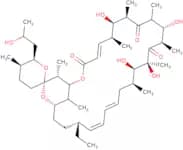
CAS:<p>Oligomycin is a macrolide antibiotic, which is derived from species of the bacterium Streptomyces. It acts as a potent inhibitor of the mitochondrial ATP synthase complex, specifically targeting the F₀ portion of the enzyme. This interference results in the blockage of proton translocation across the mitochondrial membrane, thereby preventing ATP synthesis. Due to this mode of action, Oligomycin is primarily utilized in biochemical research to study cellular respiration and energy metabolism. It serves as a valuable tool in elucidating the mechanisms of oxidative phosphorylation and the role of ATP in various cellular processes. In addition, its application extends to investigations on mitochondrial dysfunctions and the screening of mitochondrial-targeted drugs.</p>Formula:C45H74O11Purity:Min. 95%Molecular weight:791.06 g/molOxacillin sodium
CAS:<p>Oxacillin sodium is a beta-lactam antibiotic with action on bacterial cell wall synthesis and is used for treating infections caused by penicillin-resistant Staphylococcus aureus.</p>Formula:C19H18N3NaO5SPurity:Min. 95%Color and Shape:PowderMolecular weight:423.42 g/molAspterric acid
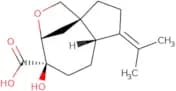
CAS:<p>Plant growth regulator</p>Formula:C15H22O4Purity:Min. 95%Molecular weight:266.33 g/molTetracycline hydrochloride, Antibiotic for Culture Media Use Only
CAS:<p>Tetracycline hydrochloride is a broad-spectrum antibiotic and is an electron transfer agent. It has been shown to be effective against bacterial infections in humans and has been used in cultures for the prevention of bacterial contamination. As an electron transfer agent, it is used in electron microscopy to study the surface of biological cells. Tetracycline hydrochloride enters bacterial cells by diffusion and interacts with the cytoplasmic membrane, where it induces a redox reaction that leads to cell death. The efficacy of tetracycline hydrochloride in treating candida albicans (yeast) was studied using in-vitro activity and showed that carboxymethyl chitosan nanoparticles were able to enhance the treatment efficiency.</p>Formula:C22H25ClN2O8Purity:Min. 88.0 Area-%Molecular weight:480.90 g/molRef: 3D-T-1961
1kgTo inquire5kgTo inquire10kgTo inquire25kgTo inquire2500gTo inquire-Unit-kgkgTo inquire(10E)-10,11-Didehydro-11-deoxy-6-O-methylerythromycin
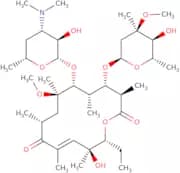
CAS:<p>(E)-10,11-Didehydro-11-deoxy-6-O-methylerythromycin is a semisynthetic macrolide antibiotic, which is derived from erythromycin, a natural product obtained from the bacterium *Saccharopolyspora erythraea*. This compound functions as an inhibitor of protein synthesis by binding to the 50S ribosomal subunit of bacteria, thus preventing the growth and proliferation of susceptible bacterial strains. The alteration in its chemical structure, notably the methylation at the 6-O position, enhances its stability and improves its pharmacokinetic profile compared to the parent compound, erythromycin.</p>Formula:C38H67NO12Purity:Min. 95%Molecular weight:729.94 g/molErythromycylamine
CAS:<p>Erythromycylamine is a semisynthetic antibiotic, which is derived from the parent compound erythromycin. This compound is sourced from the fermentation product of the bacterium *Saccharopolyspora erythraea*. Erythromycylamine acts by inhibiting bacterial protein synthesis, specifically targeting the 50S ribosomal subunit, which ultimately leads to the disruption of bacterial cell growth and replication.</p>Formula:C37H70N2O12Purity:Min. 95%Molecular weight:734.96 g/molN-Demethyl rifampin
CAS:<p>N-Demethyl rifampin is a metabolite of rifampin, which is a natural product derivative. Rifampin itself is a well-known antibiotic derived from the bacterium *Amycolatopsis rifamycinica*. N-Demethyl rifampin is formed through the metabolic process where rifampin undergoes demethylation. This transformation occurs primarily in the liver, mediated by the cytochrome P450 enzyme system.</p>Formula:C42H56N4O12Purity:Min. 95%Molecular weight:808.91 g/molClindamycin 4-phosphate
CAS:<p>Clindamycin 4-phosphate is a semi-synthetic antibiotic, which is a derivative of the natural antibiotic lincomycin. It is specifically synthesized from Streptomyces lincolnensis cultures. The mode of action of Clindamycin 4-phosphate involves inhibiting bacterial protein synthesis by binding to the 50S subunit of the bacterial ribosome, thus preventing peptide chain elongation and subsequent bacterial growth.</p>Formula:C18H34ClN2O8PSPurity:Min. 95%Molecular weight:504.96 g/molN-Desisobutyl-N-propyl rifabutin
CAS:<p>N-Desisobutyl-N-propyl rifabutin is a synthetic derivative of rifabutin, which is an antibiotic belonging to the rifamycin class. This compound is sourced from modifications of the parent molecule rifabutin, itself derived from the rifamycin family produced by the bacterium Amycolatopsis, traditionally used for its antimicrobial properties. The mode of action involves the inhibition of bacterial RNA polymerase, effectively preventing the transcription process necessary for bacterial replication and protein synthesis. This disruption of RNA synthesis provides potent antimicrobial activity.</p>Formula:C45H60N4O11Purity:Min. 95%Molecular weight:832.98 g/molKanamycin C
CAS:<p>Inhibitor of protein synthesis; aminoglycoside</p>Formula:C18H36N4O11Purity:Min. 95%Molecular weight:484.5 g/molSulfadiazine
CAS:<p>Sulfadiazine is a sulfonamide antibiotic with action on bacterial folate synthesis inhibition and is used for treating toxoplasmosis and urinary tract infections.</p>Formula:C10H10N4O2SPurity:Min. 95%Color and Shape:PowderMolecular weight:250.28 g/mol