Antibiotics
Antibiotics are compounds designed to destroy or inhibit the growth of various microorganisms, playing a crucial role in treating infections and preventing the spread of diseases. This category offers a diverse range of active ingredients specifically for research in the biochemical field. These compounds are essential tools in studying bacterial mechanisms, resistance patterns, and the development of new therapeutic agents. Researchers can explore a wide variety of antibiotics to understand their effects, optimize their use, and develop novel treatments to combat emerging microbial threats. The availability of such a broad spectrum of antibiotics supports advanced research and innovation in microbiology and pharmaceutical sciences.
Subcategories of "Antibiotics"
- Macrolide Antibiotics(26 products)
- Steroidal Antibiotics(31 products)
- Tetracycline Antibiotics(20 products)
- β-Lactam Antibiotics(11 products)
Found 4086 products of "Antibiotics"
Sort by
Purity (%)
0
100
|
0
|
50
|
90
|
95
|
100
Rosoxacin
CAS:<p>Rosoxacin (Acrosoxacin) shows antibacterial activities against a broad spectrum of Gram-negative bacteria including Neisseria gonorrhoeae (MIC90 = 0.03mg/ml).</p>Formula:C17H14N2O3Purity:99.1%Color and Shape:SolidMolecular weight:294.34'-Acetyl-chrysomycin B
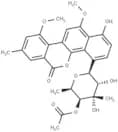
CAS:<p>4'-Acetyl-chrysomycin B, a 4'-acetylated analog of chrysomycin B, exhibits anti-Gram-positive bacterial and antimicrobial activities [1].</p>Formula:C29H30O10Color and Shape:SolidMolecular weight:538.54Oseltamivir acid methyl ester
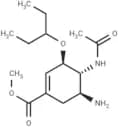
CAS:<p>Oseltamivir acid methyl ester, a CES1-convertible neuraminidase inhibitor, serves as an antiviral prodrug.</p>Formula:C15H26N2O4Purity:98.78%Color and Shape:SolidMolecular weight:298.38Alatrofloxacin
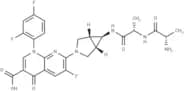
CAS:<p>Alatrofloxacin is a prodrug of trovafloxacin.</p>Formula:C26H25F3N6O5Color and Shape:SolidMolecular weight:558.51Toxoflavin
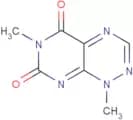
CAS:Toxoflavin (Xanthothricin) is an antagonist of transcription factor 4 (TCF4)/β-catenin complex. Toxoflavin also acts as an inhibitor of KDM4A.Formula:C7H7N5O2Purity:98.24% - 99.7%Color and Shape:SolidMolecular weight:193.16Gramicidin S hydrochloride
CAS:<p>Gramicidin S hydrochloride is a cyclic peptide antibiotic, which is a derivative of the naturally occurring antibiotic gramicidin S. It is sourced from Bacillus brevis, a type of soil bacterium. This peptide operates through a unique mode of action, whereby it disrupts bacterial cell membranes. By integrating into the lipid bilayer, it increases membrane permeability, leading to leakage of essential ions and molecules, and ultimately causing cell death.</p>Formula:C60H92N12O10•(HCl)2Purity:90%MinMolecular weight:1,214.37 g/molCarumonam
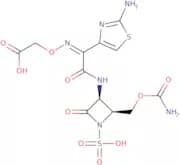
CAS:<p>Carumonam is a synthetic monobactam antibiotic, which is derived from chemically modifying aztreonam to enhance its antimicrobial properties. Its source is entirely synthetic, allowing for precise structural modifications to target specific bacterial pathogens. The mode of action involves the inhibition of bacterial cell wall synthesis. Carumonam binds to penicillin-binding proteins (PBPs) on the surface of bacterial cell walls, disrupting the peptidoglycan cross-linking process necessary for cell wall strength and integrity. This action results in bacterial cell lysis and death, making it effective against a range of Gram-negative bacteria.</p>Formula:C12H14N6O10S2Purity:Min. 95%Molecular weight:466.41 g/molOleandomycin
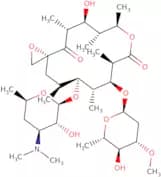
CAS:<p>Oleandomycin is a macrolide antibiotic, which is derived from the bacterium *Streptomyces antibioticus*. This antibiotic functions by binding to the 50S subunit of the bacterial ribosome, thereby inhibiting protein synthesis. The interruption of this essential process ultimately leads to the cessation of bacterial growth and replication.</p>Formula:C35H61NO12Purity:Min. 95%Color and Shape:White PowderMolecular weight:687.86 g/molN-Acetylamphotericin B
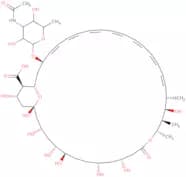
CAS:<p>N-Acetylamphotericin B is a derivative of the well-known antifungal agent Amphotericin B, which is derived from the bacterium *Streptomyces nodosus*. This compound is an acetylated version of Amphotericin B, designed to improve certain pharmacokinetic properties. It operates by binding to ergosterol, a key component of fungal cell membranes, leading to the formation of pores that disrupt membrane integrity, causing cell death. The acetylation is intended to reduce the compound's cytotoxicity and improve its solubility in aqueous solutions, potentially allowing for enhanced therapeutic applications.</p>Formula:C49H75NO18Purity:(%) Min. 75%Color and Shape:Yellow To Brown SolidMolecular weight:966.12 g/molAmoxicillin
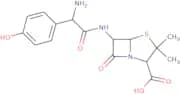
CAS:<p>Amoxicillin is an aminopenicillin antibiotic and is used for the treatment of various bacterial infections. It works by inhibiting the synthesis of bacterial cell wall mucopeptides, leading to cell lysis and death</p>Formula:C16H19N3O5SPurity:Min. 95%Color and Shape:PowderMolecular weight:365.41 g/molDesoxymycin
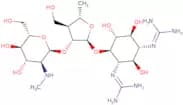
CAS:<p>Desoxymycin is an antibiotic product that belongs to the class of aminoglycosides, which is derived from natural sources such as certain species of Streptomyces bacteria. This compound exhibits its mode of action by specifically binding to the bacterial ribosomal RNA, interfering with protein synthesis. As a result, it inhibits the replication and growth of susceptible bacterial strains.</p>Formula:C21H41N7O11Purity:Min. 95%Molecular weight:567.59 g/molCilastatin ammonium salt
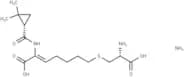
CAS:<p>Cilastatin ammonium salt is an antibiotic that is particularly effective against Gram-positive cocci, with a half-life of 3-4 hours.</p>Formula:C16H29N3O5SColor and Shape:SolidMolecular weight:375.48CRS-3123
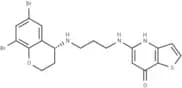
CAS:<p>CRS-3123, a methionyl-tRNA synthetase inhibitor, is used potentially for the treatment of enteric infections.</p>Formula:C19H19Br2N3O2SPurity:98%Color and Shape:SolidMolecular weight:513.25Carbonic anhydrase inhibitor 28
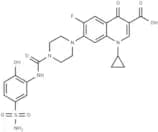
<p>Carbonic anhydrase inhibitor28 (Compound 11) serves as an inhibitor for the Pseudomonas aeruginosa carbonic anhydrase. It exhibits antibacterial activity, with minimum inhibitory concentration (MIC) and minimum bactericidal concentration (MBC) values of 0.5 and 1 μg/mL, respectively, against P. aeruginosa. Carbonic anhydrase inhibitor28 is utilized in research focused on anti-infection applications.</p>Formula:C24H24FN5O7SColor and Shape:SolidMolecular weight:545.54Anti-MRSA agent 19
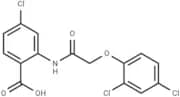
CAS:<p>Anti-MRSA agent 19 (Compound 1) is an antibiotic that exhibits activity against Staphylococcus aureus. It is active against 40 clinical isolates from the CDC, representing diverse bacterial species with various resistance factors, including resistance to vancomycin, aminoglycoside/tetracycline, and oxazolidinone (median MIC=4 μg/mL).</p>Formula:C15H10Cl3NO4Color and Shape:SolidMolecular weight:374.6Nikkomycin Z
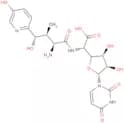
CAS:Nikkomycin Z (Nikkomycin Z from Streptomyces tendae) is a competitive chitin synthase inhibitor.It inhibitor of the growth of filamentous fungi, insects,Formula:C20H25N5O10Purity:98%Color and Shape:SolidMolecular weight:495.44Amicoumacin A
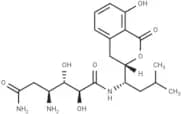
CAS:<p>Amicoumacin A has antibacterial activity. It also strongly suppresses inflammatory and ulcer activity.</p>Formula:C20H29N3O7Purity:98%Color and Shape:SolidMolecular weight:423.46Methacycline
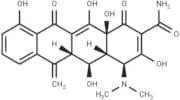
CAS:<p>Methacycline, a tetracycline antibiotic, inhibits bacterial protein synthesis and effectively suppresses epithelial-mesenchymal transition (EMT). It blocks EMT in vitro and inhibits fibrogenesis in vivo without directly affecting the TGF-β1Smad signaling pathway. As an antimicrobial agent, Methacycline holds potential for research in pulmonary fibrosis.</p>Formula:C22H22N2O8Color and Shape:SolidMolecular weight:442.42TAN-1057C
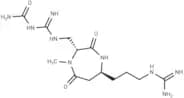
CAS:<p>TAN-1057C is a potent antibiotic with antimicrobial activity against both Gram-negative and Gram-positive bacteria, including Methicillin-resistant Staphylococcus aureus (MRSA).</p>Formula:C13H25N9O3Color and Shape:SolidMolecular weight:355.4Myxothiazol
CAS:<p>Myxothiazol blocks mitochondrial complex III and triggers SESN2, a gene important for stress response.</p>Formula:C25H33N3O3S2Color and Shape:SolidMolecular weight:487.68