Antibiotics
Subcategories of "Antibiotics"
- Macrolide Antibiotics(26 products)
- Steroidal Antibiotics(31 products)
- Tetracycline Antibiotics(20 products)
- β-Lactam Antibiotics(11 products)
Found 4116 products of "Antibiotics"
Rifamdin
CAS:Rifamdin is an antibiotic, which is a chemical substance derived from the source compound rifampicin. Its mode of action involves the inhibition of bacterial DNA-dependent RNA polymerase, which effectively suppresses bacterial RNA synthesis, leading to cell death. This mechanism primarily targets Mycobacterium tuberculosis, the causative agent of tuberculosis.
Formula:C46H64N4O12Purity:Min. 95%Molecular weight:865.02 g/molKanamycin A Related Compound 1
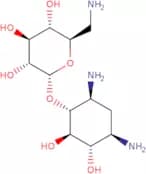
CAS:Kanamycin A Related Compound 1 is an analytical reference standard, which is derived from aminoglycoside antibiotics. Its source stems from the chemical structures related to the aminoglycoside class, primarily used to ensure precise identification and quantification of kanamycin residues or impurities in pharmaceutical formulations. The mode of action of Kanamycin A Related Compound 1 involves serving as a comparator or reference point in chromatographic and spectroscopic methods, facilitating accurate analysis by providing a consistent baseline for research laboratories.Formula:C12H25N3O7Purity:Min. 95%Molecular weight:323.34 g/mol4'-Epidaunorubicin hydrochloride
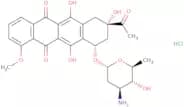
CAS:4'-Epidaunorubicin hydrochloride is an anthracycline antibiotic derivative, which is synthesized from modifications of natural products. It functions as a topoisomerase II inhibitor, which intercalates into DNA strands and disrupts replication and transcription, thereby inhibiting cancer cell proliferation. This compound is primarily utilized in the field of oncology for its potent anti-tumor activities. By forming stable complexes with DNA and topoisomerase II, 4'-Epidaunorubicin hydrochloride induces breaks in the DNA strands, leading to apoptosis of cancer cells. It is often used in treatment protocols for various malignancies, including leukemia and solid tumors. While highly effective, its administration is carefully managed to mitigate potential cardiotoxicity, a common attribute of anthracycline drugs. Research continues to explore its full potential and optimize delivery methods to enhance its therapeutic index.Formula:C27H30ClNO10Purity:Min. 95%Molecular weight:563.98 g/molVincristine
CAS:Vincristine, a microtubule disruptor, inhibits mitosis in cancer cells, useful in leukemia research.Formula:C46H56N4O10Purity:98.46% - >99.99%Color and Shape:SolidMolecular weight:824.96Rolitetracycline
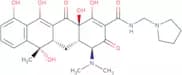
CAS:Rolitetracycline is a semi-synthetic tetracycline antibiotic, which is derived from the natural compound tetracycline. It functions primarily by inhibiting protein synthesis in susceptible bacteria. This is achieved through the binding to the 30S ribosomal subunit, effectively blocking the attachment of aminoacyl-tRNA to the mRNA-ribosome complex, thereby preventing the addition of new amino acids to the nascent peptide chain. As a result, bacterial cell growth is inhibited, leading to bacteriostatic effects.Formula:C27H33N3O8Purity:Min. 95%Color and Shape:PowderMolecular weight:527.57 g/molIclaprim
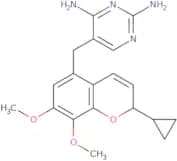
CAS:Iclaprim is an antibiotic, which is a synthetic diaminopyrimidine antimicrobial agent with a specific mechanism of action. It works by selectively inhibiting bacterial dihydrofolate reductase, a crucial enzyme in the bacterial folate synthesis pathway. This inhibition prevents the production of tetrahydrofolate, ultimately disrupting DNA, RNA, and protein synthesis in susceptible bacterial cells.Formula:C19H22N4O3Purity:Min. 95%Molecular weight:354.4 g/molKanamycin C
CAS:Inhibitor of protein synthesis; aminoglycosideFormula:C18H36N4O11Purity:Min. 95%Molecular weight:484.5 g/molTubulysin A
CAS:Tubulysin A is a natural cytotoxic agent, which is derived from myxobacteria. The compound originates from strains such as Archangium gephyra and Angiococcus disciformis, known for their prolific production of secondary metabolites. Tubulysin A exerts its mode of action by disrupting microtubule dynamics, which are essential for cell division and intracellular transport. It specifically binds to the microtubules and inhibits their polymerization, leading to cell cycle arrest and apoptosis in rapidly dividing cells.Formula:C43H65N5O10SPurity:Min. 95%Molecular weight:844.07 g/molClindamycin B hydrochloride
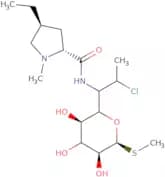
CAS:Clindamycin B hydrochloride is a semi-synthetic antibiotic, which is derived from the parent compound, lincomycin, obtained from the bacterium *Streptomyces lincolnensis*. It exerts its antibacterial effects by binding to the 50S subunit of the bacterial ribosome, inhibiting protein synthesis by preventing peptide bond formation, which is essential for bacterial growth and survival.Formula:C17H31ClN2O5S•HClPurity:Min. 95%Color and Shape:White To Off-White SolidMolecular weight:447.42 g/molOligomycin A
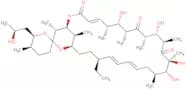
CAS:Oligomycin A is a macrolide antibiotic, which is isolated from the Streptomyces species of bacteria. Its mode of action involves inhibiting ATP synthase by binding to the F_O subunit of the enzyme complex in the mitochondrial membrane. This binding effectively stops the flow of protons across the membrane, which is critical for ATP generation through oxidative phosphorylation.
Formula:C45H74O11Purity:Min. 95%Color and Shape:PowderMolecular weight:791.06 g/molAmrubicin hydrochloride
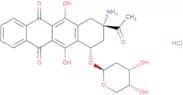
CAS:Amrubicin hydrochloride is an anthracycline chemotherapeutic agent, which is a synthetic anthracycline derivative derived from reductive amination. It functions primarily by intercalating into DNA and inhibiting topoisomerase II, an enzyme crucial to DNA replication. This mode of action disrupts DNA synthesis, leading to apoptosis in rapidly proliferating cancer cells.
Formula:C25H25NO9•HClPurity:Min. 95%Molecular weight:519.93 g/molTulathromycin B - 95%
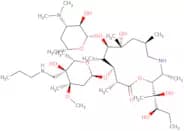
CAS:Inhibitor of protein synthesis; macrolide classFormula:C41H79N3O12Purity:Min. 95%Molecular weight:806.08 g/molColistin sulfate, Antibiotic for Culture Media Use Only
CAS:Antibacterial agent with the ability to permeate bacterial membranes and cause cell death. Colistin is a cationic peptide also known as polymyxin E. Colistin is effective in multidrug resistant Gram-positive bacteria such as P. aeruginosa, A. baumannii and K. pneumoniae.Formula:C53H102N16O17SMolecular weight:1,266.73 g/molRef: 3D-Q-200890
-Unit-kgkgTo inquire1kgTo inquire5kgTo inquire10kgTo inquire25kgTo inquire2500gTo inquireArbekacin sulfate
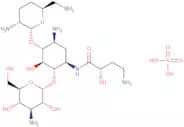
CAS:Inhibitor of DNA replication; aminoglycoside classFormula:C22H44N6O10·xH2SO4Purity:Min. 95%Color and Shape:White PowderMolecular weight:650.7 g/molCyclosporin L
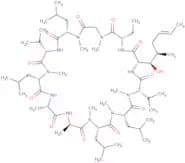
CAS:Cyclosporin L is an immunosuppressive agent, which is a cyclic polypeptide derived from the soil fungus Tolypocladium inflatum. It primarily functions by inhibiting the activity of calcineurin, a key phosphatase involved in the activation of T-cells. This inhibition prevents the transcription of interleukin-2 and other cytokines critical for T-cell proliferation.
Formula:C61H109N11O12Purity:90%MinMolecular weight:1,188.59 g/molCefoxitin EP impurity B
Cefoxitin EP impurity B is a chemical reference standard, which is derived from the synthesis and purification processes involved in producing Cefoxitin. As an impurity standard, its primary role is to serve as a benchmark for quality control in pharmaceutical formulations. The mode of action of Cefoxitin EP impurity B involves the structural analysis and quantification of impurity levels, ensuring that the primary pharmaceutical products meet necessary safety and efficacy criteria.Formula:C16H17N3O7S2Purity:Min. 95%Molecular weight:427.45 g/molThiostrepton
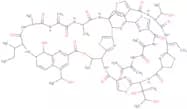
CAS:Thiostrepton is a thiopeptide antibiotic with action on bacterial protein synthesis by binding to the ribosome and is used for treating bacterial infections in veterinary medicine and research applications.Formula:C72H85N19O18S5Purity:Min. 95%Color and Shape:White To Light (Or Pale) Yellow SolidMolecular weight:1,664.89 g/molBiotinyl tobramycin amide
CAS:Biotinyl tobramycin amide is a biotinylated form of the antibiotic tobramycin, which is derived from the actinobacterium Streptomyces tenebrarius. It features a tobramycin core, a potent aminoglycoside antibiotic, chemically linked to biotin. This modification allows for the specific attachment to avidin or streptavidin-labeled probes due to the strong biotin-streptavidin interaction, facilitating various labeling and detection techniques in research.Formula:C28H51N7O11SPurity:Min. 95%Molecular weight:693.81 g/molDesmethyl doxorubicin oxalate
CAS:Desmethyl doxorubicin oxalate is an anthracycline-type chemotherapeutic agent, which is derived from the naturally occurring antibiotic doxorubicin. This compound comprises a desmethylated form of doxorubicin combined with oxalate. Its mode of action involves intercalating DNA strands and inhibiting topoisomerase II, thereby disrupting DNA replication and transcription. This interference leads to the inhibition of cancer cell proliferation and induces apoptosis.Formula:C26H27NO11Purity:Min. 95%Molecular weight:529.49 g/molDecoyinine
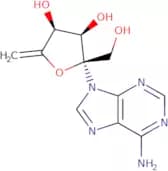
CAS:Decoyinine is an antibiotic compound, which is derived from the bacterium *Streptomyces hygroscopicus*. Its mode of action involves the inhibition of guanine nucleotide synthesis. By targeting the biosynthesis pathway of nucleotides, Decoyinine effectively impedes the growth and proliferation of bacterial cells.Formula:C11H13N5O4Purity:Min. 95%Molecular weight:279.25 g/mol