Antibiotics
Subcategories of "Antibiotics"
- Macrolide Antibiotics(26 products)
- Steroidal Antibiotics(31 products)
- Tetracycline Antibiotics(20 products)
- β-Lactam Antibiotics(11 products)
Found 4114 products of "Antibiotics"
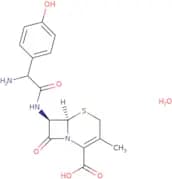
Cefadroxil monohydrate, Antibiotic for Culture Media Use Only
CAS:Cefadroxil is a broad-spectrum bactericidal antibiotic that belongs to the cephalosporin family. It is a semi-synthetic penicillin and inhibits bacterial cell wall synthesis through binding to one or more of the penicillin-binding proteins (PBPs). Cefadroxil monohydrate is used as an antibiotic for culture media and has been proven to be effective against methicillin-resistant Staphylococcus aureus (MRSA). In addition, the drug has been shown to have no significant effect on blood tests or microscopic studies.Formula:C16H19N3O6SPurity:Min. 97.0 Area-%Molecular weight:381.40 g/molErythromycin, Antibiotic for Culture Media Use Only
CAS:Erythromycin, Antibiotic for Culture Media Use Only, is a macrolide antibiotic derived from the bacterium *Saccharopolyspora erythraea*. It functions by inhibiting protein synthesis, specifically targeting the 50S ribosomal subunit in susceptible bacteria. This action results in the prevention of peptide chain elongation, effectively halting bacterial growth and proliferation.Formula:C37H67NO13Purity:Min. 93.0 Area-%Molecular weight:733.93 g/molRef: 3D-E-3250
-Unit-ggTo inquire1kgTo inquire100gTo inquire250gTo inquire500gTo inquire2500gTo inquireL-Carnitine fumarate
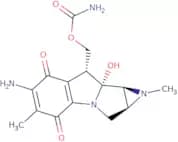
CAS:L-Carnitine fumarate is a compound that functions as a dietary supplement, which is synthesized by combining L-carnitine, an amino acid derivative naturally found in the body, with fumaric acid. This product is primarily sourced from fermentation or chemical synthesis processes to produce L-carnitine, which is then reacted with fumaric acid to form the fumarate salt. This combination enhances the stability and bioavailability of L-carnitine.Formula:C7H15NO3·C4H4O4Purity:Min. 95%Molecular weight:277.27 g/molMitomycin D
CAS:Mitomycin D is an antibiotic and chemotherapeutic agent known for its ability to inhibit DNA synthesis, making it a potent antitumor agent. It is derived from the bacterium *Streptomyces caespitosus*. Mitomycin D functions as a DNA crosslinking agent by alkylating the DNA strands, which interferes with DNA replication and transcription. This mechanism leads to the cessation of cellular division and ultimately induces apoptosis in rapidly dividing cells.Formula:C15H18N4O5Purity:Min. 95%Molecular weight:334.33 g/molSulfadiazine
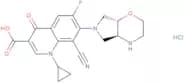
CAS:Sulfadiazine is a sulfonamide antibiotic with action on bacterial folate synthesis inhibition and is used for treating toxoplasmosis and urinary tract infections.Formula:C10H10N4O2SPurity:Min. 95%Color and Shape:PowderMolecular weight:250.28 g/molFinafloxacin hydrochloride
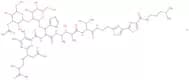
CAS:Finafloxacin hydrochloride is an antibiotic, which is a synthetic compound derived from the fluoroquinolone class. Its source is a chemically engineered structure, specifically designed to combat bacterial infections effectively. The mode of action of Finafloxacin hydrochloride involves the inhibition of bacterial DNA gyrase and topoisomerase IV, essential enzymes responsible for DNA replication, transcription, and repair in bacteria. By inhibiting these enzymes, it disrupts bacterial DNA processes, ultimately leading to cell death and resolution of the infection.Formula:C20H20ClFN4O4Purity:Min. 95%Molecular weight:434.85 g/molBleomycin HCl
CAS:Inducer of DNA strand breaks; glycopeptide antibiotic, anti-neoplasticFormula:C50H71N16O21S2R•(HCl)xPurity:Min. 95%Color and Shape:White To Off-White SolidNorvancomycin trifluoroacetate
CAS:Norvancomycin trifluoroacetate is an antibiotic compound, which is a glycopeptide derived from the bacterium Amycolatopsis orientalis. Its mode of action involves inhibiting bacterial cell wall synthesis. Specifically, Norvancomycin disrupts the cross-linking of peptidoglycan layers in the bacterial cell wall by binding to the D-alanyl-D-alanine terminus of cell wall precursors. This disruption weakens the bacterial cell wall, ultimately leading to cell lysis and death, thereby exerting a bactericidal effect.Formula:C65H73Cl2N9O24•(C2HF3O2)xPurity:Min. 95%Sulfadiazine-d4
CAS:Sulfadiazine-d4 is an isotopically labeled antibiotic, which is a derivative of sulfadiazine containing four deuterium atoms. This compound is synthesized using advanced chemical techniques to replace hydrogen atoms with deuterium in the molecular structure. The mechanism of action involves inhibition of bacterial dihydropteroate synthase, an enzyme critical in the folate synthesis pathway. By preventing the production of folic acid, sulfadiazine-d4 effectively halts bacterial growth and replication.Formula:C10H6D4N4O2SPurity:Min. 95%Molecular weight:254.3 g/molseco erythromycin
CAS:Seco erythromycin is a derivative of the macrolide antibiotic erythromycin, which originates from the bacterium *Saccharopolyspora erythraea*. As a semi-synthetic compound, it retains the core lactone ring structure of erythromycin, but modifications in its chemical configuration confer distinct properties. Seco erythromycin operates by binding to the 50S subunit of the bacterial ribosome, inhibiting protein synthesis. This action effectively halts bacterial growth by preventing the translocation of peptides and thus impairs protein assembly.Formula:C37H69NO14Purity:Min. 95%Molecular weight:751.94 g/molClindamycin-2,4-diphosphate
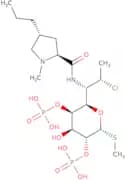
CAS:Clindamycin-2,4-diphosphate is a phosphorylated derivative of the antibiotic clindamycin, which is a semi-synthetic lincosamide antibiotic originally derived from Streptomyces lincolnensis. Its mode of action involves the inhibition of bacterial protein synthesis by binding to the 50S ribosomal subunit, thereby preventing peptide chain elongation during translation. This mechanism effectively disrupts protein production in susceptible bacteria, leading to their growth inhibition or death.Formula:C18H35ClN2O11P2SPurity:Min. 95%Molecular weight:584.94 g/molNafcilllin sodium monohydrate
CAS:Nafcillin sodium monohydrate is a beta-lactam antibiotic, which is derived from the penicillin class of antimicrobials. It is specifically a semi-synthetic penicillin and is commonly sourced through chemical synthesis to enhance its stability and spectrum of activity. Nafcillin primarily exerts its bactericidal effects by inhibiting bacterial cell wall synthesis. It achieves this through its strong affinity for penicillin-binding proteins (PBPs), which are essential for maintaining the bacterial cell wall structure. By disrupting the formation of peptidoglycan cross-links, nafcillin effectively weakens the bacterial cell wall, leading to cell lysis and death, especially in gram-positive bacteria such as Staphylococcus aureus, including methicillin-sensitive strains (MSSA).Formula:C21H21N2O5SNa·H2OPurity:Min. 95%Color and Shape:White to off-white solid.Molecular weight:454.47 g/molChaetoglobosin A - From chaetomium globosum
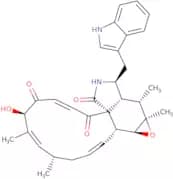
CAS:Chaetoglobosin A is a mycotoxin, which is a secondary metabolite produced by the fungus Chaetomium globosum. This compound exhibits its mode of action by disrupting the cytoskeletal elements within cells, primarily affecting actin polymerization. This interference leads to alterations in cell morphology and can induce apoptosis in certain cell lines.
Formula:C32H36N2O5Purity:Min. 95%Molecular weight:528.64 g/mol14-Chloro daunorubicin
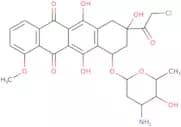
CAS:14-Chloro daunorubicin is a chemotherapeutic agent, which is a synthetic derivative of the naturally occurring anthracycline antibiotic, daunorubicin. This compound is specifically modified to include a chlorine atom at the 14th position, which enhances its pharmacological effectiveness compared to its parent compound. The drug acts primarily by intercalating into DNA, disrupting the function of topoisomerase II, and generating free radicals. These mechanisms collectively inhibit DNA replication and transcription, leading to cell apoptosis, particularly in rapidly dividing cancer cells.Formula:C27H28ClNO10Purity:Min. 95%Molecular weight:561.96 g/molAlamethacin
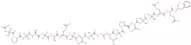
CAS:Alamethacin is a peptide antibiotic, which is derived from the soil fungus Trichoderma viride. This compound consists of a sequence of amino acids that form a helical structure, enabling its interaction with lipid membranes. Alamethacin functions by inserting itself into cellular membranes and forming voltage-dependent ion channels. As a result, it alters membrane permeability, causing ion imbalance and leading to cell death.
Formula:C92H150N22O25Purity:Min. 95%Color and Shape:SolidMolecular weight:1,964.31 g/molAphidicolin
CAS:Aphidicolin is a tetracyclic diterpenoid that acts as a potent inhibitor of DNA polymerase. Derived from the fungus *Cephalosporium aphidicola*, it is primarily identified for its ability to impede DNA synthesis by targeting eukaryotic DNA polymerase α. This selective inhibition disrupts replication processes, making it a crucial tool for studying cell cycle dynamics.Formula:C20H34O4Purity:Min. 95%Molecular weight:338.48 g/mol6,11-Di-O-methyl erythromycin
CAS:6,11-Di-O-methyl erythromycin is a semi-synthetic derivative of erythromycin, which is a macrolide antibiotic originally sourced from the bacterium *Saccharopolyspora erythraea*. This compound is produced through chemical modification of the natural antibiotic to improve its pharmacokinetic properties, such as stability and absorption.Formula:C39H71NO13Purity:Min. 95%Molecular weight:761.98 g/molEnrofloxacin HCl
CAS:Enrofloxacin HCl is a fluoroquinolone antibiotic, which is a synthetic compound derived from chemical synthesis. Its mode of action involves the inhibition of bacterial DNA gyrase and topoisomerase IV, critical enzymes in bacterial DNA replication and transcription processes. This action disrupts bacterial cellular division and transcription, leading to cell death.Formula:C19H22FN3O3•HClPurity:Min. 95%Molecular weight:395.86 g/molBoromycin
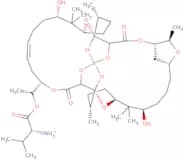
CAS:Boromycin is a macrolide antibiotic, which is derived from the fermentation of certain strains of Streptomyces bacteria. It operates as an ionophore with the ability to transport ions across lipid membranes, effectively disrupting ionic gradients. This mechanism of action compromises essential cellular processes in target organisms, thereby exerting its antimicrobial effects.Formula:C45H74BNO15Purity:Min. 95%Molecular weight:879.88 g/molImipenem Monohydrate, Antibiotic for Culture Media Use Only
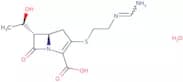
CAS:Imipenem acts as an antimicrobial through inhibiting cell wall synthesis of various gram-positive and gram-negative bacteria. It remains very stable in the presence of beta-lactamase (both penicillinase andcephalosporinase) produced by some bacteria, and is a strong inhibitor of beta-lactamases from some gram-negative bacteria that are resistant to most beta-lactam antibiotics.Formula:C12H19N3O5SPurity:Min. 98.0 Area-%Molecular weight:317.36 g/mol