Peptide Synthesis
Found 87 products of "Peptide Synthesis"
MALP-2
CAS:Macrophage-activating lipopetide-2 (MALP-2) is a TLR2 agonist and activator of MyD88-dependent signaling pathways. It has potential as a vaccine adjuvant.Formula:C99H167N19O30SPurity:Min. 95%Molecular weight:2,135.6 g/molRamage linker
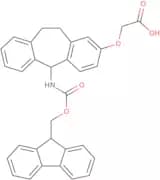
CAS:Ramage Linker,Fmoc-Suberol is a synthetic derivative of the antimicrobial peptide guanylate. It is used as an inhibitor of congestive heart failure. Ramage Linker,Fmoc-Suberol has been shown to be effective in reducing the severity of congestive heart failure by inhibiting the production of brain natriuretic peptides. The chemical structure and sequence have been determined using a combination of structural analysis and degradable linkers that are cleaved in vivo by hydrolysis or enzymatic degradation. Ramage Linker,Fmoc-Suberol has also been shown to reduce blood pressure and inhibit platelet aggregation.
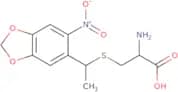
Formula:C32H27NO5Purity:Min. 95%Color and Shape:PowderMolecular weight:505.56 g/molH-L-Cys(mdnpe)-OH
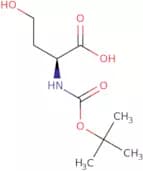
CAS:A novel protected cysteine that can be cleaved by photolysis.Formula:C12H14N2O6SPurity:Min. 95%Molecular weight:314.32 g/molN-Boc-L-homoserine
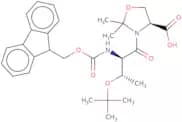
CAS:N-Boc-L-homoserine is a lactam with an alkyl group, which makes it a useful synthetic intermediate for the synthesis of various products. It has been used in the synthesis of β-unsaturated ketones and conjugates. N-Boc-L-homoserine is also found naturally in nature and can be found as its two isomers, L-homoserine and D-homoserine. This compound has been shown to have histone deacetylase inhibition activity, which may be due to its ability to inhibit histone acetyl transferase. N-Boc-L-homoserine is synthesized from butyric acid, which is a tetrapeptide that contains four amino acids: valine, leucine, proline, and hydroxyproline.Formula:C9H17NO5Purity:Min. 95%Color and Shape:PowderMolecular weight:219.24 g/molFmoc-D-allo-Thr(tBu)-L-Ser(Psi(Me,Me)pro)-OH
Fmoc-D-allo-Thr(tBu)-L-Ser(Psi(Me,Me)pro)-OH is a reagent that is used as an intermediate in the synthesis of complex compounds. It is also a fine chemical that can be used to prepare speciality chemicals. Fmoc-D-allo-Thr(tBu)-L-Ser(Psi(Me,Me)pro)-OH has CAS No. and can be used as a reaction component in various reactions. This compound is versatile and can be used as a building block for other compounds.Formula:C29H36N2O7Purity:Min. 95%Color and Shape:PowderMolecular weight:524.61 g/molDL-3-(2-Furyl)serine
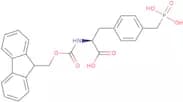
CAS:DL-3-(2-Furyl)serine is a versatile building block that can be used in the synthesis of complex compounds. It has been used as a reaction component and intermediate for research chemicals, speciality chemicals and fine chemicals. DL-3-(2-Furyl)serine has also been found to be useful in the synthesis of high quality reagents.Formula:C7H9NO4Purity:Min. 95%Color and Shape:PowderMolecular weight:171.15 g/molFmoc-4-phosphomethyl-L-phenylalanine
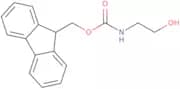
CAS:Fmoc-4-phosphomethyl-L-phenylalanine** is a specialized amino acid derivative used primarily in the field of peptide synthesis. It is a synthesized compound that serves as a building block for creating phosphorylated peptides. The compound is characterized by the presence of a phosphomethyl group attached to the phenylalanine side chain, along with a 9-fluorenylmethoxycarbonyl (Fmoc) group for temporary N-terminal protection during peptide assembly.This product plays a crucial role in the synthesis of peptides by allowing the incorporation of a phosphomethyl moiety, which is crucial for mimicking the phosphorylation of proteins—a key post-translational modification. Through its well-designed chemical structure, it facilitates the formation of peptide bonds while maintaining the integrity of sensitive side chain functionalities during synthesis.Fmoc-4-phosphomethyl-L-phenylalanine is widely used in biochemical and pharmaceutical research where the study of protein phosphorylation is paramount. It provides researchers with the means to construct peptides that closely resemble the natural phosphorylated proteins found within biological systems, thereby enabling more accurate studies of protein function and interaction. This makes it an invaluable tool in the exploration of cellular signaling pathways and protein regulation mechanisms.Formula:C25H24NO7PPurity:Min. 95%Molecular weight:481.43 g/molFmoc-glycinol
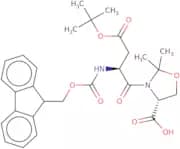
CAS:Fmoc-glycinol is a synthetase that is used to synthesize glycinol conjugates. It binds to the receptor on Gram-positive bacteria and blocks the synthesis of bacterial cell wall, leading to cell death. Fmoc-glycinol has been shown to have high binding constants with amines and an acyl chain, which allows it to bind with antigen. Fmoc-glycinol also has strong nucleophilic properties that allow it to react with chloride ions in water and other polar solvents. This reaction mechanism leads to the formation of a new bond between two molecules, which is called a glycinol linkage.Formula:C17H17NO3Purity:Min. 95%Color and Shape:White PowderMolecular weight:283.32 g/molFmoc-Asp(OtBu)-D-Ser(Psi(Me,Me)pro)-OH
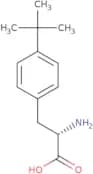
Fmoc-Asp(OtBu)-D-Ser(Psi(Me,,Me)pro)-OH is a high quality, reagent, complex compound, useful intermediate, fine chemical, useful scaffold, and speciality chemical that is used in the synthesis of peptides and other organic compounds. It can be used as a reaction component for the synthesis of peptides and other organic compounds. This building block is versatile with many different functional groups and can be used in a wide variety of reactions. Fmoc-Asp(OtBu)-D-Ser(Psi(Me,,Me)pro)-OH is also a reaction component that can be used to make various drugs or pharmaceuticals.Formula:C29H34N2O8Purity:Min. 95%Color and Shape:White PowderMolecular weight:538.59 g/mol4-tert-Butyl-L-phenylalanine
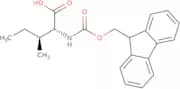
CAS:4-tert-Butyl-L-phenylalanine is a synthetically created antigen with the ability to interact with red blood cells. It has been shown to be a potent probe for the detection of P. falciparum, and can be used as an affinity reagent for the isolation and identification of mutations in the c-terminal region of this protein. 4-tert-Butyl-L-phenylalanine also interacts with P. falciparum apical membrane proteins, which are specific to this type of parasite. This interaction may play a role in its invasion into red blood cells, which is what causes malaria infection.Formula:C13H19NO2Purity:Min. 95%Color and Shape:White PowderMolecular weight:221.3 g/molFmoc-D-allo-isoleucine
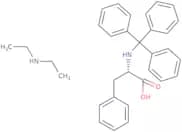
CAS:Fmoc-D-allo-isoleucine is a β-amino acid that is used in the synthesis of calpinactam, a multidrug used to treat tuberculosis. The chemical structure of Fmoc-D-allo-isoleucine has been analyzed by spectroscopic methods and found to be labile. This product is susceptible to hydrolysis and can undergo modifications such as dehydration, oxidation, or racemization. Fmoc-D-allo-isoleucine has shown antimycobacterial activity when tested against M. tuberculosis.Formula:C21H23NO4Purity:Min. 95%Color and Shape:PowderMolecular weight:353.41 g/molTrityl-L-phenylalanine diethylamine
CAS:Trityl-L-phenylalanine diethylamine is a reagent that is used in the synthesis of peptides, reagents, and other chemicals. Trityl-L-phenylalanine diethylamine reacts with an azide to form a triazole. It can also be used to convert an acid into an amino acid. This chemical has been shown to be sensitive to plasmin, which may lead to degradation during peptide synthesis.Formula:C28H25NO2·C4H11NPurity:Min. 95%Color and Shape:PowderMolecular weight:480.64 g/molBio acrylic resin
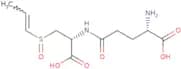
CAS:Bio acrylic resin is a dental material that is composed of a methacrylate-ethylene glycol dimethacrylate copolymer. It is used in the fabrication of dentures and other dental prosthetics. The resin particles are made up of a poly(ethylene glycol dimethacrylate-Methyl methacrylate) blend, which provides strength and durability to the final product. The particle size of the resin is approximately 50 micrometers, ensuring smooth and even application during the manufacturing process. Bio acrylic resin is commonly used in dental laboratories and research facilities for its reliable performance and consistent results.Formula:(C10H14O4)x(C5H8O2)yPurity:Min. 95%Color and Shape:PowderMolecular weight:298.33 g/molL-γ-Glutamyl-3-(1-propenylsulfinyl)-L-alanine
CAS:Please enquire for more information about L-γ-Glutamyl-3-(1-propenylsulfinyl)-L-alanine including the price, delivery time and more detailed product information at the technical inquiry form on this pageFormula:C11H18N2O6SPurity:Min. 95%Color and Shape:PowderMolecular weight:306.34 g/molH-Gln-pNA trifluoroacetate
Please enquire for more information about H-Gln-pNA trifluoroacetate including the price, delivery time and more detailed product information at the technical inquiry form on this page
Formula:C11H14N4O4•(C2HF3O2)xPurity:Min. 95%Methyl (3S)-3-aminopent-4-ynoate hydrochloride
CAS:Please enquire for more information about Methyl (3S)-3-aminopent-4-ynoate hydrochloride including the price, delivery time and more detailed product information at the technical inquiry form on this page
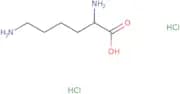
Formula:C6H9NO2•HClPurity:Min. 95%Molecular weight:163.6 g/molDL-Lysine-2-15N dihydrochloride
CAS:Please enquire for more information about DL-Lysine-2-15N dihydrochloride including the price, delivery time and more detailed product information at the technical inquiry form on this pageFormula:C6H14NNO2•(HCl)2Purity:Min. 95%Molecular weight:220.1 g/mol2-Amino-3-(4-bromobenzoyl)benzoic acid
CAS:Please enquire for more information about 2-Amino-3-(4-bromobenzoyl)benzoic acid including the price, delivery time and more detailed product information at the technical inquiry form on this pageFormula:C14H10BrNO3Purity:Min. 95%Molecular weight:320.14 g/molN6-(1-Deoxy-D-fructos-1-yl)-N2-[(phenylmethoxy)carbonyl]-L-lysine
CAS:Please enquire for more information about N6-(1-Deoxy-D-fructos-1-yl)-N2-[(phenylmethoxy)carbonyl]-L-lysine including the price, delivery time and more detailed product information at the technical inquiry form on this pageFormula:C20H30N2O9Purity:Min. 95%Molecular weight:442.46 g/molBoc-L-Gly-MBHA Resin
Please enquire for more information about Boc-L-Gly-MBHA Resin including the price, delivery time and more detailed product information at the technical inquiry form on this pagePurity:Min. 95%


![N6-(1-Deoxy-D-fructos-1-yl)-N2-[(phenylmethoxy)carbonyl]-L-lysine](/_next/image/?url=https%3A%2Fstatic.cymitquimica.com%2Fproducts%2F3D%2Fthumb-webp%2FFD184014.webp&w=3840&q=75)