


Heterocycles with Sulphur (S)
Subcategories of "Heterocycles with Sulphur (S) "
Found 1000 products of "Heterocycles with Sulphur (S) "
2-(4-Fluorophenyl)-5-[(5-iodo-2-methylphenyl)methyl]thiophene
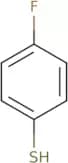
CAS:Intermediate in the synthesis of canagliflozinFormula:C18H14FISPurity:Min. 95%Molecular weight:408.27 g/mol4-Fluorothiophenol
CAS:4-Fluorothiophenol is a reactive chemical that can be used as a monomer for the synthesis of polymers. It has been shown to polymerize with acrylonitrile and methacrylate in the presence of an initiator to form polyacrylonitrile and polymethacrylate, respectively. 4-Fluorothiophenol reacts with unsaturated fatty acids to form thiolates, which are useful intermediates in organic synthesis. 4-Fluorothiophenol also reacts with sulfur transfer agents such as thiourea or mercaptoethanol, leading to S-sulfides that are useful intermediates in organic synthesis. These reactions can be followed by kinetic energy spectroscopy (photoelectron) and nuclear magnetic resonance spectroscopy (NMR). 4-Fluorothiophenol has been shown to undergo intramolecular hydrogen transfer reactions with second order rate constants ranging fromFormula:C6H5FSPurity:Min. 95%Molecular weight:128.17 g/molN,alpha-Dimethyl-2-thiopheneethanamine hydrochloride
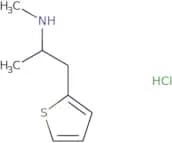
CAS:Controlled ProductMethiopropamine is a synthetic psychoactive substance that has been associated with long-term health effects. It is used recreationally for its stimulant properties, such as increased alertness and wakefulness. Methiopropamine may cause paranoia and delusions, as well as other long-term effects. The drug can be detected in the urine for up to five days after ingestion. Methiopropamine is an amphetamine analogue of cathinone, which is a naturally occurring substance found in the khat plant. It is classified by the DEA as a Schedule I controlled substance in the United States.
Formula:C8H14ClNSPurity:Min. 95%Molecular weight:191.72 g/mol5-Nitrothiophene-2-carboxaldehyde
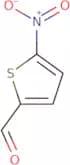
CAS:5-Nitrothiophene-2-carboxaldehyde (5NT) is a chemical compound that belongs to the class of dihedral molecules. It is commonly used as an antimicrobial agent and has been shown to have amoebicidal activity in tissue culture. 5NT also inhibits cell growth and proliferation in certain bacteria, such as Staphylococcus aureus strains, by interfering with DNA replication and protein synthesis. Although 5NT is not active against other types of bacteria, it has been shown to be effective against MRSA in laboratory studies. The biological properties of 5NT are still being studied.
Formula:C5H3NO3SPurity:Min. 95%Molecular weight:157.15 g/mol(6R,7R)-3-(Acetoxymethyl)-8-oxo-7-(2-(thiophen-2-yl)acetamido)-5-thia-1-azabicyclo[4.2.0]oct-2-ene-2-carboxylic acid
CAS:(6R,7R)-3-(Acetoxymethyl)-8-oxo-7-(2-(thiophen-2-yl)acetamido)-5-thia-1-azabicyclo[4.2.0]oct-2-ene-2-carboxylic acid is an antimicrobial agent that inhibits bacterial growth by binding to the penicillin binding protein (PBP), which prevents the synthesis of peptidoglycan. This drug has shown effectiveness against gram positive bacteria, including aerobacter aerogenes, as well as infectious diseases in wastewater treatment plants. It has also been demonstrated to be effective in experimental models of infection due to high resistance and cell signaling pathways. The reaction solution was analyzed by plasma mass spectrometry.Formula:C16H16N2O6S2Purity:Min. 98%Color and Shape:White PowderMolecular weight:396.44 g/molThiophene-3-acetonitrile
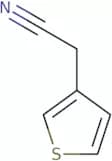
CAS:Thiophene-3-acetonitrile is a reactive intermediate that is used in the synthesis of active enzymes. It has been shown to be an efficient method for the synthesis of antitubercular agents, such as rifamycins and other drugs. Thiophene-3-acetonitrile is an electron acceptor and can be used to generate active enzymes, such as those involved in DNA replication and transcription. This compound also has a variety of functional groups, which can be used for a number of techniques, including coordination geometry studies.
Formula:C6H5NSPurity:Min. 95%Color and Shape:Clear LiquidMolecular weight:123.18 g/molThiophen-3-amine oxalate
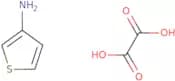
CAS:Thiophen-3-amine oxalate is an organic compound that is used as a pharmaceutical intermediate. It is a white solid that has a melting point of 121°C, and can be obtained by reacting 3-aminophenol with formaldehyde in the presence of sodium bicarbonate. It has two functional groups, one chloride and one cromakalim. The skeleton consists of a phenyl ring and an activated nucleus. The phenyl ring is substituted by two n-substituted groups, which are represented by the diazoxide group and the formaldehyde group. The chemical formula for thiophen-3-amine oxalate is C8H5N3O4Cl2.Formula:C6H7NO4SPurity:Min. 95%Molecular weight:189.19 g/mol2,3,5,6-Tetrafluorothiophenol
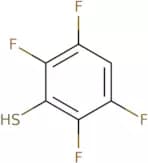
CAS:2,3,5,6-Tetrafluorothiophenol is a backup chemical that can be used in place of the more expensive 2,4,5-trichlorophenol. It is a chemical intermediate that has been shown to react with fatty acids to form chromatographic products. FTIR spectroscopy and sample preparation techniques have been developed for this application. The light emission from FTIR spectroscopy can also be used as a means of controlling a microcontroller in telecommunications devices. A telecommunication company has successfully downloaded this information on their website. 2,3,5,6-Tetrafluorothiophenol has also been shown to inhibit the growth of Pseudomonas aeruginosa and Staphylococcus epidermidis bacteria by interfering with the synthesis of fatty acids and increasing the production of hydroxyl groups.END> Rifapentine is an anti-tuberculosis drug thatFormula:C6H2F4SPurity:Min. 95%Color and Shape:Clear LiquidMolecular weight:182.14 g/mol5-Bromo-2-thiophenesulfonyl chloride
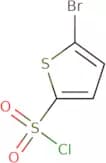
CAS:5-Bromo-2-thiophenesulfonyl chloride (5BrTSCl) is a chemical compound that belongs to the class of matrix metalloproteinase inhibitors. This drug inhibits the activity of MMPs and has anticancer activity. 5BrTSCl blocks the activation of MMPs by binding to their active site, which prevents the cleavage of collagen and other proteins. It also inhibits cell proliferation in a number of cancer cell lines, including human breast cancer cells. 5BrTSCl has been shown to be effective in inhibiting angiogenesis and tumor growth in animal models.Formula:C4H2BrClO2S2Purity:Min. 95%Color and Shape:PowderMolecular weight:261.55 g/mol3-Bromo-2,4-dimethylthiophene
CAS:3-Bromo-2,4-dimethylthiophene is a reactive chemical that can reversibly change its color in the presence of uv light. The isomers of 3-bromo-2,4-dimethylthiophene are easily separated by uv irradiation and are characterized by their different spectral properties. This compound fluoresces with a maximum at 370 nm under a uv light source and has an absorption maximum at 360 nm. The photochromic properties of 3-bromo-2,4-dimethylthiophene are related to changes in the crystalline phase and light source. 3-Bromo-2,4-dimethylthiophene is used as a photochromic agent for uv radiation protection in glasses and contact lenses.Formula:C6H7BrSPurity:Min. 95%Molecular weight:191.09 g/mol3,4-Dimethoxythiophenol
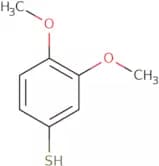
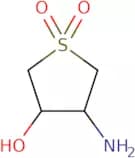
CAS:3,4-Dimethoxythiophenol is a chemical compound that is used as a fluorescence probe to study biological functions in cells. It reacts with hydroxyl groups and other reactive sites on proteins, including sulfhydryl groups, thiols, and amines. 3,4-Dimethoxythiophenol has been shown to inhibit the viability of cancer cells (e.g., prostate cancer cells) by interfering with the function of dehydrogenase enzymes. 3,4-Dimethoxythiophenol also inhibits growth of microglia (cells that protect neurons) in vitro. This inhibition is due to the production of reactive oxygen species by the microglial cells. The chemical structure of this compound includes a hydroxyl group and two methoxy groups.Formula:C8H10O2SPurity:Min. 95%Color and Shape:Clear LiquidMolecular weight:170.23 g/mol4-Aminotetrahydrothiophene-3-ol 1,1-dioxide
CAS:Please enquire for more information about 4-Aminotetrahydrothiophene-3-ol 1,1-dioxide including the price, delivery time and more detailed product information at the technical inquiry form on this page
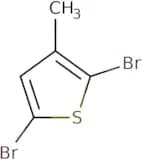
Formula:C4H9NO3SPurity:Min. 95%Molecular weight:151.19 g/mol2,5-Dibromo-3-methylthiophene
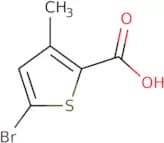
CAS:2,5-Dibromo-3-methylthiophene is a small molecule that has been shown to have anti-bacterial properties. It reacts with the bacterial cell membrane, disrupting the bacteria's ability to function and causing it to die. 2,5-Dibromo-3-methylthiophene can be used as an antibacterial agent in medicine or cosmetics. The chemical structure of 2,5-dibromo-3-methylthiophene is similar to that of oxadiazole and 5H-[1]benzothiazol[5,4,-d][1,2]oxazole and it has been shown that these compounds can also be used for antibacterial purposes. The anti-bacterial activity of 2,5-dibromo-3-methylthiophene is due to its functional groups which are reactive with metal ions such as Cu(II) and Fe(III).Formula:C5H4Br2SPurity:Min. 95%Molecular weight:255.96 g/mol5-Bromo-3-methylthiophene-2-carboxylic acid
CAS:5-bromo-3-methylthiophene-2-carboxylic acid (5BmtCA) is a potential therapeutic that has been shown to have the same estrogenic activity as estradiol. It may be used for the treatment of osteoporosis and other conditions associated with estrogen deficiency, including resorption and bone loss. 5BmtCA is an amide with two phenyl groups at the C3 position, which are bioisosteres of the sulfur in estradiol. The substitutions on these phenyl groups can be changed to produce analogs with different properties. For example, 5BmtCA may be substituted with a ketone group at position C3 to produce the corresponding ketone analog 5BmtCK. This compound would be expected to have reduced bone resorption activity relative to 5BmtCA.Formula:C6H5BrO2SPurity:Min. 95%Color and Shape:PowderMolecular weight:221.07 g/molMethyl3-iodothiophene-2-carboxylate
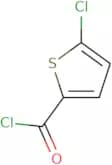
CAS:Methyl3-iodothiophene-2-carboxylate is a chemical compound that is involved in the biosynthesis of eicosanoids. It can be synthesized by the cyclization of the corresponding lactam to produce an intermediate, which is then converted to methyl3-iodothiophene-2-carboxylate by hydrolysis or reduction. This compound has been shown to inhibit malaria parasites such as Plasmodium falciparum and Plasmodium vivax. Methyl3-iodothiophene-2-carboxylate also inhibits the growth of bacteria such as Staphylococcus aureus and Bacillus subtilis. The mechanism of action is believed to be due to its ability to inhibit protein synthesis by binding with ribosomes in prokaryotic cells.END>Formula:C6H5IO2SPurity:Min. 95%Molecular weight:268.07 g/mol5-Chlorothiophene-2-carbonyl chloride
CAS:Intermediate in the synthesis of rivaroxabanFormula:C5H2Cl2OSPurity:Min. 95%Color and Shape:Clear LiquidMolecular weight:181.04 g/mol3,6-Dichlorobenzo[b]thiophene-2-carboxylic acid
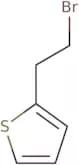
CAS:3,6-Dichlorobenzo[b]thiophene-2-carboxylic acid is an extracellular metabolite that is involved in the metabolism of muscle. It is produced as a byproduct of the reaction catalyzed by dehydrogenase, which converts 3,6-dichlorobenzo[b]thiophene to 2-carboxybenzothiophene. This compound has been shown to inhibit the enzyme histidine carboxylate synthetase, which is involved in branched-chain amino acid synthesis. The enzyme can be inhibited by either a wild type or an analog of 3,6-dichlorobenzo[b]thiophene-2-carboxylic acid.Formula:C9H4Cl2O2SPurity:Min. 95%Molecular weight:247.1 g/mol2,2-(Bromoethyl)thiophene
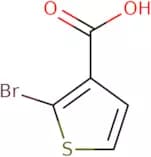
CAS:Oripavine is a naturally occurring alkaloid that can be synthesized from 2,2-bromoethane and potassium carbonate. It has been used for the treatment of Parkinson's disease. Oripavine is an intermediate in the synthesis of rotigotine, a dopamine agonist used to treat Parkinson's disease. The reaction mechanism involves the addition of bromine to 2,2-bromoethane followed by hydrochloric acid treatment to form oripavine. The reaction proceeds with the formation of hydrogen chloride and potassium bromide. The product can then be reacted with a Grignard reagent or allyl group to produce rotigotine.Formula:C6H7BrSPurity:Min. 95%Molecular weight:191.09 g/mol2-Bromo-3-thiophenecarboxylic acid
CAS:2-Bromo-3-thiophenecarboxylic acid (BTPC) is a synthetic drug that is used as an analog of sildenafil, which is a PDE5 inhibitor. BTPC has been shown to be a more potent and selective inhibitor of cGMP hydrolysis than sildenafil. It has also been shown to be capable of inhibiting the growth of human lung cancer cells in vitro. BTPC has not yet been tested in vivo, but may offer advantages over other PDE5 inhibitors due to its increased potency and selectivity.Formula:C5H3BrO2SPurity:Min. 97 Area-%Color and Shape:PowderMolecular weight:207.05 g/mol6-Methoxy-2-(4-methoxyphenyl)benzo[b]thiophene
CAS:6-Methoxy-2-(4-methoxyphenyl)benzo[b]thiophene (6MBT) is a mesomorphic, acid catalyst that has been used to synthesize polyphosphoric acid. It reacts with chloride to form 6-chloro-2-(4-methoxyphenyl)benzo[b]thiophene, which can be converted to the desired product by sulfoxide. The reaction time for this process is relatively short and the yield is high. 6MBT can also be used as a semiconductor in devices such as solar cells and electronic displays. The photoelectric effect of 6MBT was demonstrated in 1972, when it was found that electron emission from a photocurrent could be obtained at room temperature. This property has been shown to be due to the molecule's absorption of light energy and subsequent conversion into electrical energy.Formula:C16H14O2SPurity:Min. 95%Color and Shape:PowderMolecular weight:270.35 g/mol
![2-(4-Fluorophenyl)-5-[(5-iodo-2-methylphenyl)methyl]thiophene](/_next/image/?url=https%3A%2Fstatic.cymitquimica.com%2Fproducts%2F3D%2Fthumb-webp%2FFF34928.webp&w=3840&q=75)

![(6R,7R)-3-(Acetoxymethyl)-8-oxo-7-(2-(thiophen-2-yl)acetamido)-5-thia-1-azabicyclo[4.2.0]oct-2-ene…](/_next/image/?url=https%3A%2Fstatic.cymitquimica.com%2Fproducts%2F3D%2Fthumb-webp%2FFA32097.webp&w=3840&q=75)


![3,6-Dichlorobenzo[b]thiophene-2-carboxylic acid](/_next/image/?url=https%3A%2Fstatic.cymitquimica.com%2Fproducts%2F3D%2Fthumb-webp%2FFD57151.webp&w=3840&q=75)
![6-Methoxy-2-(4-methoxyphenyl)benzo[b]thiophene](/_next/image/?url=https%3A%2Fstatic.cymitquimica.com%2Fproducts%2F3D%2Fthumb-webp%2FFM25206.webp&w=3840&q=75)