


Heterocycles with Sulphur (S)
Subcategories of "Heterocycles with Sulphur (S) "
Found 1000 products of "Heterocycles with Sulphur (S) "
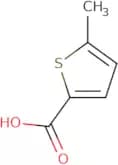
5-Methyl-2-thiophenecarboxylic acid
CAS:5-Methyl-2-thiophenecarboxylic acid is an organic compound with the molecular formula CH3COOH. It has a carboxyl group at one end and a methyl group at the other, hence its name. 5-Methyl-2-thiophenecarboxylic acid is used in the synthesis of esters that are useful as intermediates in the production of pharmaceuticals, pesticides, and other chemicals. The asymmetric synthesis of 5-Methyl-2-thiophenecarboxylic acid was accomplished by reacting it with sodium hydroxide in methanol. The compound is also found to have anticarcinogenic properties. A study conducted on mice showed that 5-Methyl-2-thiophenecarboxylic acid inhibited skin cancer by inducing apoptosis in melanoma cells and inhibiting cell proliferation. 5-Methyl-2-thiophenecarboxylic acid has been shown to
Formula:C6H6O2SPurity:Min. 95%Color and Shape:PowderMolecular weight:142.18 g/molRef: 3D-FM29285
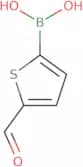
Discontinued product5-Formyl-2-thiopheneboronic acid
CAS:5-Formyl-2-thiopheneboronic acid is a synthetic molecule that has been shown to be an effective electron microscope stabilizer. It is a boronate ester with a formyl group at the 2-position and a thiophene ring at the 5-position. The chloride in this molecule is used as a functional group, which can then react with other molecules to form new compounds. The functional theory of 5-formyl-2-thiopheneboronic acid includes its ability to form bonds with other molecules and its use as an inorganic base. The particle size of 5-formyl-2-thiopheneboronic acid is unsymmetrical, making it different from other molecules.
Formula:C5H5BO3SPurity:Min. 95%Color and Shape:PowderMolecular weight:155.97 g/molRef: 3D-FF31588
Discontinued productThiophene-2-glyoxylic acid
CAS:Thiophene-2-glyoxylic acid is a reactive metabolite of thiophene that is formed from the environmental degradation of this compound. Thiophene-2-glyoxylic acid reacts with halides to form an electrophilic intermediate. This intermediate can react with a variety of nucleophiles, including the drug metabolites, leading to the formation of new compounds. Thiophene-2-glyoxylic acid has been shown to enhance the fluorescence properties of some organic compounds. It also has been shown to inhibit the metabolism of some drugs that are conjugated with acids and can be detected in plasma by mass spectrometry.
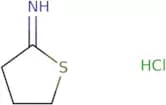
Formula:C6H4O3SPurity:Min. 95%Color and Shape:PowderMolecular weight:156.16 g/mol2-Iminothiolane hydrochloride
CAS:2-Iminothiolane hydrochloride is an amine that reacts with free thiol groups in proteins. It can be used to generate models of protein structures, as well as to study the effects of disulfide bonds on protein stability and function. 2-Iminothiolane hydrochloride has been shown to inhibit HIV infection by blocking the uptake of all-trans retinoic acid into cells. This drug also has minimal toxicity and can be used for cancer therapy. The drug was shown to have minimal toxicity in vitro, but it has not yet been tested in vivo.
Formula:C4H8ClNSPurity:Min. 95%Color and Shape:White Off-White PowderMolecular weight:137.63 g/molRef: 3D-FI24559
Discontinued product2-Amino-4-(2,4-dichlorophenyl)-5-methylthiophene-3-carbonitrile
CAS:The frequency range of 2-Amino-4-(2,4-dichlorophenyl)-5-methylthiophene-3-carbonitrile is between 0.1 and 1.0 GHz. The channel is between 1 and 10 MHz. The algorithm used for this frequency is the Gaussian algorithm. This frequency has been shown to have a frequency range of 0.1 to 1.0 GHz with a channel of 1 to 10 MHz and an algorithm of the Gaussian algorithm.
Formula:C12H8Cl2N2SPurity:Min. 95%Color and Shape:Brown PowderMolecular weight:283.18 g/molRef: 3D-FA113257
Discontinued productBenzo[1,2-b:4,5-b']dithiophene-4,8-dione
CAS:Benzo[1,2-b:4,5-b']dithiophene-4,8-dione is a heterocyclic compound that has been studied for its potential use in electronic devices. The molecule is composed of two aromatic rings and one heterocyclic ring. It is an important building block in the synthesis of many five-membered heterocycles such as benzothiophene and benzofuran. Benzo[1,2-b:4,5-b']dithiophene-4,8-dione can be used as a photoactive material for solar cells due to its ability to absorb light from the visible spectrum and emit it in the near infrared region.
Formula:C10H4O2S2Purity:Min. 95%Color and Shape:White PowderMolecular weight:220.27 g/molRef: 3D-FB42139
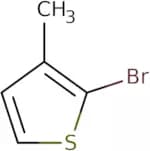
Discontinued product2-Bromo-3-methylthiophene
CAS:2-Bromo-3-methylthiophene (2BMT) is an organic chemical compound that has been used for the Suzuki coupling reaction. It can be prepared by reacting 2-bromo-3-methylthiophene with potassium hydroxide in a hydroxide solution. 2BMT has shown to inhibit the activity of tiagabine hydrochloride, which is a drug that regulates GABA neurotransmission. 2BMT is also used as an intermediate in the synthesis of carbonyl group compounds and halides. The structure and physical properties of 2BMT have been studied in detail by x-ray crystallography and nmr spectroscopy.
Formula:C5H5BrSPurity:Min. 95%Color and Shape:Clear LiquidMolecular weight:177.06 g/molRef: 3D-FB03109
Discontinued product2-Aminothiophene-3-methyl carboxylate
CAS:2-Aminothiophene-3-methyl carboxylate is a hydrogen bond that is derived from the amino acid methionine. It has been shown to have potent antitumor activity and can be used for the treatment of cancer. 2-Aminothiophene-3-methyl carboxylate has a molecular weight of 244.6 g/mol, an isolated yield of 0.68%, and a melting point of 245 °C.
Formula:C4H2SCOOCH3NH2Purity:Min. 95%Color and Shape:Yellow PowderMolecular weight:157.19 g/molRef: 3D-FA16014
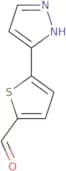
Discontinued product5-(1H-Pyrazol-5-yl)thiophene-2-carbaldehyde
CAS:Please enquire for more information about 5-(1H-Pyrazol-5-yl)thiophene-2-carbaldehyde including the price, delivery time and more detailed product information at the technical inquiry form on this pageFormula:C8H6N2OSPurity:Min. 95%Molecular weight:178.21 g/molRef: 3D-FP54683
Discontinued product9,10-Dihydro-4H-benzo[4,5]cyclohepta[1,2-b]thiophen-4-one
CAS:Please enquire for more information about 9,10-Dihydro-4H-benzo[4,5]cyclohepta[1,2-b]thiophen-4-one including the price, delivery time and more detailed product information at the technical inquiry form on this page
Formula:C13H10OSPurity:Min. 95%Molecular weight:214.28 g/molRITA
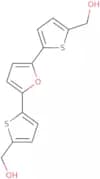
CAS:RITA is a novel compound that has been shown to have anticancer activity in vivo in a rat model. RITA is a small molecule with high potency and low toxicity. It binds selectively to the α subunit of the enzyme topoisomerase II, which is involved in DNA replication and repair. RITA has been shown to induce apoptosis in cancer cells by pro-apoptotic proteins such as Bax and Bak. These proteins are known for their ability to induce apoptosis by increasing mitochondrial membrane permeability, inhibiting mitochondrial functions, or destabilizing the mitochondrial membrane potential. The compound class of RITA is not yet known, but it has been shown to be chemically stable at physiological pH levels and does not require metabolic activation for its cytotoxicity. The pharmacokinetics of this drug have also been studied in human liver cells and humans, indicating that this drug may be able to cross the blood-brain barrier.
Formula:C14H12O3S2Purity:Min. 95%Molecular weight:292.38 g/molRef: 3D-FF153863
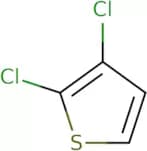
Discontinued product2,3-Dichlorothiophene
CAS:2,3-Dichlorothiophene is a heterocyclic compound that can be used as an intermediate in organic synthesis. The compound has two isomers, 2,2-dichlorothiophene and 2,3-dichlorothiophene. The first isomer reacts with water to form a protonated species and the second isomer reacts with chlorine to form a protonated species. The thermodynamic parameters for the reaction of 2,3-dichlorothiophene with chlorine are more favorable than those for the reaction of 2,2-dichlorothiophene with chlorine. This means that the equilibrium lies to the right when 2,3-chlorothiophene is reacted with chlorine (to form 2,3-dichloroethane), but not when 2,2-chlorothiophene is reacted with chlorine (to form chloroform).
Formula:C4H2Cl2SPurity:Min. 95%Color and Shape:Clear LiquidMolecular weight:153.03 g/molRef: 3D-FD149793
Discontinued product4,8-Bis[5-(2-ethylhexyl)thiophen-2-yl]-2,6-bis(trimethylstannyl)benzo[1,2-b:4,5-b']dithiophene
CAS:Please enquire for more information about 4,8-Bis[5-(2-ethylhexyl)thiophen-2-yl]-2,6-bis(trimethylstannyl)benzo[1,2-b:4,5-b']dithiophene including the price, delivery time and more detailed product information at the technical inquiry form on this pageFormula:C40H58S4Sn2Purity:Min. 95%Molecular weight:904.57 g/mol3,4'-Dihexyl-2,2'-bithiophene
CAS:Please enquire for more information about 3,4'-Dihexyl-2,2'-bithiophene including the price, delivery time and more detailed product information at the technical inquiry form on this page
Purity:Min. 95%Ref: 3D-FD44193
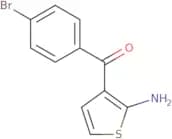
Discontinued product(2-Aminothiophen-3-yl)(4-bromophenyl)methanone
CAS:2-Aminothiophen-3-yl)(4-bromophenyl)methanone is a new compound that is being developed as a potential antiviral agent. Covid-19, the trade name for 2-aminothiophen-3-yl)(4-bromophenyl)methanone, prevents the replication of viruses by binding to their nucleic acids and blocking their ability to produce proteins. Covid-19 has been shown to be effective against both influenza A and B viruses in cellular and animal models. The antiviral activity of Covid-19 is due to its ability to bind to viral nucleic acid, preventing the production of proteins vital for viral replication. This compound has also been shown to have anti-inflammatory properties, which may be due to its ability to inhibit the production of amyloid plaques in mice with Alzheimer's disease.
Formula:C11H8BrNOSPurity:Min. 95%Molecular weight:282.16 g/molRef: 3D-FA54199
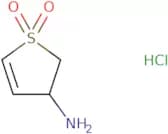
Discontinued product3-Amino-2,3-dihydro-1λ6-thiophene-1,1-dione hydrochloride
CAS:Please enquire for more information about 3-Amino-2,3-dihydro-1λ6-thiophene-1,1-dione hydrochloride including the price, delivery time and more detailed product information at the technical inquiry form on this page
Formula:C4H7NO2S•HClPurity:Min. 95%Molecular weight:169.63 g/molRef: 3D-FA164557
Discontinued product2-Acetyl-5-methylthiophene
CAS:2-Acetyl-5-methylthiophene is a heteroatomic compound that can be used in cancer therapy. It has been shown to inhibit the growth of human cell lines and to have anticancer activity. This compound is also known for its potential interaction with fatty acids, which may be due to the molecular electrostatic potential. The molecule's structure contains a β-unsaturated ketone, which is an active site for many reactions and may interact with other compounds such as thiosemicarbazide. 2-Acetyl-5-methylthiophene has two isomers, namely 5-methylthiophen-2-yl acetate and 5-(acetyloxy)methylthiophen-2-yl acetate. These two molecules differ in the arrangement of their carbons and hydrogens on the central carbon atom and are not considered to be identical substances.
Formula:C7H8OSPurity:Min. 95%Color and Shape:PowderMolecular weight:140.2 g/mol1-(4-Benzo[b]thien-2-ylphenyl)ethanone
CAS:Please enquire for more information about 1-(4-Benzo[b]thien-2-ylphenyl)ethanone including the price, delivery time and more detailed product information at the technical inquiry form on this page
Formula:C16H12OSPurity:Min. 95%Molecular weight:252.33 g/mol4-Bromobenzo[b]thiophene
CAS:Intermediate in the synthesis of brexpiprazole
Formula:C8H5BrSPurity:Min. 95%Molecular weight:213.1 g/molRef: 3D-FB57657
Discontinued product





![Benzo[1,2-b:4,5-b']dithiophene-4,8-dione](/_next/image/?url=https%3A%2Fstatic.cymitquimica.com%2Fproducts%2F3D%2Fthumb-webp%2FFB42139.webp&w=3840&q=75)

![9,10-Dihydro-4H-benzo[4,5]cyclohepta[1,2-b]thiophen-4-one](/_next/image/?url=https%3A%2Fstatic.cymitquimica.com%2Fproducts%2F3D%2Fthumb-webp%2FFD21990.webp&w=3840&q=75)
![4,8-Bis[5-(2-ethylhexyl)thiophen-2-yl]-2,6-bis(trimethylstannyl)benzo[1,2-b:4,5-b']dithiophene](/_next/image/?url=https%3A%2Fstatic.cymitquimica.com%2Fproducts%2F3D%2Fthumb-webp%2FFB76071.webp&w=3840&q=75)


![1-(4-Benzo[b]thien-2-ylphenyl)ethanone](/_next/image/?url=https%3A%2Fstatic.cymitquimica.com%2Fproducts%2F3D%2Fthumb-webp%2FFA149381.webp&w=3840&q=75)
![4-Bromobenzo[b]thiophene](/_next/image/?url=https%3A%2Fstatic.cymitquimica.com%2Fproducts%2F3D%2Fthumb-webp%2FFB57657.webp&w=3840&q=75)