


Heterocycles with Oxygen (O)
Subcategories of "Heterocycles with Oxygen (O)"
- Dioxanes(197 products)
- Dioxolane(635 products)
- Dioxoles(174 products)
- Furan(3,721 products)
- Isoxazole(1,088 products)
- Oxepanes(21 products)
- Pyrans(2,329 products)
- Trioxan(2 products)
Found 749 products of "Heterocycles with Oxygen (O)"
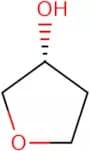
(R)-(-)-3-Hydroxytetrahydrofuran
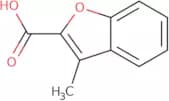
CAS:Intermediate in the synthesis of afatinibFormula:C4H8O2Purity:Min. 95%Molecular weight:88.11 g/mol3-Methylbenzofuran-2-carboxylic acid
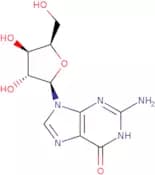
CAS:3-Methylbenzofuran-2-carboxylic acid is a dianion that binds to the cell membrane and inhibits bacterial growth. This compound has been shown to be active against bacteria at low concentrations. 3-Methylbenzofuran-2-carboxylic acid has been used as an antibacterial agent for the treatment of gram-negative bacteria such as Escherichia coli and Proteus mirabilis. It also inhibits the growth of gram-positive bacteria including Staphylococcus aureus, Streptococcus pneumoniae, and Enterococcus faecalis. The reaction temperature required for the synthesis of this compound is high, but it can be prepared at lower temperatures by using anhydrous acetonitrile in place of hydrochloric acid.Formula:C10H8O3Purity:Min. 95%Color and Shape:White PowderMolecular weight:176.17 g/mol9-(beta-D-Xylofuranosyl)guanine
CAS:9-(β-D-xylofuranosyl)guanine (9XG) is a trifluoride. It is an antiviral agent that inhibits the growth of herpes virus, in particular by methylating guanosine to 9-methylguanosine in the viral DNA. 9XG binds to the viral DNA and prevents its replication through the inhibition of RNA synthesis. The drug is active against many different types of viruses and has been shown to be effective against tissue cultures infected with herpes virus. 9XG is synthesized from guanosine and boron trifluoride etherate, which are reacted at -78 degrees Celsius for three days. This yields a mixture of compounds with various peracylation groups, which are then separated by chromatography.
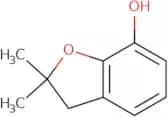
Purity:Min. 95%2,3-Dihydro-2,2-dimethyl-7-hydroxybenzofuran
CAS:2,3-Dihydro-2,2-dimethyl-7-hydroxybenzofuran is a human metabolite of carbofuran and has been shown to be an inhibitor of acetylcholinesterase. The bacterial strain CECT 4384 was used to produce the monoclonal antibody against 2,3-dihydro-2,2-dimethyl-7-hydroxybenzofuran. The monoclonal antibody was then purified by a technique called hybridoma cell line. This technique is a way to purify antibodies that are produced by hybridoma cells. It involves incubating the antibodies with an antigen such as 2,3-dihydro-2,2-dimethyl-7-hydroxybenzofuran in order to bind it and remove it from the solution. When the antibody binds to the antigen, it changes its shape and can be removed from the solution with a magnet or other device
Formula:C10H12O2Purity:Min. 95%Color and Shape:Clear LiquidMolecular weight:164.2 g/mol(R)-4-Propyldihydrofuran-2(3H)-one
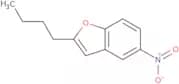
CAS:Please enquire for more information about (R)-4-Propyldihydrofuran-2(3H)-one including the price, delivery time and more detailed product information at the technical inquiry form on this pageFormula:C7H12O2Purity:Min. 95%Molecular weight:128.17 g/mol2-Butyl-5-nitrobenzofuran
CAS:2-Butyl-5-nitrobenzofuran (2B5NBF) is a drug that belongs to the class of salicylaldehydes. It is an acylation product of 2-butanol and 5-nitrobenzofuran that has the potential for use as a pharmaceutical agent. The reaction yield for this compound is high and can be increased by using hydrochloric acid as the acid catalyst. When 2B5NBF is reacted with chloride, it produces an active substance with a structural formula of C14H11NO3Cl. This substance has been shown to have arrhythmic properties in atrial tissue in rats.Formula:C12H13NO3Purity:Min. 95%Molecular weight:219.24 g/mol3-Hydroxycarbofuran
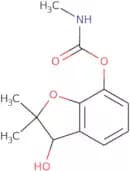
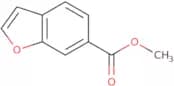
CAS:3-Hydroxycarbofuran is a carbamate pesticide that inhibits acetylcholinesterase, an enzyme that breaks down the neurotransmitter acetylcholine. 3-Hydroxycarbofuran is used in analytical chemistry to measure the concentration of pesticides and herbicides in water and soil samples. This chemical has been shown to inhibit the replication of influenza A virus in vitro, as well as inhibiting the growth of human cancer cells at high concentrations. The use of 3-hydroxycarbofuran for these purposes has been limited by its instability, which can be overcome by using trifluoroacetic acid or sodium carbonate to remove water from the sample before analysis.Formula:C12H15NO4Purity:Min. 95%Color and Shape:PowderMolecular weight:237.25 g/molMethyl benzofuran-6-carboxylate
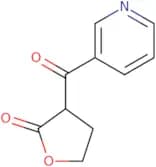
CAS:Methyl benzofuran-6-carboxylate is a synthetic retinoid that is a conformationally constrained analogue of retinoic acid, which is one of the most powerful biological molecules. Methyl benzofuran-6-carboxylate has been shown to be an effective anti-inflammatory agent and may be useful in the treatment of inflammatory skin diseases. It also inhibits the production of proinflammatory cytokines and chemokines, such as TNF-α, IL-1β, IL-8, CCL2, CXCL1, and CXCL2. Methyl benzofuran-6-carboxylate binds to specific receptors on cell surfaces to inhibit the production of inflammatory mediators. The drug also has been shown to have antiangiogenic activity. This property may be due to its ability to inhibit the production of vascular endothelial growth factor (VEGF) and other angiogenic factors.Formula:C10H8O3Purity:Min. 95%Molecular weight:176.17 g/molDihydro-3-(3-pyridoyl)-2-(3H)-furanone
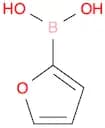
CAS:Please enquire for more information about Dihydro-3-(3-pyridoyl)-2-(3H)-furanone including the price, delivery time and more detailed product information at the technical inquiry form on this pageFormula:C10H9NO3Purity:Min. 95%Molecular weight:191.18 g/molBoronic acid, B-2-furanyl-
CAS:Formula:C4H5BO3Purity:97%Color and Shape:SolidMolecular weight:111.89175-Amino-1-β-D-ribofuranosyl-1H-imidazole-4-carboxamide
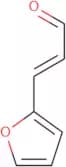
CAS:Formula:C9H14N4O5Purity:95%Color and Shape:SolidMolecular weight:258.2313Furan-2-acrolein
CAS:Furan-2-acrolein is a reaction product of furfuryl alcohol and acrolein. Furan-2-acrolein has been synthesized as an intermediate for the production of 2,5-furandione, which is used in the manufacture of dyes and pharmaceuticals. The optimal conditions for this reaction are a temperature range from 130 to 140°C and a pH range from 7 to 9. Furan-2-acrolein is bacteriostatic due to its steric interactions with bacterial enzymes and its ability to inhibit proton transfer reactions that are essential for bacterial growth. This compound also has functional groups that can be modified by chemical reactions, such as amination reactions. Furan-2-acrolein may also have potential applications in magnetic resonance spectroscopy.br>br>
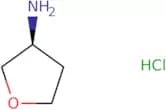
Formula:C7H6O2Purity:Min. 95%Molecular weight:122.12 g/mol(S)-Tetrahydrofuran-3-amine hydrochloride
CAS:Please enquire for more information about (S)-Tetrahydrofuran-3-amine hydrochloride including the price, delivery time and more detailed product information at the technical inquiry form on this page
Formula:C4H9NO•HClPurity:Min. 95%Color and Shape:SolidMolecular weight:123.58 g/mol2,2,5,5-Tetramethyldihydrofuran-3(2H)-one
CAS:2,2,5,5-Tetramethyldihydrofuran-3(2H)-one is an organic compound that is classified as a heterocyclic compound. This substance has been shown to be a good mercurial reagent and can be used for the synthesis of polycyclic compounds. 2,2,5,5-Tetramethyldihydrofuran-3(2H)-one has been shown to form a dimer with sulfuric acid in the presence of polyphosphoric acid. It also reacts with ethers to form sulfates and furans.
Formula:C8H14O2Purity:Min. 95%Color and Shape:Clear LiquidMolecular weight:142.2 g/molcis-3,4-Dihydroxy-2,5-dimethoxytetrahydrofuran
CAS:cis-3,4-Dihydroxy-2,5-dimethoxytetrahydrofuran is a tetrahydrofuran derivative that has been shown to have neuroprotective effects. It has been shown to inhibit the formation of crosslinks in rat spinal cord neurons and to inhibit the release of reactive oxygen species (ROS) and nitric oxide (NO), which are known to be neurotoxic. In addition, cis-3,4-dihydroxy-2,5-dimethoxytetrahydrofuran has antibacterial activity against Staphylococcus aureus and Dasycarpus sp. This compound is also a precursor for limonoids and glyceraldehyde.
Formula:C6H12O5Purity:Min. 95%Color and Shape:PowderMolecular weight:164.16 g/molRef: 3D-FD05355
Discontinued product(2R)-1-(Phenylmethyl)-N-[3-(spiro[isobenzofuran-1(3H),4'-piperidin]-1-yl)propyl-2-pyrrolidinecarboxamide HCl
CAS:(2R)-1-(Phenylmethyl)-N-[3-(spiro[isobenzofuran-1(3H),4'-piperidin]-1-yl)propyl-2-pyrrolidinecarboxamide HCl is an endogenous opioid that has been shown to have antidepressant-like effects. It can bind to γ-aminobutyric acid (GABA) receptors, catecholamine receptors, and nociceptin receptors. This drug also has anti-cancer properties and may be used for the treatment of autoimmune diseases. The interaction of this drug with other drugs is not well understood, but it has been shown to modulate the effects of opioids and increase the aversive nature of some substances.Formula:C27H35N3O2Purity:Min. 95%Color and Shape:PowderMolecular weight:433.59 g/molRef: 3D-FP73252
Discontinued product2,5-Diformylfuran
CAS:5-Hydroxymethylfurfural (5-hmf) is a naturally occurring furan derivative that can be found in many plants such as wheat and sorghum. It is an important chemical intermediate in the production of biofuels, polymers, and pharmaceuticals. 2,5-Diformylfuran has been shown to be a promising catalyst for the oxidation of 5-hydroxymethylfurfural. The reaction mechanism is not yet fully understood. The reaction solution becomes yellow when it reacts with oxygen gas. It is possible that 2,5-diformylfuran oxidizes 5-hmf to produce formaldehyde with the help of a redox potential or catalytic activity.
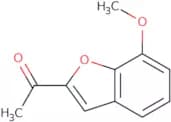
Formula:C6H4O3Purity:Min. 95%Color and Shape:PowderMolecular weight:124.09 g/mol2-Acetyl-7-methoxybenzofuran
CAS:2-Acetyl-7-methoxybenzofuran is an antibacterial agent that has potent inhibitory activity against methicillin-resistant Staphylococcus aureus and other bacterial species. It also inhibits the growth of endophytic fungus in plants. 2-Acetyl-7-methoxybenzofuran is synthesized by the fungus Cereus, which is used in traditional medicine to treat various ailments. This compound binds to the 16S ribosomal RNA, which inhibits protein synthesis and cell division. 2-Acetyl-7-methoxybenzofuran also shows potent inhibitory activity against methicillin-resistant Staphylococcus aureus, as well as other bacterial species. This antibiotic binds to the 16S ribosomal RNA, inhibiting protein synthesis and cell division.
Purity:Min. 95%Color and Shape:PowderMolecular weight:190.2 g/molRef: 3D-FA00332
Discontinued productmethyl 5-(((4-bromophenyl)sulfonyl)methyl)furan-2-carboxylate
CAS:Please enquire for more information about methyl 5-(((4-bromophenyl)sulfonyl)methyl)furan-2-carboxylate including the price, delivery time and more detailed product information at the technical inquiry form on this page
Purity:Min. 95%Ref: 3D-FM169416
Discontinued product3H-Spiro[2-benzofuran-1,4'-piperidine]
CAS:3H-Spiro[2-benzofuran-1,4'-piperidine] is a ligand with affinity for melanocortin receptors. It has been shown to bind with low affinity to the melanocortin receptor and act as an agonist. 3H-Spiro[2-benzofuran-1,4'-piperidine] has high affinity for benzene, which may be due to its ring system. This ligand also has a penetrable structure that allows it to bind to piperidine binding sites.
Formula:C12H15NO·HClPurity:Min. 95%Molecular weight:225.71 g/molRef: 3D-FS51525
Discontinued product






![(2R)-1-(Phenylmethyl)-N-[3-(spiro[isobenzofuran-1(3H),4'-piperidin]-1-yl)propyl-2-pyrrolidinecarbo…](/_next/image/?url=https%3A%2Fstatic.cymitquimica.com%2Fproducts%2F3D%2Fthumb-webp%2FFP73252.webp&w=3840&q=75)


![3H-Spiro[2-benzofuran-1,4'-piperidine]](/_next/image/?url=https%3A%2Fstatic.cymitquimica.com%2Fproducts%2F3D%2Fthumb-webp%2FFS51525.webp&w=3840&q=75)