Heterocycles with Oxygen (O)
Subcategories of "Heterocycles with Oxygen (O)"
- Dioxanes(197 products)
- Dioxolane(635 products)
- Dioxoles(174 products)
- Furan(3,721 products)
- Isoxazole(1,088 products)
- Oxepanes(21 products)
- Pyrans(2,329 products)
- Trioxan(2 products)
Found 749 products of "Heterocycles with Oxygen (O)"
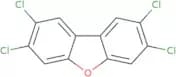
2,3,7,8-Tetrachlorodibenzofuran
CAS:2,3,7,8-Tetrachlorodibenzofuran (2,3,7,8-TCDF) is a congener of polychlorinated dibenzo-p-dioxin. It is found in the environment as a byproduct from the manufacture of chlorophenols and pentachlorophenol. 2,3,7,8-TCDF is an endocrine disruptor that affects cell nuclei and causes oxidative stress to the liver. There are few studies on 2,3,7,8-TCDF because it is not commercially available for use in research or industry. The only study done on this chemical found that it was potent inducer of glucuronide conjugation enzymes and decreased the activity of rat liver microsomes.
Formula:C12H4Cl4OPurity:Min. 95%Molecular weight:305.97 g/molRef: 3D-FT28068
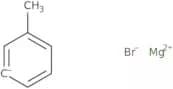
Discontinued product3-Tolylmagnesium bromide - 1.0 M in Tetrahydrofuran
CAS:Controlled Product3-Tolylmagnesium bromide is a Grignard reagent that can react with carbinols such as alcohols, phenols, and ethers to form ethers or esters. 3-Tolylmagnesium bromide is also a halogenating agent and can be used in the production of chlorides. It is soluble in organic solvents such as tetrahydrofuran, chloroform, and benzene. 3-Tolylmagnesium bromide reacts with organic compounds containing electron-donating groups such as carbinols, chlorides, and esters. This reaction forms an ion pair between the magnesium cation and the electron-deficient carbon atom of the 3-tolyl group. The reaction between 3-tolylmagnesium bromide and an alkyne produces a reactive intermediate that can undergo substitution by various nucleophiles to form products such as vinyl chloride or glycidyl chloride
Formula:C7H7BrMgPurity:Min. 95%Molecular weight:195.34 g/molRef: 3D-FT43083
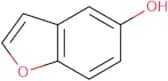
Discontinued product5-Benzofuranol
CAS:5-Benzofuranol is a potent cytotoxic natural product that has been isolated from the fungus Cryptococcus neoformans. It possesses a terminal alkyne group and a sulfonic acid group, which are both important for its cytotoxicity. 5-Benzofuranol inhibits the growth of cells in vitro by inhibiting their ability to synthesize DNA. 5-Benzofuranol shows significant cytotoxicity against various cancer cell lines, as well as potent inhibition against Candida albicans, Aspergillus niger, and Saccharomyces cerevisiae strains in vitro. This compound's functional groups make it an effective antifungal agent.
Formula:C8H6O2Purity:Min. 95%Molecular weight:134.13 g/mol2-Amino-1-(2,3-dihydro-benzofuran-5-yl)-ethanol
CAS:Controlled ProductPlease enquire for more information about 2-Amino-1-(2,3-dihydro-benzofuran-5-yl)-ethanol including the price, delivery time and more detailed product information at the technical inquiry form on this pageFormula:C10H13NO2Purity:Min. 95%Molecular weight:179.22 g/molRef: 3D-FA151846
Discontinued product2-n-Butylbenzo[b]furan
CAS:2-n-Butylbenzo[b]furan is a mitochondrial membrane potential stabilizer that blocks the acylation reaction of fatty acids. The absorption of 2-n-butylbenzo[b]furan into mitochondria has shown to stabilize the mitochondrial membrane potential and improve liver functions in rats. It also inhibits the dinucleotide phosphate (NADP) reaction, which is important for energy production within the cell. This compound has been shown to be effective against hepatitis B virus and may have other therapeutic applications as well. 2-n-Butylbenzo[b]furan can be synthesized by reacting a fatty acid with an aldehyde or ketone in a Friedel-Crafts type reaction. The product can be purified using chromatographic methods, such as column chromatography or thin layer chromatography.
Formula:C12H14OPurity:Min. 95%Molecular weight:174.24 g/molRef: 3D-FB36828
Discontinued productRITA
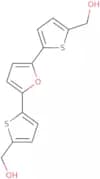
CAS:RITA is a novel compound that has been shown to have anticancer activity in vivo in a rat model. RITA is a small molecule with high potency and low toxicity. It binds selectively to the α subunit of the enzyme topoisomerase II, which is involved in DNA replication and repair. RITA has been shown to induce apoptosis in cancer cells by pro-apoptotic proteins such as Bax and Bak. These proteins are known for their ability to induce apoptosis by increasing mitochondrial membrane permeability, inhibiting mitochondrial functions, or destabilizing the mitochondrial membrane potential. The compound class of RITA is not yet known, but it has been shown to be chemically stable at physiological pH levels and does not require metabolic activation for its cytotoxicity. The pharmacokinetics of this drug have also been studied in human liver cells and humans, indicating that this drug may be able to cross the blood-brain barrier.
Formula:C14H12O3S2Purity:Min. 95%Molecular weight:292.38 g/molRef: 3D-FF153863
Discontinued productSamarium(II) Iodide (ca. 0.1mol/L in Tetrahydrofuran)
CAS:Samarium(II) iodide is a synthetic carbonyl, soluble in acetonitrile, dioxolane and formyl. It is used as a reactant in preparative methods to produce alkyl halides. Samarium(II) iodide reacts with an aldehyde or ketone in the presence of acetic acid to produce an alkyl halide. This compound has chemoselectivity for the production of secondary alcohols and can be used to prepare coupling products. Samarium(II) iodide can also be used to prepare alkene and ketone compounds by reacting with formaldehyde and acetone respectively.
Formula:SmI2Purity:Min. 95%Molecular weight:404.17 g/molRef: 3D-FS61157
Discontinued product4,5-Dibromo-1,2,6,7-tertahydro-8H-indeno[5,4-b]furan-8-one
CAS:4,5-Dibromo-1,2,6,7-tertahydro-8H-indeno[5,4-b]furan-8-one is a chemical reagent that is used for the debromination of ethyl cyanoacetate. The nucleophilic nature of the hydroxyl group in the target compound makes it an efficient substrate for this reaction. This reagent can be used to synthesize ramelteon which is a drug approved by the U.S. Food and Drug Administration (FDA) for insomnia treatment. This high yield synthesis highlights 4,5-dibromo-1,2,6,7-tertahydro-8H-indeno[5,4b]furan-8one's usefulness as a debrominating agent.
Formula:C11H8Br2O2Purity:Min. 95%Molecular weight:331.99 g/molRef: 3D-FD21568
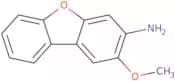
Discontinued product3-Amino-2-methoxy-dibenzofuran
CAS:3-Amino-2-methoxy-dibenzofuran (3AMD) is a cytotoxic agent that is used in the treatment of bladder carcinoma. 3AMD inhibits DNA synthesis, leading to cell death by inhibiting the production of proteins vital for cell division. 3AMD has been shown to be a potent inhibitor of cyclen-dependent kinases and to induce DNA damage in human cells. 3AMD also has significant cytotoxicity against malignant cells and has been shown to inhibit the growth of tumours in mice. 3AMD may have carcinogenic potential due to its structural similarity with other carcinogens such as aniline and aminobiphenyl.
Purity:Min. 95%Molecular weight:213.23 g/molRef: 3D-FA02148
Discontinued product


![2-n-Butylbenzo[b]furan](/_next/image/?url=https%3A%2Fstatic.cymitquimica.com%2Fproducts%2F3D%2Fthumb-webp%2FFB36828.webp&w=3840&q=75)

![4,5-Dibromo-1,2,6,7-tertahydro-8H-indeno[5,4-b]furan-8-one](/_next/image/?url=https%3A%2Fstatic.cymitquimica.com%2Fproducts%2F3D%2Fthumb-webp%2FFD21568.webp&w=3840&q=75)