Heterocycles with Oxygen (O)
Subcategories of "Heterocycles with Oxygen (O)"
- Dioxanes(197 products)
- Dioxolane(635 products)
- Dioxoles(174 products)
- Furan(3,721 products)
- Isoxazole(1,088 products)
- Oxepanes(21 products)
- Pyrans(2,329 products)
- Trioxan(2 products)
Found 749 products of "Heterocycles with Oxygen (O)"
[4-[2-(Diethylamino)ethoxy]-3-iodophenyl][2-(1-hydroxybutyl)-3-benzofuranyl]-methanone
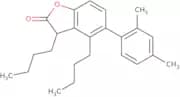
CAS:Controlled ProductPlease enquire for more information about [4-[2-(Diethylamino)ethoxy]-3-iodophenyl][2-(1-hydroxybutyl)-3-benzofuranyl]-methanone including the price, delivery time and more detailed product information at the technical inquiry form on this pageFormula:C25H30INO4Purity:Min. 95%Molecular weight:535.41 g/molXylyldibutylbenzofuranone
CAS:Xylyldibutylbenzofuranone is a stabilizer that is added to plastics to prevent the polymer from splitting into its constituent monomers. It has been shown to be an effective antioxidant, inhibiting the oxidation of polyvinyl chloride and polyethylene terephthalate plastics. Xylyldibutylbenzofuranone can be used in combination with phosphites, which form stable compounds with the stabilizer. These compounds are not allergenic or damaging to health, but may cause allergic reactions in sensitive individuals. The analytical method for determining the content of xylyldibutylbenzofuranone in a plastic material is based on its carboxylate group and functional groups. Xylyldibutylbenzofuranone does not damage the environment and has been shown to have antioxidant effects against ozone-induced oxidation of polystyrene.
Formula:C24H30O2Purity:Min. 95%Color and Shape:PowderMolecular weight:350.49 g/mol3a',4',7',7a'-Tetrahydrospiro[cyclopropane-1,8'-[2]oxa[4,7]methano[2]benzofuran]-1',3'-dione
CAS:Please enquire for more information about 3a',4',7',7a'-Tetrahydrospiro[cyclopropane-1,8'-[2]oxa[4,7]methano[2]benzofuran]-1',3'-dione including the price, delivery time and more detailed product information at the technical inquiry form on this pageFormula:C11H10O3Purity:Min. 95%Molecular weight:190.2 g/mol(17R)-4-Chloro-5-ethyl-9-fluoro-11b-hydroxy-16b-methylspiro[androsta-1,4-diene-17,2(3H)-furan]-3,3-dione
CAS:Clobetasol propionate is an organic acid with a chemical structure that is stable in pharmaceutical preparations. It is used to treat inflammatory skin disorders such as psoriasis and atopic dermatitis. Clobetasol propionate is an impurity of clobetasol, which has been shown to be chemically stable in preparations. The clobetasol propionate compound has been found to be more potent than other topical corticosteroids for the treatment of plaque psoriasis and atopic dermatitis.
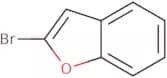
Formula:C25H30ClFO4Purity:Min. 95%Molecular weight:448.95 g/mol2-Bromobenzofuran
CAS:2-Bromobenzofuran is a compound that has been shown to have antioxidant properties and can be used for the treatment of chronic kidney disease, hepatitis, and degenerative diseases. It has nitrogen atoms in its structure that are reactive with oxygen, which may cause the release of picolinic acid (PA), a compound that has been shown to have anti-inflammatory properties. 2-Bromobenzofuran is an alkynyl group that binds to receptors such as serotonin and dopamine. This group also has carbonyl groups, which can form adducts with amines. The piperazine ring in 2-bromobenzofuran is activated by reaction with hydroxyl groups.Formula:C8H5BrOPurity:Min. 95%Molecular weight:197.03 g/mol2,3-Dihydro-1,4-dithiino[2,3-c]furan-5,7-dione
CAS:2,3-Dihydro-1,4-dithiino[2,3-c]furan-5,7-dione is a coordination polymer that contains both an anhydride and a hydroxide group. It has been shown to form a coordination polymer with lithium hydroxide as the counterion. The topological spaces of the polymer are not limited by the size of the monomer unit. This coordination polymer has been shown to form through reaction with lithium hydroxide in water at room temperature.Formula:C6H4O3S2Purity:Min. 95%Color and Shape:Slightly Yellow PowderMolecular weight:188.22 g/mol5-Chlorofuran-2-carboxylic acid
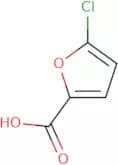
CAS:5-Chlorofuran-2-carboxylic acid is an unlabeled compound that has been found in the chloroacetate fraction of a crude extract of leaves from the plant Garcinia hombroniana. The compound was evaluated for its potential as a bioactive molecule using acetylation, which led to the formation of 5-chlorofuran-2-carboxylic acid methyl ester. This compound was then analysed for its chemical properties, including sequences and parameters. 5-Chlorofuran-2-carboxylic acid methyl ester had no effects on the growth rate of Escherichia coli, but did inhibit the activity of some enzymes involved in DNA replication and repair. Furan, an anion found in 5-chlorofuran-2-carboxylic acid methyl ester, is also present in many other compounds such as 2,4,6 trichlorophenol and 2,5 dichlorophenolFormula:C5H3ClO3Purity:Min. 95%Molecular weight:146.53 g/mol5-(Methoxymethyl)-2-furancarboxaldehyde
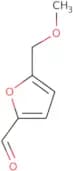
CAS:5-hydroxymethylfurfural (5-hmf) is an organic compound that is produced when a carbohydrate or sugar undergoes oxidation. It is used as an additive in animal feed and as an industrial chemical. 5-hmf is a solid catalyst that can be used at high temperatures, making it suitable for use in the production of 2,6-dihydroxybenzoic acid. The reaction mechanism of 5-hmf involves the dehydration of furfural to form 5-hydroxymethylfurfural. This process occurs when a molecule of water reacts with furfural to produce two molecules of 5-hmf. The reaction may be accelerated by introducing heat, which breaks down the hydrogen bonds between the molecules of furfural and water.Formula:C7H8O3Purity:Min. 95%Color and Shape:Clear LiquidMolecular weight:140.14 g/mol3,4-Dichlorophenylmagnesium bromide - 0.5M solution in tetrahydrofuran
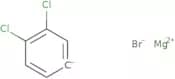
CAS:3,4-Dichlorophenylmagnesium bromide - 0.5M solution in tetrahydrofuran is a chemical reagent that is used to produce methyl compounds. It is often used in the production of chlorinated compounds by substitution of chlorine atoms for hydrogen atoms on the carbon chain. 3,4-Dichlorophenylmagnesium bromide - 0.5M solution in tetrahydrofuran has a molecular structure that includes an electronegative chloro group and a titanium ligand. Acid catalysts are often used with this chemical to promote the reaction between the magnesium and halide ions, which produces methylation products. This may be done through x-ray analysis to determine the progress of the reaction.
Formula:C6H3BrCl2MgPurity:Min. 95%Color and Shape:Clear LiquidMolecular weight:250.2 g/molTributyl(4,5-dihydrofuran-2-yl)tin
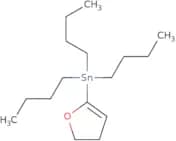
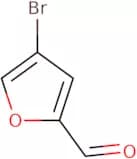
CAS:Controlled ProductPlease enquire for more information about Tributyl(4,5-dihydrofuran-2-yl)tin including the price, delivery time and more detailed product information at the technical inquiry form on this pageFormula:C16H32OSnPurity:Min. 95%Molecular weight:359.13 g/mol4-Bromofuran-2-carbaldehyde
CAS:4-Bromofuran-2-carbaldehyde is a synthetic compound that has been shown to have antioxidant properties. It contains an electron-donating carbonyl group and an electron-withdrawing bromine atom. 4-Bromofuran-2-carbaldehyde is useful in the treatment of endophytic fungi infections, as it inhibits the synthesis of ergosterol, which is an important component of the fungal cell membrane. The molecule's conformational properties are also important for its biological activity, as they enable it to act as a chiral ligand by binding to proteins in a way that will inhibit their function. In addition, 4-bromofuran-2-carbaldehyde has been shown to be effective against cancer cells in vitro, particularly against MMCF7 cells. This may be due to its ability to bind to DNA and prevent transcription or replication of DNA strands.
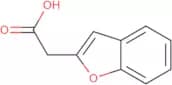
Formula:C5H3BrO2Purity:Min. 95%Molecular weight:174.98 g/mol2-(Benzofuran-2-yl)acetic acid
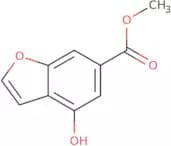
CAS:2-(Benzofuran-2-yl)acetic acid is a glp-1 analogue that has been shown to inhibit fatty acid synthesis in the test tube. It has also shown an inhibitory effect on cardiac arrhythmia and chloride ion channel activity, which may be due to the dipole nature of its structure. 2-(Benzofuran-2-yl)acetic acid is not active against microbial infections. The chemical compound is a tautomer of 2-[(benzofuran-2-yl)amino]acetic acid.Purity:Min. 95%Methyl 4-hydroxy-1-benzofuran-6-carboxylate
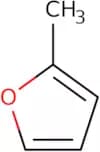
CAS:Please enquire for more information about Methyl 4-hydroxy-1-benzofuran-6-carboxylate including the price, delivery time and more detailed product information at the technical inquiry form on this pageFormula:C10H8O4Purity:Min. 95%Molecular weight:192.17 g/mol2-Methylfuran
CAS:2-Methylfuran is a compound that has been used as a catalyst in the synthesis of 2-methylpentane. The presence of nitrogen atoms in the molecule gives it some synergic effect with other catalysts, such as palladium and nickel. 2-Methylfuran can be detected at sensitivities of 10 parts per billion. A kinetic energy of ˜400 kJ/mole and a hydroxyl group give this compound the ability to react with laminar tissue culture cells. 2-Methylfuran is also a solid catalyst for methyl ethyl ketones, which are used in the production of solvents, plastics, and pharmaceuticals. Its transport properties are similar to those of isooctane, making it useful for studies on gas chromatography analysis.Formula:C5H6OPurity:Min. 95%Color and Shape:Clear LiquidMolecular weight:82.1 g/mol5-Hydroxy-4-propyl-2(5H)-furanone
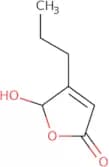
CAS:Please enquire for more information about 5-Hydroxy-4-propyl-2(5H)-furanone including the price, delivery time and more detailed product information at the technical inquiry form on this pageFormula:C7H10O3Purity:Min. 95%Color and Shape:Yellow PowderMolecular weight:142.15 g/mol(S)-(+)-3-Hydroxytetrahydrofuran
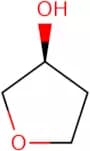
CAS:Intermediate in the synthesis of afatinibFormula:C4H8O2Purity:Min. 95%Molecular weight:88.11 g/mol3-Methyldihydrofuran-2,5-dione
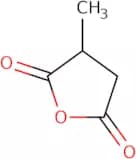
CAS:3-Methyldihydrofuran-2,5-dione is a diterpenoid alkaloid found in the plant Dictamnus albus. This compound has been shown to have metal chelating properties and can be used as an asymmetric synthesis intermediate. 3-Methyldihydrofuran-2,5-dione reacts with diazonium salt to form a high resistance molecule that is highly reactive. This chemical reacts with hydroxyl groups, amide groups, or methyl ethyl groups. The structure of this compound consists of nitrogen atoms and anhydride bonds. 3-Methyldihydrofuran-2,5-dione has been shown to exhibit electrochemical impedance spectroscopy (EIS) characteristics similar to those of other molecules that are known to be reactive.Formula:C5H6O3Purity:Min. 95%Molecular weight:114.1 g/mol3’’’-Epi-Empagliflozin
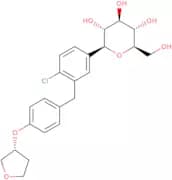
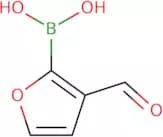
CAS:Please enquire for more information about 3’’’-Epi-Empagliflozin including the price, delivery time and more detailed product information at the technical inquiry form on this pageFormula:C23H27ClO7Purity:95% MinColor and Shape:PowderMolecular weight:450.91 g/mol3-Formylfuran-2-boronic acid
CAS:3-Formylfuran-2-boronic acid is a molecule that can reversibly form an imine with primary amines. 3-Formyl group and fluorophore are the main features of this molecule. The fluorescent properties of 3-formyl group have been extensively studied by functional theory, structural studies and kinetic experiments. The study of these properties has led to the discovery of new fluorescent probes for use in biochemical studies. 3-Formyl furan also interacts with anthracene and other heterocycles by binding constants. These interactions were studied using quantum chemical calculations.
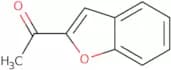
Formula:C5H5BO4Purity:Min. 95%Color and Shape:PowderMolecular weight:139.9 g/mol2-Acetylbenzofuran
CAS:2-Acetylbenzofuran is a chemical compound that can be synthesized from cinnamic acid derivatives. It has been shown to have antimicrobial properties, which are due to its ability to inhibit bacterial growth. 2-Acetylbenzofuran has been used in the treatment of metabolic disorders and diabetes, as it acts by regulating the synthesis of insulin. This compound also inhibits the production of reactive oxygen species (ROS) and decreases cellular oxidative stress. 2-Acetylbenzofuran has also been shown to increase glucose uptake in cells through insulin-stimulated phosphorylation of AKT.Formula:C10H8O2Purity:Min. 95%Color and Shape:White To Yellow SolidMolecular weight:160.17 g/mol
![[4-[2-(Diethylamino)ethoxy]-3-iodophenyl][2-(1-hydroxybutyl)-3-benzofuranyl]-methanone](/_next/image/?url=https%3A%2Fstatic.cymitquimica.com%2Fproducts%2F3D%2Fthumb-webp%2FFD150040.webp&w=3840&q=75)

![3a',4',7',7a'-Tetrahydrospiro[cyclopropane-1,8'-[2]oxa[4,7]methano[2]benzofuran]-1',3'-dione](/_next/image/?url=https%3A%2Fstatic.cymitquimica.com%2Fproducts%2F3D%2Fthumb-webp%2FFT131357.webp&w=3840&q=75)
![(17R)-4-Chloro-5-ethyl-9-fluoro-11b-hydroxy-16b-methylspiro[androsta-1,4-diene-17,2(3H)-furan]-3,3…](/_next/image/?url=https%3A%2Fstatic.cymitquimica.com%2Fproducts%2F3D%2Fthumb-webp%2FFF103612.webp&w=3840&q=75)
![2,3-Dihydro-1,4-dithiino[2,3-c]furan-5,7-dione](/_next/image/?url=https%3A%2Fstatic.cymitquimica.com%2Fproducts%2F3D%2Fthumb-webp%2FFD00362.webp&w=3840&q=75)