Heterocycles with Nitrogen (N)
In this category, you will find a wide variety of nitrogen-containing heterocycles. Heterocycles are carbon chains that form a cycle in which at least one position is occupied by a heteroatom, in this case, nitrogen. These compounds are integral in the synthesis of pharmaceuticals, agrochemicals, and dyes, offering unique reactivity and stability. At CymitQuimica, we provide a comprehensive selection of high-quality nitrogen-containing heterocycles to support your research and industrial applications
Subcategories of "Heterocycles with Nitrogen (N)"
- Azepane(434 products)
- Benzotriazoles(436 products)
- Diazepanes(331 products)
- Imidazoles(4,006 products)
- Imidazolines(385 products)
- Isoxazole(1,077 products)
- Piperazines(3,735 products)
- Piperidines(8,394 products)
- Pyrazines(1,297 products)
- Pyrazole(5,919 products)
- Pyrazolidine(21 products)
- Pyrazoline(142 products)
- Pyridazine(856 products)
- Pyridines(21,910 products)
- Pyrimidine(6,038 products)
- Pyrroles(2,440 products)
- Pyrrolidines(5,814 products)
- Pyrroline(48 products)
- Pyrrolo[1,2-b]pyridazine(10 products)
- Tetrazole(510 products)
- Triazines(462 products)
- Triazoles(1,679 products)
Show 14 more subcategories
Found 17855 products of "Heterocycles with Nitrogen (N)"
Sort by
Purity (%)
0
100
|
0
|
50
|
90
|
95
|
100
[2-(6-Methylpyridin-2-yl)ethyl]amine
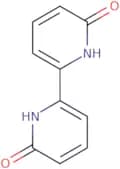
CAS:<p>2-(6-Methylpyridin-2-yl)ethyl]amine is a reagent that is used as a building block for the synthesis of heterocycles. It is used in the preparation of various complex compounds, such as 2-(6-methylpyridin-2-yl)ethylamine hydrochloride, 2-(6-methylpyridin-2-yl)ethylamine hydrobromide, and 2-[(6-methylpyridin-2-yl)ethyl]amine hydrochloride. This chemical can be used as an intermediate in the synthesis of fine chemicals or speciality chemicals. It has CAS No. 19363-94-1 and is an important research chemical with versatile uses in organic synthesis reactions.</p>Formula:C8H12N2Purity:Min. 95%Color and Shape:Colourless LiquidMolecular weight:136.19 g/mol2,2'-Bipyridine-6,6'-(1H,1'H)dione
CAS:<p>2,2'-Bipyridine-6,6'-(1H,1'H)dione is a high-quality compound that is used as a reagent to provide a variety of useful compounds. This compound can be used as a building block for various chemical syntheses or as a component in many reactions. It is also a versatile building block and can be used in the synthesis of other compounds. 2,2'-Bipyridine-6,6'-(1H,1'H)dione has been shown to be an effective intermediate for organic synthesis.</p>Formula:C10H8N2O2Purity:Min. 95%Color and Shape:Off-White To Light Brown SolidMolecular weight:188.18 g/mol6-Chloropyridine-3-sulfonyl chloride
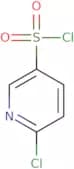
CAS:<p>6-Chloropyridine-3-sulfonyl chloride is a synthetic compound that has been shown to be an inhibitor of the enzyme anhydrase, which is involved in the production of carbonic acid. This inhibition leads to a decrease in the pH of tissues and may inhibit the proliferation of malignant cancer cells. 6-Chloropyridine-3-sulfonyl chloride has also been shown to have anticancer activity against eukaryotes.</p>Formula:C5H3Cl2NO2SPurity:Min. 95%Color and Shape:PowderMolecular weight:212.05 g/mol4,4'-Bis(methoxycarbonyl)-2,2'-bipyridine
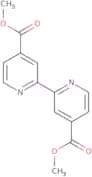
CAS:<p>4,4'-Bis(methoxycarbonyl)-2,2'-bipyridine is a ligand that can be used in cross-coupling reactions. It has been shown to bind to metal ions and form complexes with the ligands. 4,4'-Bis(methoxycarbonyl)-2,2'-bipyridine has a constant value for maximizing the yield of the reaction and is luminescent. This product also has photophysical properties that allow it to be utilized in voltammetry studies. The transfer of this product can be optimized by using chromophores or catalysis. 4,4'-Bis(methoxycarbonyl)-2,2'-bipyridine provides a means for cross-coupling reactions using electrochemical studies and dichroism.</p>Formula:C14H12N2O4Purity:Min. 95%Color and Shape:PowderMolecular weight:272.26 g/mol7-Chloroquinoline-3-carboxylicacid
CAS:<p>7-Chloroquinoline-3-carboxylicacid (7CQCA) is a synthetic compound that has been shown to have regulatory, immunomodulatory, and anticancer properties. It is a potent inhibitor of mammalian DNA polymerase beta and it has been shown to induce apoptosis in human prostate cancer cells by inhibiting the production of cAMP. 7CQCA also inhibits the proliferation of mouse CD1 leukemia cells in vitro and induces apoptosis in these cells. The compound was found to be more effective when used with other agents such as triticum aestivum extract, which may be due to its synergistic interaction with these compounds.</p>Formula:C10H6ClNO2Purity:Min. 95%Color and Shape:Off-White PowderMolecular weight:207.61 g/mol1-Propylpiperidin-4-amine 2HCl
CAS:<p>1-Propylpiperidin-4-amine 2HCl is a cyclic amine. It is an organic compound that has a high absorption rate and can be used as an absorbent. 1-Propylpiperidin-4-amine 2HCl is used in experiments to study the speciation of different compounds, such as carbonates and desorption. The experiment was performed using various solvents with different densities, such as water, ethanol, and acetone, to determine the absorption rate of 1-Propylpiperidin-4-amine 2HCl. The experiment also studied viscosity changes over time while in contact with 1-Propylpiperidin-4-amine 2HCl. This chemical has a molecular structure consisting of one propyl group and four amines.</p>Formula:C8H20Cl2N2Purity:Min. 95%Color and Shape:SolidMolecular weight:215.16 g/mol[2,3'-Bipyridin]-6'-amine
CAS:<p>2,3'-Bipyridin-6'-amine is a chemical compound that is used as a building block for more complex molecules. It has high quality and can be used to make many different compounds. 2,3'-Bipyridin-6'-amine is versatile and can be used in the synthesis of a variety of compounds. It is also an intermediate in a number of reactions, including the formation of pyrimidine analogs. This chemical has been shown to be useful in the creation of new drugs for cancer treatment and other diseases.</p>Formula:C10H9N3Purity:Min. 95%Color and Shape:Off-White PowderMolecular weight:171.2 g/mol4-Nitropyridine-2-carboxylic acid
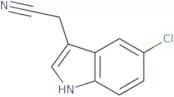
CAS:<p>4-Nitropyridine-2-carboxylic acid (4NPCA) is a nitro compound that can form both an n-oxide and a deuterium isotope effect. 4NPCA has been shown to react with picolinic acid, forming a stable chelate ligand that is stabilized by the electron withdrawal of the nitro group. 4NPCA also reacts with acetonitrile to form isotopomers, which are molecules that differ only in the number of atoms of hydrogen or deuterium present. The formation of these isotopomers occurs through an intramolecular hydrogen transfer from the hydroxyl group on one molecule to the nitro group on another.</p>Formula:C6H4N2O4Purity:Min. 95%Color and Shape:Pale yellow solid.Molecular weight:168.11 g/mol5-Chloroindole-3-acetonitrile
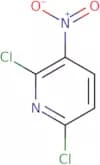
CAS:<p>5-Chloroindole-3-acetonitrile is a chemical compound that can be used as a reaction component, reagent, or useful scaffold in the synthesis of complex compounds. 5-Chloroindole-3-acetonitrile is also a fine chemical with many uses as a high quality research chemical and versatile building block. It is commercially available from various suppliers and its CAS number is 81630-83-3.</p>Formula:C10H7ClN2Purity:Min. 95%Color and Shape:Yellow PowderMolecular weight:190.63 g/mol2,6-Dichloro-3-nitropyridine
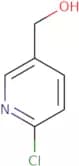
CAS:<p>2,6-Dichloro-3-nitropyridine is a nitro compound that is used to synthesize the drug flupirtine. Flupirtine has been shown to be effective in treating hepatitis C and prostate cancer cells. It inhibits glycogen synthase kinase-3 (GSK-3) by binding to the ATP site on the enzyme, which prevents phosphorylation of its substrate proteins and leads to cell death. 2,6-Dichloro-3-nitropyridine can also inhibit pim-1 and ammonolysis, two enzymes involved in DNA damage repair.</p>Formula:C5H2Cl2N2O2Purity:Min. 95%Color and Shape:Slightly Yellow PowderMolecular weight:192.99 g/mol2-Chloro-5-hydroxymethylpyridine
CAS:<p>2-Chloro-5-hydroxymethylpyridine is a metabolite of the active substance 2-chloro-5,6-dihydroxymethylpyridine (mk-0674), which has been shown to inhibit cytochrome P450 enzymes. It is found in urine samples from patients treated with mk-0674 and can be used to monitor the efficacy of treatment. The biochemical properties of 2-chloro-5,6-dihydroxymethylpyridine have been studied in yeast cells and it has been shown that this compound is glucuronidated and excreted as a conjugate with glycine. The yeast strain Saccharomyces cerevisiae was used for these studies.</p>Formula:C6H6ClNOPurity:Min. 95%Color and Shape:Off-White To Light Brown SolidMolecular weight:143.57 g/mol6-Bromo-2-(4-bromophenyl)-indole
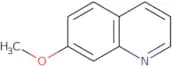
CAS:<p>6-Bromo-2-(4-bromophenyl)-indole is a fine chemical with CAS No. 28718-96-9 that can be used as a versatile building block for the synthesis of complex compounds, useful scaffold for research chemicals, and reaction component for speciality chemicals. This compound has high quality and is a reagent in the synthesis of other compounds.</p>Formula:C14H9Br2NPurity:Min. 95%Color and Shape:Off white to pale yellow powder.Molecular weight:351.04 g/mol7-Methoxyquinoline
CAS:<p>7-Methoxyquinoline is a drug that belongs to the group of histone deacetylase inhibitors. It has been shown to inhibit monooxygenase and cytochrome p-450, which are enzymes involved in the metabolism of drugs. 7-Methoxyquinoline can be used as a fluorescent probe for reactions involving histones or other proteins with similar chemical structures. It is also used as an inhibitor in biochemical assays, such as fluorometric assays. 7-Methoxyquinoline can be prepared by reacting hydrazine with methoxyacetic acid followed by hydrolysis of the resulting hydrazone. This process yields a mixture of products, some of which are substituted with methoxy groups at different positions on the benzene ring.</p>Formula:C10H9NOPurity:Min. 95%Color and Shape:Colorless PowderMolecular weight:159.18 g/mol2-(Hydroxymethyl)pyridine
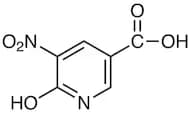
CAS:<p>2-(Hydroxymethyl)pyridine is a metal chelate that has been shown to be a potent inhibitor of picolinic acid amidohydrolase. This enzyme is responsible for the conversion of picolinic acid to nicotinamide adenine dinucleotide (NAD), which is a cofactor in the citric acid cycle. The 2-(hydroxymethyl)pyridine-picolinic acid complex inhibits the activity of this enzyme, blocking the conversion of NAD into nicotinamide adenine dinucleotide phosphate (NADP). This inhibition leads to higher levels of NAD and lower levels of NADP, which may lead to an increase in metabolic activity by increasing the availability of ATP. 2-(Hydroxymethyl)pyridine has been shown to have immunosuppressive properties, as well as anti-inflammatory properties. It also has been shown to be effective against bowel disease and infectious diseases.</p>Formula:C6H7NOPurity:Min. 95%Color and Shape:Clear LiquidMolecular weight:109.13 g/mol6-Hydroxy-5-nitronicotinic Acid
CAS:Formula:C6H4N2O5Purity:>97.0%(GC)(T)Color and Shape:Light yellow to Yellow powder to crystalMolecular weight:184.114-Amino-6-chloro-2-(methylthio) pyrimidine
CAS:<p>4-Amino-6-chloro-2-(methylthio) pyrimidine is a reactive chemical that is used in medicine as an antioxidant. It has been shown to have beneficial effects on atherosclerosis, colitis and cancer. 4-Amino-6-chloro-2-(methylthio) pyrimidine has also been shown to inhibit the production of reactive oxygen species (ROS). ROS are generated by lipoxygenase enzymes in soybean oil and cause damage to cells. 4-Amino-6-chloro-2-(methylthio) pyrimidine binds to the enzyme's heme group, preventing it from forming ROS.</p>Formula:C5H6ClN3SPurity:Min. 95%Molecular weight:175.64 g/mol1-(Phenylsulfonyl)-1H-indole
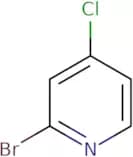
CAS:<p>1-Phenylsulfonyl-1H-indole is a synthetic, non-naturally occurring compound that belongs to the class of indole alkaloids. It is an asymmetrical molecule with a dihedral angle of 12.2° and a molecular weight of 226.11 g/mol. The compound has two benzyl groups that are attached to the phenylsulfonyl group at C4 and C5 positions, which are both hydrogen bonded to the indole group at C3 position. 1-Phenylsulfonyl-1H-indole is used as a starting material in organic reactions. It can be reacted with organolithium reagents to form sulfonamides or with Friedel–Crafts reaction to produce ketones.</p>Formula:C14H11NO2SPurity:Min. 95%Molecular weight:257.31 g/mol2-Bromo-4-chloropyridine
CAS:<p>2-Bromo-4-chloropyridine is a 4-chloropyridine derivative with the chemical structure of a heterocyclic amine. It has been synthesised as an analog of 2,4,6-trimethylaniline to explore its pharmacological effect. 2-Bromo-4-chloropyridine has been shown to have a bladder carcinogenic effect in animals. The compound was evaluated for its potential to cause bladder cancer in humans by determining the concentration of the compound in human urine following oral administration and by measuring the frequency of bladder tumors in rats. It has also been found that 2-bromo-4-chloropyridine inhibits serotonin receptors (5HT2C) and dopamine receptors (D2).</p>Formula:C5H3BrCINPurity:Min. 95%Color and Shape:Off-White To Yellow Solid Or Liquid (May Vary)Molecular weight:192.44 g/mol4-(2-Aminoanilino)pyridine
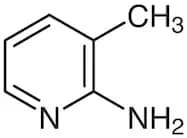
CAS:<p>4-(2-Aminoanilino)pyridine is a pyridine that has been shown to be an impurity in the acid salt of 4-(2-aminophenyl)pyridine. It is an acidified impurity that can form when the pyridine reacts with hydrochloric acid or sulfuric acid.</p>Formula:C11H11N3Purity:Min. 95%Color and Shape:PowderMolecular weight:185.23 g/mol2-Amino-3-methylpyridine
CAS:Formula:C6H8N2Purity:>98.0%(GC)Color and Shape:White or Colorless to Light orange to Yellow powder to lump to clear liquidMolecular weight:108.14
![[2-(6-Methylpyridin-2-yl)ethyl]amine](/_next/image/?url=https%3A%2Fstatic.cymitquimica.com%2Fproducts%2F3D%2Fthumb-webp%2FFM123522.webp&w=3840&q=75)



![[2,3'-Bipyridin]-6'-amine](/_next/image/?url=https%3A%2Fstatic.cymitquimica.com%2Fproducts%2F3D%2Fthumb-webp%2FFB141123.webp&w=3840&q=75)