Heterocycles with Nitrogen (N)
In this category, you will find a wide variety of nitrogen-containing heterocycles. Heterocycles are carbon chains that form a cycle in which at least one position is occupied by a heteroatom, in this case, nitrogen. These compounds are integral in the synthesis of pharmaceuticals, agrochemicals, and dyes, offering unique reactivity and stability. At CymitQuimica, we provide a comprehensive selection of high-quality nitrogen-containing heterocycles to support your research and industrial applications
Subcategories of "Heterocycles with Nitrogen (N)"
- Azepane(434 products)
- Benzotriazoles(436 products)
- Diazepanes(331 products)
- Imidazoles(4,011 products)
- Imidazolines(385 products)
- Isoxazole(1,077 products)
- Piperazines(3,736 products)
- Piperidines(8,406 products)
- Pyrazines(1,299 products)
- Pyrazole(5,921 products)
- Pyrazolidine(21 products)
- Pyrazoline(142 products)
- Pyridazine(856 products)
- Pyridines(21,918 products)
- Pyrimidine(6,041 products)
- Pyrroles(2,443 products)
- Pyrrolidines(5,817 products)
- Pyrroline(48 products)
- Pyrrolo[1,2-b]pyridazine(10 products)
- Tetrazole(510 products)
- Triazines(462 products)
- Triazoles(1,680 products)
Show 14 more subcategories
Found 17857 products of "Heterocycles with Nitrogen (N)"
Sort by
Purity (%)
0
100
|
0
|
50
|
90
|
95
|
100
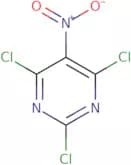
2,4,6-Trichloro-5-nitropyrimidine
CAS:<p>2,4,6-Trichloro-5-nitropyrimidine is a purine derivative that inhibits the cell proliferation of cancer cells. It has been shown to inhibit the activity of kinases and to induce apoptosis in human cancer cells in vitro. This drug also has antiproliferative potential against erythrocytes and is being investigated as a treatment for renal disease. 2,4,6-Trichloro-5-nitropyrimidine shows inhibitory effects on the phosphorylation of roscovitine by ATP and may be used to treat patients with glomerulonephritis. 2,4,6-Trichloro-5-nitropyrimidine can be synthesized from 2,4,6-trichloropyrimidinethiol and nitric acid according to the following equation: CClNO + HNO → CClNOH + NO 2 Cl + 3 HNO</p>Formula:C4Cl3N3O2Purity:Min. 97 Area-%Molecular weight:228.42 g/mol1-(2-Phenylethyl)piperazine
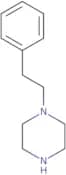
CAS:Controlled Product<p>1-(2-Phenylethyl)piperazine is a potential drug for the treatment of insulin resistance. It has been shown to increase insulin sensitivity in mice and humans, as measured by glucose uptake rates, pharmacokinetic properties, and insulin sensitivity. This compound may be used in combination with other drugs to treat cancer or skin conditions. 1-(2-Phenylethyl)piperazine has also been shown to bind to the aminophenyl receptor, which is a G protein-coupled receptor that is involved in cell proliferation and apoptosis. The aminophenyl receptor also binds to multidrugs such as HIV protease inhibitors (e.g., indinavir), which suggests that it may have antitumor effects.</p>Formula:C12H18N2Purity:Min. 95%Molecular weight:190.28 g/molS-Desmethyl-S-(2-hydroxy-2-methylpropyl) rosuvastatin calcium
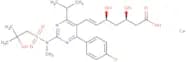
CAS:Please enquire for more information about S-Desmethyl-S-(2-hydroxy-2-methylpropyl) rosuvastatin calcium including the price, delivery time and more detailed product information at the technical inquiry form on this pageFormula:(C25H34FN3O7S)2•CaPurity:Min. 95%Molecular weight:1,119.24 g/mol3-Ethyl 5-methyl 2-[(2-aminoethoxy)methyl]-4-(2-chlorophenyl)-6-methylpyridine-3,5-dicarboxylate hydrochloride
CAS:<p>Please enquire for more information about 3-Ethyl 5-methyl 2-[(2-aminoethoxy)methyl]-4-(2-chlorophenyl)-6-methylpyridine-3,5-dicarboxylate hydrochloride including the price, delivery time and more detailed product information at the technical inquiry form on this page</p>Formula:C20H23ClN2O5•HClPurity:Min. 95%Molecular weight:443.32 g/molPyridine-3-sulfonamide
CAS:<p>Pyridine-3-sulfonamide is a diazonium salt that has shown anticancer activity against human colon HCT116 cells. It inhibits the proliferation of leukemia cells by inhibiting the uptake of glucose, and it also has inhibitory properties on l1210 murine leukemia cells. Pyridine-3-sulfonamide binds to metal surfaces and accumulates in the cytoplasm of cancer cells, which may be due to its structural formula consisting of a pyridine group and a sulfonamide group. This compound can be used as an anticancer drug for cancer treatment.</p>Formula:C5H6N2O2SPurity:Min. 95%Color and Shape:PowderMolecular weight:158.18 g/molPyridine-3-carboxaldehyde
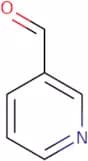
CAS:<p>Pyridine-3-carboxaldehyde is a heterocyclic compound that is structurally related to nicotinic acid and picolinic acid. It has been shown to have anti-tumor activity, with hl-60 cells as the model system. Pyridine-3-carboxaldehyde has also been shown to be toxic to bacteria in biological studies. The chemical stability of this compound was studied by Langmuir adsorption isotherm and electrochemical impedance spectroscopy. It was found that pyridine-3-carboxaldehyde is stable at a pH range of 7 to 8 and at temperatures up to 60 degrees Celsius.</p>Formula:C6H5NOPurity:Min. 95%Color and Shape:Clear LiquidMolecular weight:107.11 g/mol1-(3-Bromophenyl)-piperazine
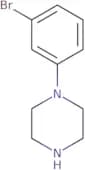
CAS:Controlled Product1-(3-Bromophenyl)-piperazine is a furan compound with a piperazine base. It is used as an anti-cancer drug in the treatment of cancer and impurities are removed from this compound using chromatography. This compound has been shown to be homocoupled, which means that it can be used to synthesize other compounds. 1-(3-Bromophenyl)-piperazine is approved by the FDA and European Medicines Agency for the treatment of cancer, and has been shown to have immunological properties.Formula:C10H13BrNPurity:Min. 95%Molecular weight:227.12 g/moltert-Butyl 4-(6-aminopyridin-3-yl)piperazine-1-carboxylate
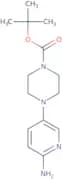
CAS:<p>tert-Butyl 4-(6-aminopyridin-3-yl)piperazine-1-carboxylate is an organic compound that can be synthesized by the reduction of 5-bromo-2-nitro pyridine with a palladium catalyst. It has been shown to inhibit the growth of cancer cells in vitro and in vivo, and is being investigated as a potential treatment for breast cancer.</p>Formula:C14H22N4O2Purity:Min. 95%Molecular weight:278.35 g/molPiperidin-3-one hydrochloride
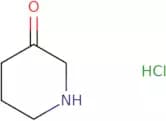
CAS:<p>Piperidin-3-one hydrochloride is an organic solvent that belongs to the group of benzyl compounds. It is a reagent for the synthesis of sulfides, which are used in the production of dyes, pharmaceuticals, and other products. Piperidin-3-one hydrochloride can be used as a constant in calculating the shift of tetrafluoroborate ions. This compound has been shown to be assembled into planar structures with six atoms per side. The resonance frequencies of this compound depend on the solvents and its aliphatic nature. Piperidin-3-one hydrochloride can be used to generate dimethyl sulfide by reacting with methanol or methyl chloride.</p>Formula:C5H10NOClPurity:Min. 95%Color and Shape:White PowderMolecular weight:135.59 g/mol4-Piperazinylphenylboronic acid, pinacol ester
CAS:<p>Please enquire for more information about 4-Piperazinylphenylboronic acid, pinacol ester including the price, delivery time and more detailed product information at the technical inquiry form on this page</p>Formula:C16H25BN2O2Purity:Min. 95%Color and Shape:PowderMolecular weight:288.19 g/moltert-Butyl 4-(2-methoxy-2-oxoethyl)piperazine-1-carboxylate
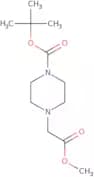
CAS:<p>Please enquire for more information about tert-Butyl 4-(2-methoxy-2-oxoethyl)piperazine-1-carboxylate including the price, delivery time and more detailed product information at the technical inquiry form on this page</p>Formula:C12H22N2O4Purity:Min. 95%Molecular weight:258.31 g/mol5-Boc-octahydro-pyrrolo[3,4-c]pyridine
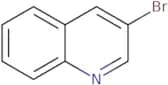
CAS:<p>Please enquire for more information about 5-Boc-octahydro-pyrrolo[3,4-c]pyridine including the price, delivery time and more detailed product information at the technical inquiry form on this page</p>Formula:C12H22N2O2Purity:Min. 95%Molecular weight:226.32 g/mol3-Bromoquinoline
CAS:<p>3-Bromoquinoline is a brominated quinoline derivative that can be synthesized by cross-coupling reactions. The compound's chemical structure is similar to the 3-azidoquinoline, which was studied in quantum theory and molecular modeling. The 3-bromoquinoline molecule has been shown to exist in two different coordination geometries: octahedral and trigonal bipyramidal. In the octahedral geometry, the 3-bromoquinoline molecule is bound to three bromine atoms and one nitrogen atom, with an intramolecular hydrogen bond between the nitrogen atom and the quinoline ring system. The trigonal bipyramidal geometry also features an intramolecular hydrogen bond between the nitrogen atom and quinoline ring system, as well as a halogen bonding interaction with one of the three bromine atoms.</p>Formula:C9H6BrNPurity:Min. 95%Color and Shape:Yellow PowderMolecular weight:208.05 g/mol1-[(1-Methyl-1H-pyrazol-4-yl)methyl]piperazine
CAS:Controlled Product<p>Please enquire for more information about 1-[(1-Methyl-1H-pyrazol-4-yl)methyl]piperazine including the price, delivery time and more detailed product information at the technical inquiry form on this page</p>Formula:C9H16N4Purity:Min. 95%Molecular weight:180.25 g/mol3-[(4-Aminopiperidin-1-yl)methyl]phenol
CAS:<p>Please enquire for more information about 3-[(4-Aminopiperidin-1-yl)methyl]phenol including the price, delivery time and more detailed product information at the technical inquiry form on this page</p>Formula:C12H18N2OPurity:Min. 95%Molecular weight:206.28 g/mol1,3,5-Triacryloylhexahydro-1,3,5-triazine
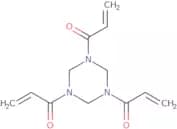
CAS:<p>1,3,5-Triacryloylhexahydro-1,3,5-triazine (TTH) is a particle that absorbs UV light. It is a reactive chemical with a high thermal stability and low reactivity to air. TTH has been used as a cross-linker in polymer films and as a microsphere filler. The absorption of UV light by TTH may be due to the presence of hydroxyl groups or nitrogen atoms. The nmr spectra show that TTH contains trimethylolpropane groups.</p>Formula:C12H15N3O3Purity:Min. 95%Color and Shape:White PowderMolecular weight:249.27 g/mol4-Dimethylaminopyridinium Bromide Perbromide
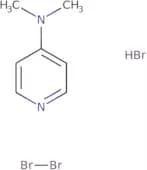
CAS:Controlled Product<p>4-Dimethylaminopyridinium Bromide Perbromide is a synthetic compound that contains a phenolic hydroxyl group. It reacts with chloride to form the perbromide salt, which is anhydrous and insoluble in water. The compound has been shown to inhibit the growth of cancer cells by interfering with DNA replication and transcription.</p>Formula:C7H11Br3N2Purity:Min. 95%Molecular weight:362.89 g/mol4-Chloro-3-iodopyridin-2-amine
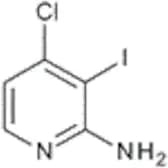
CAS:Please enquire for more information about 4-Chloro-3-iodopyridin-2-amine including the price, delivery time and more detailed product information at the technical inquiry form on this pageFormula:C5H4ClIN2Purity:Min. 95%Molecular weight:254.46 g/molAzaperol-D4
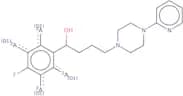
CAS:Controlled Product<p>Please enquire for more information about Azaperol-D4 including the price, delivery time and more detailed product information at the technical inquiry form on this page</p>Formula:C19H20D4FN3OPurity:Min. 95%Molecular weight:333.4 g/mol5-Chloro-2-(ethylsulfonyl)pyrimidine-4-carboxylic acid
CAS:<p>Please enquire for more information about 5-Chloro-2-(ethylsulfonyl)pyrimidine-4-carboxylic acid including the price, delivery time and more detailed product information at the technical inquiry form on this page</p>Formula:C7H7ClN2O4SPurity:Min. 95%Molecular weight:250.66 g/mol

![3-Ethyl 5-methyl 2-[(2-aminoethoxy)methyl]-4-(2-chlorophenyl)-6-methylpyridine-3,5-dicarboxylate h…](/_next/image/?url=https%3A%2Fstatic.cymitquimica.com%2Fproducts%2F3D%2Fthumb-webp%2FFE183833.webp&w=3840&q=75)


![5-Boc-octahydro-pyrrolo[3,4-c]pyridine](/_next/image/?url=https%3A%2Fstatic.cymitquimica.com%2Fproducts%2F3D%2Fthumb-webp%2FFB147002.webp&w=3840&q=75)
![1-[(1-Methyl-1H-pyrazol-4-yl)methyl]piperazine](/_next/image/?url=https%3A%2Fstatic.cymitquimica.com%2Fproducts%2F3D%2Fthumb-webp%2FFM112287.webp&w=3840&q=75)
![3-[(4-Aminopiperidin-1-yl)methyl]phenol](/_next/image/?url=https%3A%2Fstatic.cymitquimica.com%2Fproducts%2F3D%2Fthumb-webp%2FFA116167.webp&w=3840&q=75)