Heterocycles with Nitrogen (N)
In this category, you will find a wide variety of nitrogen-containing heterocycles. Heterocycles are carbon chains that form a cycle in which at least one position is occupied by a heteroatom, in this case, nitrogen. These compounds are integral in the synthesis of pharmaceuticals, agrochemicals, and dyes, offering unique reactivity and stability. At CymitQuimica, we provide a comprehensive selection of high-quality nitrogen-containing heterocycles to support your research and industrial applications
Subcategories of "Heterocycles with Nitrogen (N)"
- Azepane(434 products)
- Benzotriazoles(436 products)
- Diazepanes(331 products)
- Imidazoles(4,011 products)
- Imidazolines(385 products)
- Isoxazole(1,077 products)
- Piperazines(3,736 products)
- Piperidines(8,405 products)
- Pyrazines(1,299 products)
- Pyrazole(5,921 products)
- Pyrazolidine(21 products)
- Pyrazoline(142 products)
- Pyridazine(856 products)
- Pyridines(21,917 products)
- Pyrimidine(6,041 products)
- Pyrroles(2,443 products)
- Pyrrolidines(5,816 products)
- Pyrroline(48 products)
- Pyrrolo[1,2-b]pyridazine(10 products)
- Tetrazole(510 products)
- Triazines(462 products)
- Triazoles(1,680 products)
Show 14 more subcategories
Found 17855 products of "Heterocycles with Nitrogen (N)"
Sort by
Purity (%)
0
100
|
0
|
50
|
90
|
95
|
100
3-Bromopyridazine
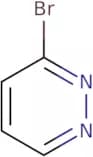
CAS:<p>3-Bromopyridazine is a dechlorinated derivative of pyridazine that has been used as an agrochemical. 3-Bromopyridazine can be synthesized by aminocarbonylation at the 3-position, which is a nucleophilic substitution reaction. It has been shown to yield high yields and to react with nucleophiles such as chlorine or heterocycles such as cinnoline. 3-Bromopyridazine can also be obtained by cross coupling of 2-bromoacetophenone with benzaldehyde and pyridine in the presence of copper. The resulting product is then reacted with sodium nitrite in hydrochloric acid to produce 3-bromopyridazine. This compound may have potential use as a chemical intermediate for other compounds, due to its chemical stability and its ability to undergo cross coupling reactions.</p>Formula:C4H3BrN2Purity:Min. 95%Molecular weight:158.98 g/mol2-Cyano-3,4,5,6-tetrachloropyridine
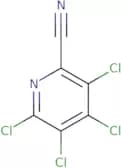
CAS:<p>2-Cyano-3,4,5,6-tetrachloropyridine is a genotoxic compound that is used for the preparation of picolinic acid. It has been shown to induce DNA damage and cytotoxicity in vitro. The reaction products of this compound have also been found to be genotoxic in vitro and in vivo. This chemical has been shown to inhibit the growth of cells in culture as well as cause cell death by releasing hydrogen chloride gas. 2-Cyano-3,4,5,6-tetrachloropyridine is a potent mutagen and carcinogen that can be activated by fluorine or chlorine compounds. This chemical can also form chlorinated derivatives with chlorine. 2-Cyano-3,4,5,6-tetrachloropyridine reacts with phosphorus pentachloride to produce hydrogen chloride gas and other reaction products such as chloride (Cl) or sublimed (P</p>Formula:C6Cl4N2Purity:Min. 95%Molecular weight:241.89 g/molPyrrole-2-carboxylic acid
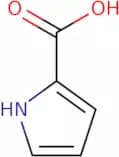
CAS:<p>Pyrrole-2-carboxylic acid is a polycyclic aromatic compound that can be found in coal tar. It has been shown to have anti-inflammatory, antiallergic, and antifungal properties. Pyrrole-2-carboxylic acid is produced by the human body as an intermediate in the metabolism of tryptophan. This compound can also be synthesized and used to treat chronic bronchitis, which is caused by excessive mucus production and inflammation of the airways. The reaction mechanism for pyrrole-2-carboxylic acid is similar to that of other drugs that are used in respiratory therapy, such as aminophylline or acetylcysteine.</p>Formula:C5H5NO2Purity:Min. 95%Molecular weight:111.1 g/mol3,4,7,8-Tetramethyl-1,10-phenanthroline
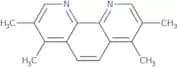
CAS:<p>Metal-chelating agent</p>Formula:C16H16N2Purity:Min. 98 Area-%Color and Shape:White PowderMolecular weight:236.31 g/mol4-Imidazole methyl carboxylate
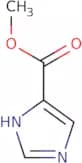
CAS:<p>4-Imidazole methyl carboxylate is a drug that inhibits the activity of dehydrogenases and other enzymes. It has been shown to be an inhibitor of the enzyme catalase in vitro and in vivo, which may be due to its ability to bind bidentately with the active site. 4-Imidazole methyl carboxylate is effective when administered orally, and it has been shown to improve symptoms of neurodegenerative diseases such as Alzheimer's disease. This drug also has a trifunctional chemical structure that contains a macrocyclic ring system with an imidazole group and a carboxylic acid group. The redox potential of this molecule makes it suitable for use as an antioxidant.</p>Formula:C5H6N2O2Purity:Min. 95%Color and Shape:White PowderMolecular weight:126.11 g/mol4-Bromo-1-methyl-1H-pyrazolo[4,3-c]pyridine-6-carboxylic acid
CAS:<p>Please enquire for more information about 4-Bromo-1-methyl-1H-pyrazolo[4,3-c]pyridine-6-carboxylic acid including the price, delivery time and more detailed product information at the technical inquiry form on this page</p>Formula:C8H6BrN3O2Purity:Min. 95%Molecular weight:256.06 g/mol(2S,3S)-(-)-3-Amino-2-phenylpiperidine
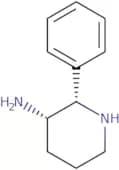
CAS:<p>The process of asymmetric epoxidation is used to convert alkenes into epoxides in a single step. This reaction is catalyzed by the use of a chiral catalyst with an enantiomeric excess (ee) greater than 50%. The reactants are added to the catalyst and hydrogen peroxide, which oxidizes the alkenes. The resulting epoxides can be isolated from the reaction mixture by distillation or extraction. Factors that affect this reaction include the type of reactant, solvent, temperature, and pressure.</p>Formula:C11H16N2Purity:Min. 95%Molecular weight:176.26 g/mol2,4,5,6-Tetraaminopyrimidine sulphate
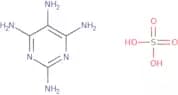
CAS:<p>2,4,5,6-Tetraaminopyrimidine sulphate is a chemical compound that is used for the treatment of leukemic mice. It has shown to have anti-inflammatory and anti-cancer properties. This drug binds to the enzyme p-hydroxybenzoic acid that is involved in the synthesis of collagen and elastin. It also suppresses the production of inflammatory cytokines such as TNF-α and IL-1β. 2,4,5,6-Tetraaminopyrimidine sulphate has been used in clinical trials for the treatment of autoimmune diseases and inflammatory diseases such as psoriasis. The drug is currently being researched for use in cancer treatments due to its ability to inhibit cell division and induce apoptosis. 2,4,5,6-Tetraaminopyrimidine sulphate has also been shown to be effective when applied topically on skin as a cosmetic agent or when administered orally as a supplement for</p>Formula:C4H10N6O4SPurity:Min. 95%Color and Shape:Slightly Yellow PowderMolecular weight:238.23 g/mol4-Aminopicolinic acid
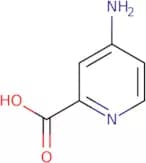
CAS:<p>4-Aminopicolinic acid is a synthetic amine that has been shown to activate plant science. 4-Aminopicolinic acid is a cyclic peptide with two subunits, one of which is 4-amino-3-pyridinecarboxylic acid. This compound has been synthesized from picolinic acid, an agriculturally important compound that is found in plant and animal tissues. The synthesis of 4-aminopicolinic acid involves the reaction of picolinic acid with nitrous oxide, followed by hydrolysis and oxidation to form the desired product. Hplc analyses have confirmed the presence of picolinic acid in extracts from various plants containing this compound.</p>Formula:C6H6N2O2Purity:Min. 95%Color and Shape:White To Beige Or Pink To Light Brown SolidMolecular weight:138.12 g/mol2,5-Dibromopyridine
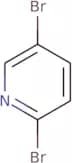
CAS:<p>2,5-Dibromopyridine is a chemical compound that can be used as a coupling agent in palladium-catalyzed cross-coupling reactions. It is used on the surface of metal particles to increase the efficiency of the reaction, and has been shown to react with substrates such as sodium hydroxide solution, sodium carbonate, halides and hydroxides. 2,5-Dibromopyridine also reacts with benzoate to form a palladium complex. 2,5-Dibromopyridine can be used as an oxidant or reductant depending on the type of reaction it is being used in. It has redox potentials at -0.6 volts for oxidation and +0.6 volts for reduction.</p>Formula:C5H3Br2NPurity:Min. 95%Color and Shape:PowderMolecular weight:236.89 g/mol2-chloro-3-nitro-5-(trifluoromethyl)pyridine
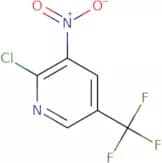
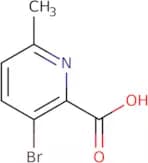
CAS:<p>Please enquire for more information about 2-chloro-3-nitro-5-(trifluoromethyl)pyridine including the price, delivery time and more detailed product information at the technical inquiry form on this page</p>Formula:C6H2ClF3N2O2Purity:Min. 95%Molecular weight:226.54 g/mol3-Bromo-6-methylpicolinic acid
CAS:<p>Please enquire for more information about 3-Bromo-6-methylpicolinic acid including the price, delivery time and more detailed product information at the technical inquiry form on this page</p>Formula:C7H6BrNO2Purity:Min. 95%Molecular weight:252.49 g/mol1-{[5-(Cyclopropylcarbonyl)-1-methyl-4,5,6,7-tetrahydro-1H-pyrazolo[4,3-c]pyridin-3-yl]carbonyl}piperidine-4-carboxylic acid
CAS:<p>Please enquire for more information about 1-{[5-(Cyclopropylcarbonyl)-1-methyl-4,5,6,7-tetrahydro-1H-pyrazolo[4,3-c]pyridin-3-yl]carbonyl}piperidine-4-carboxylic acid including the price, delivery time and more detailed product information at the technical inquiry form on this page</p>Formula:C18H24N4O4Purity:Min. 95%Molecular weight:360.41 g/mol2-Mercaptopyridine
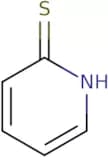
CAS:<p>2-Mercaptopyridine is a quinone that has been used as an inhibitor of the HIV reverse transcriptase enzyme. It binds to the active site of the enzyme and inhibits its activity by forming a stable covalent bond with two cysteine residues in the enzyme. The molecule is stabilized by two adjacent sulfide bonds, which form a six-membered ring with three nitrogen atoms and one oxygen atom. This ring coordinates to the zinc ion in the active site of the enzyme. 2-Mercaptopyridine has also been found to be effective against methicillin-resistant Staphylococcus aureus (MRSA) and Mycobacterium tuberculosis. 2-Mercaptopyridine binds to DNA at positions where it is complementary to guanine or adenine nucleotides, thus preventing RNA synthesis and replication.</p>Formula:C5H5NSPurity:Min. 95%Color and Shape:PowderMolecular weight:111.17 g/mol1-Benzyl-3-piperidone HCl hydrate
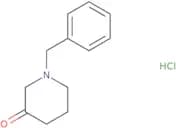
CAS:<p>1-Benzyl-3-piperidone HCl hydrate is a synthetic organic compound that is used as a neutralizing agent in industrial processes. It is typically used in the extraction of metal ions from an acid solution, although it can also be used as a catalyst for chemical reactions. The neutralization reaction product, 1-benzyl-3-piperidone, has been reported to have significant antibacterial activity. The use of 1-benzyl-3-piperidone HCl hydrate may be limited by its high cost and toxicity.</p>Formula:C12H15NO·HCl·xH2OPurity:Min. 95%Color and Shape:PowderMolecular weight:225.71 g/mol4-Amino-3,5,6-trichloropyridine-2-carboxylic acid
CAS:<p>4-Amino-3,5,6-trichloropyridine-2-carboxylic acid (4ATC) is a herbicide that inhibits the activity of pyridoxal phosphate (PLP)-dependent enzymes. 4ATC has been shown to be more toxic to plants than temozolomide and is used in vitro to study the effects of herbicides on cells. It inhibits cell growth and induces apoptosis in human cancer cells. In addition, 4ATC has been shown to inhibit the enzyme activities of group P2 proteins and nucleic acid synthesis. 4ATC also inhibits protein synthesis by inhibiting RNA synthesis in eukaryotic cells. 4ATC is not active against bacteria or fungi.</p>Formula:C6H3Cl3N2O2Purity:Min. 95%Color and Shape:White To Tan SolidMolecular weight:241.46 g/mol1-Acetyl-4-(4-hydroxyphenyl)piperazine
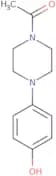
CAS:<p>1-Acetyl-4-(4-hydroxyphenyl)piperazine is a triazole antifungal that inhibits the synthesis and activity of nitric oxide. It binds to the N1 atom of the molecule, which is the site of nitrite ion, and prevents it from reacting with chloride ions. This binding also prevents nucleophilic attack on imine bonds in proteins and DNA. The photophysical properties of 1-acetyl-4-(4-hydroxyphenyl)piperazine are determined by its coumarin derivatives, which absorb light at wavelengths between 400 and 500 nm. The compound has been found to be specific for fungi, but not bacteria or yeast. 1-Acetyl-4-(4-hydroxyphenyl)piperazine has been shown to be effective against Candida albicans and other strains of yeast when used as an oral or topical treatment.</p>Formula:C12H16N2O2Purity:Min. 95%Molecular weight:220.27 g/mol5-Bromo-2-(methylthio)pyrimidine
CAS:<p>5-Bromo-2-(methylthio)pyrimidine is a synthetic compound that has been used to synthesize palladium complexes. It can also be used in the synthesis of vitamin B1, which is an essential nutrient for humans and animals. 5-Bromo-2-(methylthio)pyrimidine binds with magnesium and reacts with sulfoxide, nucleophilic attack and electronegativity. 5-Bromo-2-(methylthio)pyrimidine is activated by 2-chlorobenzothiazole and hydrogen chloride, which leads to nucleophilic attack on the electrophilic carbon atom. This causes a displacement reaction with the elimination of chlorine gas and production of dihydro.</p>Formula:C5H5BrN2SPurity:Min. 95%Molecular weight:205.08 g/mol6-Chloro-pyridazine hydrochloride
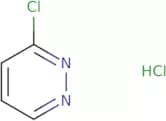
CAS:<p>Please enquire for more information about 6-Chloro-pyridazine hydrochloride including the price, delivery time and more detailed product information at the technical inquiry form on this page</p>Formula:C4H3ClN2·HClPurity:Min. 95%Molecular weight:150.99 g/mol2-(Chloromethyl)-4-methoxy-3,5-dimethylpyridine hydrochloride
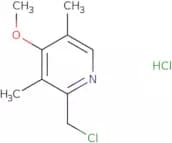
CAS:<p>2-(Chloromethyl)-4-methoxy-3,5-dimethylpyridine hydrochloride is a benzimidazole derivative. It has a chemical stability and can be used for wastewater treatment. It is also a pump inhibitor and can be used for anhydrous sodium magnesium salts. This product is synthesized from the reaction of protonated 2-bromo-4-methoxyphenol with 2,6-dimethylpyridine in the presence of hydrochloric acid. The reaction was carried out in an asymmetric synthesis using a proton transport system. 2-(Chloromethyl)-4-methoxy-3,5-dimethylpyridine hydrochloride is soluble in water and has a pH of 1 to 3. It has been shown that this product can be used as an antioxidant and as a metal chelation agent.</p>Formula:C9H13Cl2NOPurity:Min. 95%Color and Shape:PowderMolecular weight:222.11 g/mol

![4-Bromo-1-methyl-1H-pyrazolo[4,3-c]pyridine-6-carboxylic acid](/_next/image/?url=https%3A%2Fstatic.cymitquimica.com%2Fproducts%2F3D%2Fthumb-webp%2FFB183353.webp&w=3840&q=75)
![1-{[5-(Cyclopropylcarbonyl)-1-methyl-4,5,6,7-tetrahydro-1H-pyrazolo[4,3-c]pyridin-3-yl]carbonyl}pi…](/_next/image/?url=https%3A%2Fstatic.cymitquimica.com%2Fproducts%2F3D%2Fthumb-webp%2FFC119596.webp&w=3840&q=75)