Heterocycles with Nitrogen (N)
In this category, you will find a wide variety of nitrogen-containing heterocycles. Heterocycles are carbon chains that form a cycle in which at least one position is occupied by a heteroatom, in this case, nitrogen. These compounds are integral in the synthesis of pharmaceuticals, agrochemicals, and dyes, offering unique reactivity and stability. At CymitQuimica, we provide a comprehensive selection of high-quality nitrogen-containing heterocycles to support your research and industrial applications
Subcategories of "Heterocycles with Nitrogen (N)"
- Azepane(434 products)
- Benzotriazoles(436 products)
- Diazepanes(331 products)
- Imidazoles(4,011 products)
- Imidazolines(385 products)
- Isoxazole(1,077 products)
- Piperazines(3,736 products)
- Piperidines(8,406 products)
- Pyrazines(1,299 products)
- Pyrazole(5,921 products)
- Pyrazolidine(21 products)
- Pyrazoline(142 products)
- Pyridazine(856 products)
- Pyridines(21,917 products)
- Pyrimidine(6,041 products)
- Pyrroles(2,443 products)
- Pyrrolidines(5,816 products)
- Pyrroline(48 products)
- Pyrrolo[1,2-b]pyridazine(10 products)
- Tetrazole(510 products)
- Triazines(462 products)
- Triazoles(1,680 products)
Show 14 more subcategories
Found 17856 products of "Heterocycles with Nitrogen (N)"
Sort by
Purity (%)
0
100
|
0
|
50
|
90
|
95
|
100
1,1',1''-(1,3,5-Triazinane-1,3,5-triyl)tris(2-bromoethan-1-one)
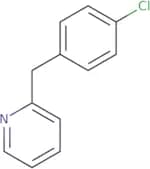
CAS:<p>Please enquire for more information about 1,1',1''-(1,3,5-Triazinane-1,3,5-triyl)tris(2-bromoethan-1-one) including the price, delivery time and more detailed product information at the technical inquiry form on this page</p>Formula:C9H12Br3N3O3Purity:Min. 95%Color and Shape:PowderMolecular weight:449.82 g/mol2-(4-Chlorobenzyl)pyridine
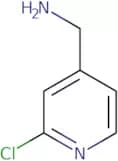
CAS:<p>2-(4-Chlorobenzyl)pyridine is a synthetic pyridine compound that has been shown to have anti-cancer properties. It is also a potent inducer of the enzyme methane monooxygenase and has been shown to interact with other compounds, such as maleates and sulfoxides, which are also used in this type of experiment. The catalytic mechanism for 2-(4-chlorobenzyl)pyridine is not yet known, but it may involve an acidic chlorine atom or a hydrochloric acid catalyst. 2-(4-Chlorobenzyl)pyridine has been found to be effective at inhibiting the growth of cancer cells in vitro without toxic effects on healthy cells. It has also been shown to inhibit the proliferation of human leukemia cells in vivo.</p>Formula:C12H10ClNPurity:Min. 95%Molecular weight:203.67 g/mol(2-Chloropyridin-4-yl)methanamine
CAS:<p>2-Chloropyridin-4-yl)methanamine is a hydrogenated molecule that has been shown to inhibit the activity of certain cancer cells. It inhibits the expression of the enzyme molecules involved in the synthesis of DNA and RNA. 2-Chloropyridin-4-yl)methanamine also inhibits the hydrolysis of hydrogen chloride (HCl) to produce hydrogen (H2). This drug is used as an inhibitor for medicines that require acidic pH for absorption, such as HCl.</p>Formula:C6H7ClN2Purity:Min. 95%Molecular weight:142.59 g/mol2-Isobutyl-3-methoxypyrazine
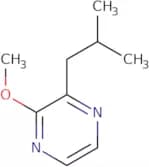
CAS:<p>2-Isobutyl-3-methoxypyrazine is a hydrophobic compound that is not soluble in water. It has a bound form and can be titrated with calorimetry. 2-Isobutyl-3-methoxypyrazine is synthesized by reacting 2,2,4-trimethylpentane with methoxyacetone in the presence of sodium methylate. The compound has been detected as an odorant in numerous plant species and is believed to play a role in plant physiology. 2-Isobutyl-3-methoxypyrazine has been shown to have potent antiviral activity against infectious diseases such as HIV, herpes simplex virus type 1 (HSV1), and varicella zoster virus (VZV). This specific antiviral activity may be due to its ability to bind fatty acids by hydrogen bonds, which may interfere with the synthesis of viral membranes.</p>Formula:C9H14N2OPurity:Min. 95%Molecular weight:166.22 g/mol2-Hydroxypyrimidine HCl
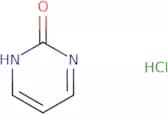
CAS:<p>2-Hydroxypyrimidine HCl is a compound that is soluble in water and has an appearance of white crystals. It can be used as a metal ion chelator, as well as an inhibitor of aldehyde oxidase. 2-Hydroxypyrimidine HCl has been shown to be effective in the treatment of solid tumours and may also be used for the treatment of neoplastic diseases such as leukemia. The compound is cytotoxic and inhibits DNA synthesis, which may lead to cell death. 2-Hydroxypyrimidine HCl also has functional groups that are responsible for its ability to inhibit aldehyde oxidase and 5-aminouracil (5AU).</p>Formula:C4H5ClN2OPurity:Min. 95%Color and Shape:White To Yellow SolidMolecular weight:132.55 g/molSulfamethoxypyridazine
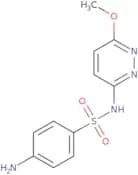
CAS:<p>Sulfamethoxypyridazine is a sulfa drug that inhibits bacterial growth by inhibiting the synthesis of folic acid, which is essential for DNA and RNA production. It has been shown to be effective in the treatment of urinary infections and infectious diseases. Sulfamethoxypyridazine interacts with other drugs, such as oral contraceptives, to increase their blood levels. This drug also has a matrix effect on urine samples, which can be used to detect the presence of bacteria. The matrix effect is due to its hydrophobic nature and ability to form aggregates with other compounds. Sulfamethoxypyridazine is used in wastewater treatment plants as an analytical method for nitrogen atoms.</p>Formula:C11H12N4O3SPurity:Min. 95%Molecular weight:280.3 g/mol2-Methylpyridine-4-boronic acid
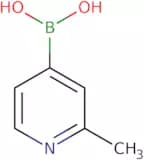
CAS:<p>2-Methylpyridine-4-boronic acid is a reactive molecule that has been used in post-column derivatization and vivo studies. It has been shown to be reactive with mass spectrometric analysis, cancer assays, proteomics, and tumorigenic sample preparation. It also has been shown to have a molecular target of the cytochrome P450 reductase (CPR), which is involved in the metabolism of drugs and other xenobiotics. 2-Methylpyridine-4-boronic acid binds to CPR and inhibits its enzymatic activity, thereby affecting the metabolism of xenobiotics.</p>Formula:C6H8BNO2Purity:Min. 95%Color and Shape:White PowderMolecular weight:136.94 g/mol4-[(4-Methylpiperazin-1-yl)methyl]benzoic acid
CAS:<p>4-[(4-Methylpiperazin-1-yl)methyl]benzoic acid is an organic compound. It is a white solid that is insoluble in water but soluble in organic solvents. The molecule has a molecular weight of 224.8 g/mol and contains a carbonyl group and amine functional groups. 4-[(4-Methylpiperazin-1-yl)methyl]benzoic acid can be prepared by the acylation of 4-(aminomethyl)-benzoic acid with imidazole hydrochloride in the presence of sodium carbonate as a base.</p>Formula:C13H18N2O2Purity:Min. 95%Molecular weight:234.29 g/mol4-[4-(4-Methyloxy-phenyl)-piperazin-1-yl]-phenylamine
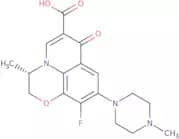
CAS:<p>4-Methyloxy-phenyl)-piperazin-1-yl]-phenylamine is an organic compound that has a reactive silicon group. It contains two phenyl groups, one of which is attached to the silicon. This compound exhibits phase equilibrium in water and can be used as a monomer for fabricating inorganic materials with orderly patterns, such as glass and metal oxides. This product also has impurities and can be grown at different rates depending on the conditions, such as temperature. The optical properties of 4-methyloxy-phenyl)-piperazin-1-yl]-phenylamine are dependent on its environment and it has been shown to have exothermic properties when reacting with iron powder.</p>Formula:C17H21N3OPurity:Min. 95%Molecular weight:283.37 g/mol9-Piperazino levofloxacin
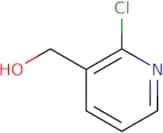
CAS:<p>Please enquire for more information about 9-Piperazino levofloxacin including the price, delivery time and more detailed product information at the technical inquiry form on this page</p>Formula:C18H20FN3O4Purity:Min. 95%Molecular weight:361.37 g/mol2-Chloro-3-(hydroxymethyl)pyridine
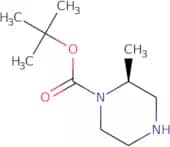
CAS:<p>2-Chloro-3-(hydroxymethyl)pyridine is an organic compound that is used as a building block for the synthesis of other heterocycles. This compound can be synthesized from 2-chloronicotinic acid, which is obtained by oxidation of nicotine with sodium hypochlorite in the presence of potassium ion. The reaction proceeds via a cleavage of the C-Cl bond and formation of a pyridine ring. The catalytic process can be performed at room temperature and at atmospheric pressure in a variety of solvents, including water.<br>2-Chloro-3-(hydroxymethyl)pyridine has been shown to have high yields for the preparation of compounds such as 2,4-dichloropyridine and 4,5-dichloropyrimidine. It also has been used in the preparation of pharmaceuticals such as atrial natriuretic factor (ANF).</p>Formula:C6H6ClNOPurity:Min. 98 Area-%Color and Shape:PowderMolecular weight:143.57 g/mol(S)-1-N-Boc-2-methylpiperazine
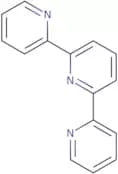
CAS:<p>(S)-1-N-Boc-2-methylpiperazine is a quinolone synthon that has been shown to have antibacterial activity against bacteria. The synthesis of this compound is done through the condensation of piperazine with an N-Boc protected 2,6-dichloroquinoline. This reaction proceeds in good yield and enantioselectivity. The antibacterial properties of (S)-1-N-Boc-2-methylpiperazine are not yet known.</p>Formula:C10H20N2O2Purity:Min. 95%Color and Shape:White PowderMolecular weight:200.28 g/mol2,2', 2'' -Terpyridine
CAS:<p>2,2', 2'' -Terpyridine is a chelate ligand that is used in wastewater treatment. It can be synthesized by reacting 2-aminopyridine with ethylene diamine and 2,4-dichloro-1,3-dithiolane. The x-ray crystal structures of the ligand show that it has a coordination geometry of octahedral and its reaction mechanism is an oxidation. The chelate ligand binds to the metal ion in the same way as other ligands and stabilizes it by forming hydrogen bonds. This compound has significant cytotoxicity against carcinoma cell lines and also inhibits the mitochondrial membrane potential (MMP). 2,2', 2'' -Terpyridine is classified as group p2 due to its redox potentials and cytotoxicity.</p>Formula:C15H11N3Purity:Min. 95%Molecular weight:233.27 g/mol2-[(5-Chloropyridin-2-yl)amino]-2-oxoacetic acid ethyl ester monohydrochloride
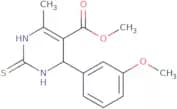
CAS:<p>Intermediate in the synthesis of edoxaban</p>Formula:C9H9ClN2O3·HClPurity:Min. 95%Molecular weight:265.09 g/molMethyl 4-(3-methoxyphenyl)-6-methyl-2-thioxo-1,2,3,4-tetrahydropyrimidine-5-carboxylate
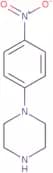
CAS:<p>Please enquire for more information about Methyl 4-(3-methoxyphenyl)-6-methyl-2-thioxo-1,2,3,4-tetrahydropyrimidine-5-carboxylate including the price, delivery time and more detailed product information at the technical inquiry form on this page</p>Formula:C14H16N2O3SPurity:85%MinMolecular weight:292.35 g/mol1-(4-Nitrophenyl)piperazine
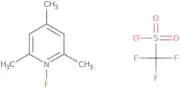
CAS:<p>1-(4-Nitrophenyl)piperazine is a nitro compound with a molecular weight of 147.2. It is soluble in DMSO and ethanol, but not in water. 1-(4-Nitrophenyl)piperazine has the ability to absorb ultraviolet radiation (UV) and it can be used as a UV-absorbing agent in plastics. 1-(4-Nitrophenyl)piperazine can also be used as an intermediate for the synthesis of triazole antifungal agents. The molecule has been shown to have high values at magnetic resonance spectroscopy (NMR). The crystal structure of 1-(4-nitrophenyl)piperazine was determined by x-ray diffraction data and molecular modeling techniques. This molecule's melting point was determined by titration calorimetry, which showed that its melting point is around 195 degrees Celsius.br> 1-(4-Nitrophenyl)piper</p>Formula:C10H13N3O2Purity:Min. 95%Molecular weight:207.23 g/mol1-Fluoro-2,4,6-trimethylpyridinium trifluoromethanesulfonate
CAS:<p>Gabapentin is a pharmaceutical preparation that is used for the treatment of epilepsy and neuropathic pain. It is also used for postherpetic neuralgia, bipolar disorder, and anxiety disorders. Gabapentin has been shown to bind reversibly to the enzyme adenylate cyclase, which regulates the production of the second messenger cAMP. The binding of gabapentin to this enzyme prevents the conversion of ATP into cAMP and blocks signal transduction. This leads to an increase in intracellular levels of adenine nucleotides (ATP) and suppression of neuronal activity. Gabapentin has high values in kinetic tests because it is a reversible inhibitor with a low Km value. It binds irreversibly to nucleophilic substitutions, which are enzymes that catalyze reactions involving hydrolysis or transfer of one or more hydrogen ions from one molecule to another in a chemical reaction. A fluorine atom on gabapentin's structure may account for its</p>Formula:C9H11F4NO3SPurity:85%MinColor and Shape:PowderMolecular weight:289.25 g/mol4-Bromo-1-methyl-1H-pyrazolo[4,3-c]pyridine-6-carboxylic acid
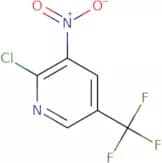
CAS:<p>Please enquire for more information about 4-Bromo-1-methyl-1H-pyrazolo[4,3-c]pyridine-6-carboxylic acid including the price, delivery time and more detailed product information at the technical inquiry form on this page</p>Formula:C8H6BrN3O2Purity:Min. 95%Molecular weight:256.06 g/mol2-chloro-3-nitro-5-(trifluoromethyl)pyridine
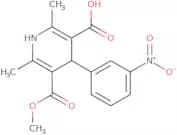
CAS:<p>Please enquire for more information about 2-chloro-3-nitro-5-(trifluoromethyl)pyridine including the price, delivery time and more detailed product information at the technical inquiry form on this page</p>Formula:C6H2ClF3N2O2Purity:Min. 95%Molecular weight:226.54 g/mol1,4-Dihydro-2,6-dimethyl-4-(3-nitrophenyl)-3,5-pyridinedicarboxylic acid 3-methyl ester
CAS:<p>Lercanidipine is a calcium antagonist that binds to the calcium channels in the membranes of cells, preventing the entry of calcium ions. Lercanidipine is water soluble and can be synthesized using techniques such as elemental analysis and pharmacological techniques. It is also an ionizable drug, which means that its affinity for chloride varies with pH. Lercanidipine has been shown to have strong affinity for erythrocyte membranes and thus has a high selectivity for vascular smooth muscle cells. This drug also has a low toxicity profile and does not affect tissues other than vascular smooth muscle cells.</p>Formula:C16H16N2O6Purity:Min. 95%Color and Shape:White PowderMolecular weight:332.31 g/mol


![4-[(4-Methylpiperazin-1-yl)methyl]benzoic acid](/_next/image/?url=https%3A%2Fstatic.cymitquimica.com%2Fproducts%2F3D%2Fthumb-webp%2FFM136767.webp&w=3840&q=75)
![4-[4-(4-Methyloxy-phenyl)-piperazin-1-yl]-phenylamine](/_next/image/?url=https%3A%2Fstatic.cymitquimica.com%2Fproducts%2F3D%2Fthumb-webp%2FFM25923.webp&w=3840&q=75)
![2-[(5-Chloropyridin-2-yl)amino]-2-oxoacetic acid ethyl ester monohydrochloride](/_next/image/?url=https%3A%2Fstatic.cymitquimica.com%2Fproducts%2F3D%2Fthumb-webp%2FFC63138.webp&w=3840&q=75)
![4-Bromo-1-methyl-1H-pyrazolo[4,3-c]pyridine-6-carboxylic acid](/_next/image/?url=https%3A%2Fstatic.cymitquimica.com%2Fproducts%2F3D%2Fthumb-webp%2FFB183353.webp&w=3840&q=75)