Heterocycles with Nitrogen (N)
In this category, you will find a wide variety of nitrogen-containing heterocycles. Heterocycles are carbon chains that form a cycle in which at least one position is occupied by a heteroatom, in this case, nitrogen. These compounds are integral in the synthesis of pharmaceuticals, agrochemicals, and dyes, offering unique reactivity and stability. At CymitQuimica, we provide a comprehensive selection of high-quality nitrogen-containing heterocycles to support your research and industrial applications
Subcategories of "Heterocycles with Nitrogen (N)"
- Azepane(434 products)
- Benzotriazoles(436 products)
- Diazepanes(331 products)
- Imidazoles(4,011 products)
- Imidazolines(385 products)
- Isoxazole(1,077 products)
- Piperazines(3,736 products)
- Piperidines(8,406 products)
- Pyrazines(1,299 products)
- Pyrazole(5,921 products)
- Pyrazolidine(21 products)
- Pyrazoline(142 products)
- Pyridazine(856 products)
- Pyridines(21,917 products)
- Pyrimidine(6,041 products)
- Pyrroles(2,443 products)
- Pyrrolidines(5,816 products)
- Pyrroline(48 products)
- Pyrrolo[1,2-b]pyridazine(10 products)
- Tetrazole(510 products)
- Triazines(462 products)
- Triazoles(1,680 products)
Show 14 more subcategories
Found 17855 products of "Heterocycles with Nitrogen (N)"
Sort by
Purity (%)
0
100
|
0
|
50
|
90
|
95
|
100
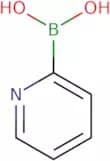
2-Pyridineboronic acid
CAS:<p>2-Pyridineboronic acid is a chemical compound that belongs to the group of quinoline derivatives. It is used in pharmaceutical preparations, including as an intermediate for the synthesis of other compounds. 2-Pyridineboronic acid has been shown to have antiproliferative effects on cancer cells and has been found to be active against nicotinic acetylcholine receptors (NAR). The compound also inhibits lipid kinase activity, which is involved in the production of phosphatidylcholine and phosphatidylethanolamine from phosphatidylserine. 2-Pyridineboronic acid can react with hydrochloric acid and electrochemical impedance spectroscopy to produce a solution that has a detection time of about 10 minutes.</p>Formula:C5H6BNO2Purity:Min. 95%Molecular weight:122.92 g/mol2-chloro-3-nitro-5-(trifluoromethyl)pyridine
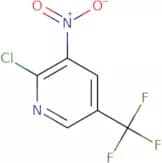
CAS:<p>Please enquire for more information about 2-chloro-3-nitro-5-(trifluoromethyl)pyridine including the price, delivery time and more detailed product information at the technical inquiry form on this page</p>Formula:C6H2ClF3N2O2Purity:Min. 95%Molecular weight:226.54 g/molN,4-Dimethyl-1-(phenylmethyl)-3-piperidinamine hydrochloride (1:2)
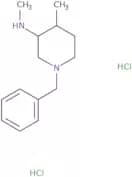
CAS:<p>Intermediate in the synthesis of tofacitinib</p>Formula:C14H24N2Cl2Purity:Min. 95%Molecular weight:291.26 g/molBenzopyrazine-6-boronic acidHCl
CAS:<p>Please enquire for more information about Benzopyrazine-6-boronic acidHCl including the price, delivery time and more detailed product information at the technical inquiry form on this page</p>Formula:C8H8BClN2O2Purity:Min. 95%Molecular weight:210.43 g/molPiperazine-2-carboxylic acid dihydrochloride
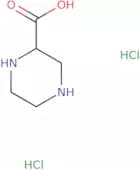
CAS:<p>Piperazine-2-carboxylic acid dihydrochloride (PZC) is an aminopyrimidine antibiotic that binds to the amine groups of plasma proteins and hydroxyapatite. It has been shown to have a specific interaction with Gram-negative bacteria, such as Escherichia coli and Salmonella typhimurium, as well as cancer cells. PZC can be used as a modifier in the treatment of staphylococcal infections and has been shown to inhibit protein synthesis in mammalian cells. PZC interacts with histidine residues on the surface of bacterial cells and inhibits their growth by binding to sites on DNA called triplexes. This drug also specifically binds to primary amines and reacts with other molecules containing amines such as polyamines, amides, or thiols.</p>Formula:C5H12Cl2N2O2Purity:Min. 95%Color and Shape:PowderMolecular weight:203.07 g/molBoc-4-carboxymethyl-piperidine
CAS:<p>Boc-4-carboxymethyl-piperidine is a novel drug that has been shown to have significant correlations with the inhibition of fibrinogen and cellulose. It also has the ability to inhibit arsenite, which may be due to its dithiocarbamate group. Boc-4-carboxymethyl-piperidine has been shown to have significant biological activity in vitro. This molecule has been synthesized and crystallized, and x-ray data have been collected. The molecular structure of this molecule is shown below:</p>Formula:C12H21NO4Purity:Min. 95%Color and Shape:White PowderMolecular weight:243.3 g/molc4-Ethyl-2,3-dioxo-piperazine carbonyl chloride
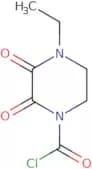
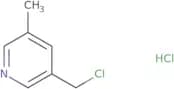
CAS:<p>c4-Ethyl-2,3-dioxo-piperazine carbonyl chloride is a chloroformate that is used in the synthesis of carbamates. It is used in the production of triphosgene, which is an intermediate for the production of herbicides and pesticides. The impurities found in this substance are n-hexane, flow rate, chloride, chloroformate and solvents. This product can be synthesized by reacting c4-ethyl-2,3-dioxopiperazine with carbon tetrachloride. The reaction time required to produce this product is 2 hours at a temperature between 100°C and 150°C. The optimum pH range for the reaction is 8 - 10.</p>Formula:C7H9ClN2O3Purity:Min. 95%Color and Shape:PowderMolecular weight:204.61 g/mol3-(Chloromethyl)-5-methylpyridine hydrochloride
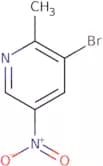
CAS:<p>3-(Chloromethyl)-5-methylpyridine hydrochloride (3CMPH) is a chemical compound that is synthesized from chlorine and methylpyridine. 3CMPH can be produced by the reaction of chlorination with toluene or hydrogen chloride. The synthesis of 3CMPH is done in two steps: first, reacting toluene with chlorine gas at high temperature and pressure in the presence of sulfuric acid, followed by the addition of sulfuric acid to the resulting product. In the second step, hydrogen chloride reacts with methylpyridine in an alkaline solution, yielding 3-(chloromethyl)-5-methylpyridine hydrochloride as a white solid. 3CMPH has been shown to have antihistamine effects and can be used for treating allergies. It can also be used as a skin protectant against uv light and rupatadine.</p>Formula:C7H8ClN·HClPurity:Min. 95%Molecular weight:178.06 g/mol3-Bromo-2-methyl-5-nitropyridine
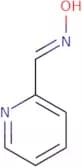
CAS:<p>Please enquire for more information about 3-Bromo-2-methyl-5-nitropyridine including the price, delivery time and more detailed product information at the technical inquiry form on this page</p>Formula:C6H5BrN2O2Purity:Min. 95%Molecular weight:217.02 g/molPyridine-2-aldoxime
CAS:<p>Pyridine-2-aldoxime is a chemical compound that is used as a pesticide. It is an inhibitor of acetylcholinesterase, and it can be toxic at low doses. Pyridine-2-aldoxime binds to the active site of acetylcholinesterase and prevents the breakdown of acetylcholine by this enzyme, leading to paralysis of the respiratory muscles. Pyridine-2-aldoxime has been shown to be effective against chronic oral exposure to sarin gas, with lethal dose (LD) values ranging from 0.5–1 mg/kg in rats.</p>Formula:C6H6N2OPurity:Min. 95%Color and Shape:White PowderMolecular weight:122.12 g/mol5,7-Dimethyl-[1,2,4]triazolo[1,5-a]pyrimidine-2-carboxylic acid
CAS:<p>Please enquire for more information about 5,7-Dimethyl-[1,2,4]triazolo[1,5-a]pyrimidine-2-carboxylic acid including the price, delivery time and more detailed product information at the technical inquiry form on this page</p>Formula:C8H8N4O2Purity:Min. 95%Molecular weight:192.17 g/mol1-t-Boc-piperidine-4-spiro-5'-[1',3'-bis-t-boc]-hydantoin
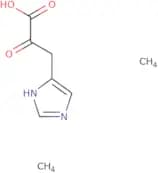
CAS:<p>Please enquire for more information about 1-t-Boc-piperidine-4-spiro-5'-[1',3'-bis-t-boc]-hydantoin including the price, delivery time and more detailed product information at the technical inquiry form on this page</p>Formula:C22H35N3O8Purity:Min. 95%Molecular weight:469.53 g/molImidazolepyruvic acid hydrobromide hydrate
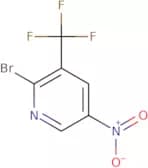
CAS:<p>Please enquire for more information about Imidazolepyruvic acid hydrobromide hydrate including the price, delivery time and more detailed product information at the technical inquiry form on this page</p>Formula:C6H6N2O3•(HBr)x•(H2O)xPurity:Min. 95%Color and Shape:Powder2-Bromo-5-nitro-3-(trifluoromethyl)pyridine
CAS:<p>2-Bromo-5-nitro-3-(trifluoromethyl)pyridine is a white crystalline compound that is soluble in water. It has high melting point and is stable at high temperatures. This chemical has been recycled from terephthalic acid by the cyanation reaction with sodium nitrite, followed by hydrogenation of 2-bromo-5-nitro-3-(trifluoromethyl)pyridine to 5,6-dichloro-2,4,6-(1H,3H)-triazine. The target product of this recycling process is terephthalic acid. 2-Bromo-5-nitro-3-(trifluoromethyl)pyridine can be used as a catalyst for the preparation of drugs for urogenital use.</p>Purity:Min. 95%tert-Butyl 6-amino-3-azabicyclo[3.1.0]hexane-3-carboxylate
CAS:<p>Please enquire for more information about tert-Butyl 6-amino-3-azabicyclo[3.1.0]hexane-3-carboxylate including the price, delivery time and more detailed product information at the technical inquiry form on this page</p>Formula:C10H18N2O2Purity:Min. 95%Molecular weight:198.26 g/mol5-Bromo-2-(methylthio)pyrimidine
CAS:<p>5-Bromo-2-(methylthio)pyrimidine is a synthetic compound that has been used to synthesize palladium complexes. It can also be used in the synthesis of vitamin B1, which is an essential nutrient for humans and animals. 5-Bromo-2-(methylthio)pyrimidine binds with magnesium and reacts with sulfoxide, nucleophilic attack and electronegativity. 5-Bromo-2-(methylthio)pyrimidine is activated by 2-chlorobenzothiazole and hydrogen chloride, which leads to nucleophilic attack on the electrophilic carbon atom. This causes a displacement reaction with the elimination of chlorine gas and production of dihydro.</p>Formula:C5H5BrN2SPurity:Min. 95%Molecular weight:205.08 g/mol5-Ethylpyridine-2-carboxylic acid
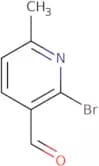
CAS:<p>5-Ethylpyridine-2-carboxylic acid is a biologically active compound that is biosynthesized from the amino acid tryptophan. This compound is also known as 5-ethylpicolinic acid or 5-ethylpyridin-2-yl carboxylic acid. It is a phytoalexin, which is an antimicrobial agent produced by plants to inhibit pathogen growth. 5-Ethylpyridine-2-carboxylic acid has been shown to be effective against picolinic acid phosphoribosyltransferase and flavopereirine reductase in vitro, and has also been shown to have antimicrobial properties against Escherichia coli, Staphylococcus aureus, and Bacillus cereus. 5-Ethylpyridine-2-carboxylic acid can be prepared by reacting ethyl acetoacetate with pyridine</p>Formula:C8H9NO2Purity:Min. 95%Color and Shape:Off-White PowderMolecular weight:151.16 g/mol2-Bromo-6-methylpyridine-3-carboxaldehyde
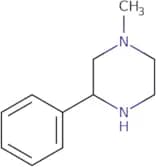
CAS:<p>2-Bromo-6-methylpyridine-3-carboxaldehyde (BMPCA) is a pharmacological agent that belongs to the group of antagonists. It has been shown to be a potent antagonist at the NMDA receptor and may be used for treating neuropathic pain. BMPCA also has been shown to have competitive inhibition at the naphthyridine receptor, which may allow it to act as an antagonist or an agonist depending on its binding site. The regioisomeric analogs of BMPCA are 2-(2,5-dichloropyridyl)-6-methylpyridine-3-carboxaldehyde and 2-(2,5-dimethylpyridyl)-6-methylpyridine-3-carboxaldehyde. These analogs have been shown to inhibit the growth of tumor cells in vitro and in vivo.</p>Formula:C7H6BrNOPurity:Min. 95%Molecular weight:200.03 g/mol1-Methyl-3-phenyl-piperazine
CAS:<p>1-Methyl-3-phenylpiperazine is a molecule with the chemical formula C6H14N2. It is an amide that belongs to the group of hexanes. 1-Methyl-3-phenylpiperazine is a colorless liquid with a strong ammonia odor and an irritating effect on skin. The molecule has been tested in vivo and found to be irritants when applied to the skin of rabbits, and can cause severe irritation when injected into the eyes of rabbits or rats. 1-Methyl-3-phenylpiperazine is not soluble in water but can be dissolved in ethanolamine, dimethyl sulfoxide, acetone, or chloroform.</p>Formula:C11H16N2Purity:Min. 95%Color and Shape:PowderMolecular weight:176.26 g/mol4-Amino-3,5,6-trichloropyridine-2-carboxylic acid
CAS:<p>4-Amino-3,5,6-trichloropyridine-2-carboxylic acid (4ATC) is a herbicide that inhibits the activity of pyridoxal phosphate (PLP)-dependent enzymes. 4ATC has been shown to be more toxic to plants than temozolomide and is used in vitro to study the effects of herbicides on cells. It inhibits cell growth and induces apoptosis in human cancer cells. In addition, 4ATC has been shown to inhibit the enzyme activities of group P2 proteins and nucleic acid synthesis. 4ATC also inhibits protein synthesis by inhibiting RNA synthesis in eukaryotic cells. 4ATC is not active against bacteria or fungi.</p>Formula:C6H3Cl3N2O2Purity:Min. 95%Color and Shape:White To Tan SolidMolecular weight:241.46 g/mol



![5,7-Dimethyl-[1,2,4]triazolo[1,5-a]pyrimidine-2-carboxylic acid](/_next/image/?url=https%3A%2Fstatic.cymitquimica.com%2Fproducts%2F3D%2Fthumb-webp%2FFD12883.webp&w=3840&q=75)
![1-t-Boc-piperidine-4-spiro-5'-[1',3'-bis-t-boc]-hydantoin](/_next/image/?url=https%3A%2Fstatic.cymitquimica.com%2Fproducts%2F3D%2Fthumb-webp%2FFB18981.webp&w=3840&q=75)
![tert-Butyl 6-amino-3-azabicyclo[3.1.0]hexane-3-carboxylate](/_next/image/?url=https%3A%2Fstatic.cymitquimica.com%2Fproducts%2F3D%2Fthumb-webp%2FFM161190.webp&w=3840&q=75)