Heterocycles with Nitrogen (N)
Subcategories of "Heterocycles with Nitrogen (N)"
- Azepane(436 products)
- Benzotriazoles(438 products)
- Diazepanes(335 products)
- Imidazoles(4,031 products)
- Imidazolines(385 products)
- Isoxazole(1,088 products)
- Piperazines(3,758 products)
- Piperidines(8,442 products)
- Pyrazines(1,304 products)
- Pyrazole(5,960 products)
- Pyrazolidine(21 products)
- Pyrazoline(143 products)
- Pyridazine(860 products)
- Pyridines(22,006 products)
- Pyrimidine(6,084 products)
- Pyrroles(2,450 products)
- Pyrrolidines(5,840 products)
- Pyrroline(48 products)
- Pyrrolo[1,2-b]pyridazine(10 products)
- Tetrazole(531 products)
- Triazines(466 products)
- Triazoles(1,689 products)
Found 17863 products of "Heterocycles with Nitrogen (N)"
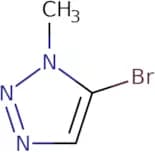
5-Bromo-1-methyl-1H-1,2,3-triazole
CAS:Please enquire for more information about 5-Bromo-1-methyl-1H-1,2,3-triazole including the price, delivery time and more detailed product information at the technical inquiry form on this page
Formula:C3H4BrN3Purity:Min. 95%Molecular weight:162 g/molRef: 3D-FB181197
Discontinued product2-Ethyl-6-methylpyridine
CAS:2-Ethyl-6-methylpyridine is an organic compound that has been analyzed in a range of experiments, including the determination of its melting point. The compound has been found to be crystalline in nature, and this property can be used to determine its purity. 2-Ethyl-6-methylpyridine is a colorless liquid with a sweet odor that can be detected at concentrations as low as 0.5 parts per million. It is soluble in organic solvents such as benzene, chloroform, and acetone. This reagent is also known for its ability to catalyze reactions involving ketones and esters. 2-Ethyl-6-methylpyridine may be used as a marker for tobacco smoke, but it is not currently approved by the United States Food and Drug Administration (FDA) for this purpose.
Formula:C8H11NPurity:Min. 95%Molecular weight:121.18 g/molRef: 3D-FE55042
Discontinued product4-Bromomethyl-4'-methyl-2,2'-bipyridine
CAS:Please enquire for more information about 4-Bromomethyl-4'-methyl-2,2'-bipyridine including the price, delivery time and more detailed product information at the technical inquiry form on this page
Formula:C12H11BrN2Purity:Min. 91.0 Area-%Molecular weight:263.14 g/moltert-Butyl 4-(2-oxo-2,4-dihydro-1H-benzo[d][1,3]oxazin-1-yl)piperidine-1-carboxylate
CAS:Controlled ProductPlease enquire for more information about tert-Butyl 4-(2-oxo-2,4-dihydro-1H-benzo[d][1,3]oxazin-1-yl)piperidine-1-carboxylate including the price, delivery time and more detailed product information at the technical inquiry form on this page
Purity:Min. 95%Ref: 3D-FB142189
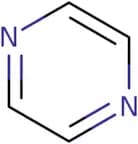
Discontinued productPyrazine
CAS:Pyrazine is a model system that has been used to investigate the reaction mechanism of pyrazinoic acid, an antimicrobial agent. Pyrazine reacts with water to give pyrazinoic acid and hydrogen gas. Pyrazine is also used as an analytical method for determining the concentration of odorant binding compounds in air and as a model system to study the electrochemical properties of odorant binding. The compound is characterized by intermolecular hydrogen bonding and synchronous fluorescence. Pyrazine has been shown to have an adsorption peak at 1780 cm-1 and a Langmuir adsorption isotherm at 10-4 M.
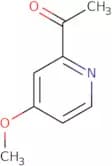
Formula:C4H4N2Purity:Min. 95%Molecular weight:80.09 g/mol1-(4-Methoxy-pyridin-2-yl)-ethanone
CAS:Please enquire for more information about 1-(4-Methoxy-pyridin-2-yl)-ethanone including the price, delivery time and more detailed product information at the technical inquiry form on this page
Formula:C8H9NO2Purity:Min. 95%Molecular weight:151.16 g/molRef: 3D-FM64054
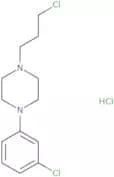
Discontinued product1-(3-Chlorophenyl)-4-(3-chloropropyl)piperazine Hydrochloride
CAS:Controlled Product1-(3-Chlorophenyl)-4-(3-chloropropyl)piperazine Hydrochloride is an antidepressant that belongs to the class of nefazodone. It is a prodrug, which is hydrolyzed to nefazodone in the liver. It has been shown to have a high affinity for serotonin receptors and as such may be useful for the treatment of depression. 1-(3-Chlorophenyl)-4-(3-chloropropyl)piperazine Hydrochloride also has anticonvulsant properties, which may be due to its inhibition of neuronal excitability by blocking sodium channels in the brain.Formula:C13H18Cl2N2·HClPurity:Min. 95%Molecular weight:309.66 g/molRef: 3D-FC75434
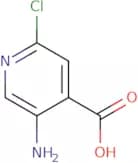
Discontinued product5-Amino-2-chloropyridine-4-carboxylic acid
CAS:5-Amino-2-chloropyridine-4-carboxylic acid is a potent tyrosine kinase inhibitor. It inhibits the activation of EGFR, which may be due to its binding to the ATP-binding pocket in EGFR. 5-Amino-2-chloropyridine-4-carboxylic acid has been shown to inhibit cancer cell growth and induce apoptosis in vitro. This drug has also been shown to have potent anticancer activity in vivo, as well as inhibitory effect on tumor growth in xenograft models of human cancer cells. In addition, it inhibits the production of formamidine acetate, a precursor for histamine synthesis. 5-Amino-2-chloropyridine-4-carboxylic acid binds to formamide and formamidine acetate with high affinity and therefore inhibits histamine synthesis.Formula:C6H5ClN2O2Purity:Min. 95%Color and Shape:White PowderMolecular weight:172.57 g/molKinetin
CAS:Kinetin is a chemical compound that is used in research as a reagent, useful scaffold, and an intermediate. It has been shown to be an effective building block for the synthesis of complex compounds. Kinetin is also a versatile building block that can be used to synthesize many different types of compounds. Kinetin has a CAS number 525-79-1 and is classified as a speciality chemical.
Formula:C10H9N5OMolecular weight:215.22 g/mol(NZ)-4-chloro-N-[1-[2-(4-nitrophenyl)ethyl]piperidin-2-ylidene]benzenesulfonamide
CAS:Controlled ProductPlease enquire for more information about (NZ)-4-chloro-N-[1-[2-(4-nitrophenyl)ethyl]piperidin-2-ylidene]benzenesulfonamide including the price, delivery time and more detailed product information at the technical inquiry form on this page
Formula:C19H20ClN3O4SPurity:Min. 95%Molecular weight:421.9 g/molRef: 3D-FN154024
Discontinued product3-[(4-Aminopiperidin-1-yl)methyl]phenol
CAS:Please enquire for more information about 3-[(4-Aminopiperidin-1-yl)methyl]phenol including the price, delivery time and more detailed product information at the technical inquiry form on this page
Formula:C12H18N2OPurity:Min. 95%Molecular weight:206.28 g/molRef: 3D-FA116167
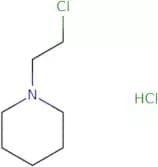
Discontinued product1-(2-Chloroethyl)piperidine hydrochloride
CAS:1-(2-Chloroethyl)piperidine hydrochloride is a chemical compound that has photochemical properties. It is used as an amine and in the synthesis of other chemicals. The crystal structure of 1-(2-Chloroethyl)piperidine hydrochloride has been determined by X-ray crystallography. It also has antibacterial activity and inhibits the growth of bacteria by binding to single-stranded DNA, which prevents DNA replication. 1-(2-Chloroethyl)piperidine hydrochloride binds to DNA with tetradentate coordination, forming a stable complex which does not allow the DNA polymerase to bind to the single strand. 1-(2-Chloroethyl)piperidine hydrochloride can be detected using mass spectrometry and nuclear magnetic resonance spectra.
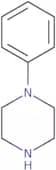
Formula:C7H14ClN•HClPurity:Min. 95%Molecular weight:184.11 g/mol1-Phenylpiperazine
CAS:Controlled Product1-Phenylpiperazine is a piperazine derivative that can bind to the DNA of cervical cancer cells and inhibit their growth. It also has antihypertensive effects. 1-Phenylpiperazine is a white crystalline solid that is soluble in water, ethanol, ether, and chloroform. It binds to the hydrogen chloride ion (HCl) with high affinity and forms an equilibrium mixture with HCl gas. The binding constants of 1-phenylpiperazine to HCl are greater than those for piperazine. This compound has been shown to inhibit tumor cell growth in vitro through its ability to bind to DNA and prevent RNA synthesis. 1-Phenylpiperazine has been shown to have antihypertensive activity in rats by blocking alpha1-adrenergic receptors on vascular smooth muscle cells.br>br>
In addition, this molecule has been shown to have binding properties for amines which may be due to the presenceFormula:C10H14N2Purity:Min. 95%Molecular weight:162.23 g/molRef: 3D-FP10343
Discontinued product8-Bromo-imidazo[1,2-a]pyridine
CAS:8-Bromo-imidazo[1,2-a]pyridine is a neutralizing agent that can be used in the synthesis of succinimide. It reacts with chloroacetaldehyde to yield the imidate ester. This reaction is catalyzed by alkali and requires filtration to remove the bromine and any other impurities. The reaction generates heat, so it must be performed in a well-ventilated area.
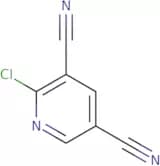
Formula:C7H5BrN2Purity:Min. 95%Molecular weight:197.03 g/mol2-Chloropyridine-3,5-dicarbonitrile
CAS:2-Chloropyridine-3,5-dicarbonitrile is a potential drug that can be used as an anionic linker in the synthesis of donepezil. Donepezil is a pharmacological agent that inhibits the enzyme acetylcholinesterase and may be effective in treating Alzheimer's disease. 2-Chloropyridine-3,5-dicarbonitrile has been shown to have good profile against cholinesterase inhibitors. It binds to the active site of acetylcholinesterase and inhibits its activity. This inhibition prevents the breakdown of acetylcholine, which is required for memory and cognitive function. 2-Chloropyridine-3,5-dicarbonitrile also has molecular modeling properties and has been studied at the μm range.
Formula:C7H2ClN3Purity:Min. 95%Molecular weight:163.56 g/molRef: 3D-FC143469
Discontinued product1-[(4-Chlorophenyl)phenylmethyl]piperazine
CAS:Controlled Product1-[(4-Chlorophenyl)phenylmethyl]piperazine is an analytical reagent that is used in the determination of meclozine, a drug used for the treatment of nausea and vomiting. 1-[(4-Chlorophenyl)phenylmethyl]piperazine is a nucleophile, which means that it can donate electrons to other molecules. It can be used as a catalyst to increase the rate of chemical reactions. 1-[(4-Chlorophenyl)phenylmethyl]piperazine may also be used in wastewater treatment because it has been shown to have phospholipidosis inhibiting properties. The levorotatory form (1R-enantiomer) of this compound has been shown to inhibit protein synthesis in vitro and is an amine oxidase inhibitor that binds to proteins with nitrogen atoms. This nucleophilic compound may also be converted into an n-oxide or dinucleotide phosphate by hydrochloric acid and
Formula:C17H19ClN2Purity:Min. 95%Molecular weight:286.8 g/molRef: 3D-FC20350
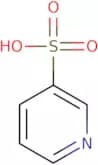
Discontinued productPyridine-3-sulfonic acid
CAS:Pyridine-3-sulfonic acid is a reactive molecule that can exist in two forms. It reacts with iron oxides to form pyridine-3-sulfonic acid amide and reacts with picolinic acid to form pyridine-3-sulfonic acid phosphoric acid complex. Pyridine 3 sulfonic acid is an intermediate in the synthesis of picolinic acid and is involved in the genetic mechanisms of bacteria. It has been shown to be effective at concentrations of 10 mM or higher when used in tissue culture experiments. The optimum concentration for the reaction varies depending on the reactant and its environment, which is why experimentation should be conducted before using it as a reagent.
Formula:C5H5NO3SPurity:Min. 95%Molecular weight:159.16 g/molRef: 3D-FP11287
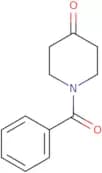
Discontinued productN-Benzoylpiperidone
CAS:Controlled ProductN-Benzoylpiperidone is a synthetic piperidine derivative that is used in the synthesis of other organic compounds. It can be synthesized by reacting phenylacetaldehyde with chloroacetonitrile and hydroxybenzene. It can also be synthesized by reacting bromoacetonitrile with hydroxybenzene in the presence of sodium hydroxide. The compound has two stereoisomers, which are determined by the configuration at the nitrogen atom. The N-benzoyl group on one stereoisomer binds to the intramolecular hydrogen molecule, which signifies its structural analysis. These two isomers are distinguished by their hydroxy group, amide and alkylation properties. They react differently with rat liver microsomes due to different substrate concentration.
Formula:C12H13NO2Purity:(%) Min. 95%Color and Shape:PowderMolecular weight:203.23 g/molRef: 3D-FB142667
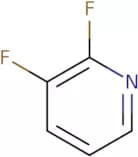
Discontinued product2,3-Difluoro pyridine
CAS:2,3-Difluoro pyridine is an organic compound with the chemical formula C6H3F2N. It is a colorless liquid that has a strong odor and a boiling point of 147°C. 2,3-Difluoro pyridine has antibacterial properties and can be used to treat bacterial infections by inhibiting the synthesis of proteins in bacterial cells. This inhibition prevents the formation of new cell walls, which leads to cell death. 2,3-Difluoro pyridine is also used as an intermediate in organic chemistry reactions involving hydrogen fluoride. The transport properties of this compound are low due to its high melting point and low solubility in water. There are three different polymorphs for 2,3-difluoropyridine: form II, form III and form IV, with form II being the most common. Form II has a trigonal planar molecular geometry, whereas forms III and IV have tetragonal
Formula:C5H3F2NPurity:Min. 95%Color and Shape:Clear LiquidMolecular weight:115.08 g/molRef: 3D-FD16119
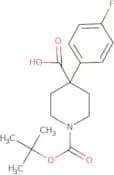
Discontinued productBoc-4-(4-fluorophenyl)-piperidine-4-carboxylic acid
CAS:Please enquire for more information about Boc-4-(4-fluorophenyl)-piperidine-4-carboxylic acid including the price, delivery time and more detailed product information at the technical inquiry form on this page
Formula:C17H22FNO4Purity:Min. 95%Molecular weight:323.36 g/mol


![tert-Butyl 4-(2-oxo-2,4-dihydro-1H-benzo[d][1,3]oxazin-1-yl)piperidine-1-carboxylate](/_next/image/?url=https%3A%2Fstatic.cymitquimica.com%2Fproducts%2F3D%2Fthumb-webp%2FFB142189.webp&w=3840&q=75)

![(NZ)-4-chloro-N-[1-[2-(4-nitrophenyl)ethyl]piperidin-2-ylidene]benzenesulfonamide](/_next/image/?url=https%3A%2Fstatic.cymitquimica.com%2Fproducts%2F3D%2Fthumb-webp%2FFN154024.webp&w=3840&q=75)
![3-[(4-Aminopiperidin-1-yl)methyl]phenol](/_next/image/?url=https%3A%2Fstatic.cymitquimica.com%2Fproducts%2F3D%2Fthumb-webp%2FFA116167.webp&w=3840&q=75)
![8-Bromo-imidazo[1,2-a]pyridine](/_next/image/?url=https%3A%2Fstatic.cymitquimica.com%2Fproducts%2F3D%2Fthumb-webp%2FFB54448.webp&w=3840&q=75)
![1-[(4-Chlorophenyl)phenylmethyl]piperazine](/_next/image/?url=https%3A%2Fstatic.cymitquimica.com%2Fproducts%2F3D%2Fthumb-webp%2FFC20350.webp&w=3840&q=75)