Heterocycles with Nitrogen (N)
Subcategories of "Heterocycles with Nitrogen (N)"
- Azepane(436 products)
- Benzotriazoles(438 products)
- Diazepanes(335 products)
- Imidazoles(4,031 products)
- Imidazolines(385 products)
- Isoxazole(1,088 products)
- Piperazines(3,758 products)
- Piperidines(8,442 products)
- Pyrazines(1,304 products)
- Pyrazole(5,960 products)
- Pyrazolidine(21 products)
- Pyrazoline(143 products)
- Pyridazine(860 products)
- Pyridines(22,005 products)
- Pyrimidine(6,084 products)
- Pyrroles(2,449 products)
- Pyrrolidines(5,840 products)
- Pyrroline(48 products)
- Pyrrolo[1,2-b]pyridazine(10 products)
- Tetrazole(531 products)
- Triazines(466 products)
- Triazoles(1,689 products)
Found 17863 products of "Heterocycles with Nitrogen (N)"
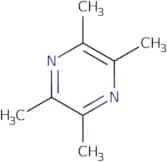
2,3,5,6-Tetra-methyl-pyrazine
CAS:2,3,5,6-Tetra-methyl-pyrazine is a chemical compound that is structurally similar to ATP. It has been shown to inhibit the mitochondrial membrane potential and induce apoptosis in rat heart cells. 2,3,5,6-Tetra-methyl-pyrazine has also been shown to inhibit ATP synthase activity and increase lactate levels in the presence of glucose. This compound inhibits cyclase activity and increases microdialysis probe signal pathways. 2,3,5,6-Tetra-methyl-pyrazine may be useful for the treatment of myocardial infarcts.
Formula:C8H12N2Purity:Min. 95%Molecular weight:136.19 g/molRef: 3D-FT04172
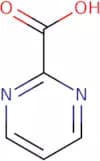
Discontinued product2-Pyrimidine-carboxylic acid
CAS:2-Pyrimidine-carboxylic acid is a biologically active molecule that can be found in the human body. It is a derivative of pyrimidine, which belongs to the group of purines. 2-Pyrimidine-carboxylic acid has been shown to inhibit the nicotinic acetylcholine receptor and α7 nicotinic acetylcholine receptor, which are receptors for acetylcholine. This molecule also has antihypertensive activity and has been shown to have therapeutic effects in psychotic disorders. 2-Pyrimidine-carboxylic acid binds to picolinic acid, which is an important intermediate in the metabolism of tryptophan, and hydroxyl group, which is essential for many biological functions. It also reacts with copper ions and forms a complex that is x-ray crystal structure confirmed. This complex may be used as a herbicide resistance inducer or as a chemical species for receptor binding studies or chemical reactions.
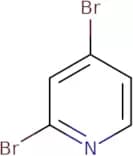
Formula:C5H4N2O2Purity:Min. 95%Color and Shape:PowderMolecular weight:124.1 g/mol2,4-Dibromopyridine
CAS:2,4-Dibromopyridine is a brominated derivative of pyridine. It is synthesized through the substitution of two bromine atoms for two hydrogens on the pyridine ring. This synthesis can be achieved by disubstitution or cross-coupling reactions. The reaction products are nucleophilic and react with electrophiles to produce substitution products. The reaction mechanism is thought to involve a six-membered transition state, which has been observed using X-ray absorption spectroscopy.
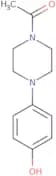
Formula:C5H3Br2NPurity:Min. 95%Color and Shape:White To Off-White SolidMolecular weight:236.89 g/mol1-Acetyl-4-(4-hydroxyphenyl)piperazine
CAS:1-Acetyl-4-(4-hydroxyphenyl)piperazine is a triazole antifungal that inhibits the synthesis and activity of nitric oxide. It binds to the N1 atom of the molecule, which is the site of nitrite ion, and prevents it from reacting with chloride ions. This binding also prevents nucleophilic attack on imine bonds in proteins and DNA. The photophysical properties of 1-acetyl-4-(4-hydroxyphenyl)piperazine are determined by its coumarin derivatives, which absorb light at wavelengths between 400 and 500 nm. The compound has been found to be specific for fungi, but not bacteria or yeast. 1-Acetyl-4-(4-hydroxyphenyl)piperazine has been shown to be effective against Candida albicans and other strains of yeast when used as an oral or topical treatment.
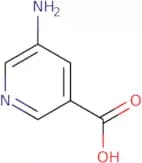
Formula:C12H16N2O2Purity:Min. 95%Molecular weight:220.27 g/mol5-Aminopyridine-3-carboxylic acid
CAS:5-Aminopyridine-3-carboxylic acid (5APC) is a structural analog of nicotinic acid that has been shown to have anti-inflammatory effects. 5APC inhibits the production of inflammatory cytokines, such as IL-10 and IL-17, by inhibiting the activation of NFκB and MAPK pathways. This drug also has significant inhibitory activities against dextran sulfate sodium (DSS)-induced acute colitis in experimental models. 5APC is thought to act by interrupting the assembly of p38 mitogen activated protein kinase (MAPK) and nuclear factor kappa B (NFκB) signaling complexes.
Formula:C6H6N2O2Purity:Min. 95%Molecular weight:138.12 g/molRef: 3D-FA66664
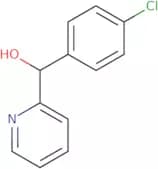
Discontinued product4-Chlorophenyl-2-pyridinylmethanol
CAS:Please enquire for more information about 4-Chlorophenyl-2-pyridinylmethanol including the price, delivery time and more detailed product information at the technical inquiry form on this page
Formula:C12H10ClNOPurity:Min. 95%Molecular weight:219.67 g/mol5-Bromo-2-(methylthio)pyrimidine
CAS:5-Bromo-2-(methylthio)pyrimidine is a synthetic compound that has been used to synthesize palladium complexes. It can also be used in the synthesis of vitamin B1, which is an essential nutrient for humans and animals. 5-Bromo-2-(methylthio)pyrimidine binds with magnesium and reacts with sulfoxide, nucleophilic attack and electronegativity. 5-Bromo-2-(methylthio)pyrimidine is activated by 2-chlorobenzothiazole and hydrogen chloride, which leads to nucleophilic attack on the electrophilic carbon atom. This causes a displacement reaction with the elimination of chlorine gas and production of dihydro.
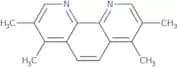
Formula:C5H5BrN2SPurity:Min. 95%Molecular weight:205.08 g/mol3,4,7,8-Tetramethyl-1,10-phenanthroline
CAS:Metal-chelating agent
Formula:C16H16N2Purity:Min. 98 Area-%Color and Shape:White PowderMolecular weight:236.31 g/mol6-Bromo-pyrazolo[1,5-a]pyrimidine
CAS:6-Bromo-pyrazolo[1,5-a]pyrimidine is a bone morphogenetic protein (BMP) inhibitor. It has been shown to be a potent inhibitor of the tyrosine kinase activity of BMP receptors and may be useful for the development of new strategies for the treatment of osteoporosis. 6-Bromo-pyrazolo[1,5-a]pyrimidine is also an effective inhibitor of the proliferation and survival of cancer cells. It inhibits cell growth by interfering with cellular signaling pathways that regulate these processes. 6-Bromo-pyrazolo[1,5-a]pyrimidine was also found to inhibit the production of bone morphogenetic protein 2 (BMP2) in mouse calvaria cells without affecting other bone metabolism markers such as alkaline phosphatase or osteocalcin.
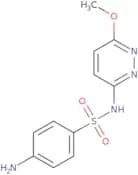
Formula:C6H4BrN3Purity:Min. 95%Color and Shape:PowderMolecular weight:198.02 g/molSulfamethoxypyridazine
CAS:Sulfamethoxypyridazine is a sulfa drug that inhibits bacterial growth by inhibiting the synthesis of folic acid, which is essential for DNA and RNA production. It has been shown to be effective in the treatment of urinary infections and infectious diseases. Sulfamethoxypyridazine interacts with other drugs, such as oral contraceptives, to increase their blood levels. This drug also has a matrix effect on urine samples, which can be used to detect the presence of bacteria. The matrix effect is due to its hydrophobic nature and ability to form aggregates with other compounds. Sulfamethoxypyridazine is used in wastewater treatment plants as an analytical method for nitrogen atoms.
Formula:C11H12N4O3SPurity:Min. 95%Molecular weight:280.3 g/molRef: 3D-FS27934
Discontinued product2-Amino-6-chloropyrimidin-4(3h)-one
CAS:2-Amino-6-chloropyrimidin-4(3H)-one (ACPP) is a betaine that has been shown to exhibit potent activity against clinical isolates of methicillin-resistant Staphylococcus aureus (MRSA). It is a mesomeric molecule, which means that it can exist as two different tautomers. The frequency of the absorption bands in the FTIR spectra for ACPP are characteristic of the carbenes and ethanolamine tautomers. The presence of these tautomers may be due to stabilization from the nucleophilic character of the nitrogen atom in betaines. Betaines are also able to form polymersized chains by reacting with themselves or other molecules, such as ethanolamine.
Formula:C4H4ClN3OPurity:Min. 95%Color and Shape:PowderMolecular weight:145.55 g/molRef: 3D-FA35262
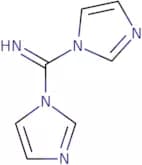
Discontinued product1,1'-Carbonimidoylbis-1H-imidazole
CAS:1,1'-Carbonimidoylbis-1H-imidazole is a ligand that binds to amines and isosteres. It can be activated with electrophilic reagents to form an activated linker. This ligand has been shown to inhibit the growth of xenograft tumor cells in mice by binding to functional groups on the cell surface. This drug also has been shown to bind to the receptor for advanced glycation end products (RAGE) and inhibit its function. 1,1'-Carbonimidoylbis-1H-imidazole has also been evaluated as a cancer therapeutic agent in animal models.
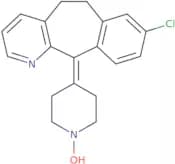
Formula:C7H7N5Purity:Min. 95%Color and Shape:White PowderMolecular weight:161.16 g/molDesloratadine N-hydroxypiperidine
CAS:Desloratadine N-hydroxypiperidine is a drug that is used to treat allergic rhinitis and urticaria. It belongs to the class of antihistamines, which block the activity of histamine in the body. Desloratadine N-hydroxypiperidine is a prodrug that has a piperidine moiety attached to its side chain. This prodrug is metabolized into desloratadine, its active form, by esterase enzymes in the liver and blood plasma. The onset of action is rapid after oral administration and the duration of action is 12 hours or more. Desloratadine N-hydroxypiperidine has shown linearity over a wide range of pH values (pH 1 to 10) and ionic strengths (0.1 M to 0.5 M). Optimization was achieved by adjusting elution time, ion-pairing agent, mobile phase composition, organic modifier concentration and column particle
Formula:C19H19ClN2OPurity:Min. 95%Molecular weight:326.82 g/molRef: 3D-FD21215
Discontinued product11-(1-Piperazinyl)-dibenzo[b,f][1,4]thiazepine dihydrochloride
CAS:11-(1-Piperazinyl)-dibenzo[b,f][1,4]thiazepine dihydrochloride is a long-acting drug that has been synthesized as an analog of diazepam. The compound is characterized by high diffraction, interaction and evaporation constants and low molecular weight. It is soluble in water and methanol. 11-(1-Piperazinyl)-dibenzo[b,f][1,4]thiazepine dihydrochloride has been shown to have a constant pharmacokinetic profile and high chemical stability in vivo.Formula:C17H17N3S·2HClPurity:Min. 98 Area-%Color and Shape:White Off-White PowderMolecular weight:368.32 g/mol(R)-4-N-Boc-2-hydroxymethyl-piperazine
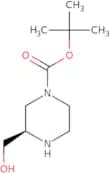
CAS:Please enquire for more information about (R)-4-N-Boc-2-hydroxymethyl-piperazine including the price, delivery time and more detailed product information at the technical inquiry form on this page
Formula:C10H20N2O3Purity:Min. 95%Molecular weight:216.28 g/mol4-Aminopicolinic acid
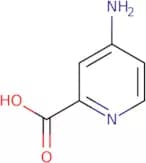
CAS:4-Aminopicolinic acid is a synthetic amine that has been shown to activate plant science. 4-Aminopicolinic acid is a cyclic peptide with two subunits, one of which is 4-amino-3-pyridinecarboxylic acid. This compound has been synthesized from picolinic acid, an agriculturally important compound that is found in plant and animal tissues. The synthesis of 4-aminopicolinic acid involves the reaction of picolinic acid with nitrous oxide, followed by hydrolysis and oxidation to form the desired product. Hplc analyses have confirmed the presence of picolinic acid in extracts from various plants containing this compound.
Formula:C6H6N2O2Purity:Min. 95%Color and Shape:White To Beige Or Pink To Light Brown SolidMolecular weight:138.12 g/mol3-Boc-amino-2,6-dioxopiperidine
CAS:Please enquire for more information about 3-Boc-amino-2,6-dioxopiperidine including the price, delivery time and more detailed product information at the technical inquiry form on this page
Formula:C10H16N2O4Purity:Min. 95%Molecular weight:228.25 g/mol1-Acetylpiperazine
CAS:1-Acetylpiperazine is a growth factor that has been shown to stimulate the proliferation of keratinocytes and dermal fibroblasts. It also inhibits the production of proinflammatory cytokines, such as tumor necrosis factor alpha (TNF-α) and interleukin-1 beta (IL-1β), in immune cells. 1-Acetylpiperazine has been shown to have antimicrobial properties against Gram-positive bacteria, including methicillin resistant Staphylococcus aureus and Clostridium perfringens. The compound binds to the receptor for epidermal growth factor in cancer cells, which may be responsible for its anticancer effects. 1-Acetylpiperazine has also been shown to inhibit the binding of imatinib to its receptor, which may be responsible for its anticancer effects.
Formula:C6H12N2OPurity:Min. 95%Molecular weight:128.18 g/molRef: 3D-FA10288
Discontinued product2-(Hydroxymethyl)pyridine N-oxide
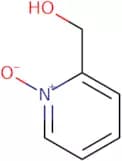
CAS:2-(Hydroxymethyl)pyridine N-oxide is a model system that was originally synthesized to study the mechanism of perchlorate and amine degradation in vivo. It has been shown to be an excellent model for studying the oxidative decomposition of n-oxides with metal ions, as well as their transformation into monomers. 2-(Hydroxymethyl)pyridine N-oxide reacts with chloride ion to form 2-(hydroxymethyl)pyridine N-oxide chloride. The reaction of 2-(hydroxymethyl)pyridine N-oxide with a sulfoxide produces an adduct that can be used to study hydrogen bonding. 2-(Hydroxymethyl)pyridine N-oxide has biological properties and is a potential drug candidate for the treatment of cancer.
Formula:C6H7NO2Purity:Min. 95%Molecular weight:125.13 g/molRef: 3D-FH24412
Discontinued product8-Chloro-3,7-dihydro-1H-purine-2,6-dione
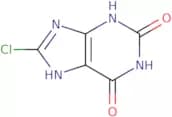
CAS:8-Chloro-3,7-dihydro-1H-purine-2,6-dione is a reactive molecule that binds to the active site of bacterial cyclic nucleotide phosphodiesterases and inhibits their activity. This inhibition prevents the breakdown of cAMP and cGMP, which are important second messengers in eukaryotic cells. 8-Chloro-3,7-dihydro-1H-purine-2,6-dione is also a potent inhibitor of protein synthesis and has been used in research studies on wheat leaves.
Formula:C5H3N4O2ClPurity:Min. 95%Color and Shape:PowderMolecular weight:186.56 g/molRef: 3D-FC09024
Discontinued product


![6-Bromo-pyrazolo[1,5-a]pyrimidine](/_next/image/?url=https%3A%2Fstatic.cymitquimica.com%2Fproducts%2F3D%2Fthumb-webp%2FFB140359.webp&w=3840&q=75)

![11-(1-Piperazinyl)-dibenzo[b,f][1,4]thiazepine dihydrochloride](/_next/image/?url=https%3A%2Fstatic.cymitquimica.com%2Fproducts%2F3D%2Fthumb-webp%2FFP32447.webp&w=3840&q=75)