Heterocycles with Nitrogen (N)
Subcategories of "Heterocycles with Nitrogen (N)"
- Azepane(436 products)
- Benzotriazoles(438 products)
- Diazepanes(335 products)
- Imidazoles(4,031 products)
- Imidazolines(385 products)
- Isoxazole(1,088 products)
- Piperazines(3,758 products)
- Piperidines(8,442 products)
- Pyrazines(1,304 products)
- Pyrazole(5,960 products)
- Pyrazolidine(21 products)
- Pyrazoline(143 products)
- Pyridazine(860 products)
- Pyridines(22,005 products)
- Pyrimidine(6,084 products)
- Pyrroles(2,449 products)
- Pyrrolidines(5,840 products)
- Pyrroline(48 products)
- Pyrrolo[1,2-b]pyridazine(10 products)
- Tetrazole(531 products)
- Triazines(466 products)
- Triazoles(1,689 products)
Found 17862 products of "Heterocycles with Nitrogen (N)"
11-(1-Piperazinyl)-dibenzo[b,f][1,4]thiazepine dihydrochloride
CAS:11-(1-Piperazinyl)-dibenzo[b,f][1,4]thiazepine dihydrochloride is a long-acting drug that has been synthesized as an analog of diazepam. The compound is characterized by high diffraction, interaction and evaporation constants and low molecular weight. It is soluble in water and methanol. 11-(1-Piperazinyl)-dibenzo[b,f][1,4]thiazepine dihydrochloride has been shown to have a constant pharmacokinetic profile and high chemical stability in vivo.Formula:C17H17N3S·2HClPurity:Min. 98 Area-%Color and Shape:White Off-White PowderMolecular weight:368.32 g/mol2-Pyrimidine-carboxylic acid
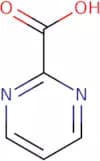
CAS:2-Pyrimidine-carboxylic acid is a biologically active molecule that can be found in the human body. It is a derivative of pyrimidine, which belongs to the group of purines. 2-Pyrimidine-carboxylic acid has been shown to inhibit the nicotinic acetylcholine receptor and α7 nicotinic acetylcholine receptor, which are receptors for acetylcholine. This molecule also has antihypertensive activity and has been shown to have therapeutic effects in psychotic disorders. 2-Pyrimidine-carboxylic acid binds to picolinic acid, which is an important intermediate in the metabolism of tryptophan, and hydroxyl group, which is essential for many biological functions. It also reacts with copper ions and forms a complex that is x-ray crystal structure confirmed. This complex may be used as a herbicide resistance inducer or as a chemical species for receptor binding studies or chemical reactions.
Formula:C5H4N2O2Purity:Min. 95%Color and Shape:PowderMolecular weight:124.1 g/mol4-Hydroxypiperidine
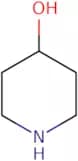
CAS:4-Hydroxypiperidine is a molecule with a carbonyl group. It is the most active and selective CCR5 receptor antagonist that has been studied to date. 4-Hydroxypiperidine inhibits HIV infection by preventing the binding of HIV to its receptor on the surface of white blood cells, thereby preventing it from entering these cells. 4-Hydroxypiperidine also acts as an anti-inflammatory agent in chronic bronchitis patients, due to its ability to inhibit prostaglandin synthesis. The chemical ionization mass spectra of this molecule show peaks for methyl ethyl, malic acid, and hydroxyl groups. These properties make 4-hydroxypiperidine a useful candidate for drug development against inflammatory diseases and several cancers.
Formula:C5H11NOPurity:Min. 95%Molecular weight:101.15 g/mol2,2', 2'' -Terpyridine
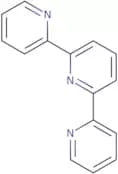
CAS:2,2', 2'' -Terpyridine is a chelate ligand that is used in wastewater treatment. It can be synthesized by reacting 2-aminopyridine with ethylene diamine and 2,4-dichloro-1,3-dithiolane. The x-ray crystal structures of the ligand show that it has a coordination geometry of octahedral and its reaction mechanism is an oxidation. The chelate ligand binds to the metal ion in the same way as other ligands and stabilizes it by forming hydrogen bonds. This compound has significant cytotoxicity against carcinoma cell lines and also inhibits the mitochondrial membrane potential (MMP). 2,2', 2'' -Terpyridine is classified as group p2 due to its redox potentials and cytotoxicity.
Formula:C15H11N3Purity:Min. 95%Molecular weight:233.27 g/mol2-Amino-6-chloropurine
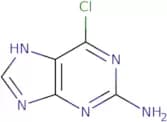
CAS:2-Amino-6-chloropurine is a nucleophilic substituent that is used in the synthesis of 2-amino-6-chloropurine. It reacts with hydroxyl groups to form a palladium-catalyzed coupling reaction solution, which is then treated with hydrochloric acid and trifluoroacetic acid. The product is purified by crystallization and recrystallization. This compound has potent antitumor activity against carcinoma cell lines, but it has not been shown to have any effect against Mycobacterium tuberculosis.
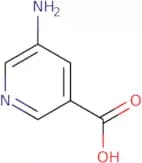
Formula:C5H4ClN5Purity:Min. 95%Color and Shape:Off-White PowderMolecular weight:169.57 g/mol5-Aminopyridine-3-carboxylic acid
CAS:5-Aminopyridine-3-carboxylic acid (5APC) is a structural analog of nicotinic acid that has been shown to have anti-inflammatory effects. 5APC inhibits the production of inflammatory cytokines, such as IL-10 and IL-17, by inhibiting the activation of NFκB and MAPK pathways. This drug also has significant inhibitory activities against dextran sulfate sodium (DSS)-induced acute colitis in experimental models. 5APC is thought to act by interrupting the assembly of p38 mitogen activated protein kinase (MAPK) and nuclear factor kappa B (NFκB) signaling complexes.
Formula:C6H6N2O2Purity:Min. 95%Molecular weight:138.12 g/molRef: 3D-FA66664
Discontinued product1-Acetylpiperazine
CAS:1-Acetylpiperazine is a growth factor that has been shown to stimulate the proliferation of keratinocytes and dermal fibroblasts. It also inhibits the production of proinflammatory cytokines, such as tumor necrosis factor alpha (TNF-α) and interleukin-1 beta (IL-1β), in immune cells. 1-Acetylpiperazine has been shown to have antimicrobial properties against Gram-positive bacteria, including methicillin resistant Staphylococcus aureus and Clostridium perfringens. The compound binds to the receptor for epidermal growth factor in cancer cells, which may be responsible for its anticancer effects. 1-Acetylpiperazine has also been shown to inhibit the binding of imatinib to its receptor, which may be responsible for its anticancer effects.
Formula:C6H12N2OPurity:Min. 95%Molecular weight:128.18 g/molRef: 3D-FA10288
Discontinued productH-Ala-Ala-Pro-OH trifluoroacetate
CAS:Please enquire for more information about H-Ala-Ala-Pro-OH trifluoroacetate including the price, delivery time and more detailed product information at the technical inquiry form on this page
Formula:C11H19N3O4•C2HF3O2Purity:Min. 95%Molecular weight:371.31 g/molRef: 3D-FA183453
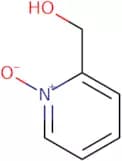
Discontinued product2-(Hydroxymethyl)pyridine N-oxide
CAS:2-(Hydroxymethyl)pyridine N-oxide is a model system that was originally synthesized to study the mechanism of perchlorate and amine degradation in vivo. It has been shown to be an excellent model for studying the oxidative decomposition of n-oxides with metal ions, as well as their transformation into monomers. 2-(Hydroxymethyl)pyridine N-oxide reacts with chloride ion to form 2-(hydroxymethyl)pyridine N-oxide chloride. The reaction of 2-(hydroxymethyl)pyridine N-oxide with a sulfoxide produces an adduct that can be used to study hydrogen bonding. 2-(Hydroxymethyl)pyridine N-oxide has biological properties and is a potential drug candidate for the treatment of cancer.
Formula:C6H7NO2Purity:Min. 95%Molecular weight:125.13 g/molRef: 3D-FH24412
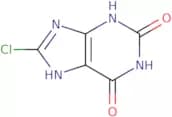
Discontinued product8-Chloro-3,7-dihydro-1H-purine-2,6-dione
CAS:8-Chloro-3,7-dihydro-1H-purine-2,6-dione is a reactive molecule that binds to the active site of bacterial cyclic nucleotide phosphodiesterases and inhibits their activity. This inhibition prevents the breakdown of cAMP and cGMP, which are important second messengers in eukaryotic cells. 8-Chloro-3,7-dihydro-1H-purine-2,6-dione is also a potent inhibitor of protein synthesis and has been used in research studies on wheat leaves.
Formula:C5H3N4O2ClPurity:Min. 95%Color and Shape:PowderMolecular weight:186.56 g/molRef: 3D-FC09024
Discontinued product4-Amino-6-mercaptopyrazolo[3,4-d]pyrimidine
CAS:Please enquire for more information about 4-Amino-6-mercaptopyrazolo[3,4-d]pyrimidine including the price, delivery time and more detailed product information at the technical inquiry form on this page
Formula:C5H5N5SPurity:Min. 95%Molecular weight:167.19 g/molRef: 3D-FA17663
Discontinued productMacaridine
CAS:Please enquire for more information about Macaridine including the price, delivery time and more detailed product information at the technical inquiry form on this page
Formula:C13H13NO2Purity:Min. 95%Molecular weight:215.25 g/molRef: 3D-FM183770
Discontinued product
![11-(1-Piperazinyl)-dibenzo[b,f][1,4]thiazepine dihydrochloride](/_next/image/?url=https%3A%2Fstatic.cymitquimica.com%2Fproducts%2F3D%2Fthumb-webp%2FFP32447.webp&w=3840&q=75)



![4-Amino-6-mercaptopyrazolo[3,4-d]pyrimidine](/_next/image/?url=https%3A%2Fstatic.cymitquimica.com%2Fproducts%2F3D%2Fthumb-webp%2FFA17663.webp&w=3840&q=75)