Heterocycles with Nitrogen (N)
In this category, you will find a wide variety of nitrogen-containing heterocycles. Heterocycles are carbon chains that form a cycle in which at least one position is occupied by a heteroatom, in this case, nitrogen. These compounds are integral in the synthesis of pharmaceuticals, agrochemicals, and dyes, offering unique reactivity and stability. At CymitQuimica, we provide a comprehensive selection of high-quality nitrogen-containing heterocycles to support your research and industrial applications
Subcategories of "Heterocycles with Nitrogen (N)"
- Azepane(434 products)
- Benzotriazoles(436 products)
- Diazepanes(331 products)
- Imidazoles(4,006 products)
- Imidazolines(385 products)
- Isoxazole(1,077 products)
- Piperazines(3,735 products)
- Piperidines(8,394 products)
- Pyrazines(1,297 products)
- Pyrazole(5,919 products)
- Pyrazolidine(21 products)
- Pyrazoline(142 products)
- Pyridazine(856 products)
- Pyridines(21,910 products)
- Pyrimidine(6,038 products)
- Pyrroles(2,439 products)
- Pyrrolidines(5,814 products)
- Pyrroline(48 products)
- Pyrrolo[1,2-b]pyridazine(10 products)
- Tetrazole(510 products)
- Triazines(462 products)
- Triazoles(1,679 products)
Show 14 more subcategories
Found 17855 products of "Heterocycles with Nitrogen (N)"
Sort by
Purity (%)
0
100
|
0
|
50
|
90
|
95
|
100
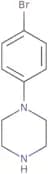
1-(4-Bromophenyl)piperazine
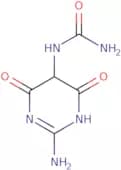
CAS:Controlled Product<p>1-(4-Bromophenyl)piperazine is a chemical that is used in the synthesis of pharmaceuticals, such as antidepressants. It has been shown to inhibit monoamine neurotransmitter reuptake, including serotonin and dopamine. It also has an inhibitory effect on 5-hydroxytryptamine (5HT) release from nerve terminals and its binding to the 5HT7 receptor. 1-(4-Bromophenyl)piperazine can be used in chromatographic methods for validation of impurities, potential impurities, and other substances.</p>Formula:C10H13BrN2Purity:Min. 95 Area-%Color and Shape:PowderMolecular weight:241.13 g/mol2-Amino-5-ureido-4,6-pyrimidinedione
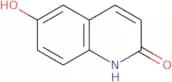
CAS:<p>2-Amino-5-ureido-4,6-pyrimidinedione is a chemical building block that can be used in research, as a reagent for the synthesis of other compounds, or as an intermediate. It is also a versatile building block and reaction component. 2-Amino-5-ureido-4,6-pyrimidinedione is a high purity compound with a CAS number of 21823-25-6.</p>Formula:C5H7N5O3Purity:Min. 95%Color and Shape:PowderMolecular weight:185.14 g/mol6-Hydroxyquinoline-(1H)-2-one
CAS:<p>6-Hydroxyquinoline-(1H)-2-one is an organic compound that has been shown to inhibit the uptake of carbostyril by bacterial cells. This inhibition causes increased uptake of xanthurenic acid and anthranilic acid, which are two compounds that are found in wastewater treatment. 6-Hydroxyquinoline-(1H)-2-one may be a potential anticancer agent, as it inhibits the growth of astroglia cells and bladder cancer cells. It also reacts with acylation reactions to form quinolinic acid, which has been shown to have anticancer effects.</p>Formula:C9H7NO2Purity:Min. 95%Color and Shape:White SolidMolecular weight:161.16 g/mol1-(4-Chlorophenyl)piperazine 2HCl
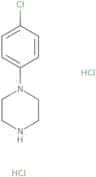
CAS:Controlled Product<p>1-(4-Chlorophenyl)piperazine 2HCl is an antidepressant drug that binds to the 5-HT7 receptor. It has been shown to be effective in reducing symptoms of depression and may be a valuable alternative to other antidepressants. 1-(4-Chlorophenyl)piperazine 2HCl is synthesized through a synthetic scheme that starts with the reaction of 4-chlorobenzaldehyde and piperazine. The molecular structure of this compound was determined by molecular modelling techniques, which showed that it has a linear shape with two hydrogen bonds. 1-(4-Chlorophenyl)piperazine 2HCl is metabolised into the glucuronide conjugate, which can be detected using analytical methods such as LC-MS/MS. This compound also interacts with aluminium, which could affect its pharmacokinetics and metabolism.</p>Formula:C10H13ClN2•(HCl)2Purity:Min. 95%Color and Shape:White/Off-White SolidMolecular weight:269.6 g/mol3,4-Dichloro-2-methylpyridine
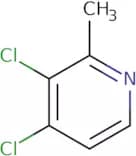
CAS:<p>3,4-Dichloro-2-methylpyridine is a novel sulfur analogue that has been shown to have significant antitumor activity in breast cancer xenografts. 3,4-Dichloro-2-methylpyridine inhibits the growth of tumor cells by binding to their DNA and inhibiting RNA synthesis. It also inhibits the production of reactive oxygen species and stabilizes cell membranes. 3,4-Dichloro-2-methylpyridine has been found to be active against human tumors in vivo and is a potential anticancer drug for human use.</p>Formula:C6H5Cl2NPurity:Min. 95%Color and Shape:PowderMolecular weight:162.02 g/mol4-Chloro-3-pyridinesulfonamide
CAS:<p>4-Chloro-3-pyridinesulfonamide is an antibacterial sulfonamide that inhibits the enzyme carbonic anhydrase. It has been shown to inhibit the growth of cancer cells in vitro and in vivo. The anticancer effect may be due to its ability to block the growth of cancer cells by interfering with DNA synthesis and inducing apoptosis, which causes cell death. 4-Chloro-3-pyridinesulfonamide also inhibits tuberculosis and tuberculostatic activity may be due to its inhibition of mycobacterium tuberculosis ribosomes. 4-Chloro-3-pyridinesulfonamide binds to the active site of bacterial anhydrase as well as human carbonic anhydrase II, blocking the conversion of CO2 into bicarbonate ions, which leads to a decrease in pH. This drug also binds to DNA and RNA, inhibiting DNA synthesis and RNA synthesis respectively, leading to cell</p>Formula:C5H5ClN2O2SPurity:Min. 95%Color and Shape:SolidMolecular weight:192.62 g/mol2,6-Dibromopyrazine
CAS:<p>2,6-Dibromopyrazine is a quinoxaline molecule with two nitrogen atoms. It is an electropolymerizable material that can be used to create patterned surfaces. 2,6-Dibromopyrazine has been used in the fabrication of devices such as fluorescent lamps and light emitting diodes (LEDs). The fluorescence of these devices depends on the alignment of molecules within the device. The number and position of nitrogen atoms in the molecule determine the wavelength emission. 2,6-Dibromopyrazine is a structural isomer of 1,8-dibromopyrazine.<br>2,6-Dibromopyrazine has homologues such as anilines and amines that have been used in organic synthesis for decades.</p>Formula:C4H2Br2N2Purity:Min. 95%Color and Shape:SolidMolecular weight:237.88 g/mol4-Methoxy-3-nitropyridine
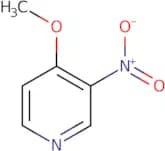
CAS:<p>4-Methoxy-3-nitropyridine (4MNOP) is an organic compound that is a white solid at room temperature. 4MNOP has been shown to interact with alkali metals and can be used in the preparation of emulsifying agents. It also has been found to have pharmacokinetic properties, including a low molecular weight, good solubility in water, and a high degree of absorption. The imidazopyridine ring system is susceptible to reductive amination reactions, which may lead to the formation of amine or surfactant residues.</p>Formula:C6H6N2O3Purity:Min. 95%Color and Shape:PowderMolecular weight:154.13 g/mol4'-Methyl-2,2'-bipyridine-4-carboxaldehyde
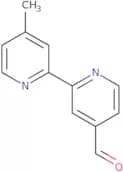
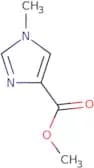
CAS:<p>4'-Methyl-2,2'-bipyridine-4-carboxaldehyde is a heterocyclic compound that contains a nitro group. It has the chemical formula C8H6N2O and the molecular weight of 122.15 g/mol. This compound belongs to the class of formyl compounds and it is composed of two formyl groups and one hydrogen atom. The bipyridines are linked by a methylene bridge to form a six-membered ring. The compound can be used as an intermediate for the synthesis of other organic compounds such as pharmaceuticals, dyes, water repellents, pesticides, and herbicides.</p>Formula:C12H10N2OPurity:Min. 95%Color and Shape:PowderMolecular weight:198.22 g/mol1-Methyl-1H-imidazole-4-carboxylic acid methyl ester
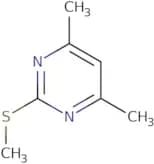
CAS:<p>1-Methyl-1H-imidazole-4-carboxylic acid methyl ester is a carboxylic acid that is aniline derivative with the chemical formula C6H5NCH2COOH. It is soluble in water, ethanol and acetone. 1-Methyl-1H-imidazole-4-carboxylic acid methyl ester hydrolyzes to form aniline and methanol. The reflux of 1-methyl imidazole can produce the same products as well as formaldehyde and hydrogen cyanide.</p>Formula:C6H8N2O2Purity:Min. 95%Color and Shape:PowderMolecular weight:140.14 g/mol4,6-Dimethyl-2-methylmercapyrimidine
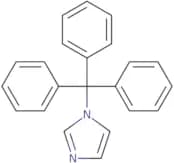
CAS:<p>4,6-Dimethyl-2-methylmercapyrimidine is a synthetic chemical compound with two different structural isomers. The 4,6-dimethyl isomer has shown to be an effective bifunctional inhibitor of cellular peroxide production and sirtuin activity. This compound also stabilizes cellular proteins by preventing the formation of reactive oxygen species, which are generated as a result of oxidative stress. 4,6-Dimethyl-2-methylmercapyrimidine is able to inhibit the enzyme SIRT2 in cells, which plays a key role in regulating cell metabolism. This compound can also inhibit the production of nitric oxide in cells, which mediates inflammatory responses.</p>Formula:C7H10N2SPurity:Min. 95%Color and Shape:Off-White PowderMolecular weight:154.23 g/molN-Tritylimidazole
CAS:<p>N-tritylimidazole is a palladium complex that was designed as an inhibitor of glycosidases. It binds to the active site of these enzymes and inhibits their function. N-tritylimidazole has been shown to inhibit the growth of Gram-positive bacteria, such as Staphylococcus aureus, by preventing the production of extracellular polysaccharides. This compound also binds to κ-opioid receptors in the brain and has been shown to block pain transmission. N-tritylimidazole can be synthesized using a cross-coupling reaction with phenylboronic acid and chloroiodomethane, which requires hydrochloric acid as a catalyst.</p>Formula:C22H18N2Purity:Min. 95%Color and Shape:White PowderMolecular weight:310.39 g/mol1-[[2-(4-Chlorophenyl)-4,4-dimethylcyclohex-1-enyl]methyl]piperazine
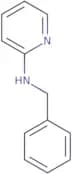
CAS:<p>1-[[2-(4-Chlorophenyl)-4,4-dimethylcyclohex-1-enyl]methyl]piperazine is a high quality compound that can be used as a reagent or intermediate. It is a complex compound with the CAS No. 1228780-72-0 that is useful in the production of fine chemicals, research chemicals and speciality chemicals. 1-[2-(4-Chlorophenyl)-4,4-dimethylcyclohex-1-enyl]methyl]piperazine is a versatile building block that can be used in reactions to produce specialized products such as pharmaceuticals, agrochemicals, dyes and fragrances.</p>Formula:C19H27ClN2Purity:Min. 95%Color and Shape:White PowderMolecular weight:318.88 g/mol2-Benzylaminopyridine
CAS:<p>2-Benzylaminopyridine is a hydrogen bond donor that interacts with anions. This compound has been shown to be bactericidal and able to inhibit the activity of tyrosine kinase. It was also found to have functional theory properties. 2-Benzylaminopyridine is a ligand for coordination chemistry, which is used in supramolecular chemistry. The constant of this compound is high, making it useful as a starting material in the synthesis of other compounds. The imidazole derivatives of 2-benzylaminopyridine are chloride, which can be used as a ligand for interaction chemistry and dichroism spectroscopy.</p>Formula:C12H12N2Purity:Min. 98 Area-%Color and Shape:Yellow PowderMolecular weight:184.24 g/mol3-Hydrazinopyridine 2HCl
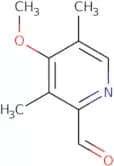
CAS:<p>3-Hydrazinopyridine 2HCl is a carboxylic acid that occurs naturally in the form of its dihydrochloride salt, 3-hydrazinopyridine dihydrochloride. It is an intermediate in the synthesis of numerous other compounds and has been used as a precursor to maleic anhydride. 3-Hydrazinopyridine 2HCl is also a reagent for the production of dialkylated or chlorinated derivatives. The hydrolysis of 3-hydrazinopyridine 2HCl with sodium hydroxide yields acetic acid, which can be oxidized to form maleic acid, or reduced to form acrylonitrile.</p>Formula:C5H9Cl2N3Purity:Min. 95%Color and Shape:PowderMolecular weight:182.05 g/mol4-Methoxy-3,5-dimethyl-2-pyridinecarboxaldehyde
CAS:<p>4-Methoxy-3,5-dimethyl-2-pyridinecarboxaldehyde is a trifunctional molecule that has been shown to suppress the growth of cancer cells in mice. This compound is an inhibitor of acid synthesis and has also been shown to be an antirheumatic drug. 4-Methoxy-3,5-dimethyl-2-pyridinecarboxaldehyde inhibits the activity of three enzymes: synthetase, an enzyme that synthesizes fatty acids; 3-ketoacyl CoA synthase, which synthesizes ketones; and enoyl CoA reductase, which produces fatty acids. The long term efficacy of this molecule has not yet been studied in humans.</p>Formula:C9H11NO2Purity:Min. 95%Color and Shape:Colourless LiquidMolecular weight:165.19 g/mol5-Methyl-2-phenyl-1H-imidazole-4-carboxylic acid
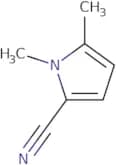
CAS:<p>5-Methyl-2-phenyl-1H-imidazole-4-carboxylic acid (MPICA) is a potent inhibitor of xanthine oxidase. It is also an inhibitor of β-glucuronidase and enzymes that maintain the integrity of bacterial DNA. MPICA has been shown to inhibit xanthine oxidase in a dose dependent manner and can be used as a lead compound for new inhibitors of this enzyme.</p>Formula:C11H10N2O2Purity:Min. 95%Color and Shape:White PowderMolecular weight:202.21 g/mol2-Cyano-1,5-dimethylpyrrole
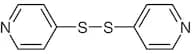
CAS:<p>2-Cyano-1,5-dimethylpyrrole is a quinone antibiotic. It has been shown to have antibacterial activity against organisms such as Staphylococcus, Streptococcus, and Pyogenes. This chemical has been shown to be active in the gaseous phase and against test organisms in alcohol extracts. 2-Cyano-1,5-dimethylpyrrole also exhibits flavonoid and saponin properties that may contribute to its antimicrobial activity.</p>Formula:C7H8N2Purity:Min. 95%Color and Shape:PowderMolecular weight:120.15 g/mol4,4'-Dipyridyl Disulfide
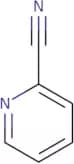
CAS:Formula:C10H8N2S2Purity:>97.0%(GC)(T)Color and Shape:White to Light yellow to Light red powder to crystalMolecular weight:220.312-Cyanopyridine
CAS:<p>2-Cyanopyridine is a chelate ligand that is structurally related to picolinic acid. It binds to the active site of IDO1 and prevents the enzyme from converting tryptophan into kynurenine. This leads to an increase in tryptophan levels, which can then be used for protein synthesis. 2-Cyanopyridine has been shown to have antimicrobial activity against Gram-positive bacteria in vitro and in vivo. It also inhibits the growth of Gram-negative bacteria, yeast, and fungi by binding to the iron atom of their heme molecules. 2-Cyanopyridine has shown potential as a pharmacological agent or as a biochemical probe for transfer reactions.</p>Formula:C6H4N2Purity:Min. 95%Color and Shape:PowderMolecular weight:104.11 g/mol



![1-[[2-(4-Chlorophenyl)-4,4-dimethylcyclohex-1-enyl]methyl]piperazine](/_next/image/?url=https%3A%2Fstatic.cymitquimica.com%2Fproducts%2F3D%2Fthumb-webp%2FFC145625.webp&w=3840&q=75)