Heterocycles with Nitrogen (N)
In this category, you will find a wide variety of nitrogen-containing heterocycles. Heterocycles are carbon chains that form a cycle in which at least one position is occupied by a heteroatom, in this case, nitrogen. These compounds are integral in the synthesis of pharmaceuticals, agrochemicals, and dyes, offering unique reactivity and stability. At CymitQuimica, we provide a comprehensive selection of high-quality nitrogen-containing heterocycles to support your research and industrial applications
Subcategories of "Heterocycles with Nitrogen (N)"
- Azepane(434 products)
- Benzotriazoles(436 products)
- Diazepanes(331 products)
- Imidazoles(4,006 products)
- Imidazolines(385 products)
- Isoxazole(1,077 products)
- Piperazines(3,735 products)
- Piperidines(8,398 products)
- Pyrazines(1,299 products)
- Pyrazole(5,919 products)
- Pyrazolidine(21 products)
- Pyrazoline(142 products)
- Pyridazine(856 products)
- Pyridines(21,911 products)
- Pyrimidine(6,038 products)
- Pyrroles(2,440 products)
- Pyrrolidines(5,814 products)
- Pyrroline(48 products)
- Pyrrolo[1,2-b]pyridazine(10 products)
- Tetrazole(510 products)
- Triazines(462 products)
- Triazoles(1,679 products)
Show 14 more subcategories
Found 17855 products of "Heterocycles with Nitrogen (N)"
Sort by
Purity (%)
0
100
|
0
|
50
|
90
|
95
|
100
3-Fluoro-4-(tributylstannyl)pyridine
CAS:Controlled Product<p>3-Fluoro-4-(tributylstannyl)pyridine is a high affinity, selective, and membrane permeable ligand of the A2B adenosine receptor. It has been shown to be a potent antagonist of A2B receptors in vitro. This compound has also been shown to have a lower affinity for A1, A3, and A4 receptors. 3-Fluoro-4-(tributylstannyl)pyridine has been shown to have high brain uptake in vivo studies. 3-Fluoro-4-(tributylstannyl)pyridine binds to the x-ray structure of the adenosine receptor with high affinity and penetrability. The binding site is proposed to be located on the extracellular side of the receptor near the interface with the second transmembrane domain. In vivo studies have shown that 3-fluoro-4-(tributylstannyl)p</p>Formula:C17H30FNSnPurity:Min. 95%Molecular weight:386.14 g/mol1-Isobutylpiperazine
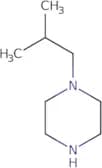
CAS:Controlled Product<p>1-Isobutylpiperazine is a synthetic amino acid that has been shown to have anticancer, antiviral, and anti-inflammatory properties. It is an inhibitor of the enzyme sulfatase, which is responsible for the degradation of sulfated glycosaminoglycans in the body. 1-Isobutylpiperazine has also been shown to be effective in treating heart disease and aminophenyl (AP) toxicity. AP overdose can lead to severe muscle spasms and seizures. 1-Isobutylpiperazine prevents AP from binding to sulfamate receptors on cells, which prevents cell death. Treatment with 1-isobutylpiperazine also reduces inflammation by inhibiting inflammatory cytokines such as tumor necrosis factor alpha (TNFα) and interleukin-1β (IL-1β). This drug also has potential use in treating autoimmune diseases or infectious diseases by modulating the immune system.</p>Formula:C8H18N2Purity:Min. 95%Molecular weight:142.24 g/mol2-(Trifluoromethyl)pyridin-3-amine
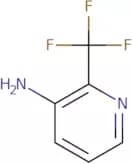
CAS:<p>2-(trifluoromethyl)pyridin-3-amine is an industrial chemical that is used as a reagent in the synthesis of other chemicals. It is synthesized from benzene and an acid ethyl ester in a complex reaction. 2-(trifluoromethyl)pyridin-3-amine is toxic, with industrial uses such as the synthesis of dyes and pesticides.</p>Formula:C6H5F3N2Purity:Min. 95%Color and Shape:PowderMolecular weight:162.11 g/mol1-(4-Methoxy-pyridin-2-yl)-ethanone
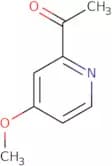
CAS:<p>Please enquire for more information about 1-(4-Methoxy-pyridin-2-yl)-ethanone including the price, delivery time and more detailed product information at the technical inquiry form on this page</p>Formula:C8H9NO2Purity:Min. 95%Molecular weight:151.16 g/mol2-Bromo-5,6-dihydro-8h-imidazo[1,2-a]pyrazine-7-carboxylic acid tert-butyl ester
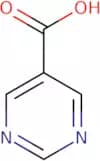
CAS:<p>Please enquire for more information about 2-Bromo-5,6-dihydro-8h-imidazo[1,2-a]pyrazine-7-carboxylic acid tert-butyl ester including the price, delivery time and more detailed product information at the technical inquiry form on this page</p>Formula:C11H16BrN3O2Purity:Min. 95%Molecular weight:302.17 g/molPyrimidine-5-carboxylic acid
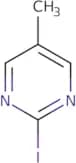
CAS:<p>Pyrimidine-5-carboxylic acid is a synthetic, nucleophilic pyrimidine compound that is used in the laboratory for the synthesis of other compounds. It has been shown to inhibit the growth of Leishmania and Staphylococcus bacteria. Pyrimidine-5-carboxylic acid binds to the malonic acid moiety of phosphoenolpyruvate carboxykinase and inhibits its activity, leading to a reduction in cellular respiration. This drug also has clinical development potential as an analgesic with modulating properties.</p>Formula:C5H4N2O2Purity:Min. 95%Molecular weight:124.1 g/mol2-Iodo-5-methylpyrimidine
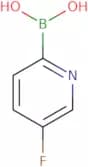
CAS:<p>Please enquire for more information about 2-Iodo-5-methylpyrimidine including the price, delivery time and more detailed product information at the technical inquiry form on this page</p>Formula:C5H5IN2Purity:Min. 95%Molecular weight:220.01 g/mol5-Fluoropyridine-2-boronic acid
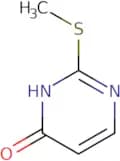
CAS:<p>Please enquire for more information about 5-Fluoropyridine-2-boronic acid including the price, delivery time and more detailed product information at the technical inquiry form on this page</p>Formula:C5H5BFNO2Purity:Min. 95%Molecular weight:140.91 g/mol2-Methylthio-4-hydroxypyrimidine
CAS:<p>2-Methylthio-4-hydroxypyrimidine is a protonated thione that inhibits the growth of bacteria, including Streptococcus faecalis. It has been shown to have an inhibitory effect on UV absorption and halide ions, such as mercury chloride. 2-Methylthio-4-hydroxypyrimidine is an analog of pyrimidine nucleosides and has a constant and regiospecific synthesis. The compound has also demonstrated antibacterial activity against bacteria, such as Staphylococcus aureus, Enterobacter aerogenes, Pseudomonas aeruginosa, Proteus vulgaris, Salmonella typhimurium, Escherichia coli, and Shigella flexneri.</p>Formula:C5H6N2OSPurity:Min. 95%Molecular weight:142.18 g/molCinidon ethyl
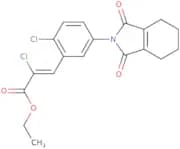
CAS:<p>Please enquire for more information about Cinidon ethyl including the price, delivery time and more detailed product information at the technical inquiry form on this page</p>Formula:C19H17Cl2NO4Purity:Min. 95%Color and Shape:PowderMolecular weight:394.2 g/mol7-Chlorothieno[3,2-B]Pyridine
CAS:<p>7-Chlorothieno[3,2-B]pyridine is a nucleophilic compound that is used as an inhibitor of the tyrosine kinase enzyme. It binds to the ATP binding site and blocks the enzymatic activity of the enzyme, preventing cell proliferation. 7-Chlorothieno[3,2-B]pyridine has been shown to inhibit growth in tumour cell lines and has been shown to be effective against tyrosine kinase receptor positive cancer cells. This drug also shows a cytotoxic activity against tumour cells in vivo, which may be due to its ability to inhibit factor receptor and receptor tyrosine.</p>Formula:C7H4ClNSPurity:Min. 95%Molecular weight:169.63 g/mol2-Chloro-4-iodo-6-(trifluoromethyl)pyridine
CAS:<p>2-Chloro-4,6-difluoro-pyridine is an electrophilic compound that can react with nucleophiles to form covalent bonds. This reaction is known as nucleophilic substitution and it can be used in the synthesis of organic compounds. The diisopropylamide of lithium is a popular reagent for this purpose because it is inexpensive, highly reactive, and easily purified by distillation. In particular, 2-chloro-4,6-difluoro-pyridine reacts quantitatively with lithium diisopropylamide to form 4-(2-chloro-4,6-difluoro)pyrimidin-2(1H)-ones in tetrahydrofuran.</p>Formula:C6H2ClF3INPurity:Min. 95%Color and Shape:Solid.Molecular weight:307.44 g/mol2-Amino-4,6-dimethylpyrimidine
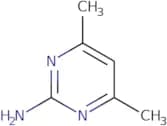
CAS:<p>2-Amino-4,6-dimethylpyrimidine is a molecule that contains a hydroxyl group, copper chloride, nitrogen atoms, sodium carbonate, and hydroxybenzoic acid. The antimicrobial properties of 2-amino-4,6-dimethylpyrimidine are due to the presence of the hydroxyl group and copper chloride in its structure. This compound has been shown to have bactericidal activity against Pseudomonas aeruginosa and other gram-negative bacteria. It also inhibits the growth of these bacteria by interfering with their ability to synthesize proteins. 2-Amino-4,6-dimethylpyrimidine is a molecule that has an octahedral coordination geometry and forms hydrogen bonds with water molecules. It binds to the surface of minerals such as calcite or quartz and can be used for gravimetric analysis.</p>Formula:C6H9N3Purity:Min. 95%Molecular weight:123.16 g/mol4-Anilino-1-benzylpiperidine
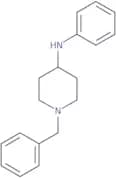
CAS:Controlled Product<p>4-Anilino-1-benzylpiperidine is a synthetic opioid analgesic that is a prodrug of the active metabolite pethidine. It is an agonist at µ-opioid receptors and is used as an analgesic medication. 4-Anilino-1-benzylpiperidine has been shown to have a high affinity for the δ subtype of opioid receptor and also inhibits the reuptake of naloxone, which may be related to its antinociceptive effects. 4-Anilino-1-benzylpiperidine has been shown to be effective in humans when given in doses around 100mg. The drug binds to functional groups on proteins, such as serine hydroxyls and cysteine sulfhydryl groups, which may account for its efficacy in humans.</p>Formula:C18H22N2Purity:Min. 95%Molecular weight:266.38 g/mol3-Hydroxyisoquinoline
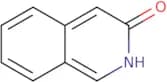
CAS:<p>3-Hydroxyisoquinoline is a non-nucleoside inhibitor of cyclic nucleotide phosphodiesterase (cNMP) that is used in the treatment of nervous system diseases. 3-Hydroxyisoquinoline has been shown to have an inhibitory effect on cyclic nucleotide phosphodiesterase and can be used for the treatment of neurological disorders such as Parkinson’s disease, Alzheimer’s disease, and epilepsy. It also has anti-inflammatory properties and can be used to treat pain. 3-Hydroxyisoquinoline has a photoelectron spectrum that peaks at 5.6 eV, with a strong absorption band at 2.1 eV due to hydrogen bonding. This compound is also able to absorb radiation in the form of light emission with an emission peak at 4.8 eV, with a maximum intensity around 830 nm and a half-life of 0.2 s. 3-Hydroxyisoquinoline is able to</p>Formula:C9H7NOPurity:Min. 95%Color and Shape:Yellow PowderMolecular weight:145.16 g/mol4-Hydroxy-7-methoxy-6-quinolinecarboxamide
CAS:<p>Please enquire for more information about 4-Hydroxy-7-methoxy-6-quinolinecarboxamide including the price, delivery time and more detailed product information at the technical inquiry form on this page</p>Formula:C11H10N2O3Purity:Min. 95%Molecular weight:218.21 g/mol5,7-Dichloro-8-hydroxyquinoline
CAS:<p>5,7-Dichloro-8-hydroxyquinoline (5,7-DC8HQ) is a mitochondrial drug that inhibits mitochondrial functions by binding to the ATP synthase. It has been shown to be effective against bacteria resistant to antimicrobial agents in vivo and also showed genotoxic activity in vitro. 5,7-DC8HQ binds to the magnesium site of the ATP synthase protein and prevents the formation of an intramolecular hydrogen bond, which leads to inhibition of ATP synthesis. This drug has also been shown to cause membrane potential depolarization in mitochondria.</p>Formula:C9H5Cl2NOPurity:Min. 98.5 Area-%Color and Shape:White PowderMolecular weight:214.05 g/mol{2-[(4-Phenylpiperazin-1-yl)carbonyl]phenyl}amine
CAS:Controlled Product<p>Please enquire for more information about {2-[(4-Phenylpiperazin-1-yl)carbonyl]phenyl}amine including the price, delivery time and more detailed product information at the technical inquiry form on this page</p>Formula:C17H19N3OPurity:Min. 95%Molecular weight:281.35 g/mol1-Isopropylpiperazine
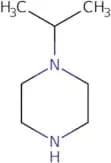
CAS:<p>1-Isopropylpiperazine is a quinoline derivative that is an antimicrobial agent. It has been shown to be effective against inflammatory bowel disease, bowel disease, and trioxane. 1-Isopropylpiperazine inhibits the activity of kinases and amines, which are molecules involved in inflammation. This drug also has molecular modeling properties that show potent inhibition of the enzyme histidine kinase. 1-Isopropylpiperazine's molecular modeling properties may be due to its ability to bind to the active site of the enzyme histidine kinase, which is adjacent to a hydrophobic pocket containing the catalytic residues.</p>Formula:C7H16N2Purity:Min. 95%Color and Shape:Clear LiquidMolecular weight:128.22 g/molN-Benzyl-4-carboethoxypiperidine
CAS:<p>N-Benzyl-4-carboethoxypiperidine (NBP) is a potential drug for the treatment of Alzheimer's disease. It is an acetylcholinesterase inhibitor that blocks the breakdown of acetylcholine, leading to increased levels of this neurotransmitter in the brain. NBP has been shown to inhibit butyrylcholinesterase, an enzyme responsible for breaking down acetylcholine. This inhibition leads to increased levels of acetylcholine in the brain and prevents the development of Alzheimer's disease. NBP has also been shown to have a low level of toxicity in mice and rats and does not inhibit other enzymes such as carboxypeptidases or aminopeptidases.</p>Formula:C15H21NO2Purity:Min. 95%Color and Shape:Clear LiquidMolecular weight:247.33 g/mol


![2-Bromo-5,6-dihydro-8h-imidazo[1,2-a]pyrazine-7-carboxylic acid tert-butyl ester](/_next/image/?url=https%3A%2Fstatic.cymitquimica.com%2Fproducts%2F3D%2Fthumb-webp%2FFB163714.webp&w=3840&q=75)
![7-Chlorothieno[3,2-B]Pyridine](/_next/image/?url=https%3A%2Fstatic.cymitquimica.com%2Fproducts%2F3D%2Fthumb-webp%2FFC53344.webp&w=3840&q=75)



![{2-[(4-Phenylpiperazin-1-yl)carbonyl]phenyl}amine](/_next/image/?url=https%3A%2Fstatic.cymitquimica.com%2Fproducts%2F3D%2Fthumb-webp%2FFP122463.webp&w=3840&q=75)