


Heterocycles with Nitrogen (N)
In this category, you will find a wide variety of nitrogen-containing heterocycles. Heterocycles are carbon chains that form a cycle in which at least one position is occupied by a heteroatom, in this case, nitrogen. These compounds are integral in the synthesis of pharmaceuticals, agrochemicals, and dyes, offering unique reactivity and stability. At CymitQuimica, we provide a comprehensive selection of high-quality nitrogen-containing heterocycles to support your research and industrial applications
Subcategories of "Heterocycles with Nitrogen (N)"
- Azepane(434 products)
- Benzotriazoles(436 products)
- Diazepanes(331 products)
- Imidazoles(4,011 products)
- Imidazolines(385 products)
- Isoxazole(1,077 products)
- Piperazines(3,736 products)
- Piperidines(8,405 products)
- Pyrazines(1,299 products)
- Pyrazole(5,921 products)
- Pyrazolidine(21 products)
- Pyrazoline(142 products)
- Pyridazine(856 products)
- Pyridines(21,917 products)
- Pyrimidine(6,041 products)
- Pyrroles(2,443 products)
- Pyrrolidines(5,816 products)
- Pyrroline(48 products)
- Pyrrolo[1,2-b]pyridazine(10 products)
- Tetrazole(510 products)
- Triazines(462 products)
- Triazoles(1,680 products)
Show 14 more subcategories
Found 17855 products of "Heterocycles with Nitrogen (N)"
Sort by
Purity (%)
0
100
|
0
|
50
|
90
|
95
|
100
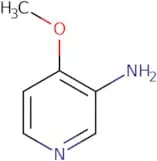
3-Amino-4-methoxypyridine
CAS:<p>3-Amino-4-methoxypyridine is a molecule that has been shown to have anesthetic activity. It has been shown to inhibit the uptake of glycogen by glioblastoma cells and decrease the rate of glycogen synthesis in these cells. 3-Amino-4-methoxypyridine also inhibits the production of ATP in cardiac muscle cells, which may be due to its ability to inhibit glycogen synthase kinase-3 (GSK3) and glycogen synthase. This drug also inhibits cancer cell growth by inhibiting protein synthesis, as well as inflammatory disease progression by inhibiting NFκB activation and cytokine production. 3-Amino-4-methoxypyridine can be synthesized from aminopyridines such as isonicotinic acid or nicotinic acid, which are oxidized with hydrogen peroxide and sodium nitrite in the presence of a base catalyst.</p>Formula:C6H8N2OPurity:Min. 95%Molecular weight:124.14 g/mol2-(Tributylstannyl)pyrimidine
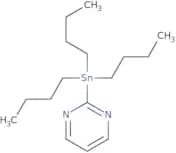
CAS:Controlled Product<p>2-(Tributylstannyl)pyrimidine is a synthetic heterocycle that has antibacterial activity. It is a guanine analog that binds to the ribonucleic acid (RNA) of bacterial cells and inhibits protein synthesis by attacking the 4-chloropyrimidine moiety of nucleoside monophosphates. 2-(Tributylstannyl) pyrimidine also has antiviral properties and acts as an inhibitor of vitamin B1, which is required for the synthesis of DNA. This drug can be used in the treatment of sulfamethoxazole-resistant infections caused by bacteria such as Streptococcus pneumoniae, Staphylococcus aureus, and Pseudomonas aeruginosa.<br>2-(Tributylstannyl)pyrimidine is effective at inhibiting the growth of bacteria due to its ability to form an ion pair with chloride ions. This property makes it highly reactive for transmetall</p>Formula:C16H30N2SnPurity:Min. 95%Color and Shape:Colourless To Yellow To Brown LiquidMolecular weight:369.13 g/molPiperidin-3-one hydrochloride
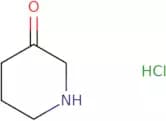
CAS:<p>Piperidin-3-one hydrochloride is an organic solvent that belongs to the group of benzyl compounds. It is a reagent for the synthesis of sulfides, which are used in the production of dyes, pharmaceuticals, and other products. Piperidin-3-one hydrochloride can be used as a constant in calculating the shift of tetrafluoroborate ions. This compound has been shown to be assembled into planar structures with six atoms per side. The resonance frequencies of this compound depend on the solvents and its aliphatic nature. Piperidin-3-one hydrochloride can be used to generate dimethyl sulfide by reacting with methanol or methyl chloride.</p>Formula:C5H10NOClPurity:Min. 95%Color and Shape:White PowderMolecular weight:135.59 g/mol1-[4-(Methylthio)benzyl]piperazine
CAS:Controlled Product<p>1-[4-(Methylthio)benzyl]piperazine is an organic compound that is used as a corrosion inhibitor in the treatment of industrial wastewater. The reaction solution is typically a mixture of copper chloride, ethylene diamine, and potassium dichromate. This compound is also known as a bound form of methylthiobenzoic acid. 1-[4-(Methylthio)benzyl]piperazine binds to copper ions, preventing the formation of copper oxide and hydroxide. It also reacts with chromium ions to form a soluble product that can be easily removed from the water by filtration or sedimentation. The profile for this compound shows that it has low energy and does not react with sodium hydroxide or hydrochloric acid.</p>Formula:C12H18N2SPurity:Min. 95%Molecular weight:222.35 g/mol4-[(4-Methyl-1H-pyrazol-1-yl)methyl]piperidine dihydrochloride
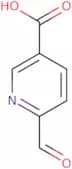
CAS:Controlled Product<p>Please enquire for more information about 4-[(4-Methyl-1H-pyrazol-1-yl)methyl]piperidine dihydrochloride including the price, delivery time and more detailed product information at the technical inquiry form on this page</p>Formula:C10H17N3Purity:Min. 95%Molecular weight:179.26 g/mol6-Formylpyridine-3-carboxylic acid
CAS:<p>Please enquire for more information about 6-Formylpyridine-3-carboxylic acid including the price, delivery time and more detailed product information at the technical inquiry form on this page</p>Formula:C7H5NO3Purity:Min. 95%Molecular weight:151.12 g/mol4-[4-(3-Chlorophenyl)piperazin-1-yl]-4-oxobutanoic acid
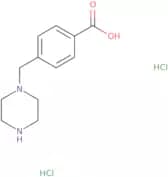
CAS:Controlled Product<p>Please enquire for more information about 4-[4-(3-Chlorophenyl)piperazin-1-yl]-4-oxobutanoic acid including the price, delivery time and more detailed product information at the technical inquiry form on this page</p>Formula:C14H17ClN2O3Purity:Min. 95%Molecular weight:296.75 g/mol4-(Piperazinomethyl)benzoic acid, dihydrochloride
CAS:Controlled Product<p>Please enquire for more information about 4-(Piperazinomethyl)benzoic acid, dihydrochloride including the price, delivery time and more detailed product information at the technical inquiry form on this page</p>Formula:C12H18Cl2N2O2Purity:Min. 95%Molecular weight:293.19 g/mol2-Vinylpyridine, stabilized with TBC
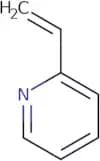
CAS:<p>2-Vinylpyridine is a reactive, organic compound that can form hydrogen bonds with other molecules. It has been used in the synthesis of detergent compositions and as a reactant to produce polymers. 2-Vinylpyridine is also used in the treatment of autoimmune diseases, such as hepatitis C. 2-Vinylpyridine has been shown to bind to proteins by forming hydrogen bonds with amino acid residues that have an amine group or a hydroxyl group. The binding of 2-vinyl pyridine to these sites leads to conformational changes and enzyme inhibition. 2-Vinylpyridine can be synthesized from pyridine and hydrochloric acid in a two step process involving condensation followed by cyclization. 2-Vinylpyridine was first synthesized by Kolbe and Woodward in 1883 using x-ray crystallography, which involved exposing crystals of pyridine to x-rays, thereby providing structural</p>Formula:C7H7NPurity:Min. 95%Color and Shape:Clear LiquidMolecular weight:105.14 g/mol3-(Tributylstannyl)pyridine
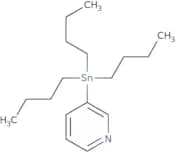
CAS:Controlled Product<p>3-Tributylstannylpyridine (3-TBS) is a synthetic compound that is used in cross-coupling reactions to form carbon-carbon bonds. It reacts with unsaturated compounds and halides, providing nitrogen atoms in the final product. 3-TBS can be used for the synthesis of quinoxalines, which are chemical compounds that have been shown to have anti-inflammatory properties. The reaction of 3-TBS with chlorobenzene and chloride yields a phosphine and a tetrahydropyridine, which can be oxidized to form an N-(2,4,6-trichlorophenyl)pyridinium salt. This salt has been shown to have anti-inflammatory effects by inhibiting prostaglandin synthesis.</p>Formula:C17H31NSnPurity:Min. 95%Molecular weight:368.15 g/mol1-(4-Trifluoromethylbenzyl)piperazine
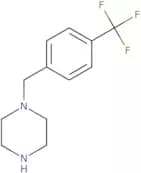
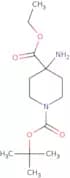
CAS:Controlled Product<p>Piperazine is a nitrogenous organic compound with a six-membered ring. It has been shown to be an inhibitor of some viruses, including influenza virus, herpes virus, and human immunodeficiency virus type 1 (HIV-1). Piperazine has been shown to inhibit the replication of both RNA and DNA viruses in vitro. This drug also inhibits the replication of hepatitis B virus in vitro and has been shown to have an inhibitory effect on the replication of HIV-1 in vitro. Piperazine is not active against RNA or DNA viruses that use only reverse transcriptase for viral replication. The chemical structure of piperazine is similar to that of amines, which are known to have antiviral properties. Piperazine can be synthesized from benzaldehyde and ammonia by reaction with hydrochloric acid and sodium nitrate.</p>Formula:C12H15F3N2Purity:Min. 95%Molecular weight:244.26 g/mol1,4-Piperidinedicarboxylic acid, 4-aMino-, 1-(1,1-diMethylethyl) 4-ethyl ester
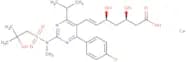
CAS:<p>Please enquire for more information about 1,4-Piperidinedicarboxylic acid, 4-aMino-, 1-(1,1-diMethylethyl) 4-ethyl ester including the price, delivery time and more detailed product information at the technical inquiry form on this page</p>Formula:C13H25N2O4Purity:Min. 95%Molecular weight:273.35 g/molS-Desmethyl-S-(2-hydroxy-2-methylpropyl) rosuvastatin calcium
CAS:<p>Please enquire for more information about S-Desmethyl-S-(2-hydroxy-2-methylpropyl) rosuvastatin calcium including the price, delivery time and more detailed product information at the technical inquiry form on this page</p>Formula:(C25H34FN3O7S)2•CaPurity:Min. 95%Molecular weight:1,119.24 g/mol3-Ethyl 5-methyl 2-[(2-aminoethoxy)methyl]-4-(2-chlorophenyl)-6-methylpyridine-3,5-dicarboxylate hydrochloride
CAS:<p>Please enquire for more information about 3-Ethyl 5-methyl 2-[(2-aminoethoxy)methyl]-4-(2-chlorophenyl)-6-methylpyridine-3,5-dicarboxylate hydrochloride including the price, delivery time and more detailed product information at the technical inquiry form on this page</p>Formula:C20H23ClN2O5•HClPurity:Min. 95%Molecular weight:443.32 g/mol2-Imidazo[1,2-a]pyridin-2-yl-ethylamine
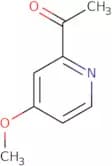
CAS:<p>Please enquire for more information about 2-Imidazo[1,2-a]pyridin-2-yl-ethylamine including the price, delivery time and more detailed product information at the technical inquiry form on this page</p>Formula:C9H11N3Purity:Min. 95%Molecular weight:161.2 g/mol1-(4-Methoxy-pyridin-2-yl)-ethanone
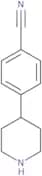
CAS:<p>Please enquire for more information about 1-(4-Methoxy-pyridin-2-yl)-ethanone including the price, delivery time and more detailed product information at the technical inquiry form on this page</p>Formula:C8H9NO2Purity:Min. 95%Molecular weight:151.16 g/mol4-(Piperidin-4-yl)benzonitrile
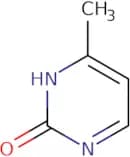
CAS:<p>Please enquire for more information about 4-(Piperidin-4-yl)benzonitrile including the price, delivery time and more detailed product information at the technical inquiry form on this page</p>Formula:C12H14N2Purity:Min. 95%Color and Shape:PowderMolecular weight:186.25 g/mol2-Hydroxy-4-methylpyrimidine
CAS:<p>2-Hydroxy-4-methylpyrimidine is a heterocyclic compound that is used in the synthesis of other heterocycles. It is prepared by the reaction of methylbenzene and nitrous acid, followed by hydrolysis to form an imine. This compound has been synthesized with various substituents at different positions on the ring and also as a series of homologues. The 2-hydroxy-4-methylpyrimidine molecule has four nitroso groups, which are substituted with methyl groups. X-ray crystallography studies have shown that the molecule can exist in two different forms: one with the methyl groups pointing "homotopically" towards each other and the other with them directed "heterotopically."</p>Formula:C5H6N2OPurity:Min. 95%Molecular weight:110.11 g/mol1-Phenylpiperazine
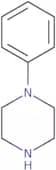
CAS:Controlled Product<p>1-Phenylpiperazine is a piperazine derivative that can bind to the DNA of cervical cancer cells and inhibit their growth. It also has antihypertensive effects. 1-Phenylpiperazine is a white crystalline solid that is soluble in water, ethanol, ether, and chloroform. It binds to the hydrogen chloride ion (HCl) with high affinity and forms an equilibrium mixture with HCl gas. The binding constants of 1-phenylpiperazine to HCl are greater than those for piperazine. This compound has been shown to inhibit tumor cell growth in vitro through its ability to bind to DNA and prevent RNA synthesis. 1-Phenylpiperazine has been shown to have antihypertensive activity in rats by blocking alpha1-adrenergic receptors on vascular smooth muscle cells.br>br><br>In addition, this molecule has been shown to have binding properties for amines which may be due to the presence</p>Formula:C10H14N2Purity:Min. 95%Molecular weight:162.23 g/mol1-[(1-Ethyl-3,5-dimethyl-1H-pyrazol-4-yl)methyl]piperazine
CAS:Controlled Product<p>Please enquire for more information about 1-[(1-Ethyl-3,5-dimethyl-1H-pyrazol-4-yl)methyl]piperazine including the price, delivery time and more detailed product information at the technical inquiry form on this page</p>Formula:C12H22N4Purity:Min. 95%Molecular weight:222.33 g/mol

![1-[4-(Methylthio)benzyl]piperazine](/_next/image/?url=https%3A%2Fstatic.cymitquimica.com%2Fproducts%2F3D%2Fthumb-webp%2FFM113848.webp&w=3840&q=75)
![4-[(4-Methyl-1H-pyrazol-1-yl)methyl]piperidine dihydrochloride](/_next/image/?url=https%3A%2Fstatic.cymitquimica.com%2Fproducts%2F3D%2Fthumb-webp%2FFM122832.webp&w=3840&q=75)
![4-[4-(3-Chlorophenyl)piperazin-1-yl]-4-oxobutanoic acid](/_next/image/?url=https%3A%2Fstatic.cymitquimica.com%2Fproducts%2F3D%2Fthumb-webp%2FFC124815.webp&w=3840&q=75)
![3-Ethyl 5-methyl 2-[(2-aminoethoxy)methyl]-4-(2-chlorophenyl)-6-methylpyridine-3,5-dicarboxylate h…](/_next/image/?url=https%3A%2Fstatic.cymitquimica.com%2Fproducts%2F3D%2Fthumb-webp%2FFE183833.webp&w=3840&q=75)
![2-Imidazo[1,2-a]pyridin-2-yl-ethylamine](/_next/image/?url=https%3A%2Fstatic.cymitquimica.com%2Fproducts%2F3D%2Fthumb-webp%2FFI51200.webp&w=3840&q=75)
![1-[(1-Ethyl-3,5-dimethyl-1H-pyrazol-4-yl)methyl]piperazine](/_next/image/?url=https%3A%2Fstatic.cymitquimica.com%2Fproducts%2F3D%2Fthumb-webp%2FFE113867.webp&w=3840&q=75)