


Heterocycles with Nitrogen (N)
In this category, you will find a wide variety of nitrogen-containing heterocycles. Heterocycles are carbon chains that form a cycle in which at least one position is occupied by a heteroatom, in this case, nitrogen. These compounds are integral in the synthesis of pharmaceuticals, agrochemicals, and dyes, offering unique reactivity and stability. At CymitQuimica, we provide a comprehensive selection of high-quality nitrogen-containing heterocycles to support your research and industrial applications
Subcategories of "Heterocycles with Nitrogen (N)"
- Azepane(434 products)
- Benzotriazoles(436 products)
- Diazepanes(331 products)
- Imidazoles(4,011 products)
- Imidazolines(385 products)
- Isoxazole(1,077 products)
- Piperazines(3,736 products)
- Piperidines(8,406 products)
- Pyrazines(1,299 products)
- Pyrazole(5,921 products)
- Pyrazolidine(21 products)
- Pyrazoline(142 products)
- Pyridazine(856 products)
- Pyridines(21,917 products)
- Pyrimidine(6,041 products)
- Pyrroles(2,443 products)
- Pyrrolidines(5,816 products)
- Pyrroline(48 products)
- Pyrrolo[1,2-b]pyridazine(10 products)
- Tetrazole(510 products)
- Triazines(462 products)
- Triazoles(1,680 products)
Show 14 more subcategories
Found 17855 products of "Heterocycles with Nitrogen (N)"
Sort by
Purity (%)
0
100
|
0
|
50
|
90
|
95
|
100
2-Amino-6-chloropyrimidin-4(3h)-one
CAS:<p>2-Amino-6-chloropyrimidin-4(3H)-one (ACPP) is a betaine that has been shown to exhibit potent activity against clinical isolates of methicillin-resistant Staphylococcus aureus (MRSA). It is a mesomeric molecule, which means that it can exist as two different tautomers. The frequency of the absorption bands in the FTIR spectra for ACPP are characteristic of the carbenes and ethanolamine tautomers. The presence of these tautomers may be due to stabilization from the nucleophilic character of the nitrogen atom in betaines. Betaines are also able to form polymersized chains by reacting with themselves or other molecules, such as ethanolamine.</p>Formula:C4H4ClN3OPurity:Min. 95%Color and Shape:PowderMolecular weight:145.55 g/molN-Methyl-N-((3R,4R)-4-methylpiperidin-3-yl)-7H-pyrrolo[2,3-d]pyrimidin-4-amine
CAS:<p>Intermediate in the synthesis of tofacitinib</p>Formula:C13H19N5Purity:Min. 95%Molecular weight:245.32 g/mol9-Piperazino levofloxacin
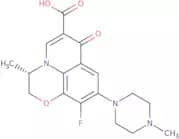
CAS:<p>Please enquire for more information about 9-Piperazino levofloxacin including the price, delivery time and more detailed product information at the technical inquiry form on this page</p>Formula:C18H20FN3O4Purity:Min. 95%Molecular weight:361.37 g/mol4-Desmethyl-2-methyl celecoxib
CAS:<p>Please enquire for more information about 4-Desmethyl-2-methyl celecoxib including the price, delivery time and more detailed product information at the technical inquiry form on this page</p>Formula:C17H14F3N3O2SPurity:Min. 95%Molecular weight:381.4 g/mol6,7-Dichloro-1-cyclopropyl-1,4-dihydro-4-oxo-3-quinolinecarboxylic acid
CAS:<p>Please enquire for more information about 6,7-Dichloro-1-cyclopropyl-1,4-dihydro-4-oxo-3-quinolinecarboxylic acid including the price, delivery time and more detailed product information at the technical inquiry form on this page</p>Formula:C13H9Cl2NO3Purity:Min. 95%Molecular weight:298.12 g/mol6-Methyl-2-(p-tolyl)imidazo[1,2-a]pyridine
CAS:<p>Formamidine is an organic compound that is used as a formylation reagent. It is a byproduct of the chlorination of formaldehyde and dimethylamine. Formamidine is produced by the reaction of chloride with formamide in the presence of dimethylamine, which leads to a high yield. Formamidine reacts with various imidazopyridines to produce a range of substituted imidazopyridines. The type and amount of substituent dictate the selectivity and reactivity of this reaction. The reagents are phosphorous pentachloride, oxalyl chloride, and N-methylformamide.</p>Formula:C15H14N2Purity:Min. 95%Molecular weight:222.29 g/molBenzopyrazine-6-boronic acidHCl
CAS:<p>Please enquire for more information about Benzopyrazine-6-boronic acidHCl including the price, delivery time and more detailed product information at the technical inquiry form on this page</p>Formula:C8H8BClN2O2Purity:Min. 95%Molecular weight:210.43 g/mol6-Chloro-2-fluoropurine
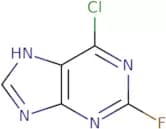
CAS:<p>6-Chloro-2-fluoropurine is an analytical reagent with a monoclonal antibody that binds to the nucleic acid of HL-60 cells and can be used for optical analysis. 6-Chloro-2-fluoropurine has been shown to have significant cytotoxicity against HL-60 cells, which may be due to its ability to bind to intracellular targets. 6-Chloro-2-fluoropurine has also been shown to inhibit the growth of HL-60 cells in a fluorescein angiography study and is used as a diagnostic agent for diagnosis of cancer.</p>Formula:C5H2ClFN4Purity:Min. 98 Area-%Color and Shape:Off-White PowderMolecular weight:172.55 g/mol5-Fluoro-2-hydrazinopyridine
CAS:<p>Please enquire for more information about 5-Fluoro-2-hydrazinopyridine including the price, delivery time and more detailed product information at the technical inquiry form on this page</p>Formula:C5H6FN3Purity:Min. 95%Molecular weight:127.12 g/molRC-3095 trifluoroacetate
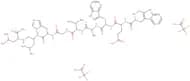
CAS:<p>Please enquire for more information about RC-3095 trifluoroacetate including the price, delivery time and more detailed product information at the technical inquiry form on this page</p>Formula:C56H79N15O9•C2HF3O2Purity:Min. 95%Molecular weight:1,220.35 g/molN-[3-Fluoro-4-[6-(2-methyl-2H-tetrazol-5-yl)-3-pyridinyl]phenyl]carbamic acid phenylmethyl ester
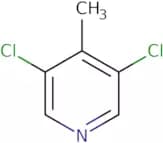
CAS:<p>Intermediate in the synthesis of tedizolid</p>Formula:C21H17FN6O2Purity:Min. 95%Molecular weight:404.4 g/mol3,5-Dichloro-4-methylpyridine
CAS:<p>Please enquire for more information about 3,5-Dichloro-4-methylpyridine including the price, delivery time and more detailed product information at the technical inquiry form on this page</p>Formula:C6H5Cl2NPurity:Min. 95%Molecular weight:162.02 g/molN-Nitroso ramipril
<p>Please enquire for more information about N-Nitroso ramipril including the price, delivery time and more detailed product information at the technical inquiry form on this page</p>Formula:C23H31N3O6Purity:Min. 95%Color and Shape:PowderMolecular weight:445.51 g/mol3-(cis-4-(2-(4-(2,3-Dichlorophenyl)piperazin-1-yl)ethyl)cyclohexyl)-1,1-dimethylurea
CAS:<p>Please enquire for more information about 3-(cis-4-(2-(4-(2,3-Dichlorophenyl)piperazin-1-yl)ethyl)cyclohexyl)-1,1-dimethylurea including the price, delivery time and more detailed product information at the technical inquiry form on this page</p>Formula:C21H32Cl2N4OPurity:Min. 95%Molecular weight:427.41 g/molD-Carnosine trifluoroacetate
CAS:<p>Please enquire for more information about D-Carnosine trifluoroacetate including the price, delivery time and more detailed product information at the technical inquiry form on this page</p>Formula:C9H14N4O3•(C2HF3O2)xPurity:Min. 95%4-Chloro-N-[2-(1,2-dihydro-2-oxo-4-quinolinyl)ethyl]benzamide
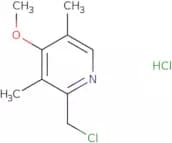
CAS:<p>Please enquire for more information about 4-Chloro-N-[2-(1,2-dihydro-2-oxo-4-quinolinyl)ethyl]benzamide including the price, delivery time and more detailed product information at the technical inquiry form on this page</p>Formula:C18H15ClN2O2Purity:Min. 95%Molecular weight:326.78 g/mol2-(Chloromethyl)-4-methoxy-3,5-dimethylpyridine hydrochloride
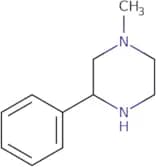
CAS:<p>2-(Chloromethyl)-4-methoxy-3,5-dimethylpyridine hydrochloride is a benzimidazole derivative. It has a chemical stability and can be used for wastewater treatment. It is also a pump inhibitor and can be used for anhydrous sodium magnesium salts. This product is synthesized from the reaction of protonated 2-bromo-4-methoxyphenol with 2,6-dimethylpyridine in the presence of hydrochloric acid. The reaction was carried out in an asymmetric synthesis using a proton transport system. 2-(Chloromethyl)-4-methoxy-3,5-dimethylpyridine hydrochloride is soluble in water and has a pH of 1 to 3. It has been shown that this product can be used as an antioxidant and as a metal chelation agent.</p>Formula:C9H13Cl2NOPurity:Min. 95%Color and Shape:PowderMolecular weight:222.11 g/mol1-Methyl-3-phenyl-piperazine
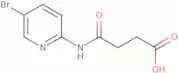
CAS:<p>1-Methyl-3-phenylpiperazine is a molecule with the chemical formula C6H14N2. It is an amide that belongs to the group of hexanes. 1-Methyl-3-phenylpiperazine is a colorless liquid with a strong ammonia odor and an irritating effect on skin. The molecule has been tested in vivo and found to be irritants when applied to the skin of rabbits, and can cause severe irritation when injected into the eyes of rabbits or rats. 1-Methyl-3-phenylpiperazine is not soluble in water but can be dissolved in ethanolamine, dimethyl sulfoxide, acetone, or chloroform.</p>Formula:C11H16N2Purity:Min. 95%Color and Shape:PowderMolecular weight:176.26 g/mol4-((5-Bromopyridin-2-yl)amino)-4-oxobutanoic acid
CAS:<p>4-((5-Bromopyridin-2-yl)amino)-4-oxobutanoic acid (BABA) is a potent photosynthetic inhibitor that inhibits light-driven electron transport in chloroplasts. This inhibition of electron transport leads to the accumulation of reactive oxygen species and cellular dysfunction. BABA is used to induce dormancy in plants and is also used as a chemical inhibitor for arabidopsis thaliana, a type of plant commonly used in molecular biology research. Studies have shown that BABA inhibits the growth of fat cells, which may be due to its ability to inhibit protein synthesis, leading to decreased fat deposition. In addition, this drug has been shown to reduce eye disorders such as retinal degeneration and cataracts by inhibiting the production of reactive oxygen species, which causes oxidative stress.</p>Formula:C9H9BrN2O3Purity:(Elemental Analysis) Min. 97%Color and Shape:PowderMolecular weight:273.08 g/mol5-Bromothieno[2,3-b]pyridine
CAS:<p>Please enquire for more information about 5-Bromothieno[2,3-b]pyridine including the price, delivery time and more detailed product information at the technical inquiry form on this page</p>Formula:C7H4BrNSPurity:Min. 95%Molecular weight:214.08 g/mol


![N-Methyl-N-((3R,4R)-4-methylpiperidin-3-yl)-7H-pyrrolo[2,3-d]pyrimidin-4-amine](/_next/image/?url=https%3A%2Fstatic.cymitquimica.com%2Fproducts%2F3D%2Fthumb-webp%2FFM154245.webp&w=3840&q=75)
![6-Methyl-2-(p-tolyl)imidazo[1,2-a]pyridine](/_next/image/?url=https%3A%2Fstatic.cymitquimica.com%2Fproducts%2F3D%2Fthumb-webp%2FFM140064.webp&w=3840&q=75)


![N-[3-Fluoro-4-[6-(2-methyl-2H-tetrazol-5-yl)-3-pyridinyl]phenyl]carbamic acid phenylmethyl ester](/_next/image/?url=https%3A%2Fstatic.cymitquimica.com%2Fproducts%2F3D%2Fthumb-webp%2FFF102200.webp&w=3840&q=75)
![4-Chloro-N-[2-(1,2-dihydro-2-oxo-4-quinolinyl)ethyl]benzamide](/_next/image/?url=https%3A%2Fstatic.cymitquimica.com%2Fproducts%2F3D%2Fthumb-webp%2FFC184071.webp&w=3840&q=75)
![5-Bromothieno[2,3-b]pyridine](/_next/image/?url=https%3A%2Fstatic.cymitquimica.com%2Fproducts%2F3D%2Fthumb-webp%2FFB111196.webp&w=3840&q=75)