Heterocycles with Nitrogen (N)
In this category, you will find a wide variety of nitrogen-containing heterocycles. Heterocycles are carbon chains that form a cycle in which at least one position is occupied by a heteroatom, in this case, nitrogen. These compounds are integral in the synthesis of pharmaceuticals, agrochemicals, and dyes, offering unique reactivity and stability. At CymitQuimica, we provide a comprehensive selection of high-quality nitrogen-containing heterocycles to support your research and industrial applications
Subcategories of "Heterocycles with Nitrogen (N)"
- Azepane(434 products)
- Benzotriazoles(436 products)
- Diazepanes(331 products)
- Imidazoles(4,011 products)
- Imidazolines(385 products)
- Isoxazole(1,077 products)
- Piperazines(3,736 products)
- Piperidines(8,405 products)
- Pyrazines(1,299 products)
- Pyrazole(5,921 products)
- Pyrazolidine(21 products)
- Pyrazoline(142 products)
- Pyridazine(856 products)
- Pyridines(21,917 products)
- Pyrimidine(6,041 products)
- Pyrroles(2,443 products)
- Pyrrolidines(5,816 products)
- Pyrroline(48 products)
- Pyrrolo[1,2-b]pyridazine(10 products)
- Tetrazole(510 products)
- Triazines(462 products)
- Triazoles(1,680 products)
Show 14 more subcategories
Found 17855 products of "Heterocycles with Nitrogen (N)"
Sort by
Purity (%)
0
100
|
0
|
50
|
90
|
95
|
100
1,1',1''-(1,3,5-Triazinane-1,3,5-triyl)tris(2-bromoethan-1-one)
CAS:<p>Please enquire for more information about 1,1',1''-(1,3,5-Triazinane-1,3,5-triyl)tris(2-bromoethan-1-one) including the price, delivery time and more detailed product information at the technical inquiry form on this page</p>Formula:C9H12Br3N3O3Purity:Min. 95%Color and Shape:PowderMolecular weight:449.82 g/mol1-Benzyl-4-((tert-butoxycarbonyl)amino)piperidine-4-carboxylic acid
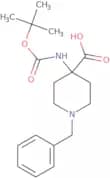
CAS:<p>Please enquire for more information about 1-Benzyl-4-((tert-butoxycarbonyl)amino)piperidine-4-carboxylic acid including the price, delivery time and more detailed product information at the technical inquiry form on this page</p>Formula:C18H26N2O4Purity:Min. 95%Molecular weight:334.41 g/mol(2-Bromopyridin-4-yl)methanamine
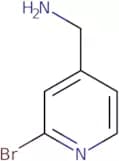
CAS:<p>Please enquire for more information about (2-Bromopyridin-4-yl)methanamine including the price, delivery time and more detailed product information at the technical inquiry form on this page</p>Purity:Min. 95%2-Fluoropyridine-5-carboxaldehyde
CAS:<p>2-Fluoropyridine-5-carboxaldehyde is a reactive chemical that can be used as an acceptor in organic synthesis. It has been shown to have antibacterial properties, and is also a synthon for the production of prosthetic groups. 2-Fluoropyridine-5-carboxaldehyde reacts with dopamine to form diphenyl ethers, which are used as labels for immunoassays. This chemical can be catalysed and has been shown to be resistant to catalysis. 2-Fluoropyridine-5-carboxaldehyde can also be used in the synthesis of cycloalkanes.</p>Formula:C6H4FNOPurity:Min. 95%Molecular weight:125.1 g/molImidazo[1,2-a]pyridin-7-amine hydrobromide
CAS:<p>Please enquire for more information about Imidazo[1,2-a]pyridin-7-amine hydrobromide including the price, delivery time and more detailed product information at the technical inquiry form on this page</p>Formula:C7H8BrN3Purity:Min. 95%Molecular weight:214.06 g/mol4-Piperidylacetylaminomethyl resin (200-400 mesh)
<p>Please enquire for more information about 4-Piperidylacetylaminomethyl resin (200-400 mesh) including the price, delivery time and more detailed product information at the technical inquiry form on this page</p>Purity:Min. 95%N-Benzyl-4-piperidone
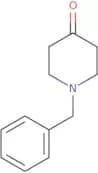
CAS:Controlled Product<p>N-Benzyl-4-piperidone is a potent antagonist of the histamine H1 receptor. It binds to the receptor in vivo, and it has been shown that this binding leads to a decrease in the release of neurotransmitters in the central nervous system. This drug is used for the treatment of hiv infection and for other conditions such as allergic rhinitis, chronic idiopathic urticaria, and vasomotor rhinitis. N-Benzyl-4-piperidone inhibits the reaction between propionyl chloride and dibutyltin oxide to form a dialkyl tin compound by an acylation reaction. The low energy released during this reaction may be due to hydrogen bonding between this drug and water molecules.</p>Formula:C12H15NOPurity:Min. 95%Color and Shape:Colorless Clear LiquidMolecular weight:189.25 g/molIsocytosine
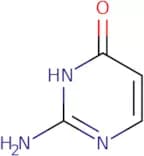
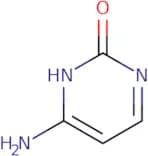
CAS:<p>Isocytosine is a prodrug that has been synthesized with the intramolecular hydrogen on the nitrogen atoms, which makes it more chemically stable. Isocytosine is a reactive molecule, and can react with tautomers to form isocytosine derivatives. Isocytosine contains three hydrogen atoms that are transferable through reactions to other molecules. The chemical stability of isocytosine allows for its use in wastewater treatment. It also has metabolic effects, such as the inhibition of colorectal adenocarcinoma and metabolic disorders. Isocytosine can be used as a model system for studying transfer reactions and reaction mechanisms.</p>Formula:C4H5N3OPurity:Min. 95%Color and Shape:PowderMolecular weight:111.1 g/mol2,5-Diaminopyridine
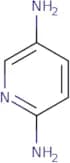
CAS:<p>2,5-Diaminopyridine is an organic compound that is expressed in the human body. It has been shown to inhibit the growth of cells in culture by binding to their DNA and preventing the production of hydrogen bonds. 2,5-Diaminopyridine has also been used clinically to treat inflammatory diseases such as rheumatoid arthritis. The hydrogen bond formation and inhibition of cell growth occurs at a low concentration of 2,5-Diaminopyridine. This drug may have potential as a therapeutic agent for cancer treatment because it inhibits the transcription factor CXCR4.</p>Formula:C5H7N3Purity:Min. 98.0 Area-%Color and Shape:Yellow To Purple To Brown SolidMolecular weight:109.13 g/mol(R)-4-Boc-2-methylpiperazine
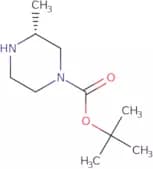
CAS:<p>(R)-4-Boc-2-methylpiperazine is a picolinamide dehydrogenase inhibitor that is used to treat type 2 diabetes. It has been shown to reduce blood glucose levels in animal models and human subjects with type 2 diabetes mellitus. The mechanism of action is thought to be via inhibition of the 11β-hydroxysteroid dehydrogenase, which increases insulin sensitivity. This drug also has good oral bioavailability, does not cause weight gain, and has an acceptable safety profile.</p>Formula:C10H20N2O2Purity:Min. 95%Color and Shape:White PowderMolecular weight:200.28 g/mol4-Bromo-6-methyl-2-pyridinamine
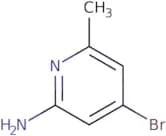
CAS:<p>4-Bromo-6-methyl-2-pyridinamine is a small molecule that binds to the bromodomain of the human protein BRD4. This binding inhibits the interaction between BRD4 and acetylated lysine residues on histones, thereby inhibiting transcriptional activation. 4-Bromo-6-methyl-2-pyridinamine has been shown to be a potent inhibitor of the activity of BRD4, which may be due to its chemical stability and ability to inhibit protein synthesis. The compound's potency in inhibition assays and its lack of biochemical toxicity make it an attractive lead compound for further study.</p>Formula:C6H7BrN2Purity:Min. 95%Molecular weight:187.04 g/molBobbitt's salt
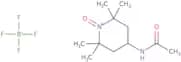
CAS:<p>4-Acetamido-2,2,6,6-tetramethyl-1-oxopiperidinium tetrafluoroborate, most commonly known as Bobbitt's salt, is a cheap and benign oxidant. It’s an oxoamonium salt that is used in oxidative cleveage of C-C and C-O bonds. The most common application of Bobbitt's salts is as a catalyst for the synthesis of dimethylbenzoquinones or DMBQs.</p>Formula:C11H21BF4N2O2Purity:Min. 95%Color and Shape:Red PowderMolecular weight:300.1 g/molPiperazine-2-carboxylic acid dihydrochloride
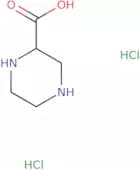
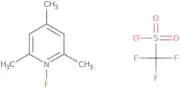
CAS:<p>Piperazine-2-carboxylic acid dihydrochloride (PZC) is an aminopyrimidine antibiotic that binds to the amine groups of plasma proteins and hydroxyapatite. It has been shown to have a specific interaction with Gram-negative bacteria, such as Escherichia coli and Salmonella typhimurium, as well as cancer cells. PZC can be used as a modifier in the treatment of staphylococcal infections and has been shown to inhibit protein synthesis in mammalian cells. PZC interacts with histidine residues on the surface of bacterial cells and inhibits their growth by binding to sites on DNA called triplexes. This drug also specifically binds to primary amines and reacts with other molecules containing amines such as polyamines, amides, or thiols.</p>Formula:C5H12Cl2N2O2Purity:Min. 95%Color and Shape:PowderMolecular weight:203.07 g/mol1-Fluoro-2,4,6-trimethylpyridinium trifluoromethanesulfonate
CAS:<p>Gabapentin is a pharmaceutical preparation that is used for the treatment of epilepsy and neuropathic pain. It is also used for postherpetic neuralgia, bipolar disorder, and anxiety disorders. Gabapentin has been shown to bind reversibly to the enzyme adenylate cyclase, which regulates the production of the second messenger cAMP. The binding of gabapentin to this enzyme prevents the conversion of ATP into cAMP and blocks signal transduction. This leads to an increase in intracellular levels of adenine nucleotides (ATP) and suppression of neuronal activity. Gabapentin has high values in kinetic tests because it is a reversible inhibitor with a low Km value. It binds irreversibly to nucleophilic substitutions, which are enzymes that catalyze reactions involving hydrolysis or transfer of one or more hydrogen ions from one molecule to another in a chemical reaction. A fluorine atom on gabapentin's structure may account for its</p>Formula:C9H11F4NO3SPurity:85%MinColor and Shape:PowderMolecular weight:289.25 g/molEthyl 4-amino-2-mercaptopyrimidine-5-carboxylate
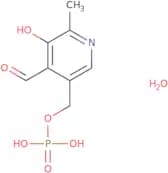
CAS:<p>Please enquire for more information about Ethyl 4-amino-2-mercaptopyrimidine-5-carboxylate including the price, delivery time and more detailed product information at the technical inquiry form on this page</p>Formula:C7H9N3O2SPurity:Min. 95%Molecular weight:199.23 g/molPyridoxal-5-phosphate monohydrate
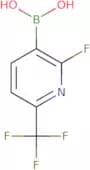
CAS:<p>Bioavailable form of vitamin B6; coenzyme; food supplement</p>Formula:C8H10NO6P·H2OPurity:Min. 98.5 Area-%Color and Shape:Off-White Slightly Yellow PowderMolecular weight:265.16 g/mol2-Fluoro-6-(trifluoroMethyl)pyridine-3-boronic acid
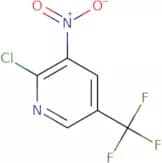
CAS:<p>Please enquire for more information about 2-Fluoro-6-(trifluoroMethyl)pyridine-3-boronic acid including the price, delivery time and more detailed product information at the technical inquiry form on this page</p>Formula:C6H4BF4NO2Purity:Min. 95%Molecular weight:208.91 g/mol2-chloro-3-nitro-5-(trifluoromethyl)pyridine
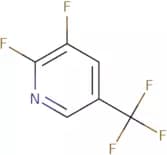
CAS:<p>Please enquire for more information about 2-chloro-3-nitro-5-(trifluoromethyl)pyridine including the price, delivery time and more detailed product information at the technical inquiry form on this page</p>Formula:C6H2ClF3N2O2Purity:Min. 95%Molecular weight:226.54 g/mol2,3-Difluoro-5-(trifluoromethyl)pyridine
CAS:<p>2,3-Difluoro-5-(trifluoromethyl)pyridine is a diluent that is used in organic synthesis. It is a nucleophilic and hydrogen fluoride (HF) activated fluoropyridine. This compound has a diameter of 190.7 pm and an anhydrous form. 2,3-Difluoro-5-(trifluoromethyl)pyridine can be prepared by condensing pyridine with fluorine gas in the presence of an activating agent such as HF or silver nitrate. This compound reacts when exposed to vapor or heat, releasing HF as a byproduct. The pyridine ring found in this compound contains six carbon atoms, two nitrogen atoms, and one oxygen atom.</p>Formula:C6H2F5NPurity:Min. 95%Molecular weight:183.08 g/molCytosine
CAS:<p>Pyrimidine nucleobase; component of nucleic acids</p>Formula:C4H5N3OPurity:(Hplc) Min. 99%Color and Shape:White PowderMolecular weight:111.1 g/mol



![Imidazo[1,2-a]pyridin-7-amine hydrobromide](/_next/image/?url=https%3A%2Fstatic.cymitquimica.com%2Fproducts%2F3D%2Fthumb-webp%2FFI111192.webp&w=3840&q=75)