Heterocycles with Nitrogen (N)
In this category, you will find a wide variety of nitrogen-containing heterocycles. Heterocycles are carbon chains that form a cycle in which at least one position is occupied by a heteroatom, in this case, nitrogen. These compounds are integral in the synthesis of pharmaceuticals, agrochemicals, and dyes, offering unique reactivity and stability. At CymitQuimica, we provide a comprehensive selection of high-quality nitrogen-containing heterocycles to support your research and industrial applications
Subcategories of "Heterocycles with Nitrogen (N)"
- Azepane(434 products)
- Benzotriazoles(436 products)
- Diazepanes(331 products)
- Imidazoles(4,006 products)
- Imidazolines(385 products)
- Isoxazole(1,077 products)
- Piperazines(3,735 products)
- Piperidines(8,398 products)
- Pyrazines(1,299 products)
- Pyrazole(5,919 products)
- Pyrazolidine(21 products)
- Pyrazoline(142 products)
- Pyridazine(856 products)
- Pyridines(21,911 products)
- Pyrimidine(6,038 products)
- Pyrroles(2,440 products)
- Pyrrolidines(5,814 products)
- Pyrroline(48 products)
- Pyrrolo[1,2-b]pyridazine(10 products)
- Tetrazole(510 products)
- Triazines(462 products)
- Triazoles(1,679 products)
Show 14 more subcategories
Found 17855 products of "Heterocycles with Nitrogen (N)"
Sort by
Purity (%)
0
100
|
0
|
50
|
90
|
95
|
100
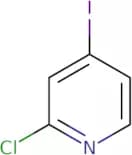
2-Chloro-4-iodopyridine
CAS:<p>2-Chloro-4-iodopyridine is an antibacterial agent that inhibits bacterial growth by interfering with the synthesis of folic acid. It has been shown to be effective against Escherichia coli, Staphylococcus aureus, and Pseudomonas aeruginosa. 2-Chloro-4-iodopyridine is a ligand that binds to metal ions such as copper and silver. The transfer of electrons from the metal ion to the ligand facilitates the cross-coupling reaction in organic synthesis. Cross-coupling reactions are also used in devices such as solar cells and hydrogen fuel cells.<br>2-Chloro-4-iodopyridine can also be used for photophysical experiments with single crystal x-ray diffraction studies.</p>Formula:C5H3ClINPurity:Min. 95%Color and Shape:White PowderMolecular weight:239.44 g/mol2-Amino-6-chloropyrimidin-4(3h)-one
CAS:<p>2-Amino-6-chloropyrimidin-4(3H)-one (ACPP) is a betaine that has been shown to exhibit potent activity against clinical isolates of methicillin-resistant Staphylococcus aureus (MRSA). It is a mesomeric molecule, which means that it can exist as two different tautomers. The frequency of the absorption bands in the FTIR spectra for ACPP are characteristic of the carbenes and ethanolamine tautomers. The presence of these tautomers may be due to stabilization from the nucleophilic character of the nitrogen atom in betaines. Betaines are also able to form polymersized chains by reacting with themselves or other molecules, such as ethanolamine.</p>Formula:C4H4ClN3OPurity:Min. 95%Color and Shape:PowderMolecular weight:145.55 g/mol3-Pyridinemethanol
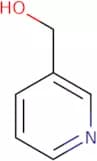
CAS:<p>3-Pyridinemethanol is a chemical compound that is soluble in water. It has a molecular weight of 92.07 grams per mole, and the chemical formula CH3CH2NH. 3-Pyridinemethanol is used as a reagent for the synthesis of organic compounds, such as chlorides, esters, amides, nitriles, and thioamides. 3-Pyridinemethanol reacts with chloride to form an intermediate which reacts with water to produce hydrochloric acid and ammonium chloride. This reaction also produces heat, which can be used to generate energy or power other reactions. br> br> A nanotube was synthesized from 3-pyridinemethanol by using a template made from nickel atoms arranged in a hexagonal pattern on the surface of an indium tin oxide (ITO) glass substrate. The nanotubes are about 5 nm in diameter and can be up</p>Formula:C6H7NOPurity:Min. 95%Molecular weight:109.13 g/mol3-(Chloromethyl)-5-methylpyridine hydrochloride
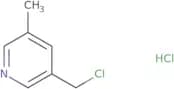
CAS:<p>3-(Chloromethyl)-5-methylpyridine hydrochloride (3CMPH) is a chemical compound that is synthesized from chlorine and methylpyridine. 3CMPH can be produced by the reaction of chlorination with toluene or hydrogen chloride. The synthesis of 3CMPH is done in two steps: first, reacting toluene with chlorine gas at high temperature and pressure in the presence of sulfuric acid, followed by the addition of sulfuric acid to the resulting product. In the second step, hydrogen chloride reacts with methylpyridine in an alkaline solution, yielding 3-(chloromethyl)-5-methylpyridine hydrochloride as a white solid. 3CMPH has been shown to have antihistamine effects and can be used for treating allergies. It can also be used as a skin protectant against uv light and rupatadine.</p>Formula:C7H8ClN·HClPurity:Min. 95%Molecular weight:178.06 g/molOrotic acid hydrate
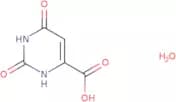
CAS:<p>Orotic acid hydrate is a synthetic compound that is designed to be a growth regulator. Orotic acid hydrate is synthesized by reacting the orotate with pyridoxine hydrochloride, followed by crystallizing the product. Hydrogen bonds form between the water molecules and fatty acids in the crystals of OA hydrate. These hydrogen bonds stabilize the crystal structure and allow for its use as a growth regulator. The stability of this molecule can also be attributed to its ability to form hydrogen bonds with other molecules such as α-tocopherol, calcium carbonate, and synthetic cannabinoids. Orotic acid hydrate has been shown to have an effect on cancer cells because it reacts with daunorubicin in solution and inhibits DNA synthesis, inhibiting cell growth.</p>Formula:C5H4N2O4·H2OPurity:Min. 95 Area-%Color and Shape:PowderMolecular weight:174.11 g/mol(-)-(2R,5S)-1-Allyl-2,5-dimethylpiperazine
CAS:<p>(-)-(2R,5S)-1-Allyl-2,5-dimethylpiperazine is a novel analog of benzyl alcohols that binds to the delta opioid receptor. The compound was found to be an agonist in vitro and in vivo. It showed no affinity for other opioid receptors or for the benzodiazepine receptor. (-)-(2R,5S)-1-Allyl-2,5-dimethylpiperazine was found to have high affinity for the human cloned delta opioid receptor with a Ki value of 0.6 nM. This compound is also a potent alkylate inhibitor with an IC50 of 6 microM against ethoxy radical formation and an IC50 of 25 microM against lipid peroxidation induced by H2O2.</p>Formula:C9H18N2Purity:Min. 95%Molecular weight:154.25 g/mol4-Amino-N-(4-methylpyrimidin-2-yl)benzenesulfonamide
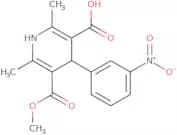
CAS:<p>4-Amino-N-(4-methylpyrimidin-2-yl)benzenesulfonamide (AMBPS) is a sulfonamide antimicrobial agent that belongs to the group of sulfa drugs. It is a potent inhibitor of tetracycline resistance in bacterial cells, and has been shown to be effective against infectious diseases such as tuberculosis, leprosy and pneumonia. AMBPS has also been used in wastewater treatment and biological studies with high values. This drug binds to sulfamerazine, which inhibits bacterial growth by inhibiting RNA synthesis. The hydrogen bonding interactions between AMBPS and sulfadiazine are thought to be responsible for the effects on congestive heart failure.</p>Formula:C11H12N4O2SPurity:Min. 95%Molecular weight:264.3 g/mol1,4-Dihydro-2,6-dimethyl-4-(3-nitrophenyl)-3,5-pyridinedicarboxylic acid 3-methyl ester
CAS:<p>Lercanidipine is a calcium antagonist that binds to the calcium channels in the membranes of cells, preventing the entry of calcium ions. Lercanidipine is water soluble and can be synthesized using techniques such as elemental analysis and pharmacological techniques. It is also an ionizable drug, which means that its affinity for chloride varies with pH. Lercanidipine has been shown to have strong affinity for erythrocyte membranes and thus has a high selectivity for vascular smooth muscle cells. This drug also has a low toxicity profile and does not affect tissues other than vascular smooth muscle cells.</p>Formula:C16H16N2O6Purity:Min. 95%Color and Shape:White PowderMolecular weight:332.31 g/mol3-Chloro-2,5-dibromopyridine
CAS:<p>3-Chloro-2,5-dibromopyridine is a fine chemical that is used as a building block in the synthesis of other chemicals. It is a reagent and speciality chemical with high quality and complex structure. 3-Chloro-2,5-dibromopyridine is a versatile building block that can be used in the synthesis of many different compounds and as an intermediate or scaffold for other reactions. It has been shown to react with various nucleophiles, such as amines, alcohols, and thiols.</p>Formula:C5H2Br2CINPurity:Min. 95%Color and Shape:White/Off-White SolidMolecular weight:271.34 g/molH-Ser-Ala-Glu-Glu-Tyr-Glu-Tyr-Pro-Ser OH trifluoroacetate
CAS:<p>Please enquire for more information about H-Ser-Ala-Glu-Glu-Tyr-Glu-Tyr-Pro-Ser OH trifluoroacetate including the price, delivery time and more detailed product information at the technical inquiry form on this page</p>Formula:C47H63N9O20•(C2HF3O2)xPurity:Min. 95%H-Ala-Ala-Pro-OH trifluoroacetate
CAS:<p>Please enquire for more information about H-Ala-Ala-Pro-OH trifluoroacetate including the price, delivery time and more detailed product information at the technical inquiry form on this page</p>Formula:C11H19N3O4•C2HF3O2Purity:Min. 95%Molecular weight:371.31 g/molSegetalin A trifluoroacetate
CAS:<p>Segetalin A trifluoroacetic acid is a protein-based product, which is a derivative of a natural compound isolated from the seeds of the plant Vaccaria segetalis. This plant is traditionally recognized for its medicinal properties, and segetalin A represents one of the active proteins responsible for these biological effects.</p>Formula:C31H43N7O6C2HF3O2Purity:Min. 95%Molecular weight:609.72 g/mol4-Amino-6-mercaptopyrazolo[3,4-d]pyrimidine
CAS:<p>Please enquire for more information about 4-Amino-6-mercaptopyrazolo[3,4-d]pyrimidine including the price, delivery time and more detailed product information at the technical inquiry form on this page</p>Formula:C5H5N5SPurity:Min. 95%Molecular weight:167.19 g/mol1-[(4-Chlorophenyl)phenylmethyl]-4-[(3-methylphenyl)methyl]-piperazine hydrochloride
CAS:<p>Please enquire for more information about 1-[(4-Chlorophenyl)phenylmethyl]-4-[(3-methylphenyl)methyl]-piperazine hydrochloride including the price, delivery time and more detailed product information at the technical inquiry form on this page</p>Formula:C25H27ClN2•HClPurity:Min. 95%Molecular weight:427.41 g/mol1-Acetylpiperazine
CAS:<p>1-Acetylpiperazine is a growth factor that has been shown to stimulate the proliferation of keratinocytes and dermal fibroblasts. It also inhibits the production of proinflammatory cytokines, such as tumor necrosis factor alpha (TNF-α) and interleukin-1 beta (IL-1β), in immune cells. 1-Acetylpiperazine has been shown to have antimicrobial properties against Gram-positive bacteria, including methicillin resistant Staphylococcus aureus and Clostridium perfringens. The compound binds to the receptor for epidermal growth factor in cancer cells, which may be responsible for its anticancer effects. 1-Acetylpiperazine has also been shown to inhibit the binding of imatinib to its receptor, which may be responsible for its anticancer effects.</p>Formula:C6H12N2OPurity:Min. 95%Molecular weight:128.18 g/mol6-Amino-1,2-dihydro-2-thioxo-5-pyrimidinecarboxylic acid sodium
CAS:<p>Please enquire for more information about 6-Amino-1,2-dihydro-2-thioxo-5-pyrimidinecarboxylic acid sodium including the price, delivery time and more detailed product information at the technical inquiry form on this page</p>Formula:C5H5N3O2S•NaPurity:Min. 95%Molecular weight:194.17 g/molLithium orotate monohydrate
CAS:<p>Please enquire for more information about Lithium orotate monohydrate including the price, delivery time and more detailed product information at the technical inquiry form on this page</p>Formula:C5H3LiN2O4Purity:Min. 95%Molecular weight:162.10 g/molAtorvastatin 3-deoxyhept-2-enoic acid calcium
CAS:<p>Please enquire for more information about Atorvastatin 3-deoxyhept-2-enoic acid calcium including the price, delivery time and more detailed product information at the technical inquiry form on this page</p>Formula:(C33H33FN2O4)2•CaPurity:Min. 95%Molecular weight:1,121.26 g/mol4-Amino-2-mercaptopyrimidine-5-carboxylic acid methyl ester
CAS:<p>Please enquire for more information about 4-Amino-2-mercaptopyrimidine-5-carboxylic acid methyl ester including the price, delivery time and more detailed product information at the technical inquiry form on this page</p>Formula:C6H7N3O2SPurity:Min. 95%Molecular weight:185.21 g/mol8-Chloro-3,7-dihydro-1H-purine-2,6-dione
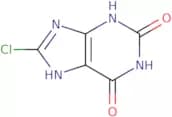
CAS:<p>8-Chloro-3,7-dihydro-1H-purine-2,6-dione is a reactive molecule that binds to the active site of bacterial cyclic nucleotide phosphodiesterases and inhibits their activity. This inhibition prevents the breakdown of cAMP and cGMP, which are important second messengers in eukaryotic cells. 8-Chloro-3,7-dihydro-1H-purine-2,6-dione is also a potent inhibitor of protein synthesis and has been used in research studies on wheat leaves.</p>Formula:C5H3N4O2ClPurity:Min. 95%Color and Shape:PowderMolecular weight:186.56 g/mol








![4-Amino-6-mercaptopyrazolo[3,4-d]pyrimidine](/_next/image/?url=https%3A%2Fstatic.cymitquimica.com%2Fproducts%2F3D%2Fthumb-webp%2FFA17663.webp&w=3840&q=75)
![1-[(4-Chlorophenyl)phenylmethyl]-4-[(3-methylphenyl)methyl]-piperazine hydrochloride](/_next/image/?url=https%3A%2Fstatic.cymitquimica.com%2Fproducts%2F3D%2Fthumb-webp%2FFC183829.webp&w=3840&q=75)