Aliphatic compounds and derivatives
Found 8753 products of "Aliphatic compounds and derivatives"
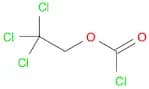
Carbonochloridic acid, 2,2,2-trichloroethyl ester
CAS:Formula:C3H2Cl4O2Purity:97%Color and Shape:LiquidMolecular weight:211.85882-(PERFLUOROHEXYL)ETHYL METHACRYLATE
CAS:Formula:C12H9F13O2Purity:95%Color and Shape:LiquidMolecular weight:432.17791,1,1,2,2,3,3,4,4,5,5,6,6-Tridecafluorooctane, (Perfluorohex-1-yl)ethane
CAS:Formula:C8H5F13Purity:99%Color and Shape:LiquidMolecular weight:348.10454159999981,1,2,2,3,3,4,4,4-nonafluoro-N,N-bis(2-hydroxyethyl)butane-1-sulphonamide
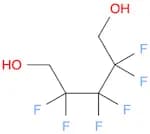
CAS:Formula:C8H10F9NO4SPurity:98%Color and Shape:SolidMolecular weight:387.21992,2,3,3,4,4-HEXAFLUORO-1,5-PENTANEDIOL
CAS:Formula:C5H6F6O2Purity:98%Color and Shape:SolidMolecular weight:212.0904Ref: IN-DA019DHY
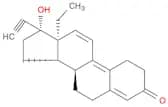
Discontinued product18,19-Dinorpregna-4,9,11-trien-20-yn-3-one, 13-ethyl-17-hydroxy-, (17α)-
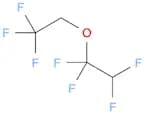
CAS:Formula:C21H24O2Purity:99%Color and Shape:SolidMolecular weight:308.4141Ethane,1,1,2,2-tetrafluoro-1-(2,2,2-trifluoroethoxy)-
CAS:Formula:C4H3F7OPurity:97%Color and Shape:LiquidMolecular weight:200.05482,2,2-TRIFLUOROETHYL TRIFLUOROACETATE
CAS:Formula:C4H2F6O2Purity:97%Color and Shape:LiquidMolecular weight:196.0479Hexadecanamide,N-[(1S,2R,3E)-2-hydroxy-1-(hydroxymethyl)-3-heptadecenyl]-
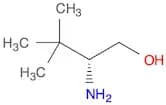
CAS:Formula:C34H67NO3Purity:99%Color and Shape:SolidMolecular weight:537.90071-Butanol, 2-amino-3,3-dimethyl-, (2R)-
CAS:Formula:C6H15NOPurity:98%Color and Shape:LiquidMolecular weight:117.1894Ref: IN-DA003DLF
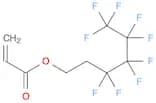
Discontinued product2-Propenoic acid, 3,3,4,4,5,5,6,6,6-nonafluorohexyl ester
CAS:Formula:C9H7F9O2Purity:98%Color and Shape:LiquidMolecular weight:318.1363Ref: IN-DA00DBWH
Discontinued product1,2-DIIODOTETRAFLUOROETHANE
CAS:Formula:C2F4I2Purity:96%Color and Shape:LiquidMolecular weight:353.8240Perfluorobutylsulphonamide
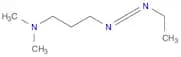
CAS:Formula:C4H2F9NO2SPurity:98%Color and Shape:SolidMolecular weight:299.11481-(3-Dimethylaminopropyl)-3-ethylcarbodiimide
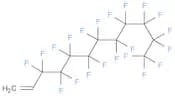
CAS:Formula:C8H17N3Purity:98%Color and Shape:LiquidMolecular weight:155.24071-Dodecene,3,3,4,4,5,5,6,6,7,7,8,8,9,9,10,10,11,11,12,12,12-heneicosafluoro-
CAS:Formula:C12H3F21Purity:97%Color and Shape:LiquidMolecular weight:546.1187Pentane, 1,1,1,2,2,3,4,5,5,5-decafluoro-
CAS:Formula:C5H2F10Purity:98%Color and Shape:LiquidMolecular weight:252.0534Ref: 4Z-A-301003
Discontinued productEicosafluorononane
CAS:Formula:C9F20Purity:>96.0%(GC)Color and Shape:Colorless to Almost colorless clear liquidMolecular weight:488.07Tetracosane
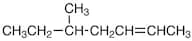
CAS:Formula:C24H50Purity:>99.0%(GC)Color and Shape:White powder to lumpMolecular weight:338.665-Methyl-2-heptene (cis- and trans- mixture)
CAS:Formula:C8H16Purity:>95.0%(GC)Color and Shape:Colorless to Almost colorless clear liquidMolecular weight:112.223-Ethynyltoluene
CAS:Formula:C9H8Purity:>98.0%(GC)Color and Shape:Colorless to Light orange to Yellow clear liquidMolecular weight:116.16Triphenylethylene
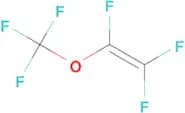
CAS:Formula:C20H16Purity:>98.0%(GC)Color and Shape:White to Light yellow powder to crystalineMolecular weight:256.35Trifluoromethyl trifluorovinyl ether
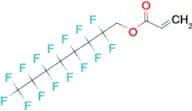
CAS:Purity:99.0%Color and Shape:GasMolecular weight:166.022003173828121H,1H-Pentadecafluorooctyl acrylate
CAS:Purity:99.0%Color and Shape:Liquid, ClearMolecular weight:454.1350097656251,7-Bis(4-hydroxyphenyl)hepta-1,6-diene-3,5-dione
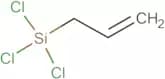
CAS:Purity:95.0%Color and Shape:SolidMolecular weight:308.3330078125Allyltrichlorosilane
CAS:S00350 - Allyltrichlorosilane
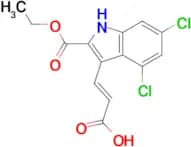
Formula:C3H5Cl3SiColor and Shape:Liquid, ClearMolecular weight:175.509994506835943-(4,6-Dichloro-2-(ethoxycarbonyl)-1H-indol-3-yl)acrylic acid
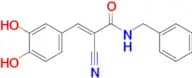
CAS:Purity:95.0%Molecular weight:328.1499938964844N-Benzyl-2-cyano-3-(3,4-dihydroxyphenyl)acrylamide
CAS:Purity:99.0%Molecular weight:294.309997558593754-{[2-methyl-6-(trifluoromethyl)pyridin-3-yl]amino}-4-oxobut-2-enoic acid
CAS:Molecular weight:274.1990051269531Ref: 10-F749587
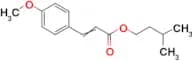
Discontinued productIsopentyl 3-(4-methoxyphenyl)acrylate
CAS:Purity:95.0%Color and Shape:LiquidMolecular weight:248.32200622558594DL-Tartaric acid
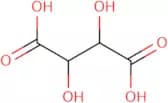
CAS:DL-Tartaric acid is a calcium salt of tartaric acid. It is used as a standard in the analysis of total calcium and tartaric acid content in beverages, wines, foodstuffs, and pharmaceuticals. DL-Tartaric acid can be used to prepare standard solutions for the determination of benzalkonium chloride and other natural compounds by chromatographic methods. The rate constants for the reaction between DL-tartaric acid and calcium pantothenate have been determined by electrochemical impedance spectroscopy. The fluorescence intensity of chemiluminescent reactions with DL-tartaric acid has been found to be proportional to the concentration of tartrate ions in solution. X-ray diffraction data confirm that DL-tartaric acid is an orthorhombic crystal system with space group P2/c.
Formula:C4H6O6Color and Shape:White PowderMolecular weight:150.09 g/molRef: 3D-FT34258
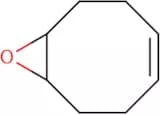
Discontinued product1,2-Epoxy-5-cyclooctene
CAS:1,2-Epoxy-5-cyclooctene is a cyclic epoxide that undergoes ring opening with the addition of a nucleophile. This reaction is catalyzed by a bromonium ion, which acts as the electrophile. The product of this reaction is 2-hydroxy-1,2-epoxycyclohexane. 1,2-Epoxy-5-cyclooctene has been used in synthesizing various compounds such as monoepoxides and hydrosilanes. It can also be used to produce compounds that are difficult to access through other methods. 1,2-Epoxy-5-cyclooctene has been studied using x-ray crystallography and conformational analysis.
Formula:C8H12OPurity:Min. 98 Area-%Color and Shape:Clear LiquidMolecular weight:124.18 g/molRef: 3D-FE03990
Discontinued product1,4-Diazabicyclo[3.2.2]nonane dihydrochloride
CAS:1,4-Diazabicyclo[3.2.2]nonane dihydrochloride is a fine chemical that is used as an intermediate in the synthesis of other chemicals. It has been shown to be a versatile building block for research chemicals and as a reaction component in the synthesis of complex compounds. 1,4-Diazabicyclo[3.2.2]nonane dihydrochloride is also useful in the synthesis of pharmaceuticals and other speciality chemicals due to its high quality and ability to function as a reagent.
1,4-Diazabicyclo[3.2.2]nonane dihydrochloride has been shown to have anti-inflammatory properties by inhibiting prostaglandin synthesis and can be used for the treatment of asthma, arthritis, and other inflammatory conditions.Formula:C7H14N2·2HClPurity:Min. 95%Color and Shape:SolidMolecular weight:199.12 g/molRef: 3D-FD07110
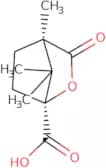
Discontinued product(1S)-(-)-Camphanic acid
CAS:A chiral auxiliary for the separation of racemates
Formula:C10H14O4Purity:Min. 95%Color and Shape:White PowderMolecular weight:198.22 g/molRef: 3D-FC46445
Discontinued productPutrescine dihydrochloride
CAS:Putrescine is a polyamine plant growth regulator affecting the synthesis of macromolecules. Promotes adventitious root formation. Precursor of spermidine.
Formula:C4H14Cl2N2Purity:Min. 98.0 Area-%Molecular weight:161.08 g/molSodium methanethiolate
CAS:Methanethiol is a compound that occurs naturally in the environment. It is used as a fungicide, insecticide and herbicide. Methanethiol inhibits the growth of microorganisms by binding to metal ions on the surface of cells. This prevents DNA replication and protein synthesis, leading to cell death. Methanethiol also has anti-inflammatory properties which may be due to its ability to inhibit adenosine A1 receptor activity in humans.
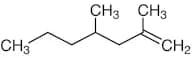
Formula:CH3NaSPurity:Min. 95%Color and Shape:White PowderMolecular weight:70.09 g/mol2,4-Dimethyl-1-heptene
CAS:Formula:C9H18Purity:>98.0%(GC)Color and Shape:Colorless to Almost colorless clear liquidMolecular weight:126.242-Nonene (cis- and trans- mixture)
CAS:Formula:C9H18Purity:>94.0%(GC)Color and Shape:Colorless to Almost colorless clear liquidMolecular weight:126.242-Bromo-3,3,3-trifluoro-1-propene
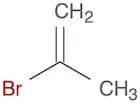
CAS:Controlled Product2-Bromo-3,3,3-trifluoro-1-propene is a chemical compound that has been synthesized in an asymmetric reaction. The reactant is bromopropane and the product is 2,2,2-trifluoropropene. The methylene group on the propene molecule is activated by the nucleophilic attack of a fluoride ion from hydrogen fluoride to form a cavity with a highly strained bond. The kinetic study of this reaction revealed that the activation energy for the reaction is 42 kJ/mol. Palladium-catalyzed coupling reactions are catalyzed by palladium and require nonpolar solvents such as toluene or dichloromethane. This type of reaction has been shown to be exothermic with an isolated yield of 1%.
Formula:C3H2BrF3Purity:Min. 95%Color and Shape:Colorless PowderMolecular weight:174.95 g/mol






![Hexadecanamide,N-[(1S,2R,3E)-2-hydroxy-1-(hydroxymethyl)-3-heptadecenyl]-](/_next/image/?url=https%3A%2Fstatic.cymitquimica.com%2Fproducts%2FIN%2Fthumb-webp%2FDA00I4QC.webp&w=3840&q=75)












![4-{[2-methyl-6-(trifluoromethyl)pyridin-3-yl]amino}-4-oxobut-2-enoic acid](/_next/image/?url=https%3A%2Fstatic.cymitquimica.com%2Fproducts%2F10%2Fthumb-webp%2FF518653.webp&w=3840&q=75)

![(imidazo[1,2-a]pyridin-6-ylmethylene)malononitrile](/_next/image/?url=https%3A%2Fstatic.cymitquimica.com%2Fproducts%2F10%2Fthumb-webp%2FF518021.webp&w=3840&q=75)

![1,4-Diazabicyclo[3.2.2]nonane dihydrochloride](/_next/image/?url=https%3A%2Fstatic.cymitquimica.com%2Fproducts%2F3D%2Fthumb-webp%2FFD07110.webp&w=3840&q=75)